|
Description:
Solitary to slowly clumping.
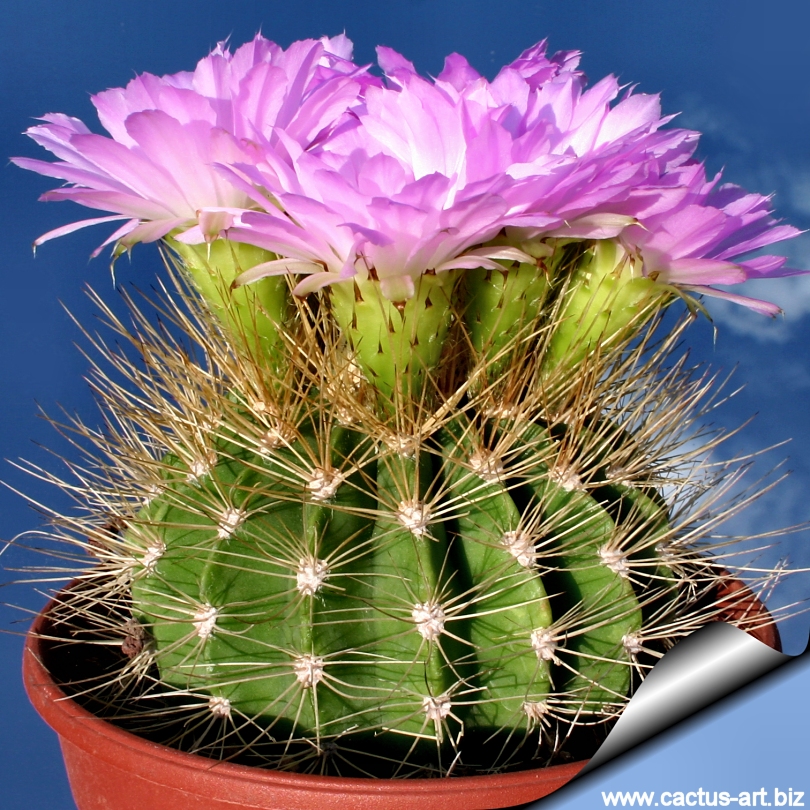
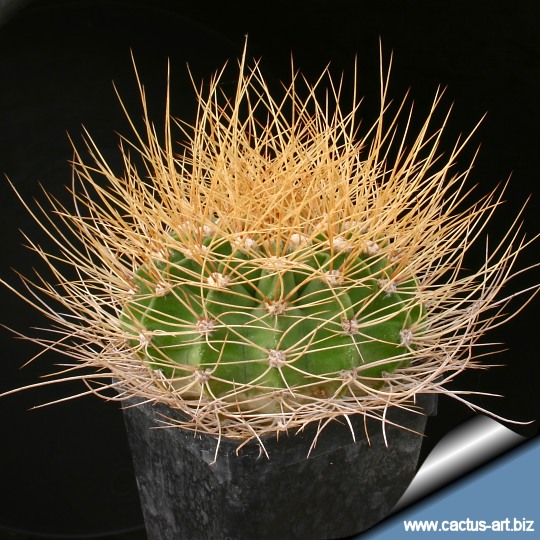
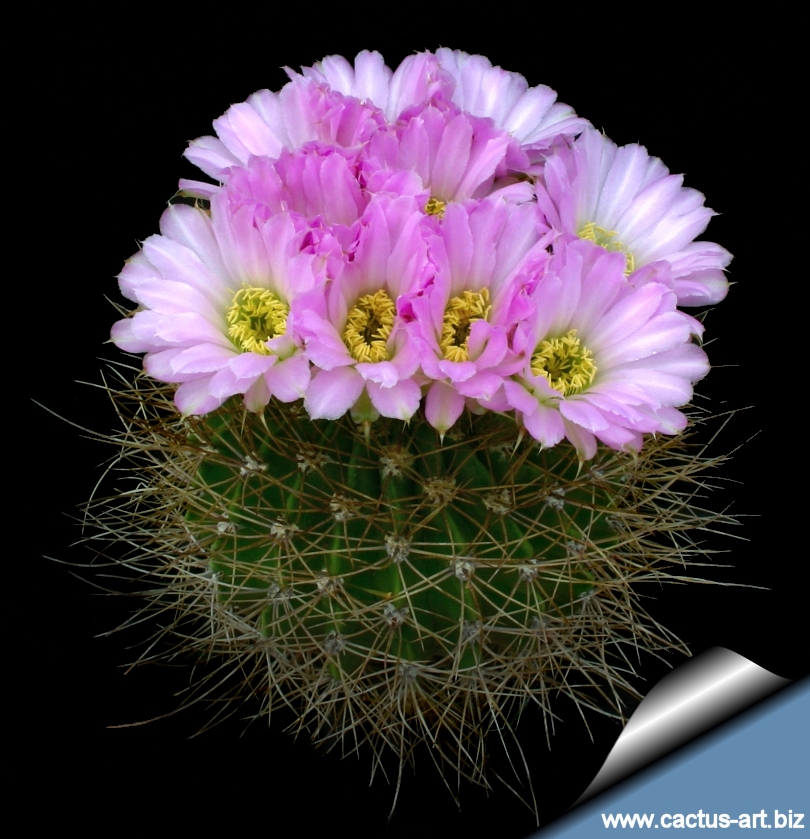
Stem: Globular to elongated, up to 60 cm tall, 15 cm in diameter.
Ribs: Numerous, 16 to 20, acute;
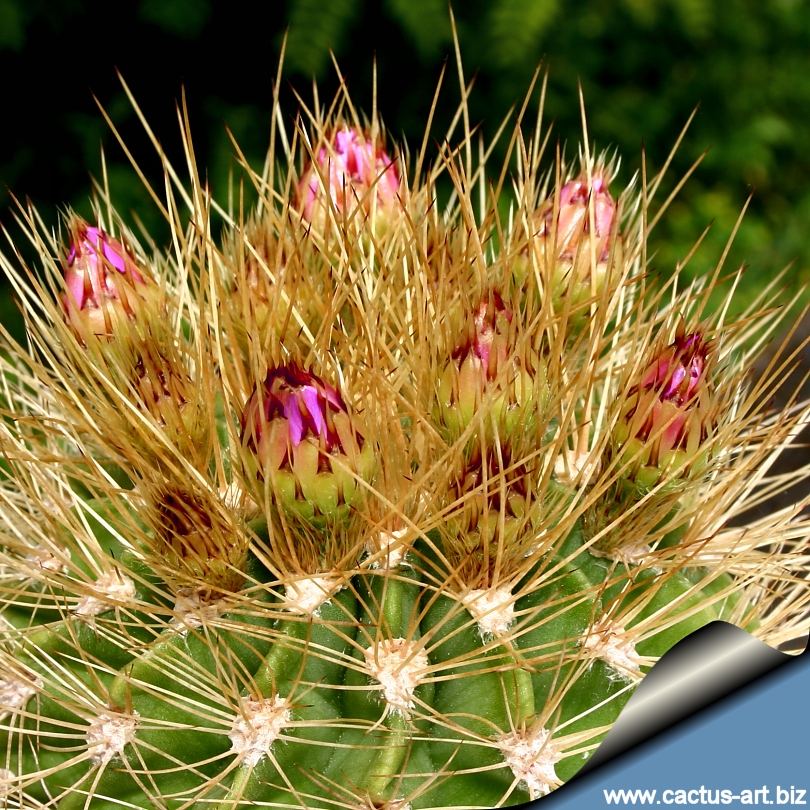
Spines: 10 to 20 per areole, dense, thin, long, curved
honey-coloured.
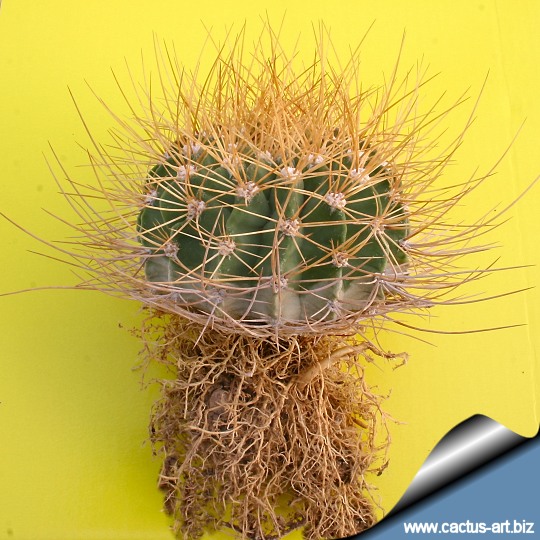
Roots: Fibrous.
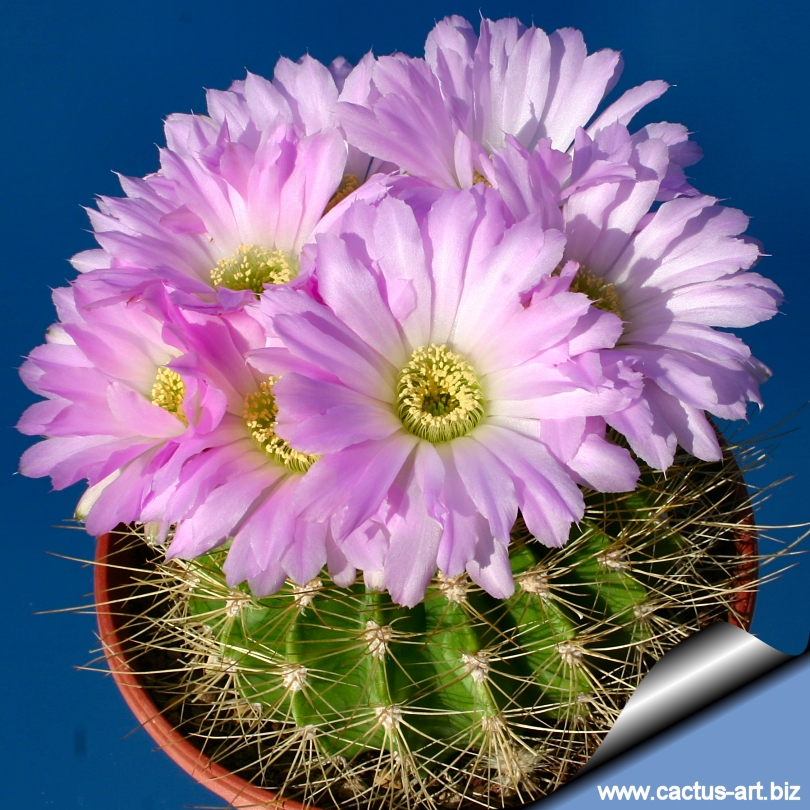
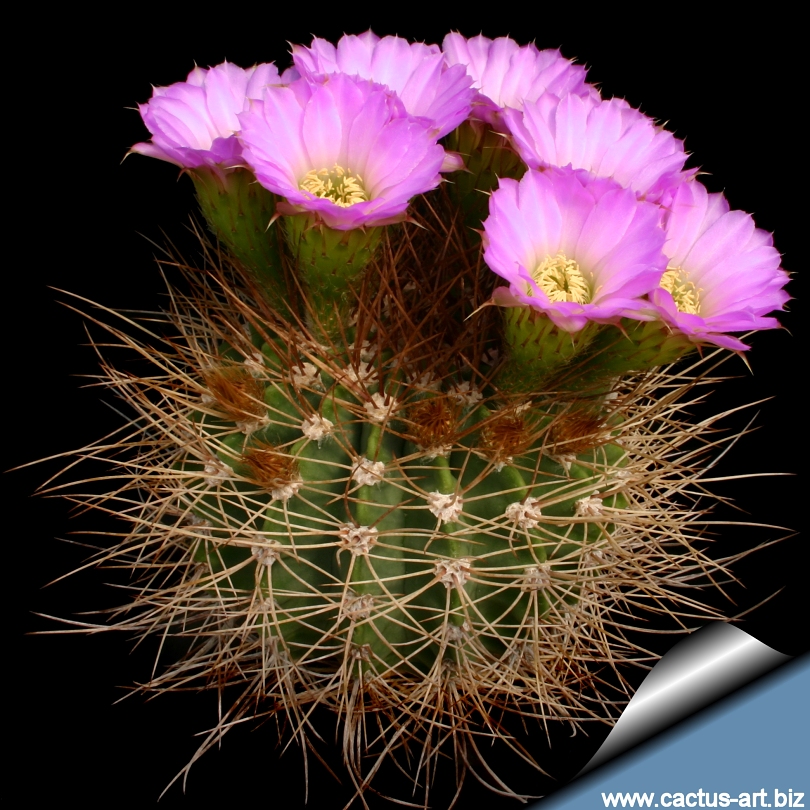
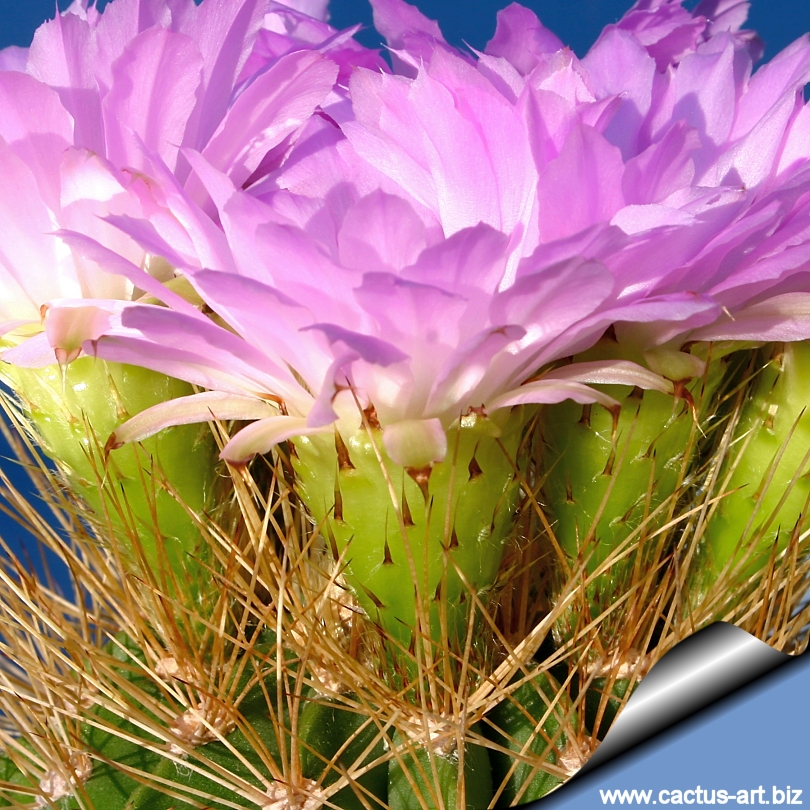
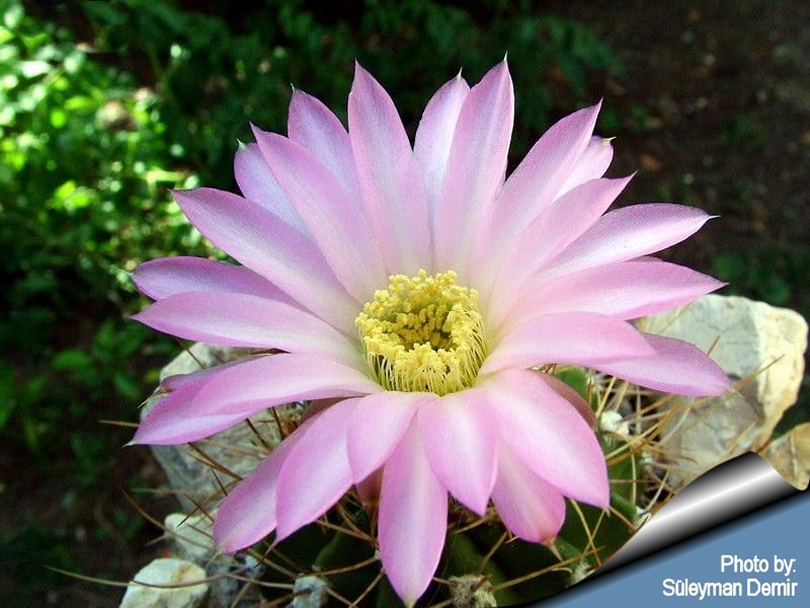
Flowers: A. spiniflorus flowers range from pink to
white (4 cm to 7,5 cm in diameter), and appear during late spring and summer.
The “violaciflorus”
form has lilac flowers.
It starts
blooming at around 6cm in diameter.
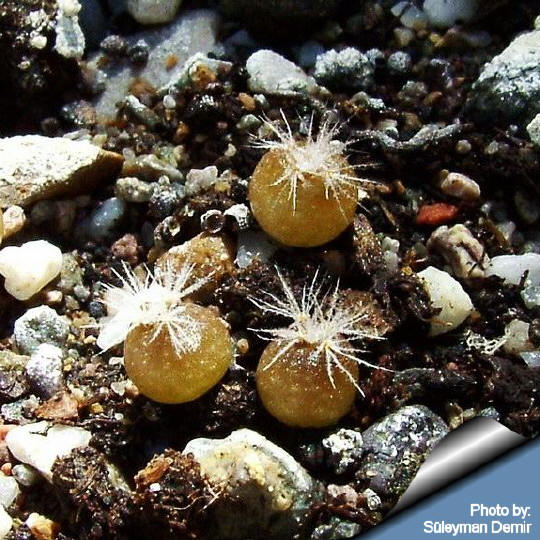
Propagation: Direct sow after last frost, although
fairly slow, or use offsets (if available)
|
|
Cultivation: It is a summer-growing species that offers no
cultivation difficulties. It needs good drainage and very porous
substrate. Water regularly in summer (but do not over-water ). Wait for
the well draining soil mixture to be rather dry before watering again.
If it loses its roots, let the stem dry for a few days before
replanting. Keep rather dry in winter. Feed with a high potassium
fertilizer in summer.
Although it is cold tolerant (hardy to -12° C for short periods), one
should give it frost protection to prevent scarring. It tolerates
intense sunlight and needs a very bright exposure. Full sun is
indispensable to keep plant compact, with strong spines.
|


 Cultivation and Mail Sale