|
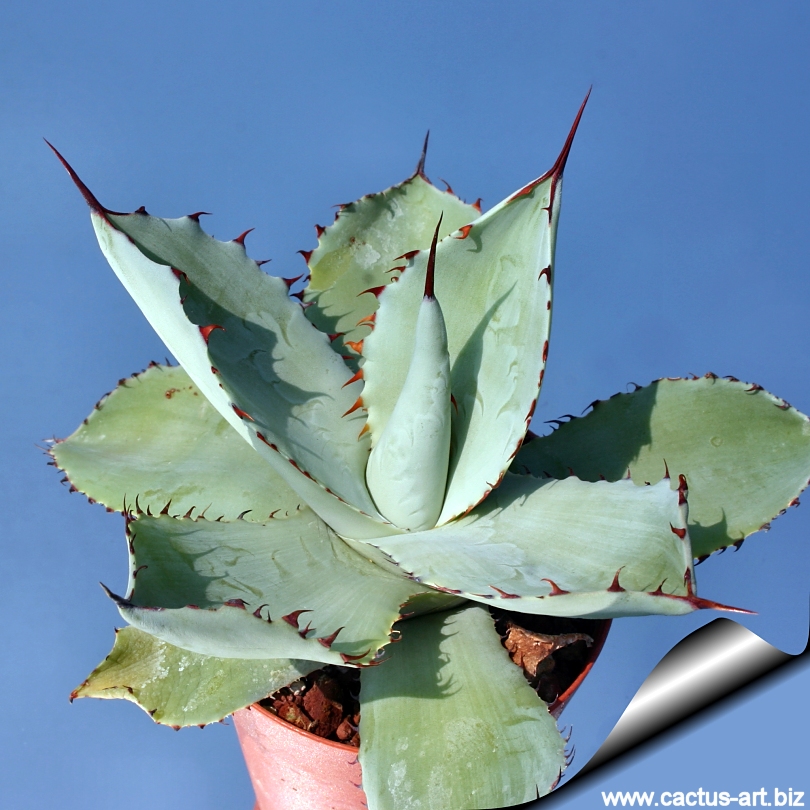
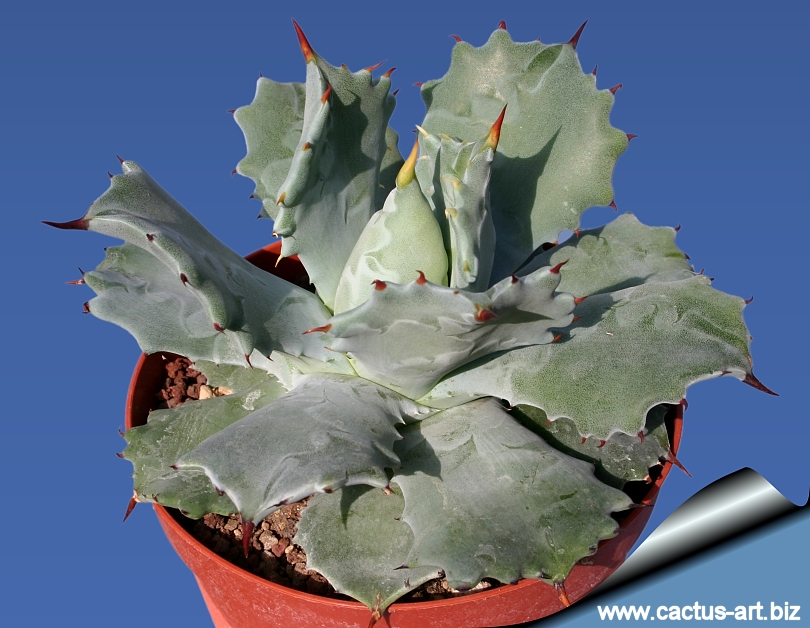
Description: A. potatorum
is a
small Agave,
growing
solitary or slowly
clumping,
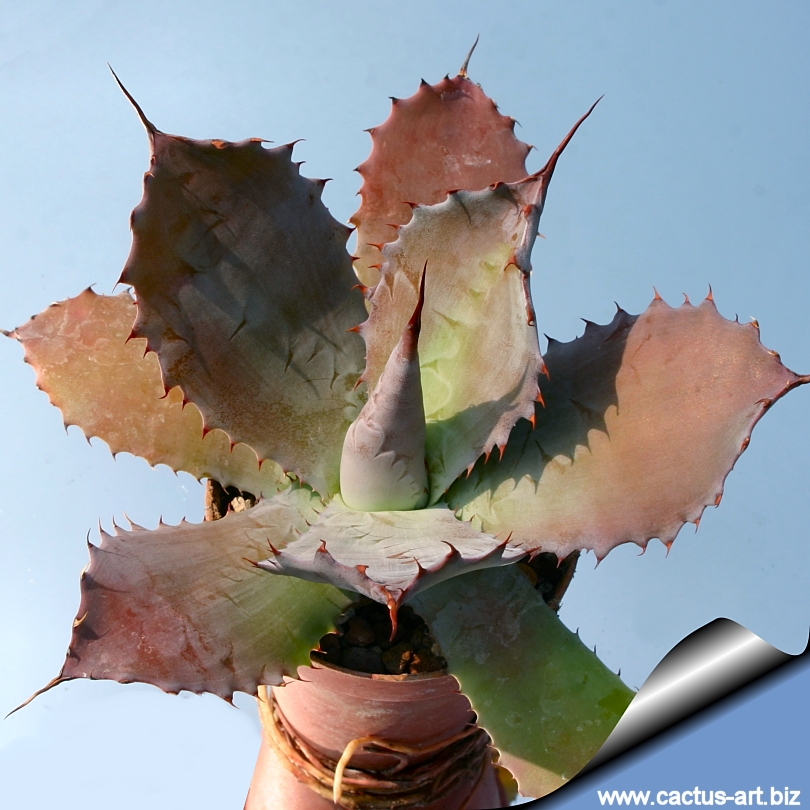
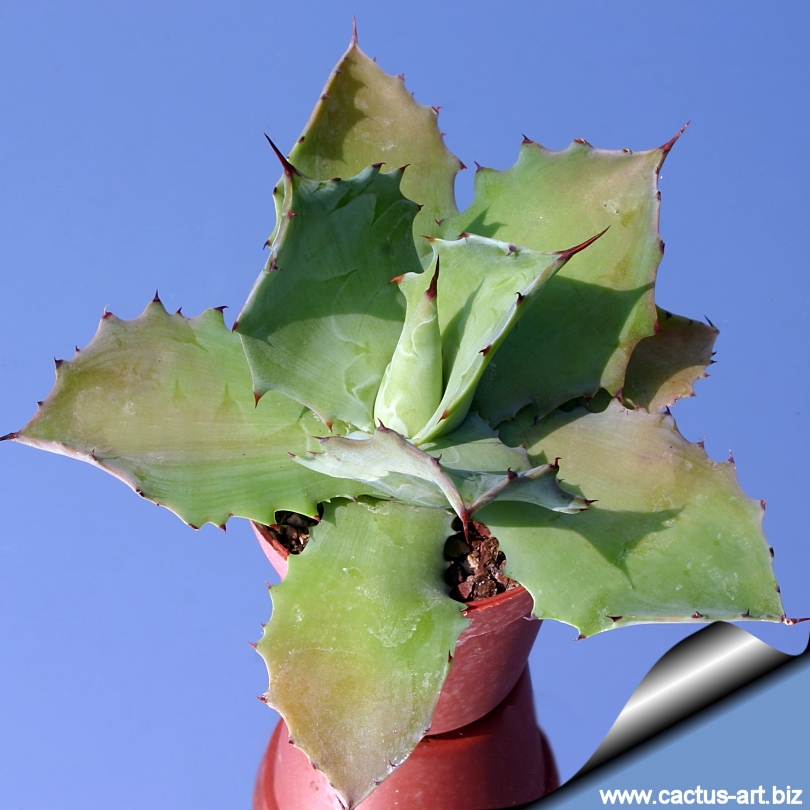
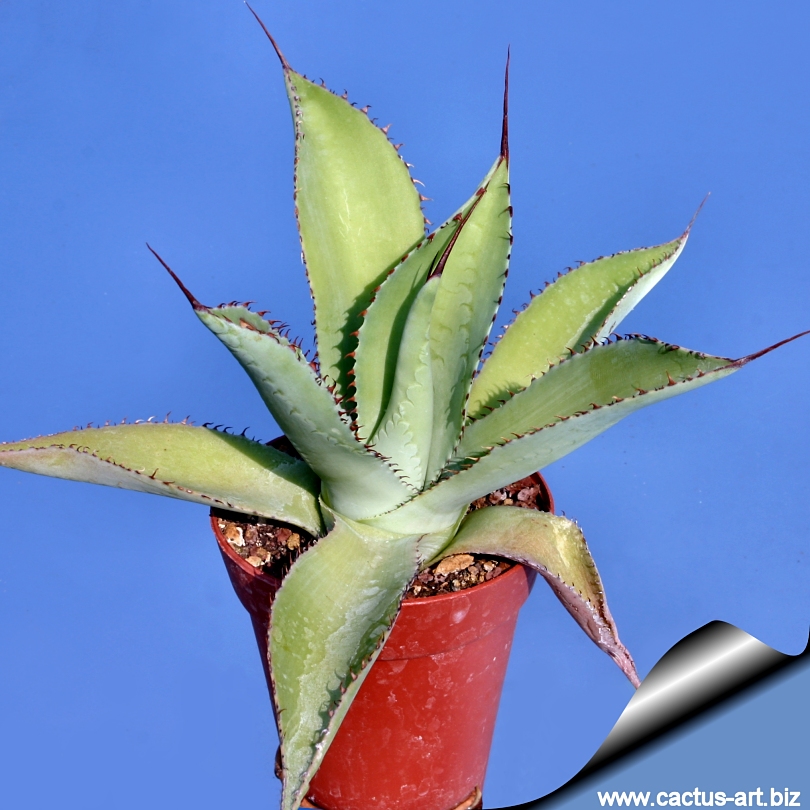
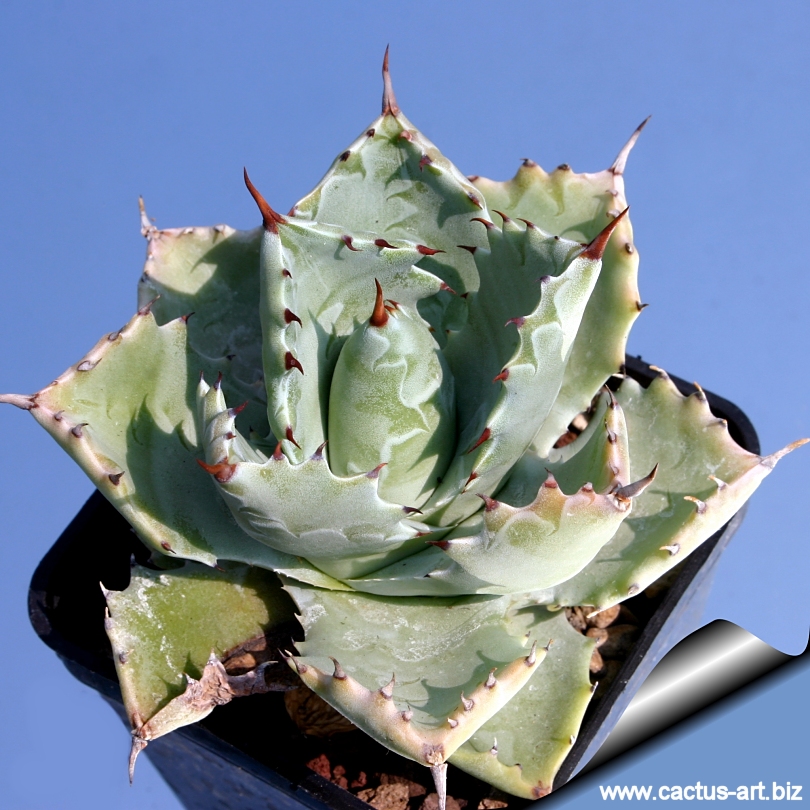
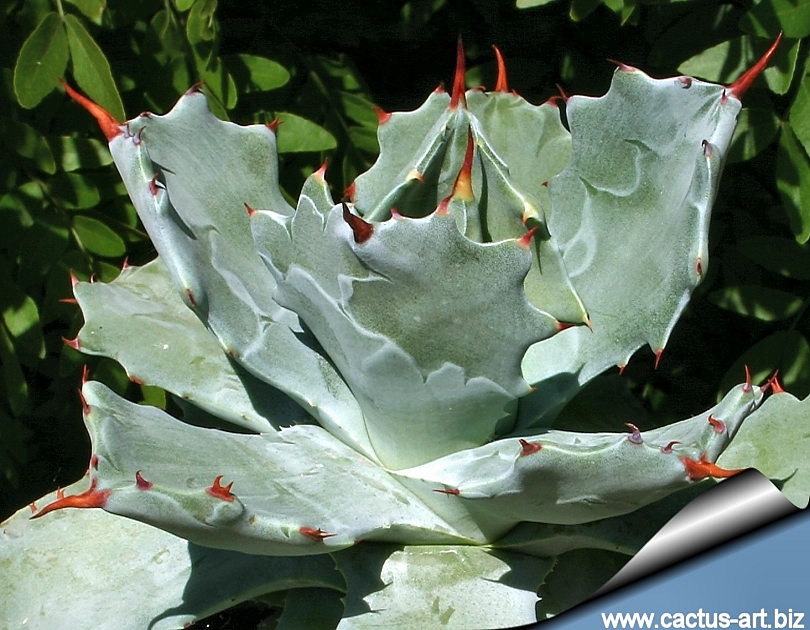
that forms an compact to open symmetrical succulent rosette. It is a
very polymorphic species with a large range of variability and the size
of the plant from different population and the clones on the market are
quite variable and may be anywhere between 10 and 90 cm in diameter when
fully grown-up.
Stem:
Usually stemless or very short stemmed.
Leaves:
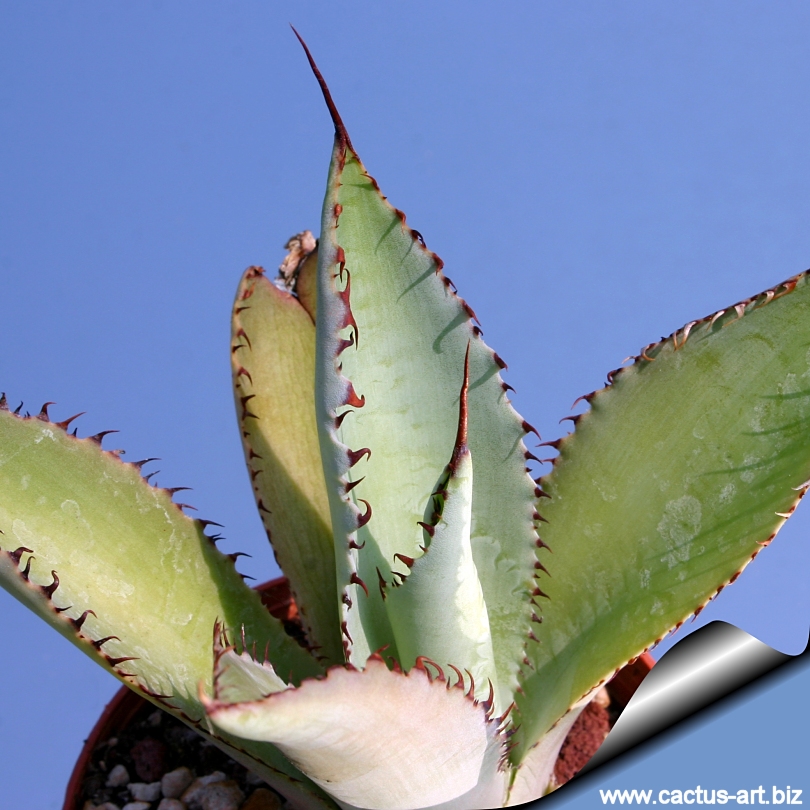
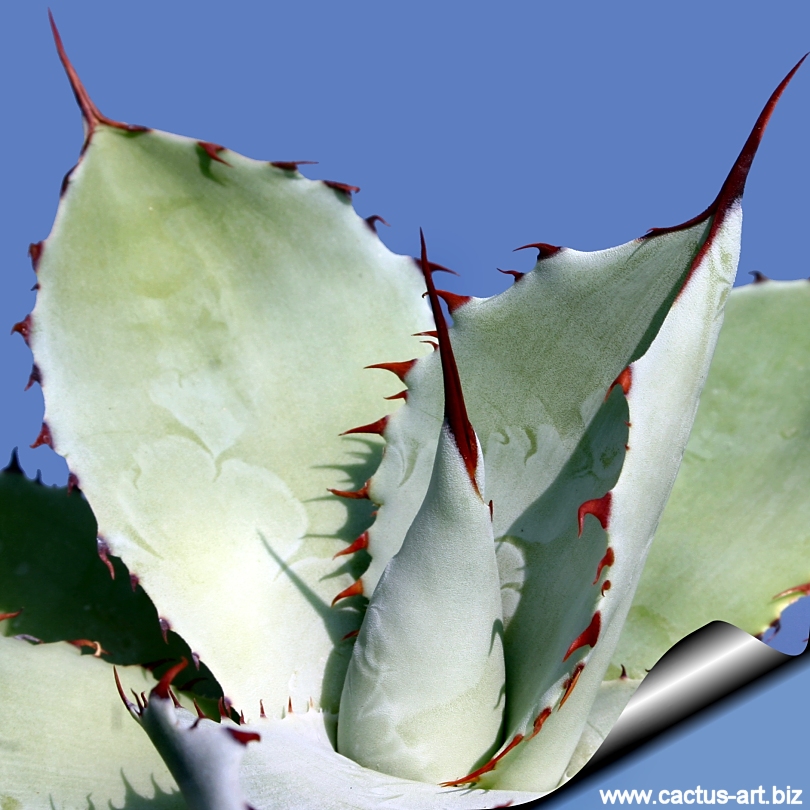
30 to 80 per rosette, softly fleshy but rather rigid, thickened and
narrowed toward the base, ovate, oblong, or short lanceolate, but very
variable in shape, size and colour. They are mostly 9-18 cm broad and
20-40 cm long and green, blue-grey to light silvery-grey. They are
slightly deflexed back near the tips that terminate in a distinctive,
often twisted or slightly wavy, reddish, dark brown spine up to 2,5
long. The short marginal spines are often on pronounced tubercle-like
prominences often dramatically so, with distinct teats. The teeth are
usually rusty or yellowish coloured 0,6 to 1,3 mm long, 0,5 to2,5 cm
apart. The leaves also have noticeable showy bud-imprints.
Flowers:
The long spikes may by either a raceme or a panicle and rise up to 3 to
6 m bearing light green flowers tinged with red and subtended with red
bracts.
Cultivation: Agave
potatorum is a relatively easy-to-grow species, though not as
cold-hardy as many of the more northerly-occurring species (Winter
hardy to around -3° C degrees). Suited for
light shade to
full sun, but better with some shade in
summer. It needs a very well-drained, soil. It
grows fairly fast in summer if provided with copious water, but allow to
dry thoroughly before watering again (the more water and fertilizer this
plant gets, the faster it will grow). During the winter months, one
should only water enough to keep the leaves from shrivelling.
It does great in containers or in the ground. Plants cultivated
outdoors are more drought tolerant and can take some heat and full sun.
Remove eventual suckers to show the beauty and form of the individual
rosette.
Propagation: By seeds or by
suckers that are found growing around the base of the plant, however
this species rarely offsets many plants after maturing,. This begins to
occur when they are as young as 10 years old. They will flower (usually
during the autumn) and the entire plant declines and dies. But many of
the clones actually in cultivation are more prolific, and suckers are
readily available. The basal suckers can be removed in spring or summer,
letting the cuttings dry for a few days before inserting in compost.
USE:
Agave potatorum
is is used in Mexico for making "pulque” the Mexican wine. In Sonora
(Mexico) the hearts (central part of the rosettes and base of leaves)
are placed in subterranean ovens and the resulting fermented juice is
distilled to make a a spirit called Bacanora.
Photo of conspecific taxa, varieties, forms and cultivars of
Agave potatorum:


|


 Cultivation
and Mail Sale
Cultivation
and Mail Sale