|
|
|
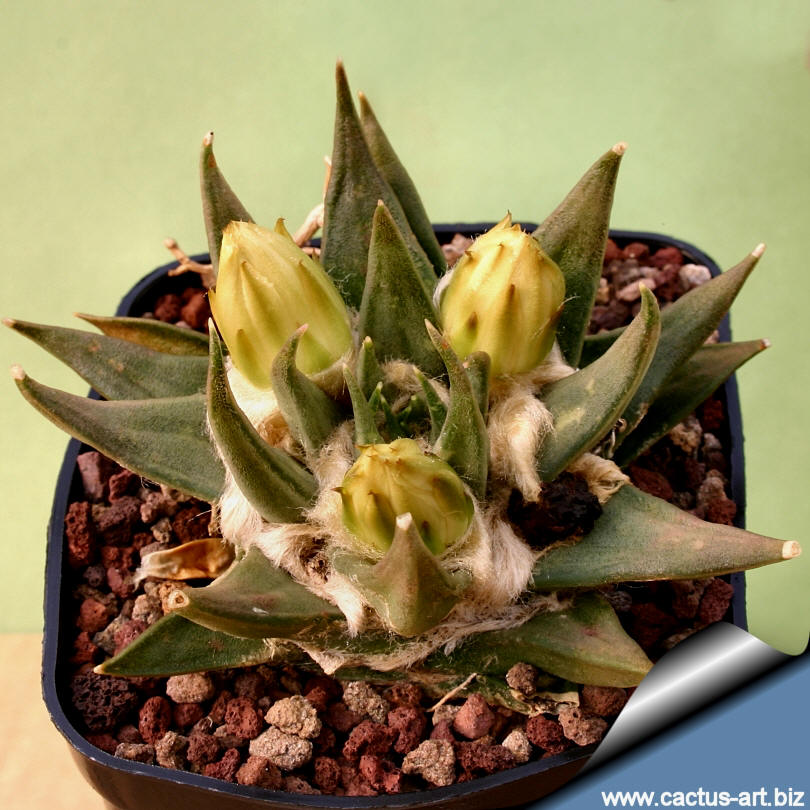
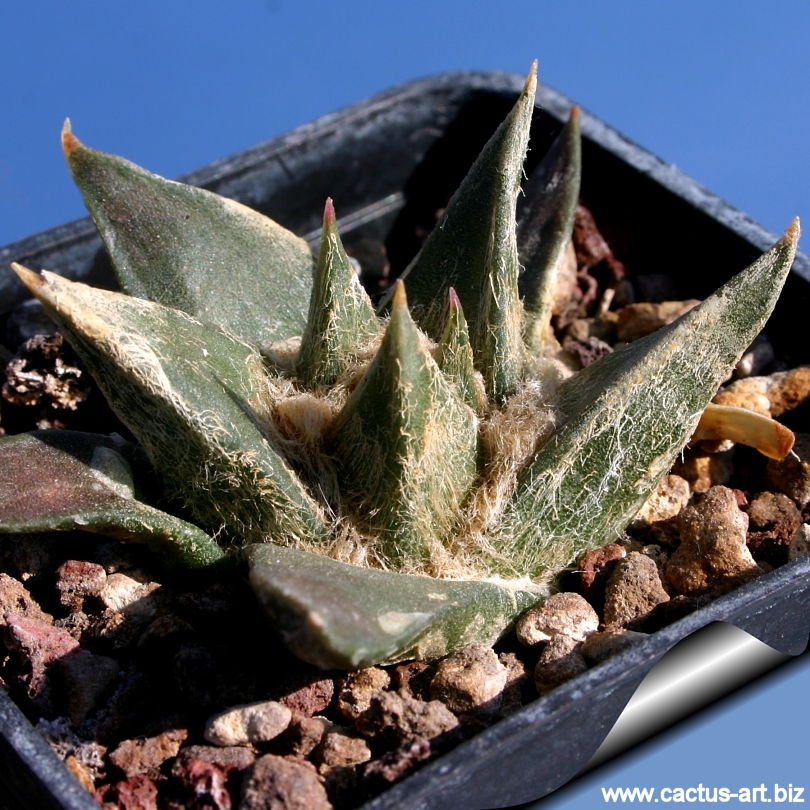
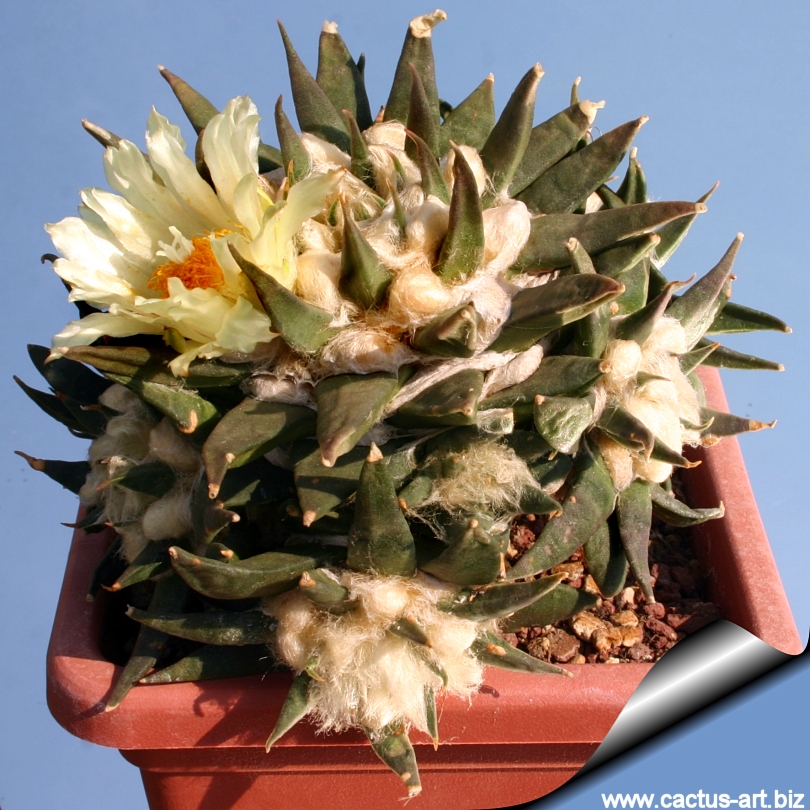
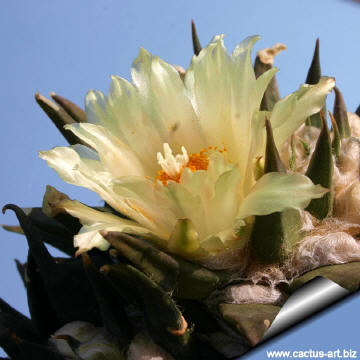
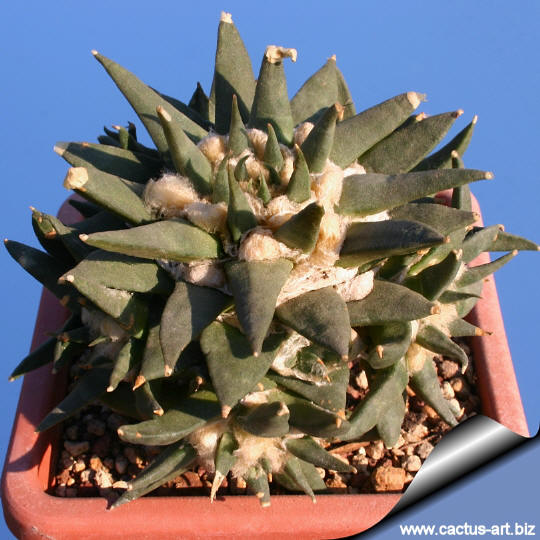
Ariocarpus trigonus (In the vicinity of
Paloma, Coahuila, Mexico)
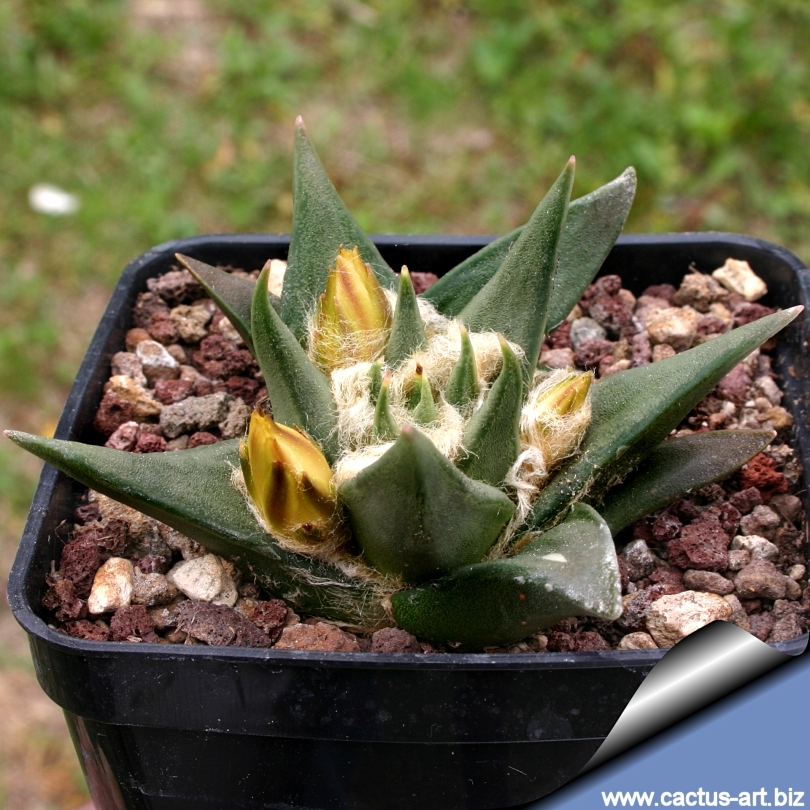
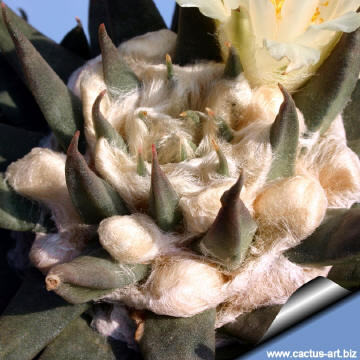
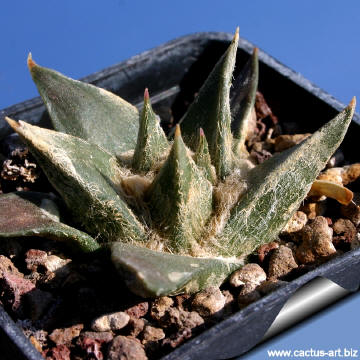
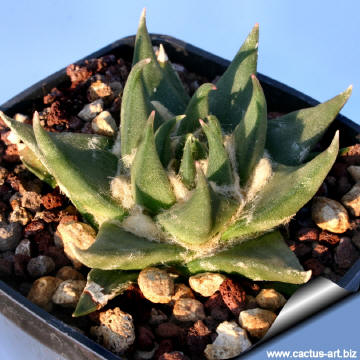
This is one of the largest species of the genusthat can grow up to 30 cm in diameter.
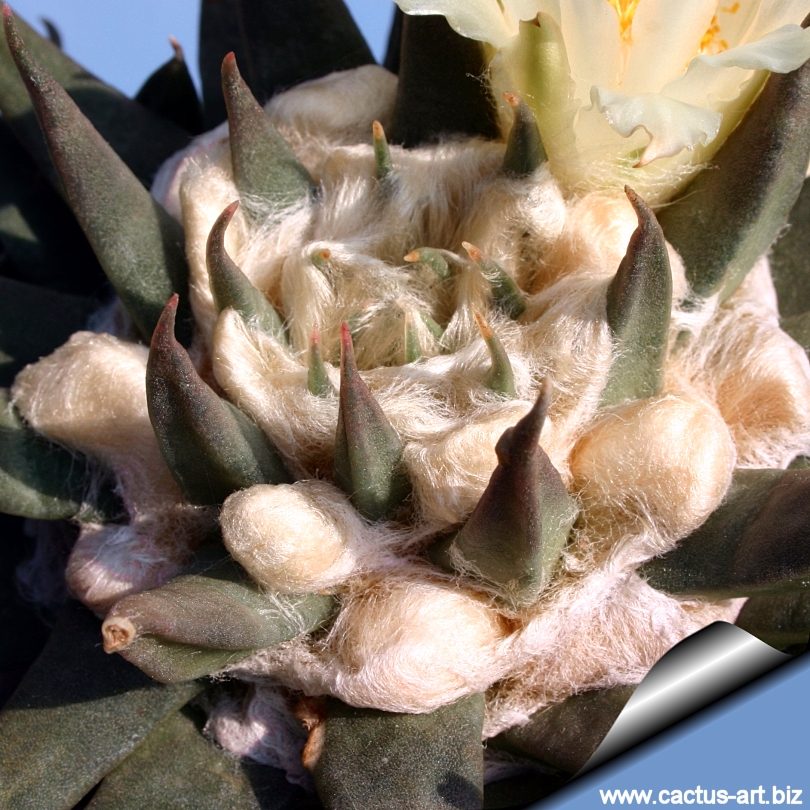
it is easily recognizable for the long upright
tubercles that are yellow/brownish/grey/green, divergent, strongly
incurved and sharp at the apices, flattened and usually twice as long as
wide.
|
 |
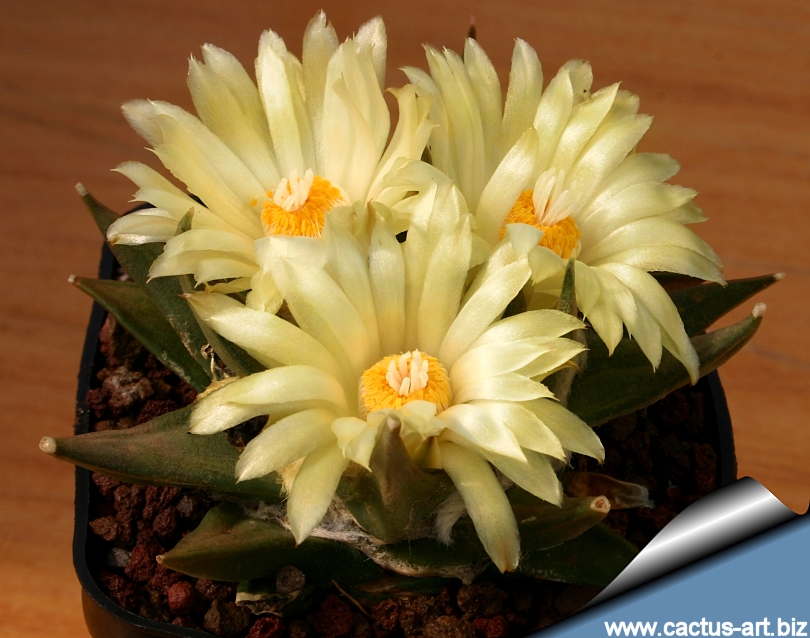
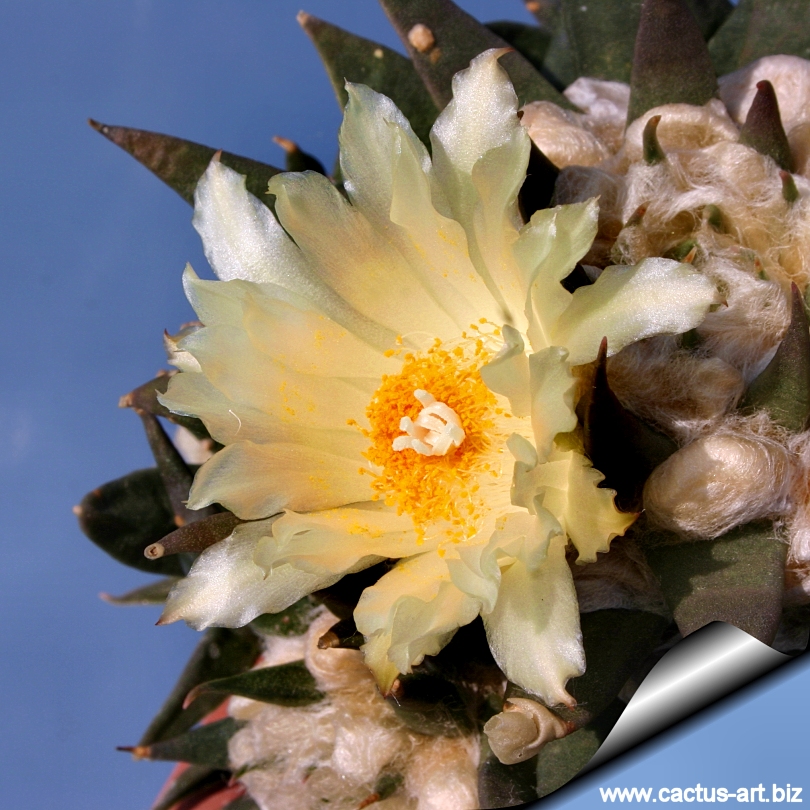
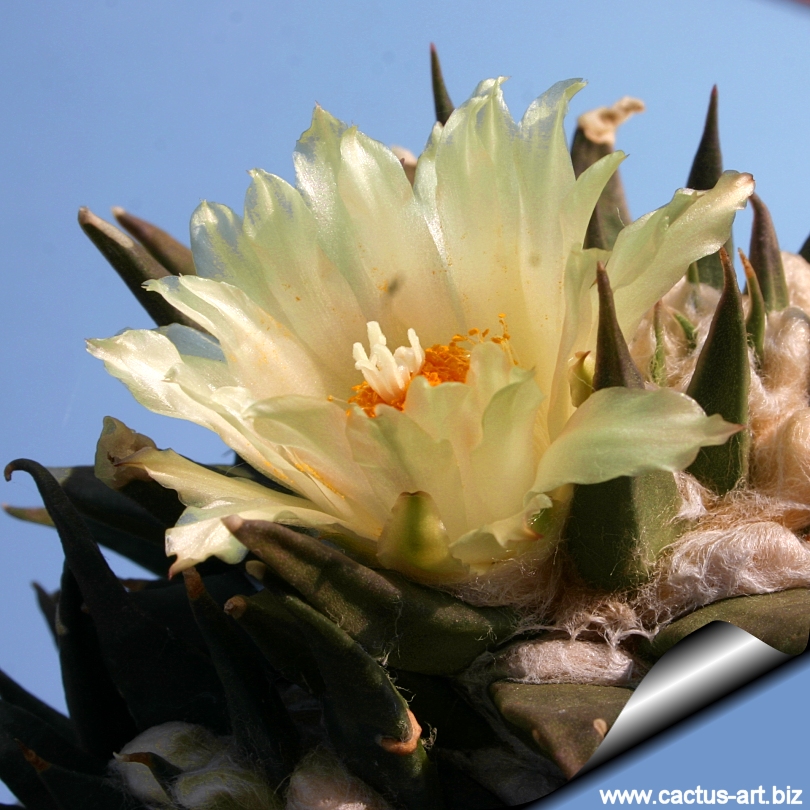
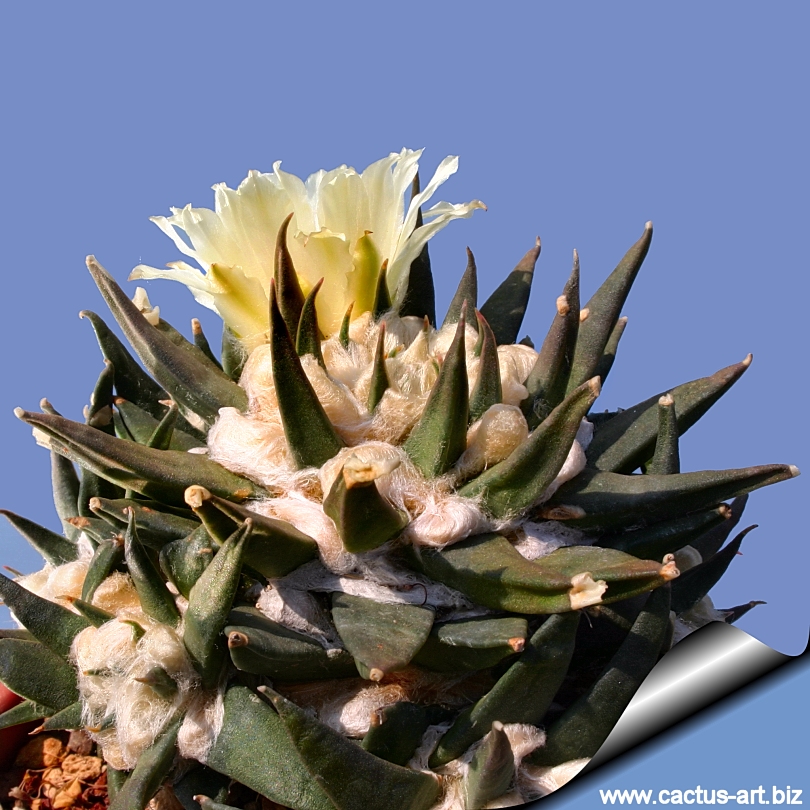
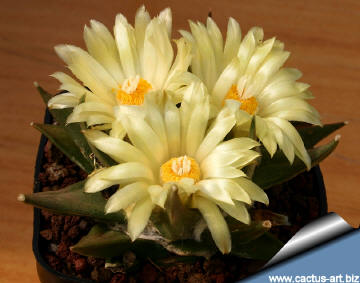 This cactus is easy to grow and gives beautiful yellow flowers
from the woolly apex in the
autumn. |
.
|
 |
|
.
|
 |
 |
.
|
 |
 |
.
|
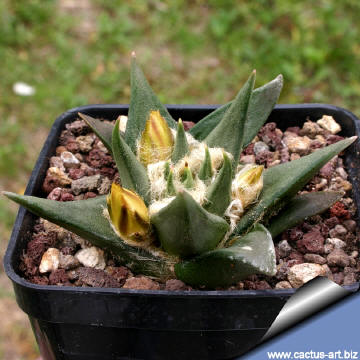
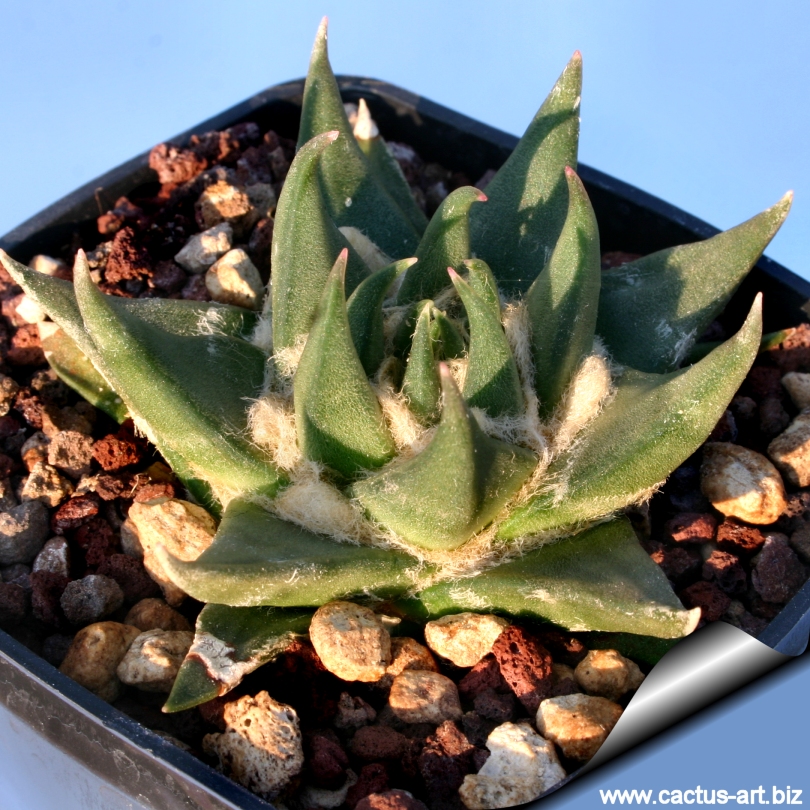
A. trigonus KMR 46 NW of Palmillas, Tam. Mexico |
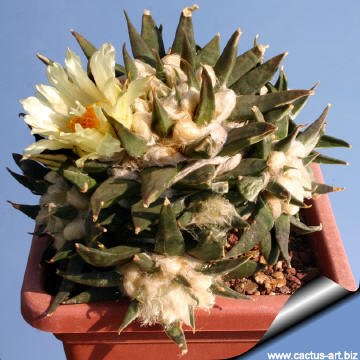
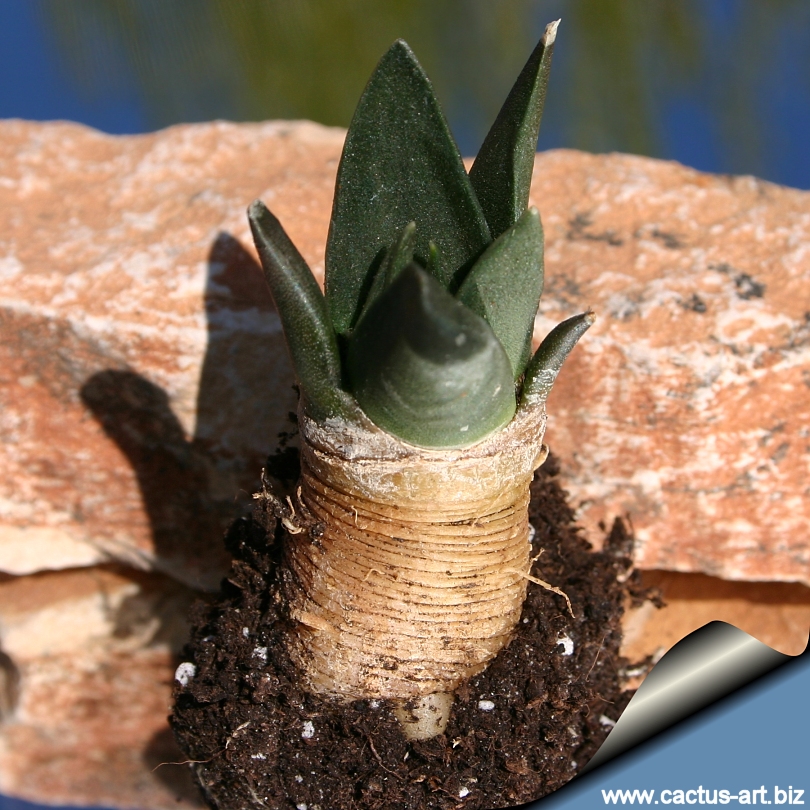
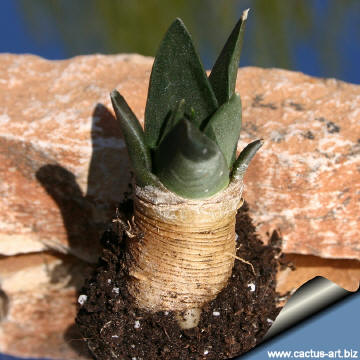
A grafted specimen
|
|
Advertising
|
|
|
|
|
|
|
Family:
Cactaceae (Cactus
Family)
Scientific name:
Ariocarpus retusus
subsp. trigonus (F. A. C. Weber) E. F. Anderson & Fitz
Origin:
Mexico (Tamaulipas, Nuevo Leon)
Habitat: Grows in limestone at 600-1200 m of elevation,
mostly found in colonies of considerable size, the habitat length is
over 400km.
Conservation status: Listed in
CITES appendix 1
Synonyms:
- Anhalonium trigonum F. A. C. Weber (basionym)
Published in: Dict. Hort. Bois. 90. 1893
- Ariocarpus trigonus (F. A. C. Weber) K. Schumann.
Published in: Engler, Bot. Jahrb. 24:549. 1898
|
|
Description: Solitary yellowish-green globose
plant, rising slightly above ground level., rounded on top Stem: 5 to 30
cm in diameter, 4 to 25 cm tall.
Tubercles: Upright yellow/brownish grey divergent, not
crowded or basally compressed, acute at the apices, flattened and smooth
adaxially, not fissured, strongly incurved,
3-8cm long, 1-2.5cm broad, usually twice as long as wide;
Root: Tap root
Flowers: Cream-white to yellowish_white (occasionally with
reddish mid-ribs) with a satin sheen, 3 to 5 cm in diameter up to 4 cm
long .
Blooming season: They come in late autumn or early winter.
Remarks: Ariocarpus retusus ssp. trigonus is an extremely variable species, and
the tubercle size and form show considerable variation, from long and
thin to short and broad)
|
|
|
|
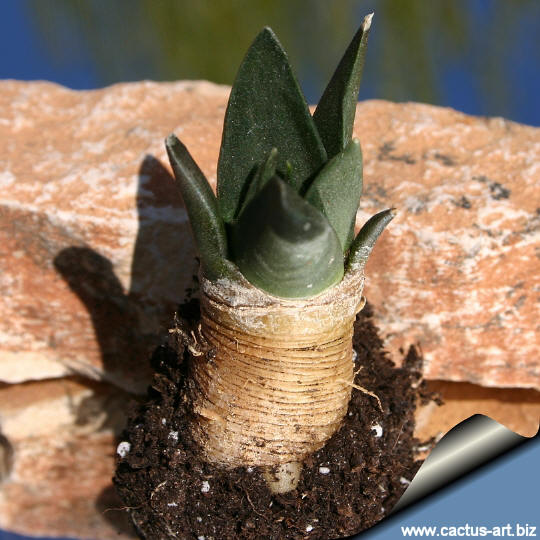
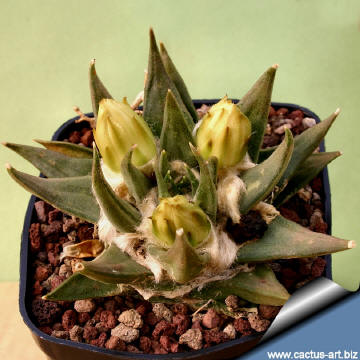
A young (6 years old) specimen of A. trigonus
(KMR 46 North-West of Palmillas, Tamaulipas, Mexico)
Ariocarpus retusus is an extremely
variable species,. Tubercle size and shape vary widely, a terminal
areole is sometimes present at the tip. The vast amount of phenotypic
variation in the species has led to the erection of several variants:
- A. retusus ssp. retusus: widespread, flowers are cream or
white, occasionally with reddish midveins.
- A. retusus ssp. trigonus: somewhat less widespread
with long sharp tubercles twice as long as wide. The flowers are
yellow (usually), white to pinkish white.
- A. retusus v. furfuraceus: applied to plants with
equilaterally triangular shaped tubercles
- A. retusus ‘furfuraceus’ var. rostratus refers to
plants with a more tapered apex to the tubercle.
- A. retusus v. scapharostroides plants from the Villa
Juarez region of SLP, it is characterized by erect angular tubercles,
superficially reminiscent of A. scapharostrus.
- A. retusus confusus nomina nuda
- A. retusus subsp. jarmilae nomina nuda
- A. retusus subsp. horaceki nomina nuda
- A. retusus var. pectinatus nomina nuda
- A. retusus subsp. panarottoi nomina nuda
- A retusus var. minimus is a nomina nuda which has
recently been applied to plants from Echido Nuncio,in San Luis Potosi.
- A. retusus f. major applied to selected cultivated
plants with very broad shaped tubercles (“Tama-botan” in
Japan).
Cultivation: This species
is slow-growing, but certainly not as slow as some other types of cacti.
It is of easy cultivation in a well drained, non-organic, free-draining
soil compost, with ample water during the growing season. Use of a weak
low-nitrogen fertilizer during the growing season can encourage growth.
The main threat to their development is root rot. Ariocarpus should be
kept dry whenever there is a threat of cold. The appearance of
Ariocarpus can benefit greatly by watering the plants from the bottom.
This practice will help to keep the “wool” on the top of the plant from
becoming matted or discoloured. Needs light shade to full sun. Frost
Tolerance: Hardy to -10° C
Propagation: It is probably the easiest species of the genus to
raise from seed, but will generally take about 7-10 years to reach
flowering size, occasionally grafted.
|
|
Photo of
conspecific taxa, varieties, forms and cultivars of Ariocarpus
retusus.


|
|


 Cultivation
and Mail Sale
Cultivation
and Mail Sale