|
|
|
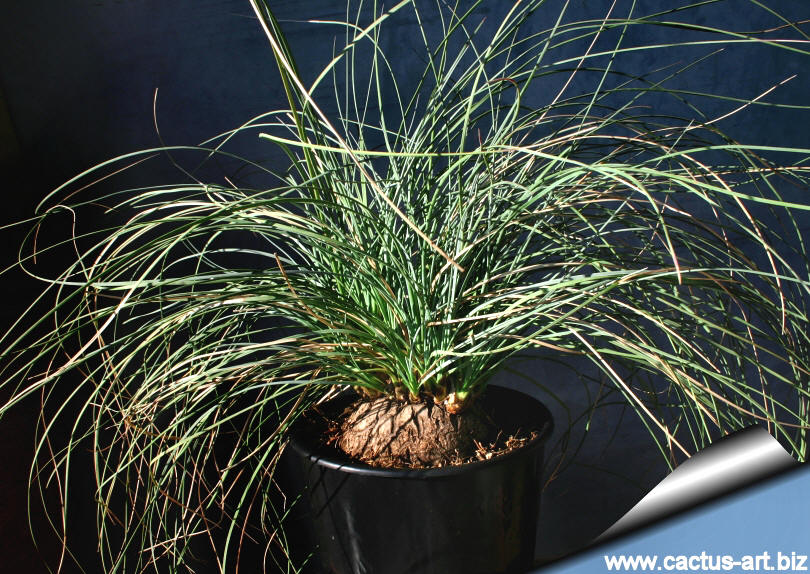
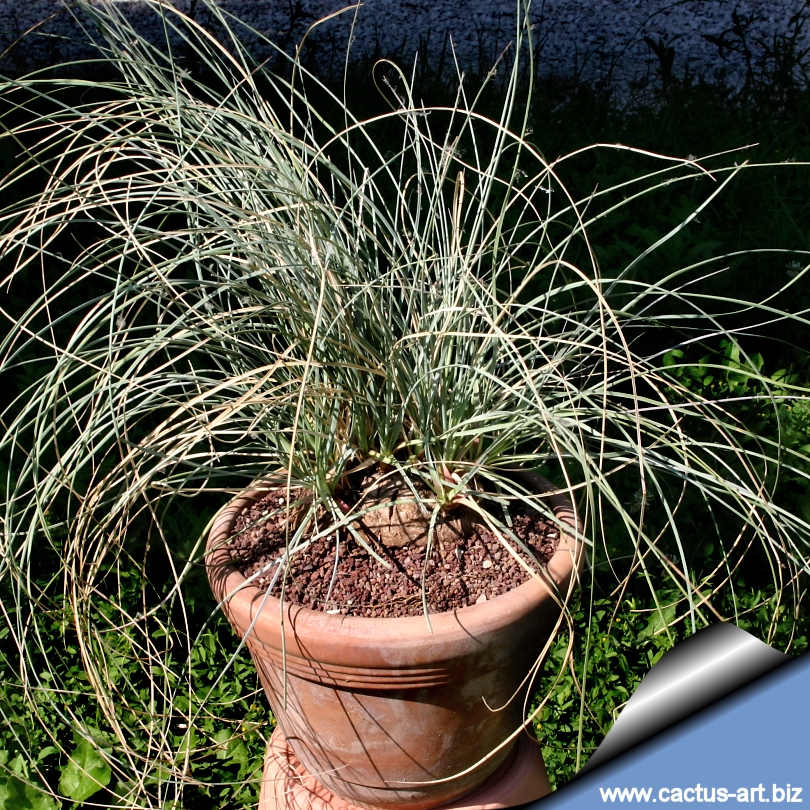
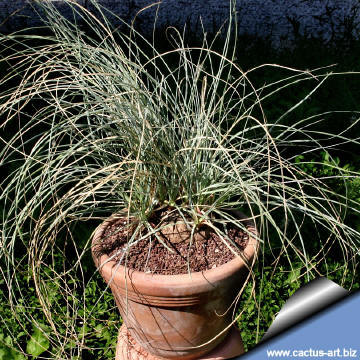
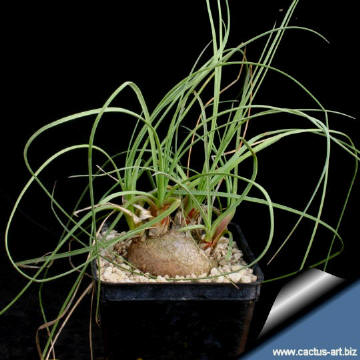
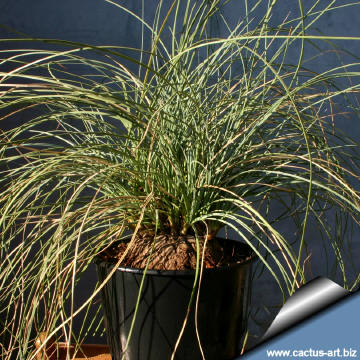
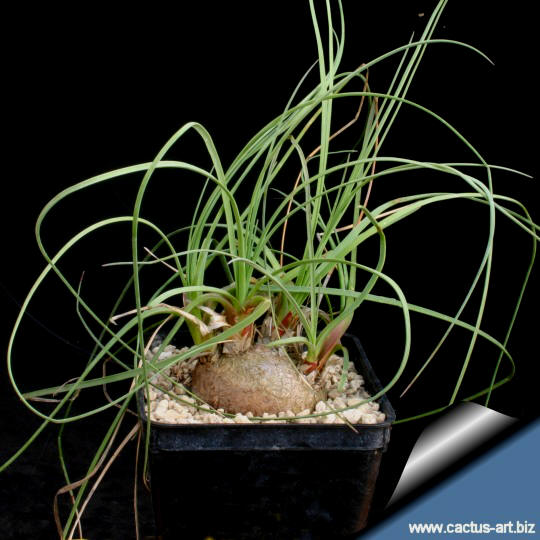
Calibanus hookerii looks like a ball topped with attractive green-blue fescue grass-like leaves.
This plant is often exposed in cultivation by
caudiciform enthusiasts for its new and unique form.
|
|
 |
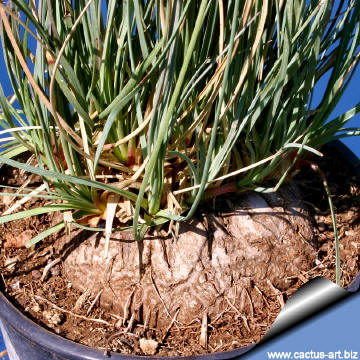 |
A tuft of
greyish-blue, grassy horsehair growing out of a disk-shaped
woody caudex, very, very strange and weird looking. |
 |
 |
|


|
|
Advertising
|
|
|
|
|
Family: Agavaceae (but in other
classifications it is indicated to belong to the Nolinaceae,
Dracaenaceae or Liliaceae
family)
Scientific Name: Calibanus hookeri (Lem.) Trelease
1911
Origin: North central Mexico (Hidalgo, Tamaulipas
and San Luis Potosi).
Habitat and
ecology: It grows in grit, in a dry mountainous habitat, where
it receives quite copious water in the short
growing-period. These plants are very
drought tolerant, and have developed a
caudex (water storage organ) at and below ground level, a common
survival strategy in dry climates.
Etymology: The genus is named for Shakespeare's monster,
Caliban. It contains only this
species, and is closely related to the
genus Nolina.
Synonyms:
- Beaucarnea
hookeri Baker 1872
- Nolina
hookeri Rowley 1990
- Dasylirion
hookeri Lemaire 1859
- Dasylirion
hartwegianum J. Hooker
- Calibanus
caespitosus Rose 1906
|
|
Description:
Calibanus hookerii is an interesting looking plant that is
related to the agaves, it looks like a
trunk-less
Nolina,
topped by
perennial grasslike silver-blue leaves that expand from a woody
caudex (Swollen succulent root).
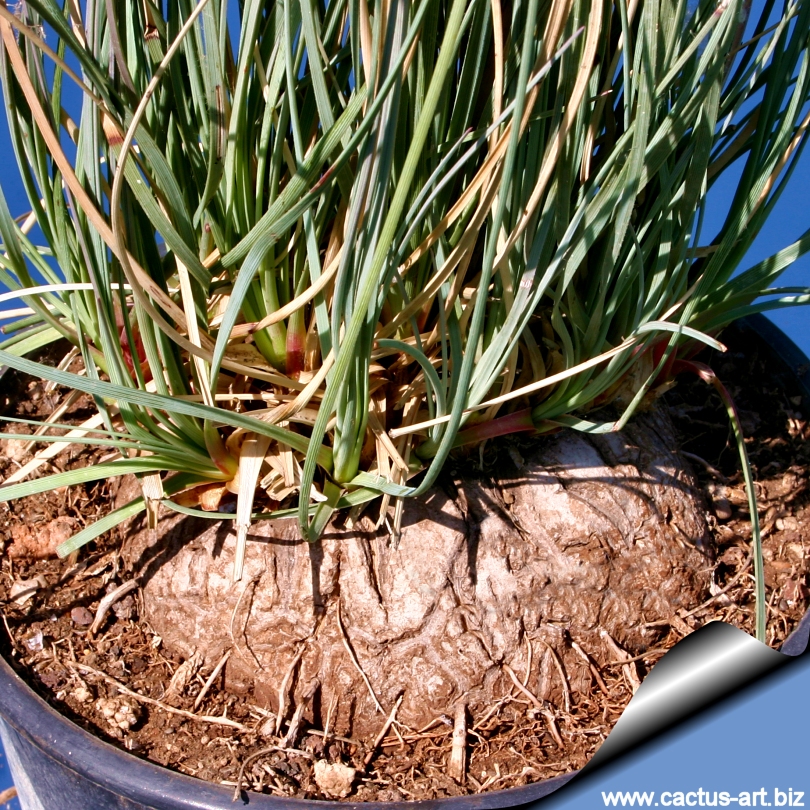
Caudex: The caudiciform base is hemispherical and woody with a
fissured or plate-like brownish-grey bark and sits halfway out of the
soil. It is very slow growing, generally it is 0,30 to 1 m in diameter
but can eventually grow to 5 meters in diameter,
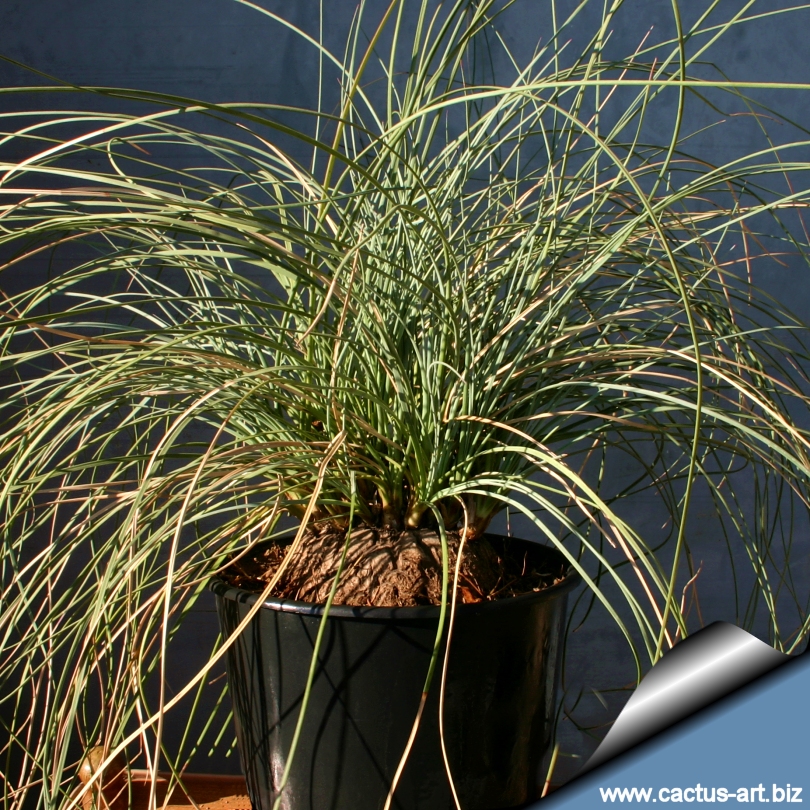
Leaves: Thin, wiry, flexible, grass-like, raspy surfaced that
grows upright in the center of the plant and then arch down as they
mature. They are somewhat concave and keeled, the margins are rounded.
The leaves will get 30 to 90 cm long and are only 2-3 mm wide. They are
blue green in colour. They appear on the plant as a crown formed by
numerous bundles arising from the top of the caudex. The number of the
bundles increase as the plant increase in size.
Flowers: The Calibanus is
dioecious (there are male and female plants) or rarely some plants
are hermaphrodite.. The
clusters of flowers (panicles) are rigid about 10-20 cm long and
partially hidden in the foliage. The flowers are pink or purplish and
very tiny.
Fruit: Female
plants bear globose, ovoid, three angled berries, 8-9 mm long, 6-7 mm in
diameter. The fruits are straw-brownish to reddish and indehiscent.
Seeds: Mellon shaped, 3-4 x 3 mm wide.
|
|
|
|
Cultivation: Calibanus hookeri is a very tolerant plant that can
withstand temperatures of -15 Celsius degrees, but its exact
hardiness is unknown. Because of its extreme
drought tolerance, it makes a great
container plant for
light shade to
full sun, or is an excellent
foliage accent in a dry garden in warm regions. Might look its best
in a vase shaped terra cotta pot to allow the leaves to drape downwards.
It needs moderate
water when actively growing, little water the rest of the time,
if
established. Outdoor it needs heavy soil with excellent drainage and
circulating dry air. It is a tough plant. Having been bred to endure dry
air and drought, it will survive for years in less than ideal
conditions. It can stay in the same pot for a number of years since it
prefers to be a bit rootbound.
Propagation:
Seeds; it cannot be reproduced by
cuttings of the caudex (or leaves).
|
|


 Cultivation and Mail Sale