|
|
|
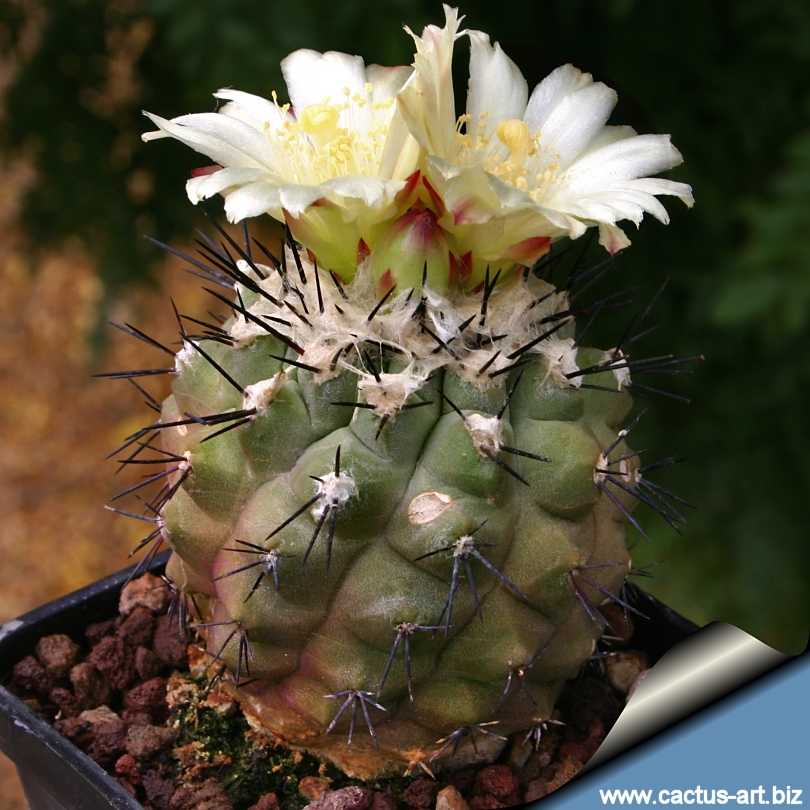
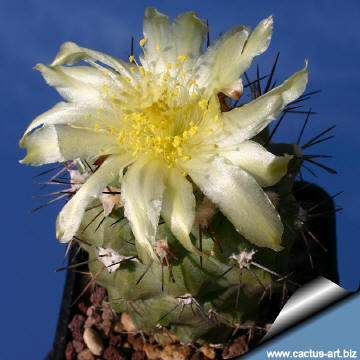
Copiapoa montana FR522 (
Nord Taltal, Antofagasta, Cile )
This species has a
very long thick taproot. |
|
|
|
 |
Description: It is a
geophytic cactus arising from a large tuberose root. It is at first
solitary but can slowly branch from the base to form large clump up to
50 cm tall.
Roots: Tuberous.
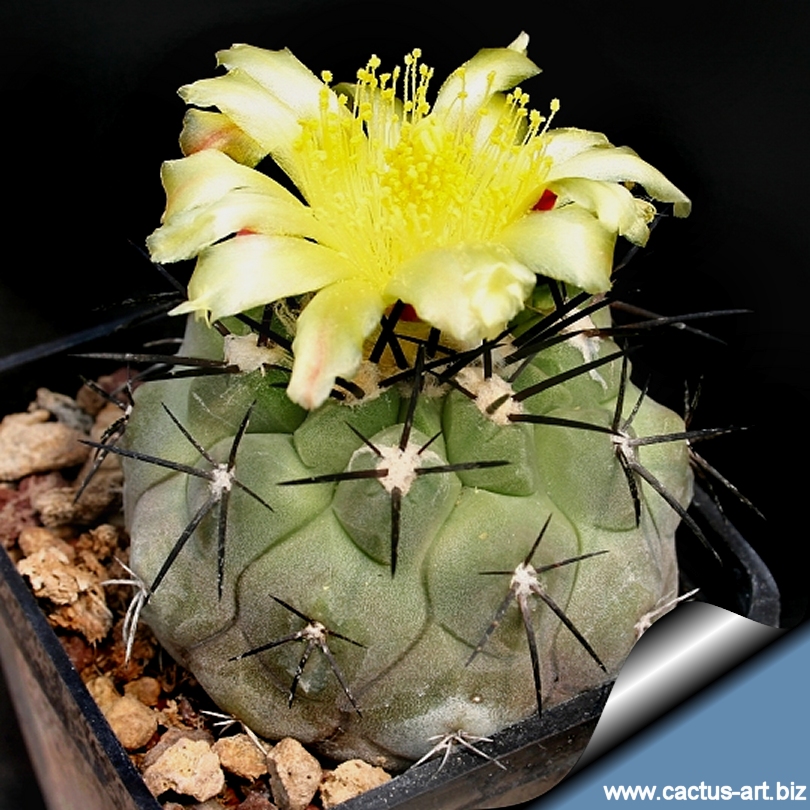
Stem: Pale green or olive green eventually lightly tinged with
brown in the sun, globular flattened in the young plant, later columnar,
5 to 10 cm across.
Ribs: 10 to 17 prominent, divided into large tubercles about 7 mm
high.
Areoles: Round. up to 10 mm large and covered with white or brown
felt.
Spines: Straight or slightly curved, brownish-black to black
(later grey). The radial spines - 4 to 6 - are 2 cm long, the central
spines - 1 to 3 - stronger and about 2 cm long as well.
|
|
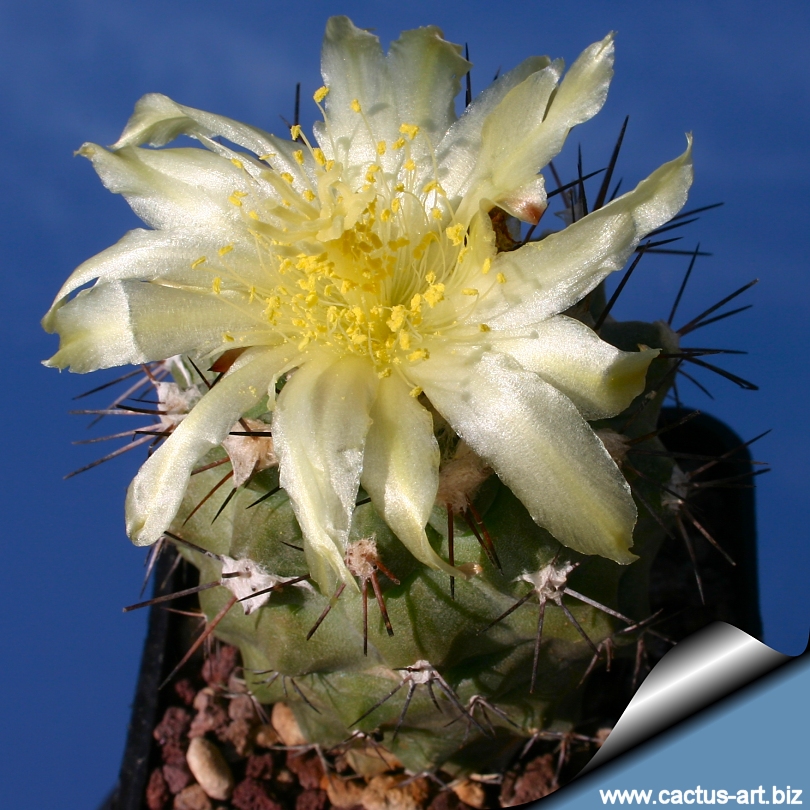
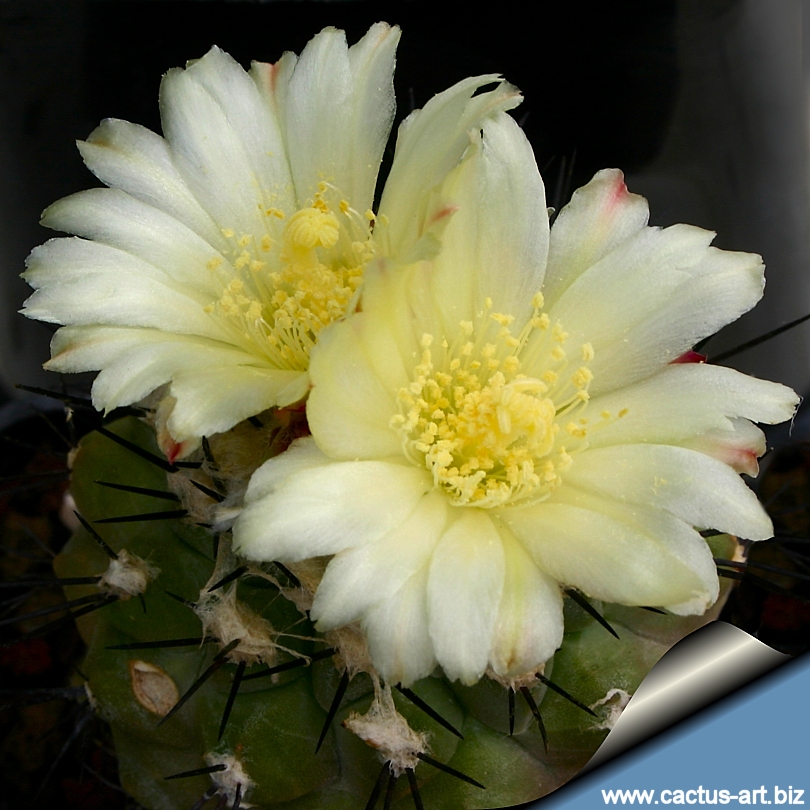
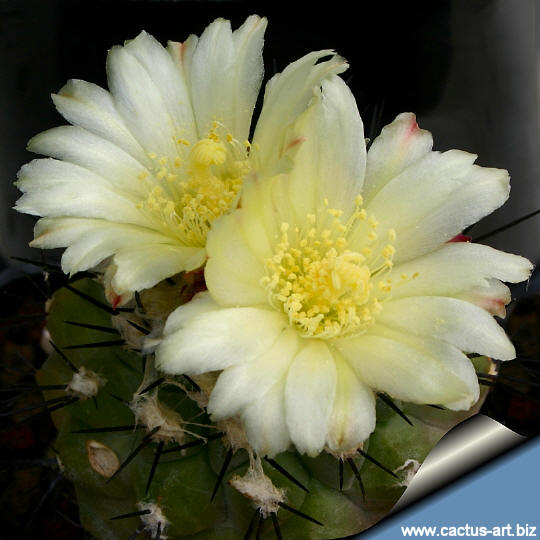
Flowers: The flowers arise on the crown, often several at a time,
nearly hidden in the dense wool. They are glossy, pale yellow, with
broad limb, 5.5 cm in diameter, and with a faint scent. The filaments,
anthers and style are yellow, the 7 to 12 lobed stigma darker. The ovary
measures about 1 cm across. It is one of the first species to flower,
even 2 to 3 year old seedlings may bloom.
Blooming season: Flowers throughout the whole summer.
Seed: Small, black glossy.
Cultivation: This
cactus can be easily cultivated on its own roots or grafted on stock
with adequate fresh air and water.
Need full sun but should be
protected from excessive heat and sun in summer, Require good drainage
to avoid root rot. In
winter it requires a light and dry environment and a temperature of
10°C. Avoid any frost (Frost tolerance 0°C)
Propagation: Seeds,
which has good powers of germination, or from shoots which are grafted.
Copiapoa montana is
also used as
grafting stock for other copiapoas.
Photo of conspecific taxa,
varieties, forms and cultivars of
plants belonging to the Copiapoa hypogea
complex
(This
Taxon
has lots of synonyms
(
like many other cacti) whit several controversial varieties and subspecies
and comprises a multitude of different forms, but where each form
is linked to others by populations of plants with intermediate
characteristics):
|
|
Advertising
|
|
|
|
|
Family:
Cactaceae (Cactus
Family)
Copiapoa montana
F. Ritter 1960
Accepted
Scientific name: Copiapoa
taltalensis Werdermann 1929
Origin: N-Chile (Antofagasta, Atacama, Coquimbo)
Conservation status: Listed in
CITES appendix 2.
Common English Names include:
Etymology: The specific
name "montana" means mountainous.
Synonyms:
- Copiapoa hypogaea
var. montana (F. Ritter) G. J. Charles 1960
- Copiapoa rubriflora
F. Ritter 1963
- Copiapoa rupestris
F. Ritter 1963
- Copiapoa desertorum
F. Ritter 1980
- Copiapoa
hornilloensis F. Ritter 1980
- Copiapoa oliviana
F. Ritter 1980
- Copiapoa rarissima
F. Ritter 1980A
|
|
|
|
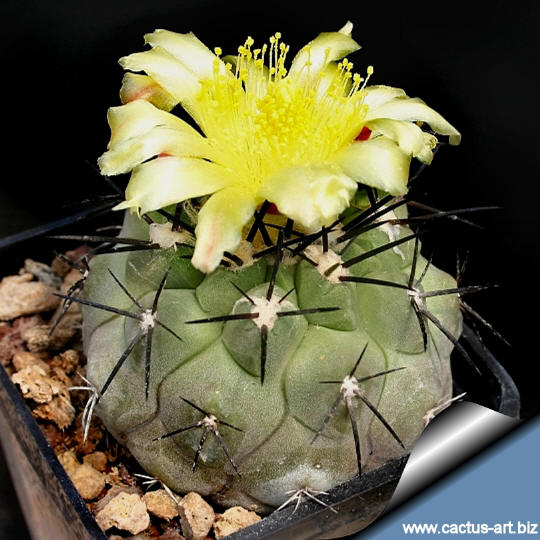
Copiapoa montana is a small plant
that produce lots of
glossy, pale yellow scented flowers throughout the summer.

 |
|


 Cultivation and Mail Sale