|
|
|
Coryphantha
tripugionacantha
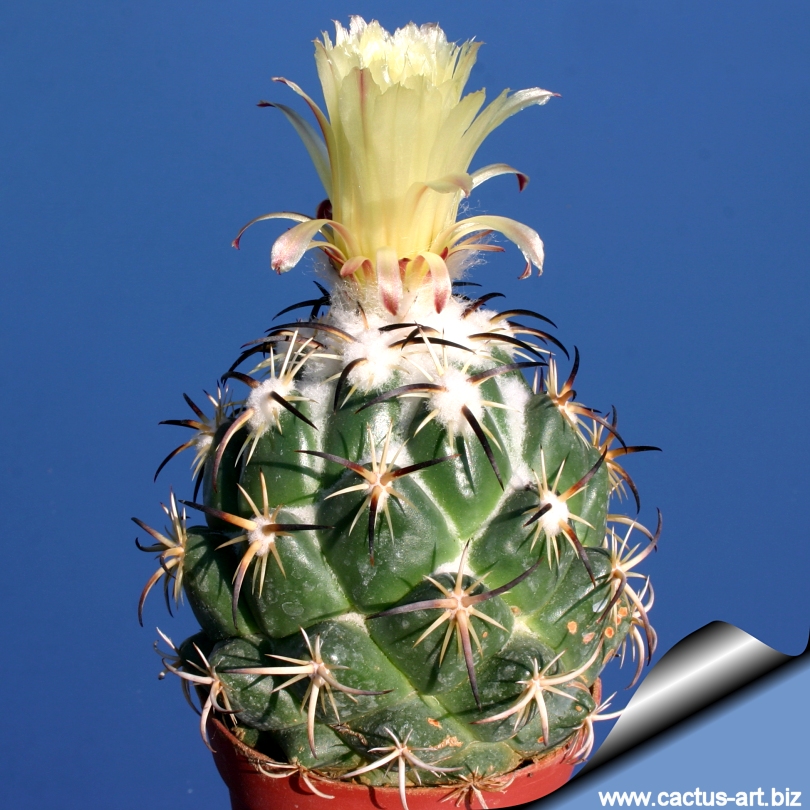
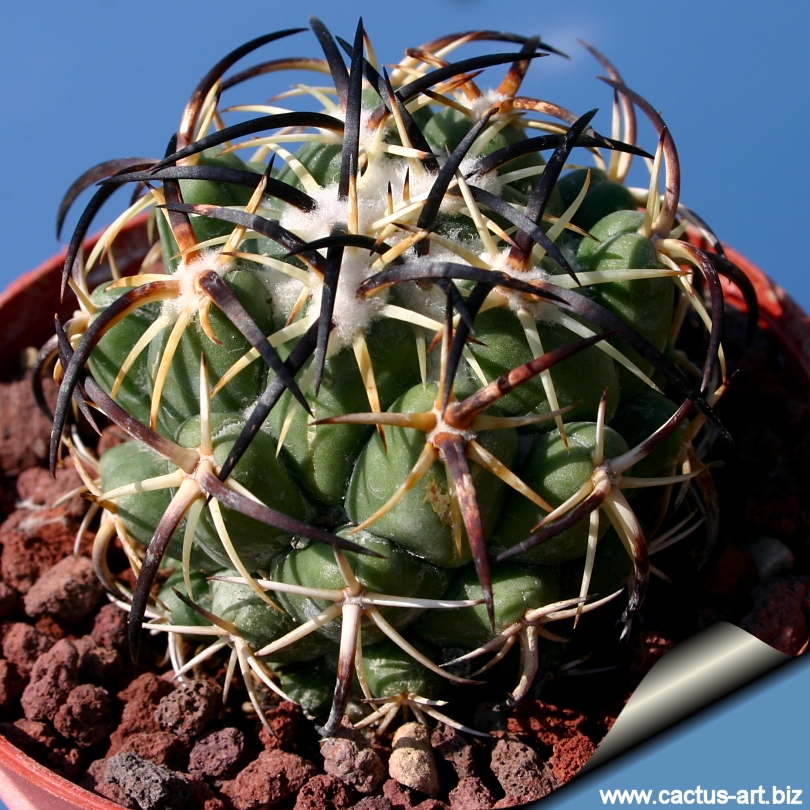
This is one of strongest spined species.
|
 |
 |
|
|
|
 |
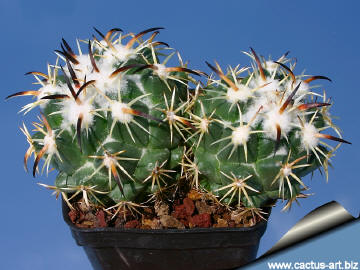
C. tripugionacantha belongs to the group of plants related to C. pallida,
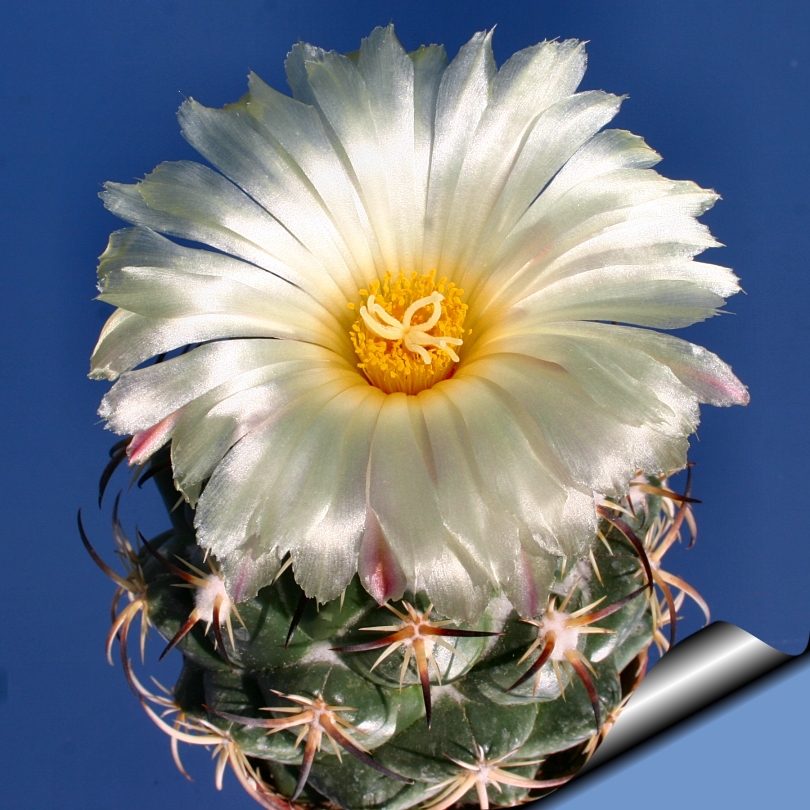
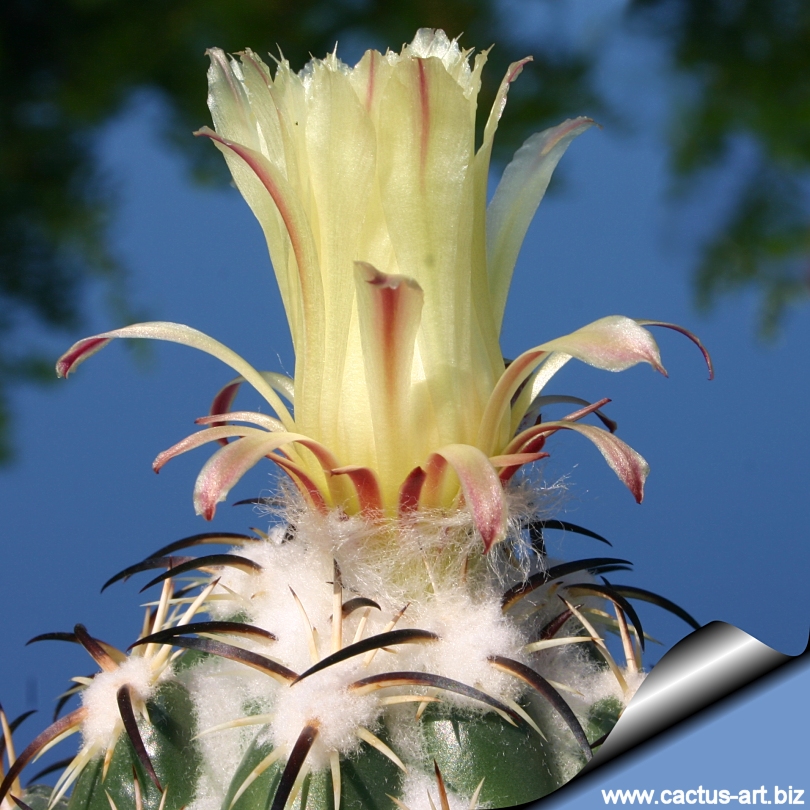
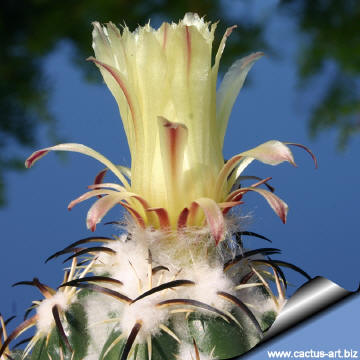
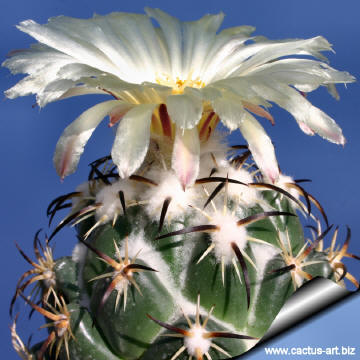
characterized by great yellow flowers without visible glands in the
furrows of tubercles. |
|
. |
 |
 |
|
.
|
 |
 |
|


Advertising
|
|
|
|
|
|
Family:
Cactaceae (Cactus
Family)
Scientific name: Coryphantha
tripugionacantha A. B. Lau 1988
Origin: Mexico (Zacatecas in the region of San Juan
Capistrano) At about 1000 m of elevation). It
grows
sympatrically with E. spinigemmatus and Mammillaria,
most possibly obscure, M. obscura.
The plant was found in nature by José Barron (a pupil of the local
missionary school).
Conservation status: Listed in
CITES appendix 2.
Etymology: The species epithet "tripugionacantha"
comes from three three strong, curved, flattened, sword-shaped central
spines.
|
|
Description:
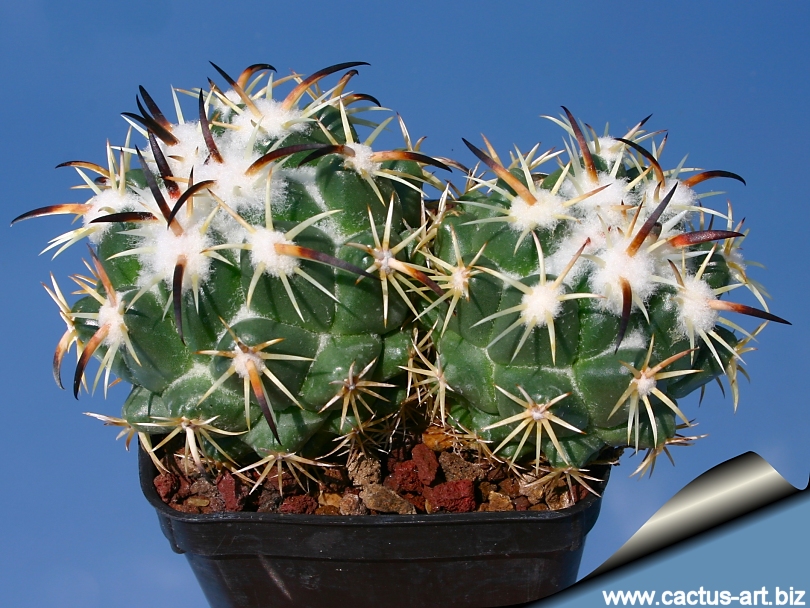
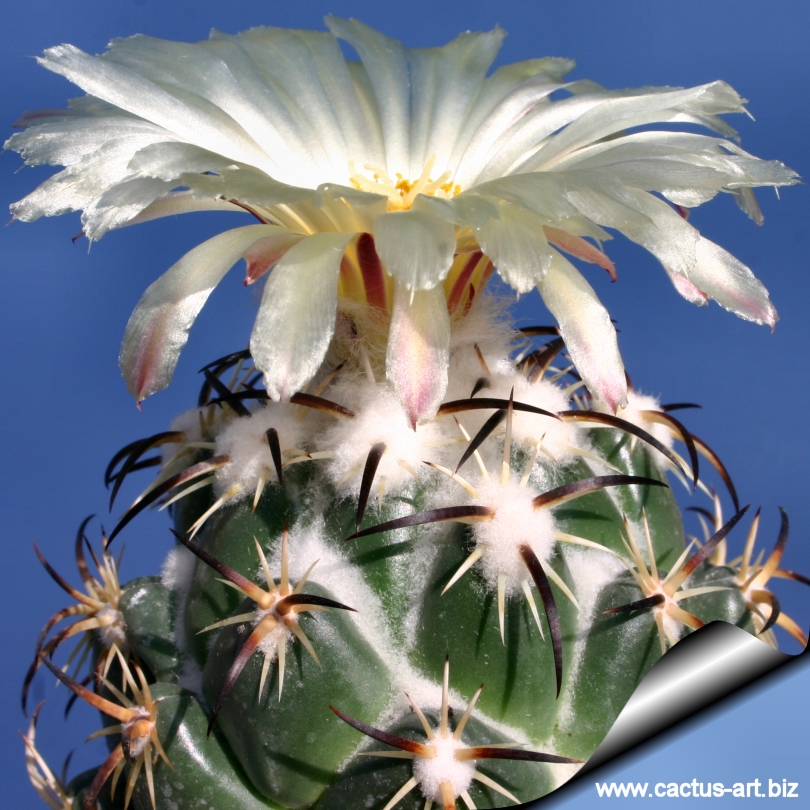
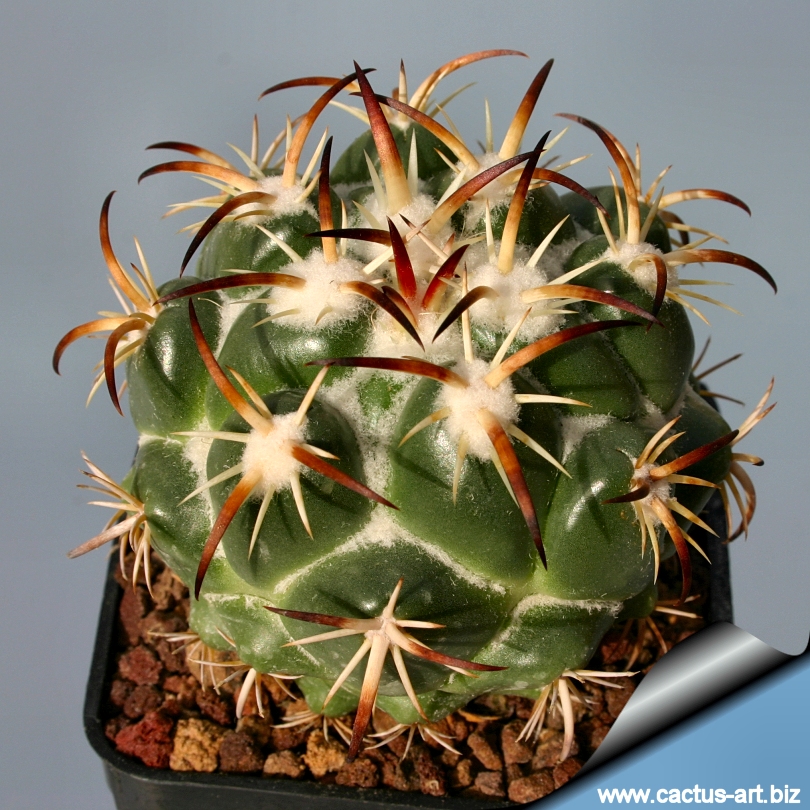
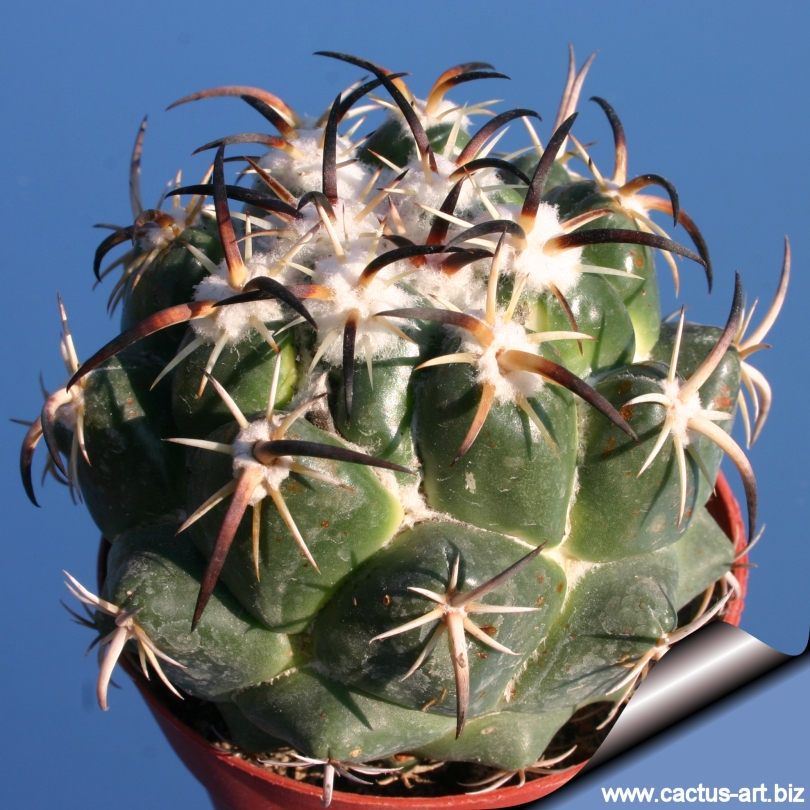
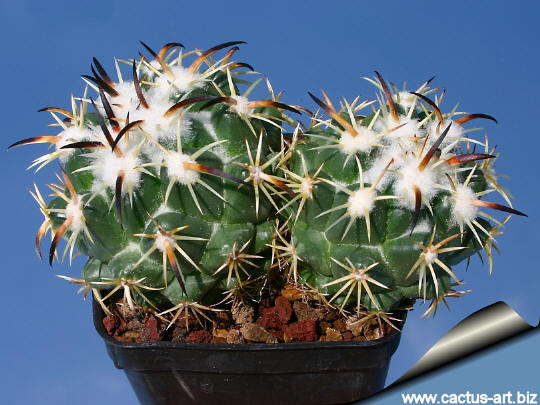
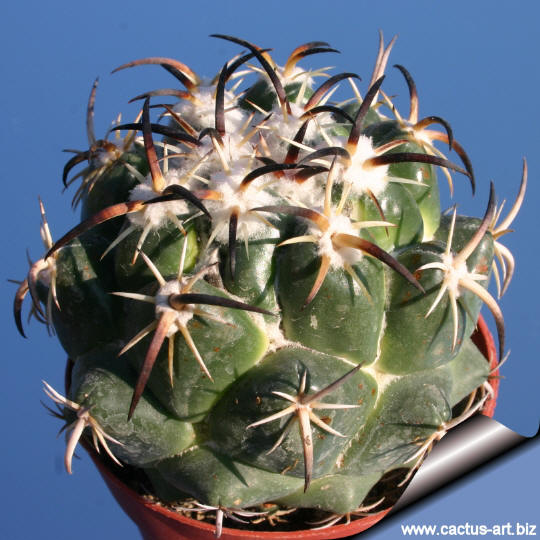
Usually solitary globose
cactus, but often small groups are formed by underground stolons.
Stem: Globose, somewhat depressed apically, blue green when
young, later dull green, up to 9 cm in height
and
width.
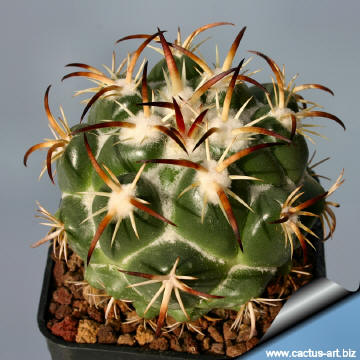
Tubercles: Flattened, more or less rounded, up to 20 mm high.
Axil is woolly at first, later naked, without glands.
Roots: It has a huge taproot.
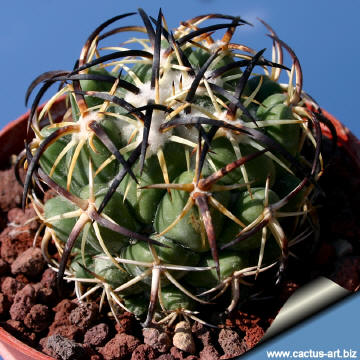
Central spines: 3, very stout, curved inward, grey with dark
tips, radiating. 18-20 mm, radiating, lower one longest.
Radial spines: 8-9 radiating, curved inward, unequal, brownish
grey, 8-9 mm long.
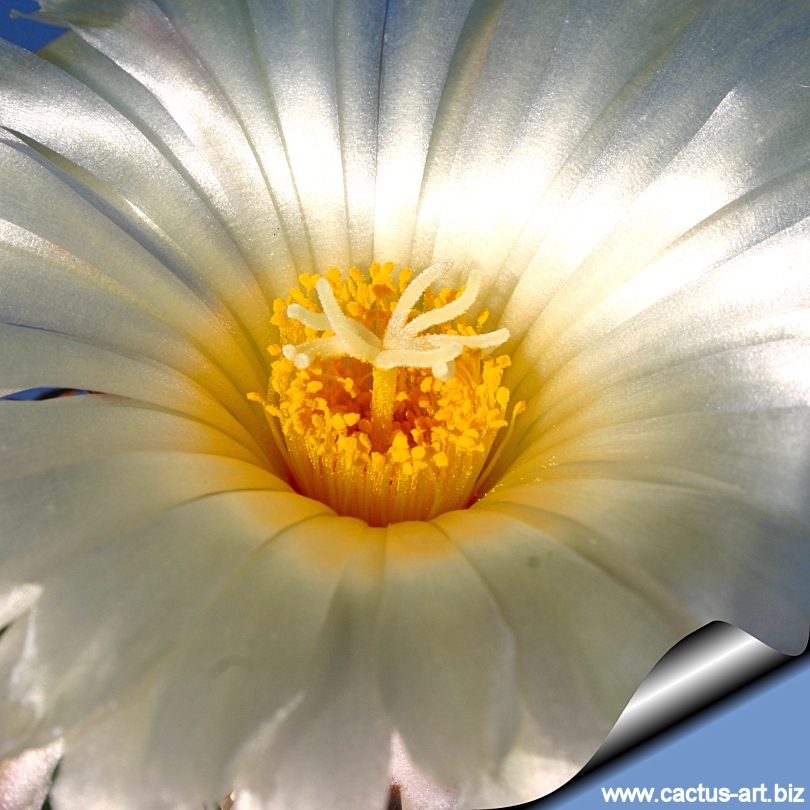
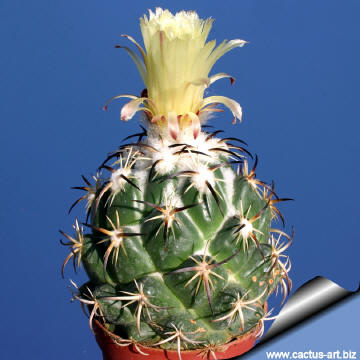
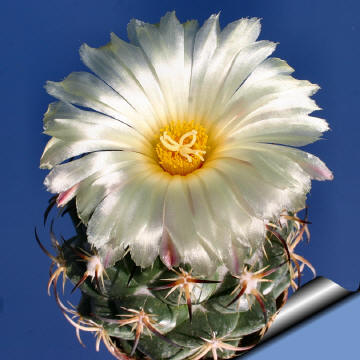
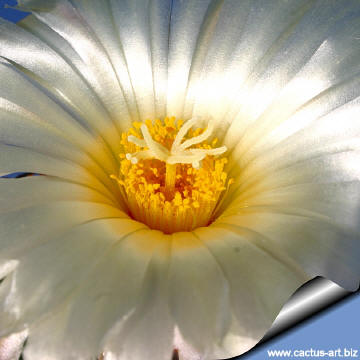
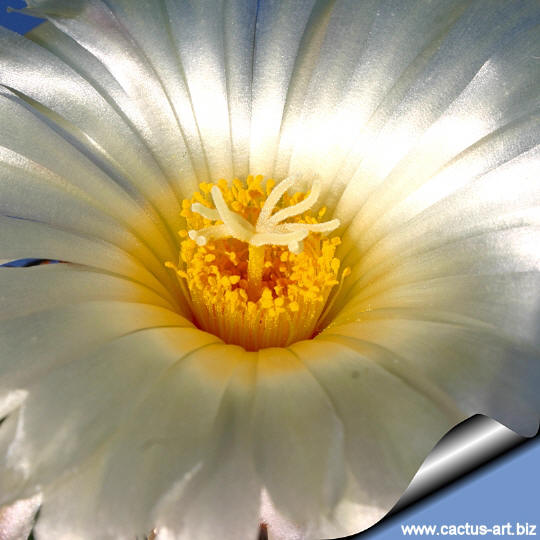
Flowers: Creamy yellow, 6-7 cm in diameter
Fruit: Oblong, juicy, opaque green. Up to 35mm long.
|
|
|
|
Cultivation: In culture C. tripugionacantha is without
problems, but it grows slowly and
rarely blooms. It does best in slight shade,
but does well in full sun,
too. It is sensitive to over-watering (rot
prone), and needs a very porous soil with good
drainage.
It flowers quite early, but needs about 8-12 years to reach
its typical, definite
aspect. It tolerates fairly low temperatures as long as it
is kept dry (hardy to -5° C or less, for short
periods of time).
Propagation: Propagation is
by seed. It also produces occasional
underground
stolons that can be detached from the mother plant. |
|


 Cultivation and
Mail Sal
Cultivation and
Mail Sal