|

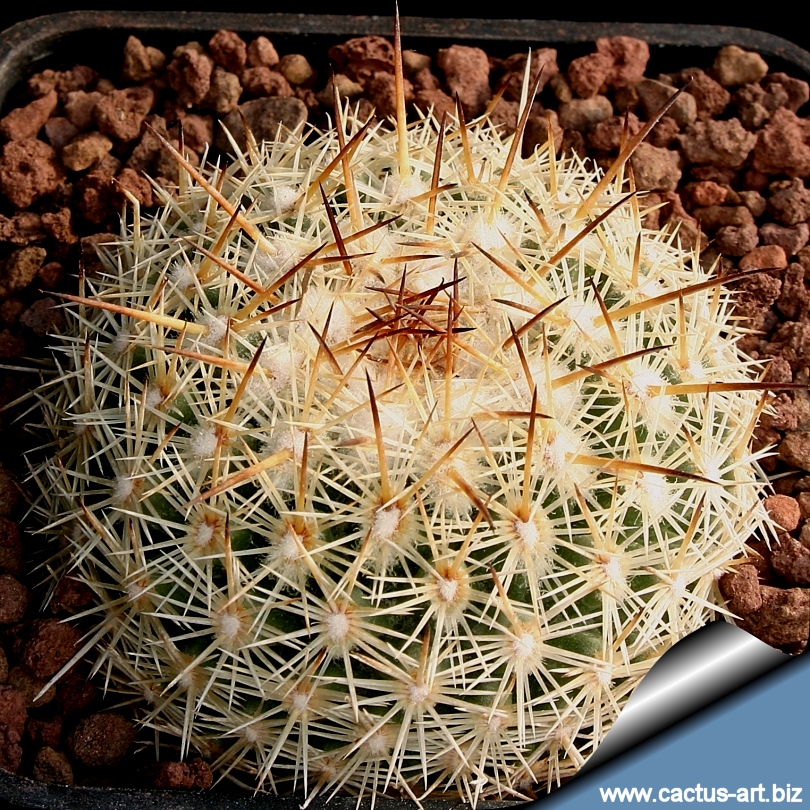
Coryphantha werdermannii PP200 Hundido, Coah. Mx.
After a youth-stage of 7 to 12 years, with purely
smooth radial spination suddenly strong central spines appear on the
top, which finally cover the whole body and which are responsible for
the wild look.
|
 |
 |
|
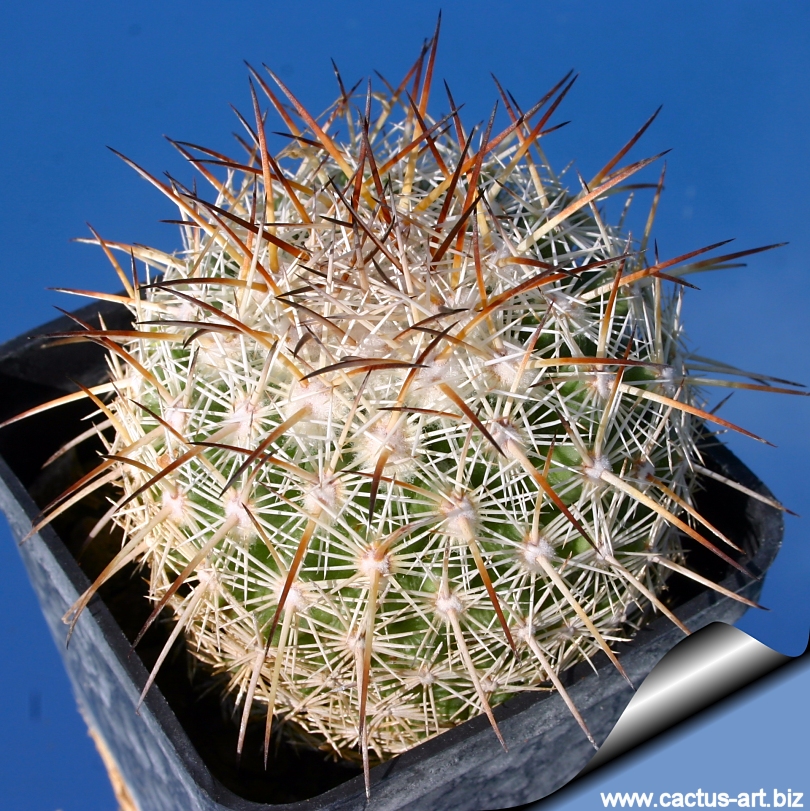
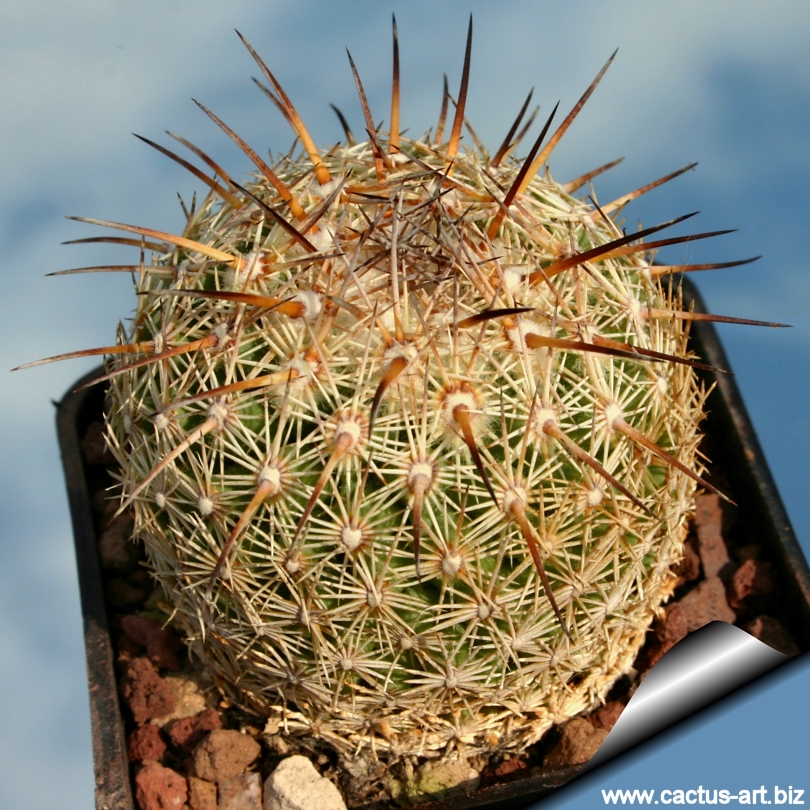
Spines shape and colour
are quite variable. |
 |
 |
|
. |
 |
 |
|
This species is one of those Coryphanthas
which pass a purely radial-spined long youth stage in which they are
already floriferous. Most of the plants after several years
develop the central spines, giving the plant its sea urchin
appearance.
|
|


Advertising
|
|
|
|
|
Family:
Cactaceae (Cactus
Family)
Scientific name:
Coryphantha
werdermannii Bödeker 1932
Published in: Monatsschr. Deutsch. Kakteen-Ges.
1:155. 1929
Origin:
The species is a regional endemic of Sierra Paila,
Coahuila. Reported from south of Cuatro Cienegas, near the road to San
Pedro de las Colonias in Coahuila over ca. 80 km along the road in a
depth of many kilometres.
Conservation status: Listed in
CITES appendix 1.
Habitat: This is the only Coryphantha included
in app. I of
CITES. In nature it is not endangered at all (a very conservative
estimate comes already to ca. 200'000 individuals on the gentle slopes
north of the Sierra de Paila) The species grows in 3 different habitat
types: Alluvial plain, gravely bajada and limestone rocks. Highest
population densities are observed on bajadas. These habitats are in
extremely dry regions.
|
|
Description: Dwarf cacti with juvenile globose
body with became ovoidal as they age.
Stem: To 8 (-30) cm tall, diameter about 6 cm.; Epidermis
grey-green. Woolly at the apex.
Areoles: Elliptical with white wool.
Spines: Centrals 2-4 clear brown (only in mature specimens);
radials 15-20 ( o more depending on plant’s age)
white.
Flowers: Quite large yellow 5-7 cm in diameter on mature
specimen
Roots: Very fine fibrous that extend just a few millimetres below
the ground surface, probably they also serve the absorption of dew
in this region poor of precipitations.
|
|
|
|

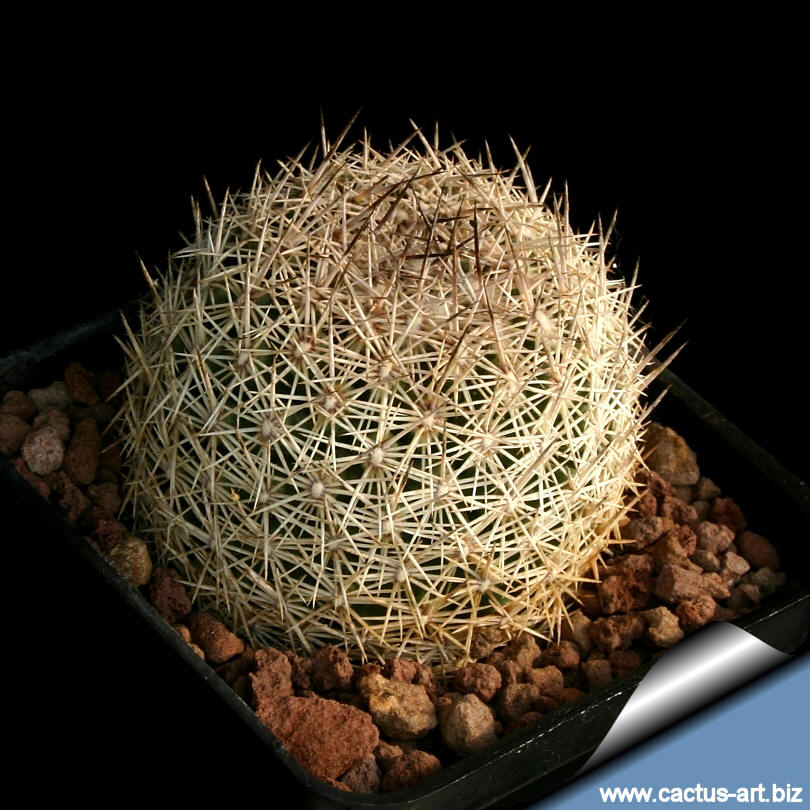
Coryphantha werdermannii PP200
A ten years old seedling but with still juvenile spination.
This species is very slow growing and not very willing to flower, in
fact they will flower only when they reach the age of 8 to 14 years.

Cultivation: Somewhat sensitive to overwatering (rot prone) and very slow-growing.
Because of it’s small size makes a great potted
plant specimen, usually reserved to experienced collectors,
Grow in a mineral
cactus compost, requires good
drainage.
Water in moderation, keep drier in
winter.
Full sun to
partial shade but is tolerant and prefers light shade during
the hot Summer months.. Provide very good
ventilation. Frost Tolerance: Hardy to - 5°C if kept dry.Propagation:
Seeds as usually shoots are not available.
|
|


 Cultivation and
Mail Sale
Cultivation and
Mail Sale