|
|
|
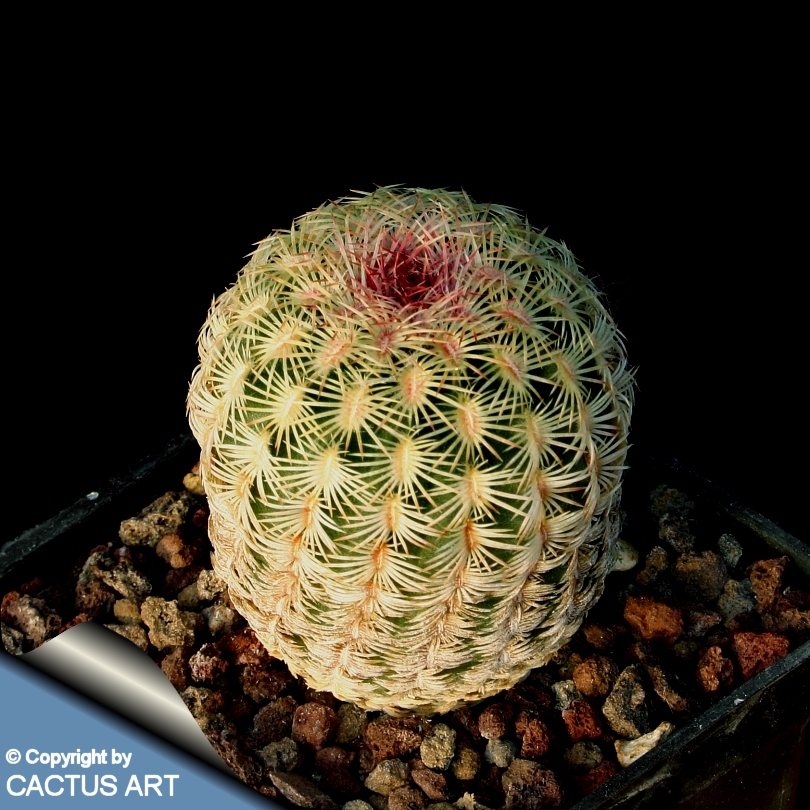
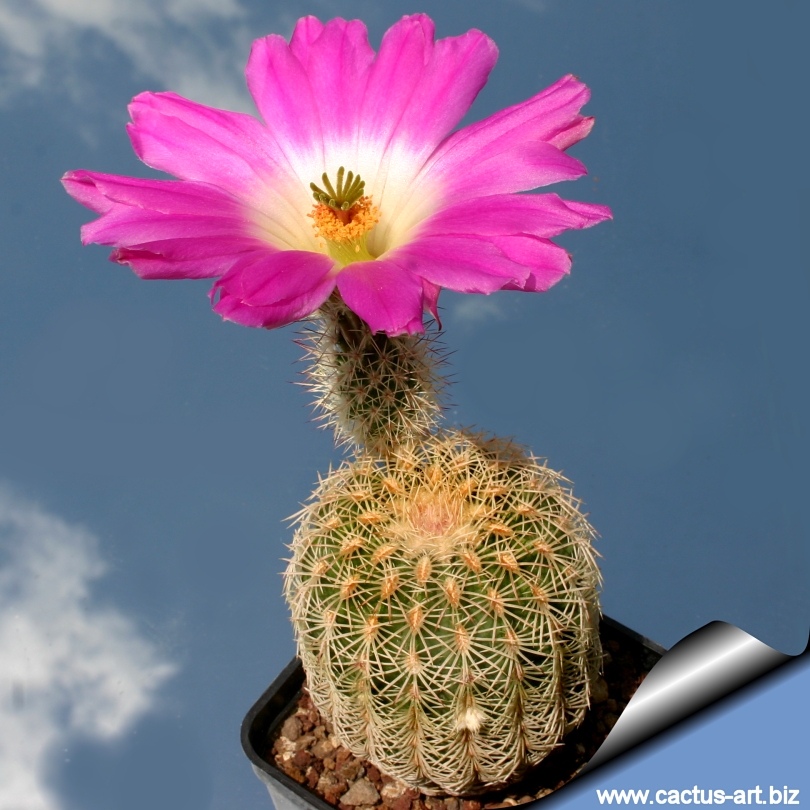
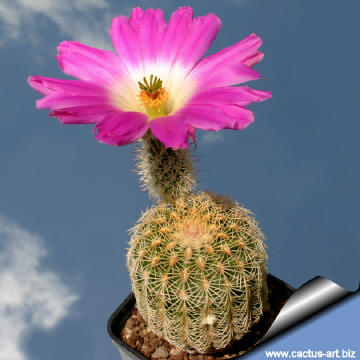
Echinocereus
rigidissimus GL501 Peloncillo Mts., NM..
A jewel of the Sonoran Desert, this species has a tight
lattice of tiny spines that hide the body of the plant.
|
|
Description: Solitary (very rarely few
branched)
Stem: erect, short cylindric 6 to 20 (-30) cm tall, 4-11 cm wide
Ribs: 2 18-23(-26), slightly undulate
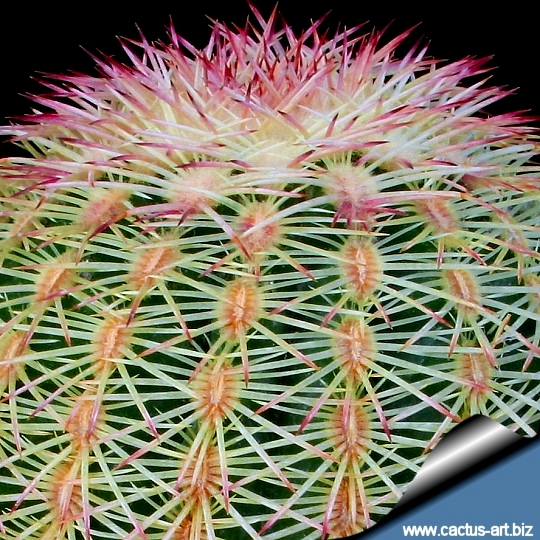
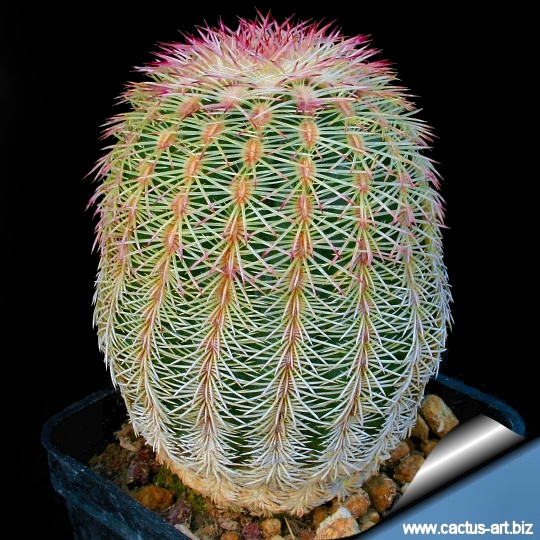
Spine: No central spines; 16 to 22 stiff pectinate radials,
appressed, straight or slightly curved toward stem, grey, reddish brown,
bright pink or pink-and-white in alternating bands of colour around
stem, 5- 10 mm long. Mature plants with a good light will generally have
red to deep pink spines that band the stems. Each year’s growth is
differentiated by differently coloured band of spines, hence the common
name Arizona Rainbow.
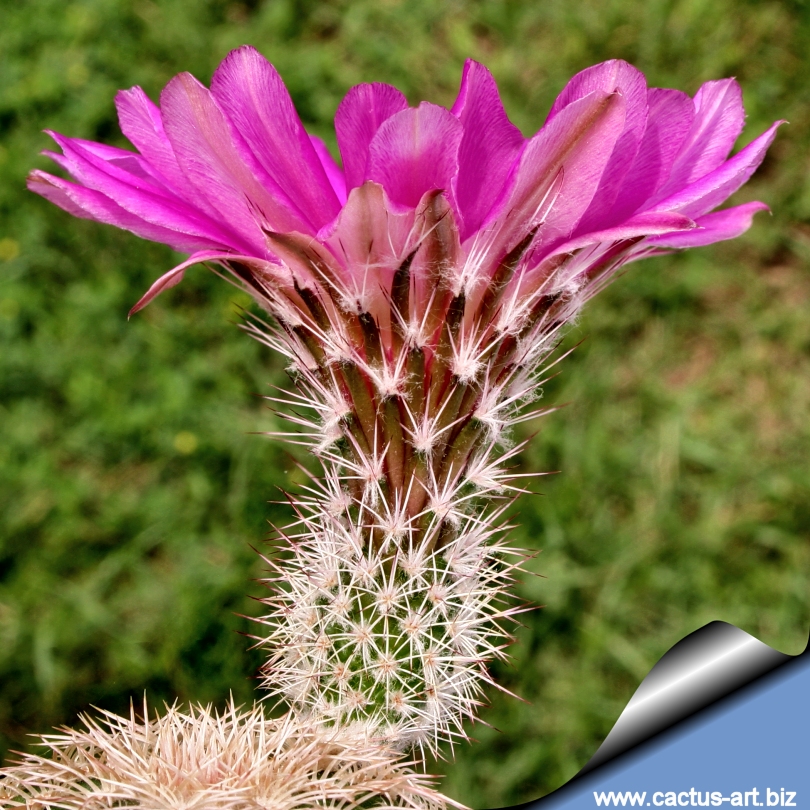
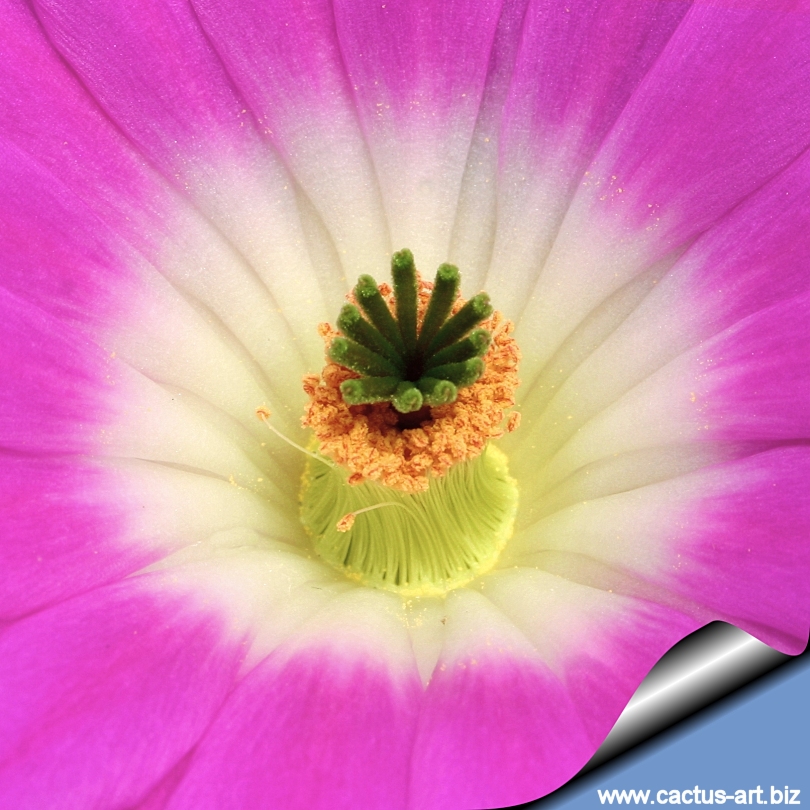
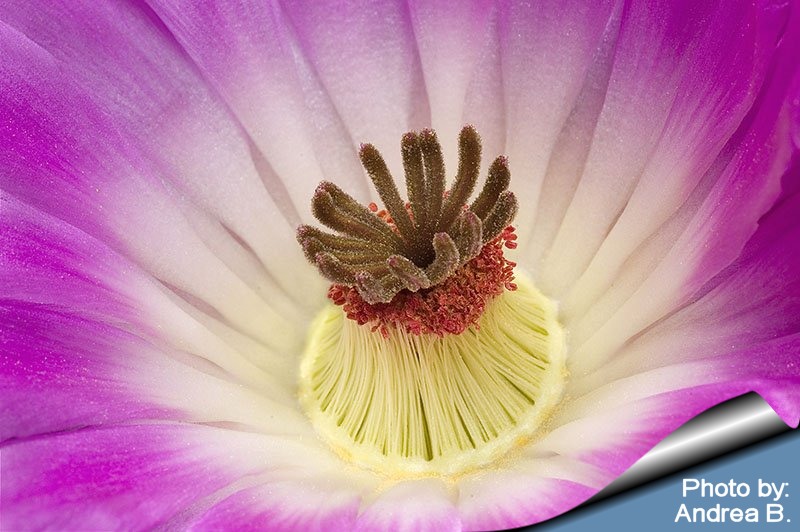
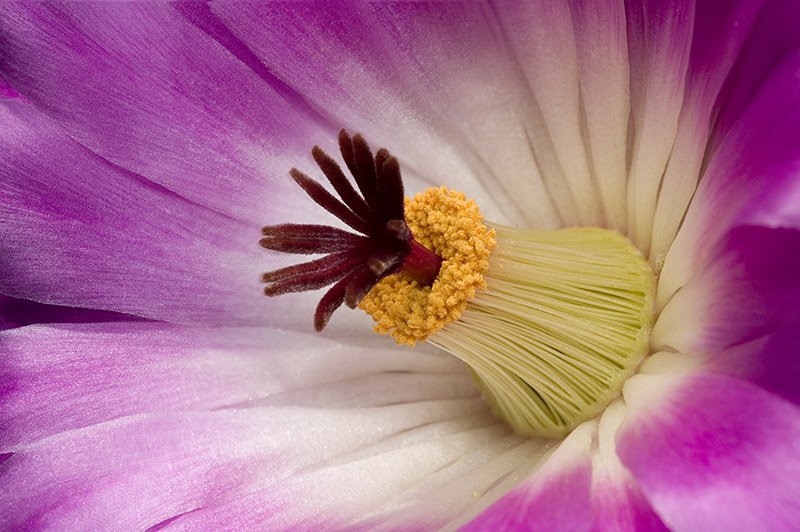
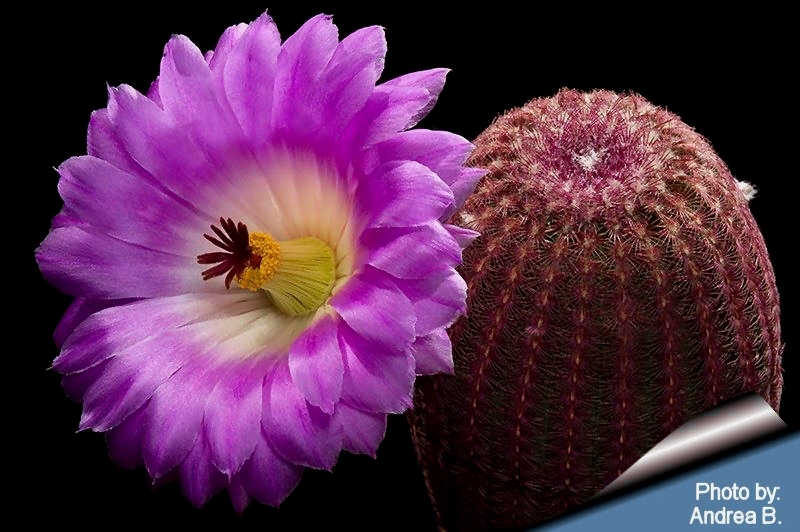
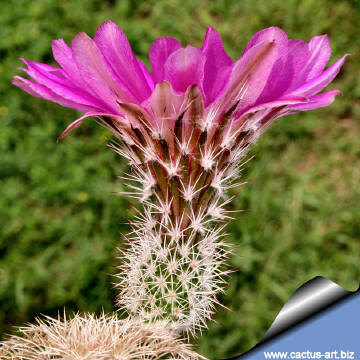
Flowers: Bright pink with much lighter throat, 6-7 cm long, up to
10 cm in diameter. It blooms in late spring summer (May-July).
Fruit: Globose, greenish or dark purplish brownish very spiny, 3
cm in diameter, pulp white. Fruiting 3 months after flowering
|
|
 |
 |
|
.
|
|
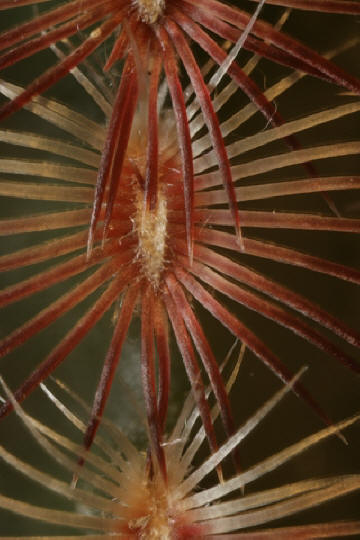
Photo &
©
copyright
by
Irwin Lightstone
Images may not be copied, downloaded,
or used in any way without the expressed, written permission of the
photographer.
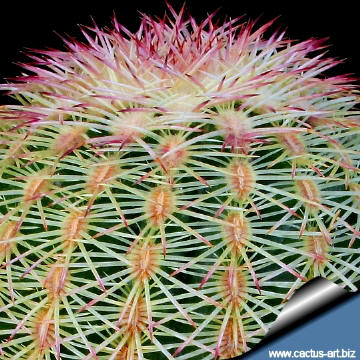 |
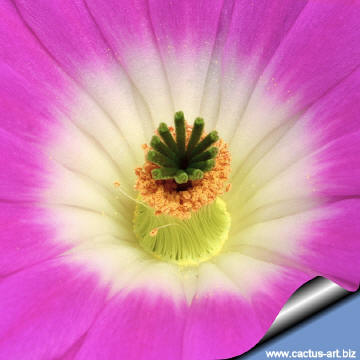

Photo and © copyright by
Andrea Italy
Photo and © copyright by
Andrea Italy |
|
Advertising
|
|
|
|
|
|
|
Family:
Cactaceae (Cactus
Family)
Scientific name: Echinocereus rigidissimus
(Engelmann) F. Haage
Published in: Special Preisverz. 13. 1897.
Common Name:
-
Arizona Rainbow
-
Hedgehog Cactus
-
Cabeza de Viejo
Origin:
USA (south-eastern Arizona,
south-western New Mexico), Mexico (northern Sonora, north-western
Chihuahua)
Habitat: Grows on gravely hills, steep canyon sides, semidesert
grasslands, oak woodlands, interior chaparral, igneous substrates;
1200-1600 m. The reported habitat preference for limestone is erroneous;
this species is a calcifuge, preferring soils poor in lime and usually
acid.
Conservation status: Listed in
CITES appendix 2.
Synonyms:
- Cereus pectinatus Engelmann var. rigidissimus
Engelmann
Published
in:Proc. Amer. Acad. Arts 3: 279. 1856;
- Echinocereus pectinatus var. rigidissimus
(Engelmann) Rümpler
NOTE: Echinocereus rigidissimus,
lacking central spines, belongs to the
E. reichenbachii group, unrelated to the superficially
similar E. pectinatus group, which has at least
microscopically visible stubs of central spines. It sometimes occurs
with E. pseudopectinatus but without evidence of
hybridization.
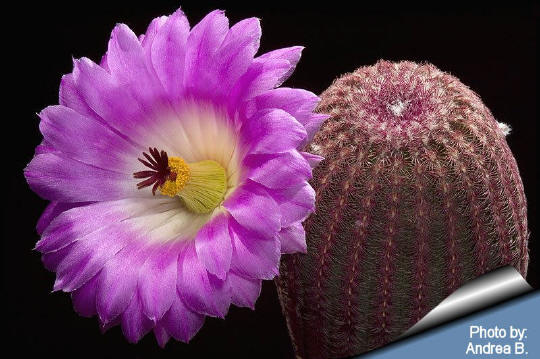
Photo and © copyright by
Andrea Italy
Echinocereus rigidissimus v. rubispinus
(L088 Sierra Oscura, W. Chihuahua, MX)
Huge 7 to 10 cm wide, shocking pink
with white-eyed flowers.
|
|
|
|
 |
|
Cultivation: The E.
rigidissimus is not the easiest
cactus to grow, but when grown well it’s very attractive. Rot easily it is sensitive to overwatering (rot prone),
so perfect soil drainage is a must. It prefer a
neutral to slightly acidic compost with plenty of extra grit. Best
if watered with rain water and given an occasional tonic of sequestrated
iron. In the summer they need an airy location in
bright sun; well watered when it's hot. To
achieve the best spine colors give these plants lots of sun.
In the winter light, cool, and absolutely dry conditions.
Very cold resistant above approx -12C or
less for short periods of time. In mild climate
they grow well when planted freely outside in well-drained soil.
Propagation: Seeds.
Photo of conspecific taxa, varieties, forms and
cultivars of Echinocereus rigidissimus:
The flowers on both are bright pinkish-red or magenta
or red with white throats.

 |
|


 Cultivation and
Mail Sale
Cultivation and
Mail Sale