|
Description: E.
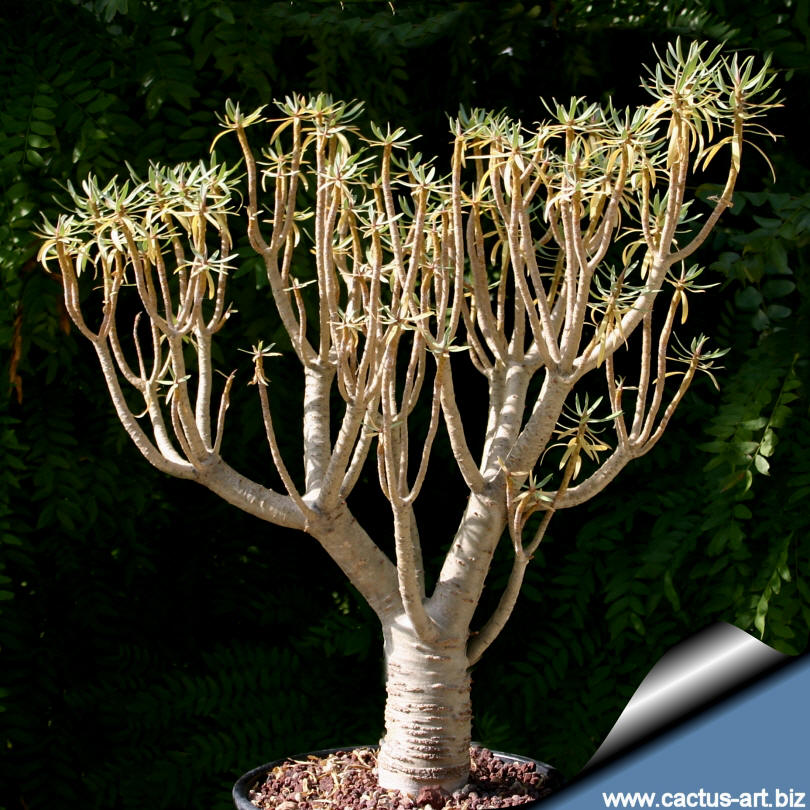
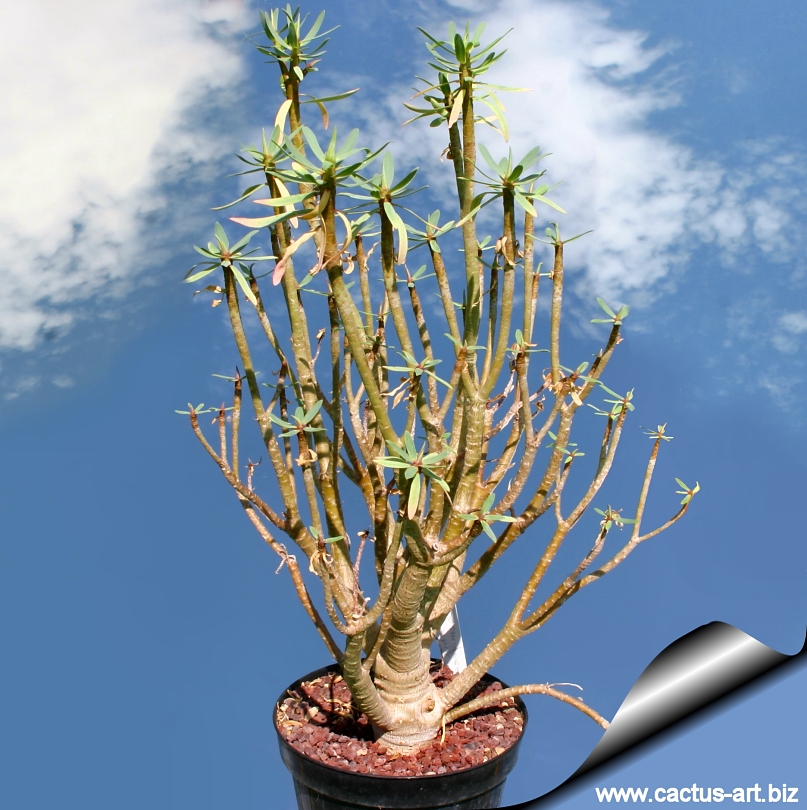
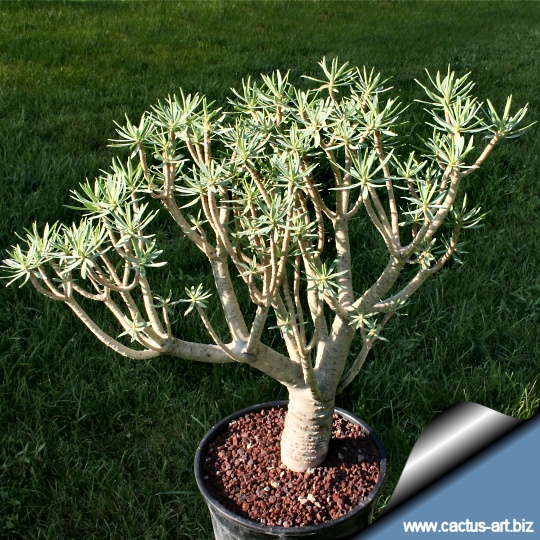
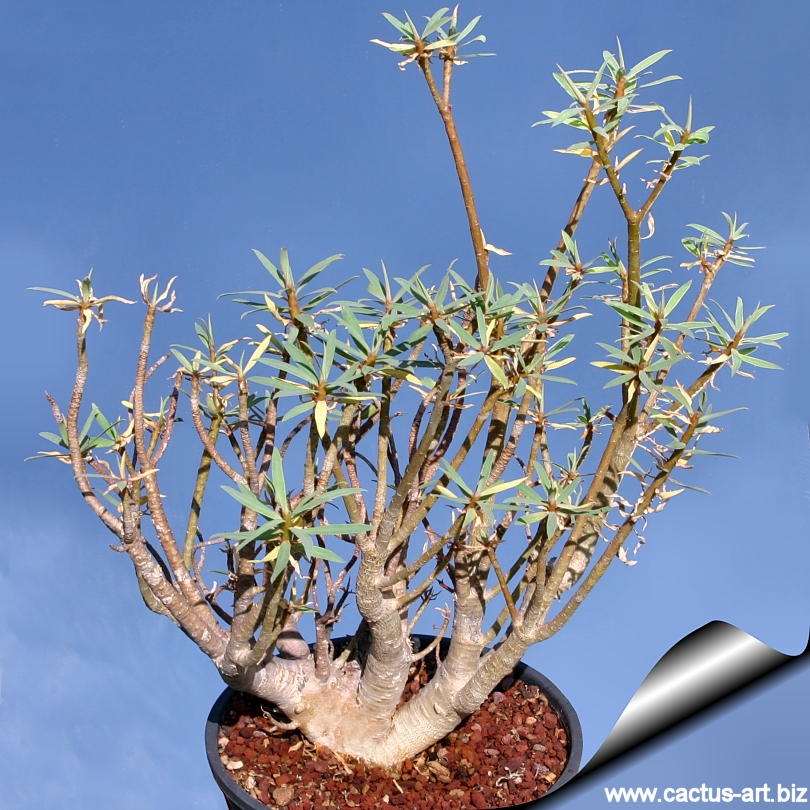
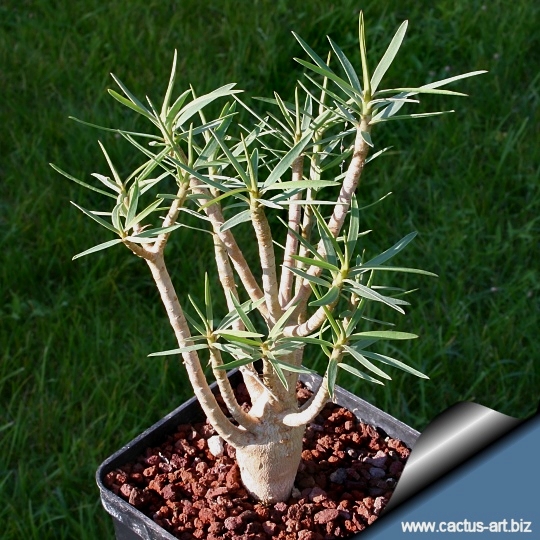
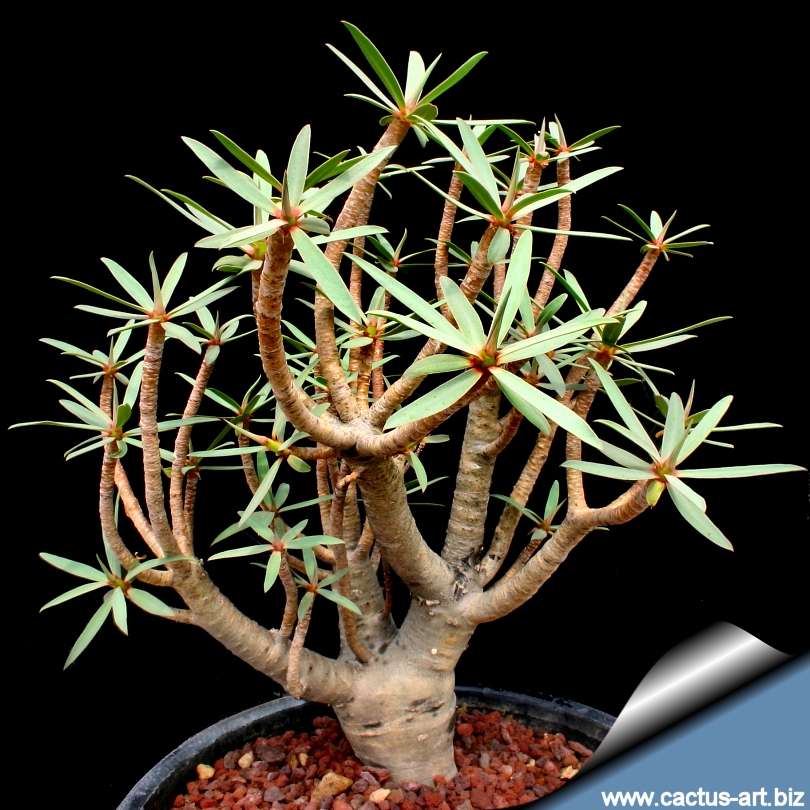
balsamifera forms intricately branched, rounded shrub of variable
height from very short bushes hardly rising above the ground to small
trees up to 5 m tall. They are pretty variable
where leaf characters and stems development are concerned.
Stems: Thick, semisucculent, gnarling, spineless, approx 1 cm in
diameter, covered in transversely elongated leaf-scars, dull pastel,
grey or terracotta coloured, branching , with the base
stalks becoming very thick. At the minimum injure it give out a
pungent-smelling white
latex.
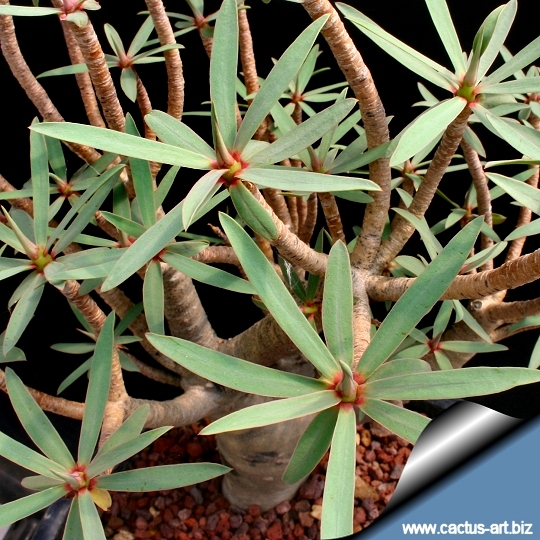
Leaves: Up to 80 mm long x 4-8 mm wide, attractive, sessile,
linear-lanceolate to long-oval shaped green to glaucous, clustered at
branches tips.
Flowers: The inflorescences are
terminal cymes usually reduced to a single subsessile cyathium up
to 6 mm Ø
on each branch which stay central above light yellowish-green
pseudo-petals
Fruit: Large capsule approx 9x10 mm wide, viscid, green becoming
pinkish reddish-green, shallowly lobed, glabrous or hairy, subsessile.
Seeds: Subglobose 3 x 2,8 mm wide.
Subspecies:
- E.
balsamifera ssp. balsamifera
Up to 5 m tall Origin Canary island, West Africa, Mauritania, Senegal,
Niger.r
- E.
balsamifera ssp. adenensis
More compact, up to 1 m tall leaves obovate up to 2,5 cm long. Origin:
Arabian peninsula, Sudan (Red sea hills) North Somalia at an altitude
ranging from 900 to1550 m.
|


 Cultivation and Mail Sale