|
|
|
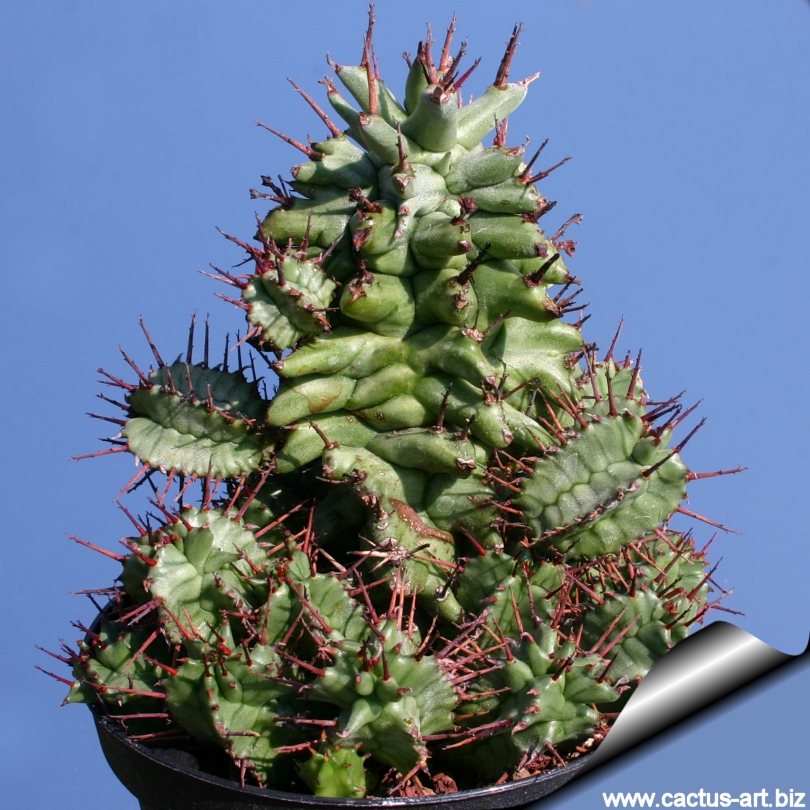
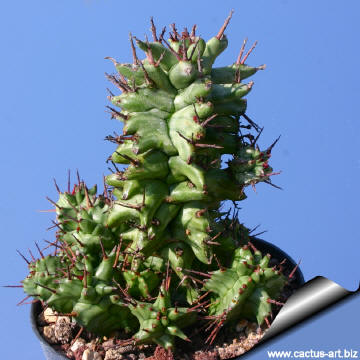
Euphorbia horrida 'mostruosa'
|
 |
 |
|
. |
 |
 |
|
Advertising
|
|
|
|
|
Family: Euphorbiaceae
Scientific name:
Euphorbia horrida 'mostruosa'
(= monstrosa, mostruose, monstrous)
Origin:
Garden origin (Nursery
produced cultivar)
Conservation status: Listed in
CITES appendix
|
|
Description:
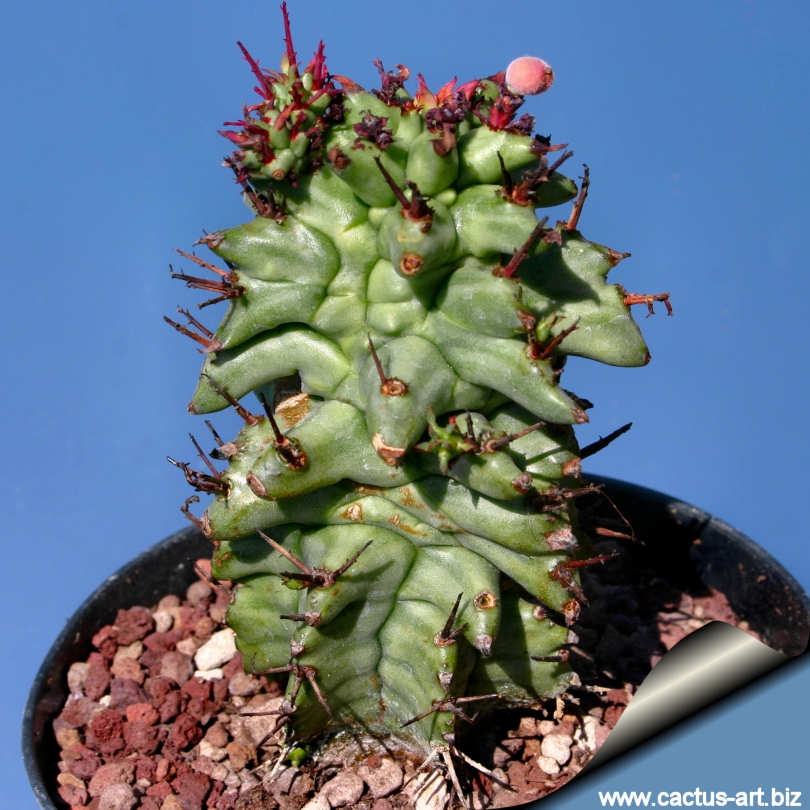
This
cultivar is easily distinguishable and shows many growing
variations
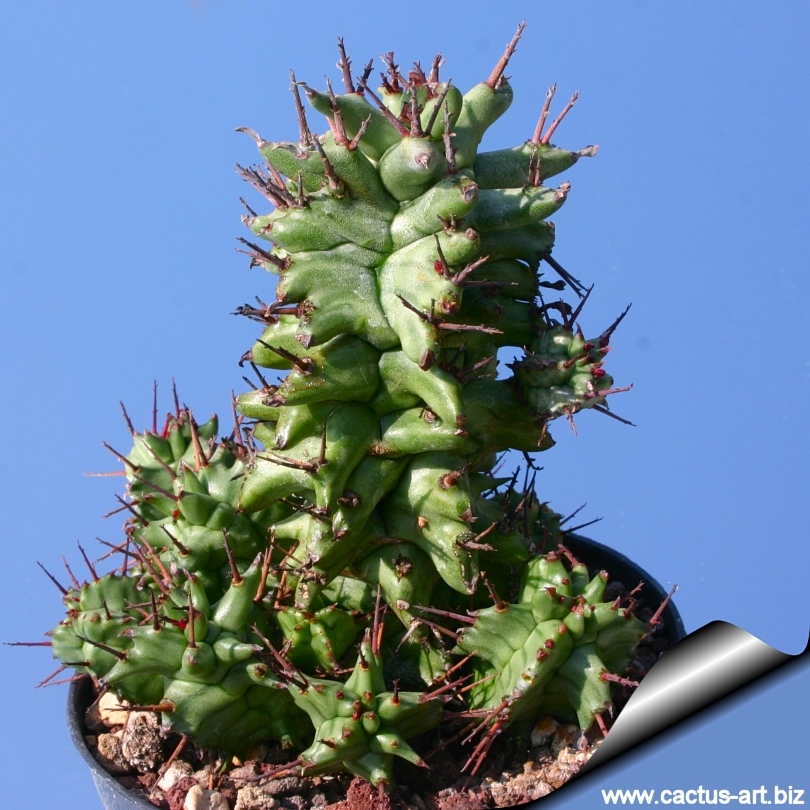
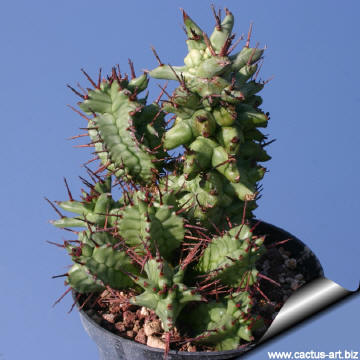
with different monstrous shapes. The stems slowly branch from the base,
forming irregular mounded clumps with more than 50 heads.
Stems: Rubbery textured green, some only a few centimeters
across, the plant looks more like some marine creature than a Euphorbia.
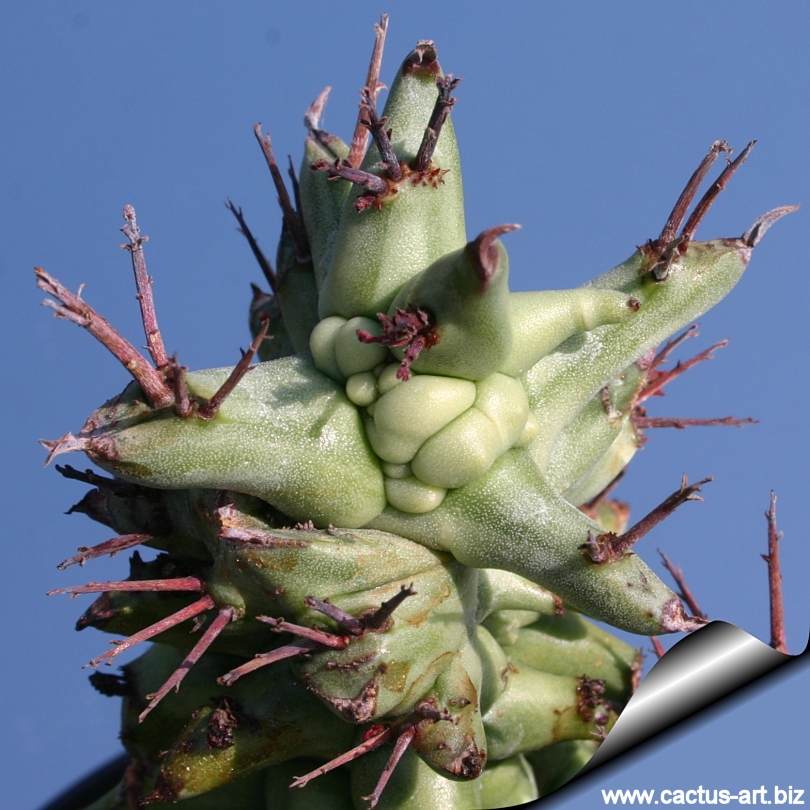
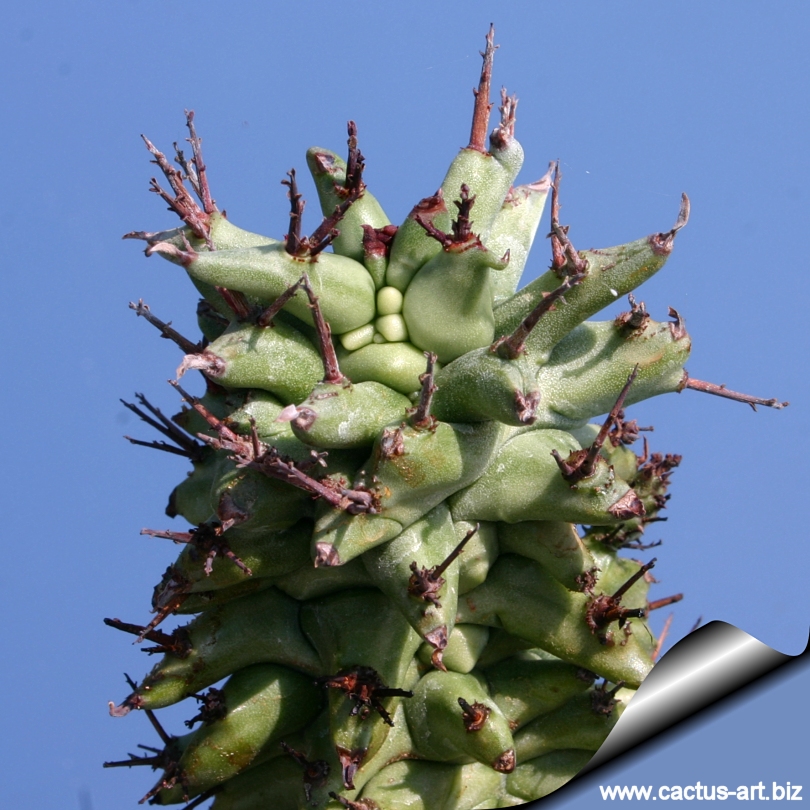
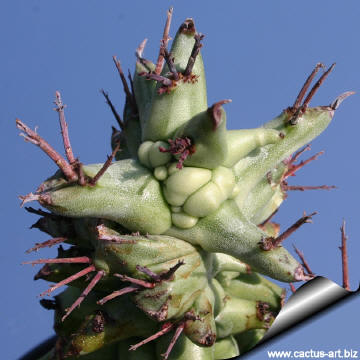
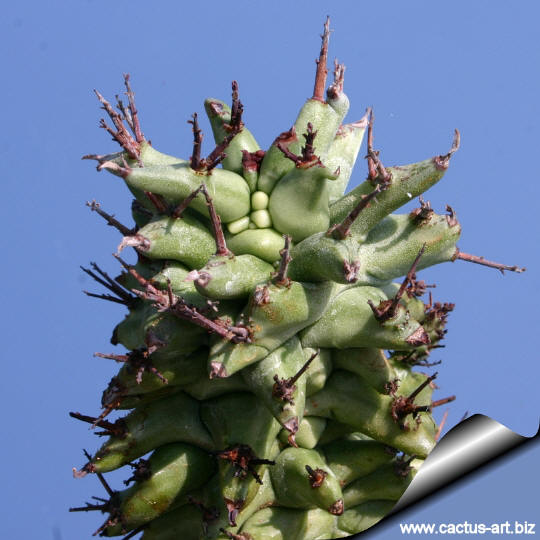
Ribs: Irregularly shaped, with flattened edges and long pointed
tubercles.
Spines: Few normal spines (typical for the species) are located
mainly on the upper part of the tubercles (not on the tip) The spines up
to 25mm are actually the dried remnants of its flower stalks, and are
very rigid.
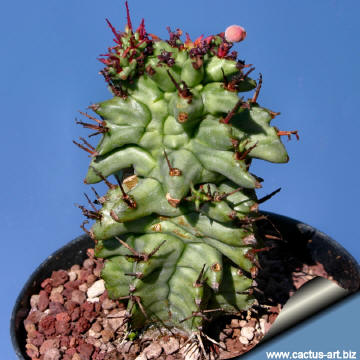
Flowers: Some green and yellow
flowers (followed by fruits and seeds) are produced on the stem's apices
in spring and summer.
|
|
|
|
Cultivation:
It is a pretty easy cultivar that
grows well on its
own roots.
It grows well in a very draining mineral potting substrate, but it
isn't picky about soil. The area to which this plant is native receives
rains in both winter and summer, so it can be watered moderately all
year around (except in the coldest month of the winter, as it rot easily
especially if overly wet. During the summer, they enjoy average feeding
and watering. Protect from
frosts
and
freezes.
But
mature healthy plants can tolerate temperatures down to -4°C. It likes
light shade to full sun, but hates the full sun in summer. Keep
well
ventilated,
as it is prone to
root rot.
Propagation:
Basal
suckers (It branches enthusiastically, and
basal suckers are readily available). if you remove an offset, remember
to let it dry for a week or so, to let the wound heal (cuttings planted
too soon easily rot before they can grow roots). It is better to wash
the cut to remove the
latex.
Warning: As with all other Euphorbias when a plant get damaged it
exudes a thick white milky sap known as latex. This latex is poisonous
and may irritate skin. Pay extreme attention not to get any in your
eyes or mouth.
Cultivated plants must be handled carefully.
Photo of conspecific taxa, varieties, forms and
cultivars of Euphorbia horrida.


|
|


 Cultivation
and Mail Sale
Cultivation
and Mail Sale