|
|
|
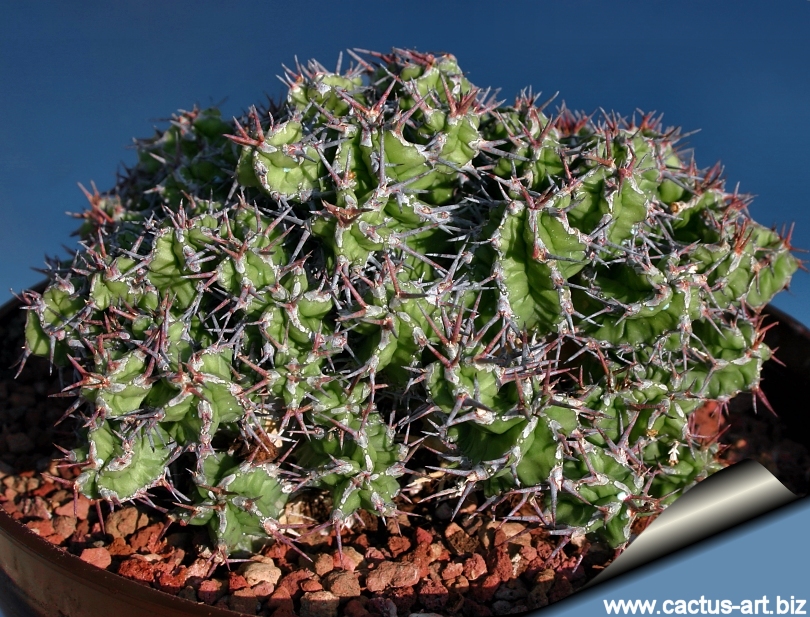
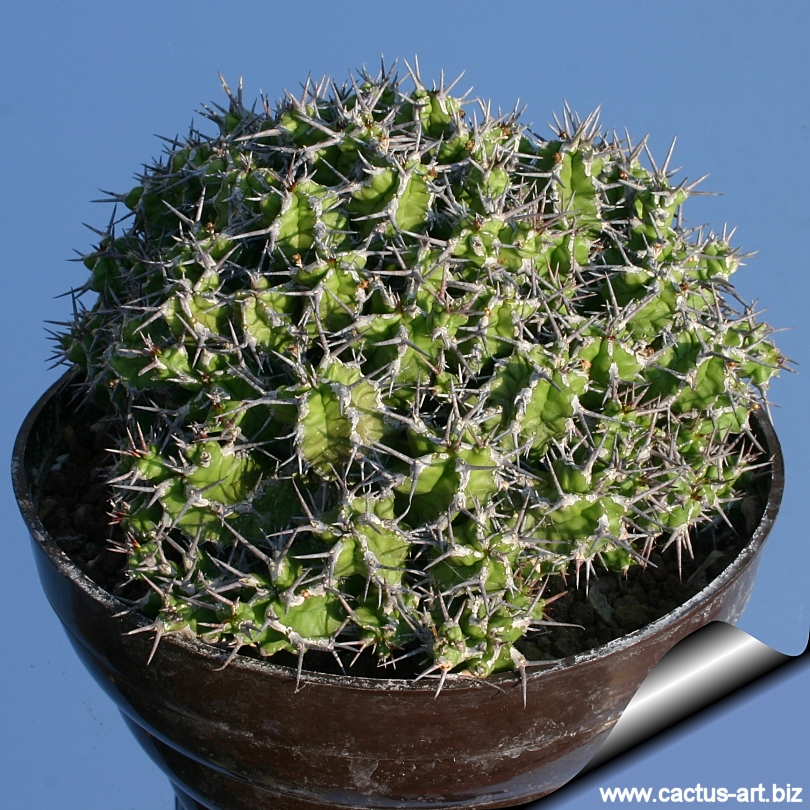
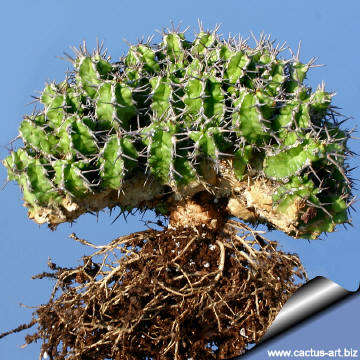
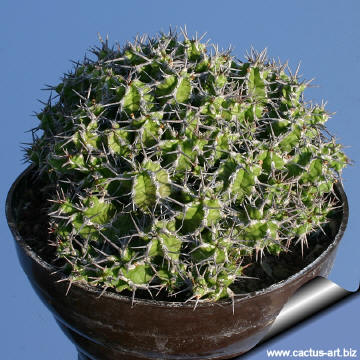
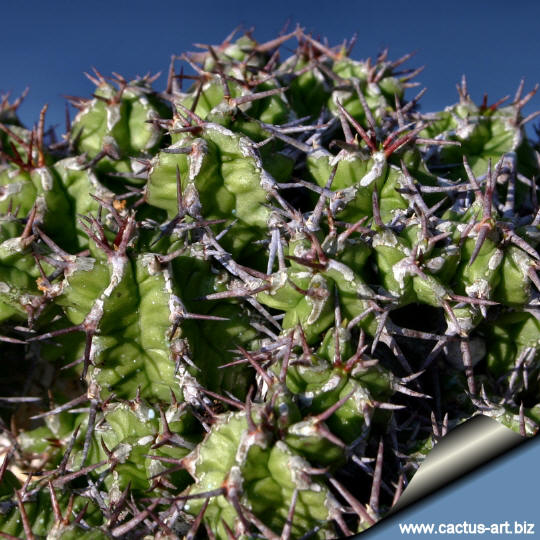
Euphorbia mitriformis 'dwarf form'
This is a beautiful compact species that provides a magnificent
view, it can form a magnificent dense cushion with thousand of small
heads. Unfortunately these plants are seldom found in collections.
|
 |
 |
|
. |
 |
 |
|
Warning: As with all other Euphorbias when a plant get damaged it
exudes a thick white milky sap known as latex. This latex is poisonous
and may irritate skin. Pay extreme attention not to get any in your
eyes or mouth.
Cultivated plants must be handled carefully.
|
|


Advertising
|
|
|
|
|
Family: Euphorbiaceae
Scientific name: Euphorbia
mitriformis P.R.O. Bally & S. Carter
(CSJA 48(3): 127-129, ills., 1976)
Origin: Somalia (Saanag region)
Habitat: Rocky, limestone slopes
with very open shrubs. Altitude (m) 1200-1600.
Conservation status: Listed in
CITES appendix 2.
Common Name: Dwarf Pincushion Euphorbia
|
|
Description: Low growing, dense, compact, clustering succulent stems
that in nature forms impressive rounded or conical mounds up to
40(-100) cm tall and 1m wide. Each mound is composed
of a lots of little heads of just 1 to 1,5 centimetres in
diameter.
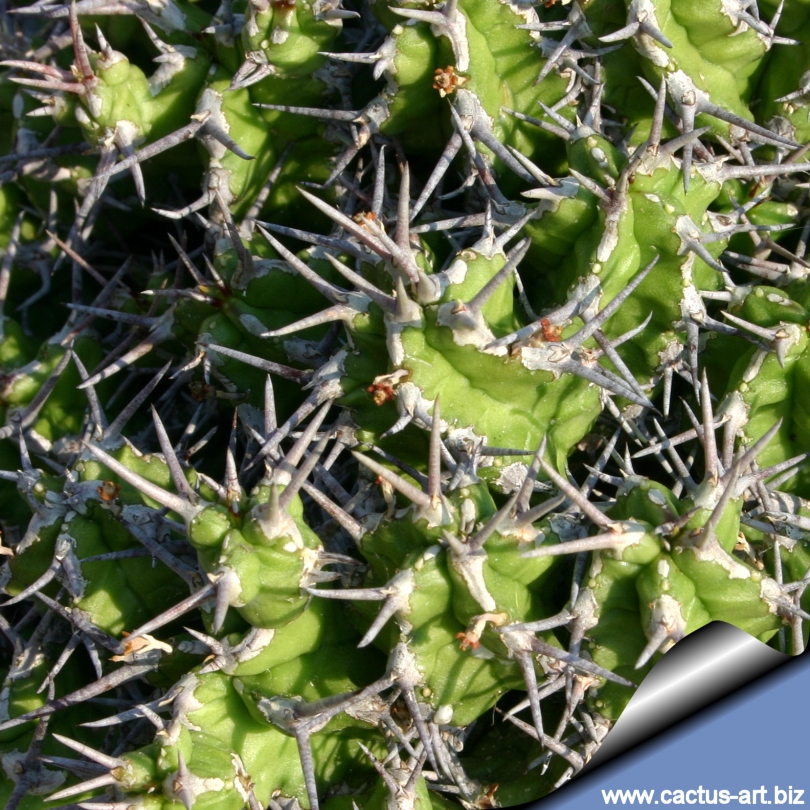
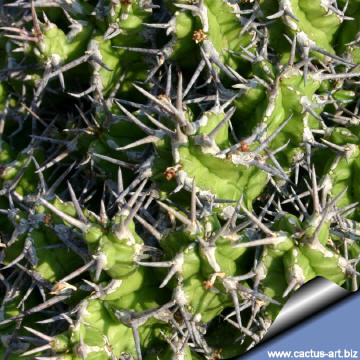
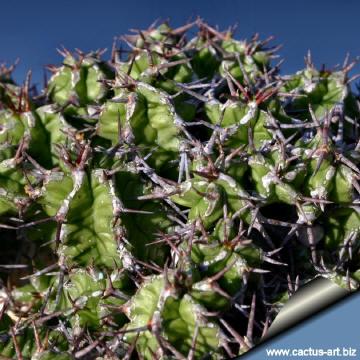
Stems: Branches up to 10 cm, deeply 5-angled not exceeding 1,5 cm
of width, angles with shallow teeth to 5mm apart. The
most common form in cultivation (depicted in this page) forms a
globular cushion that seldom exceeds
30 cm in height.
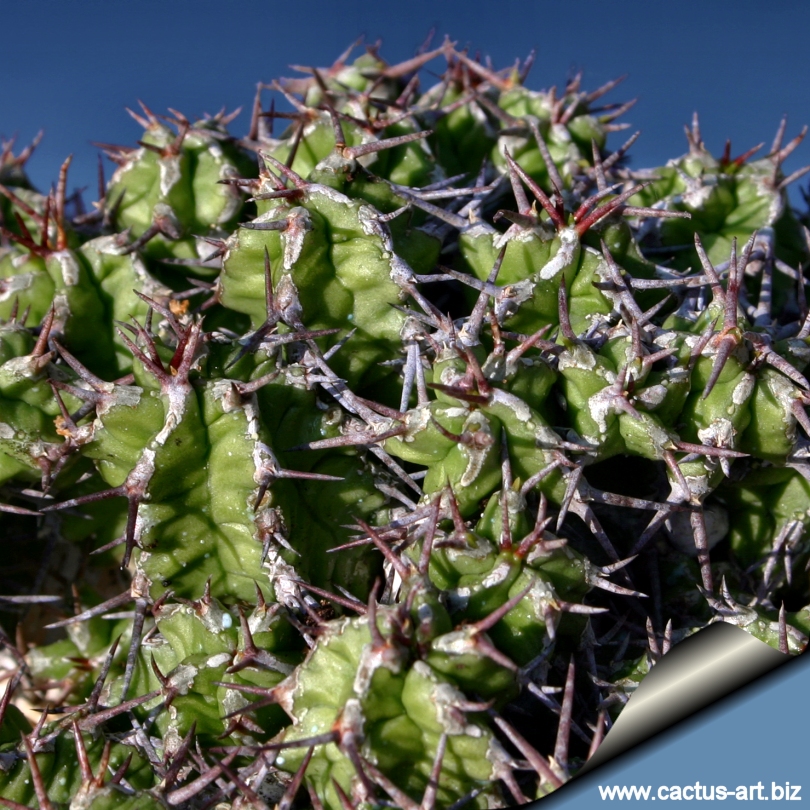
Spines: 2-25 mm long, grey to reddish
(depending on season). The basal shields of the spines are
a pale greyish oblong, ± triangular 6x2 mm, irregularly angled between them,
closely set apart, to form an almost continuous margin.
Flowers: Cyathia red on solitary cymes, 1-3 frocked up to 2,8 mm
in diameter, peduncles 2mm long.
Roots: fibrous
Note: Euphorbia mitriformis is a relatively variable
species. The plants from different areas area differ slightly, one
from another: Some form dense cushions of very small branches up to 30
cm in height; others
have fewer and longer stems, up to 1 m high. (The
small one is the more beautiful, and appreciated in cultivation)
|
|
|
|
|
Cultivation: It is a slow
growing but easy species, it grow well in a very draining mineral
potting substrate but it isn't picky about soil. It can be watered
moderately all year around (except in the coldest month of the winter, as
it rots easily (especially if
too wet). During the summer they enjoy
average feeding and watering. They do need a lot of light to keep their
compact growth-form, but different clones vary in their tolerance of
full sunshine. It responds well to warmth, ith its active growth
period in the late spring and summer months.
Very tender; protect from
frost.
Propagation: It is
propagated by cuttings (It branches enthusiastically and offsets are
readily available) if you remove an offset, remember to let it dry for a
week or so, letting the wound heal (cuttings planted too soon easily rot
before they can grow roots). It is better to wash the cut to remove the
latex.
|
|


 Cultivation
and Mail Sale
Cultivation
and Mail Sale