|
|
|
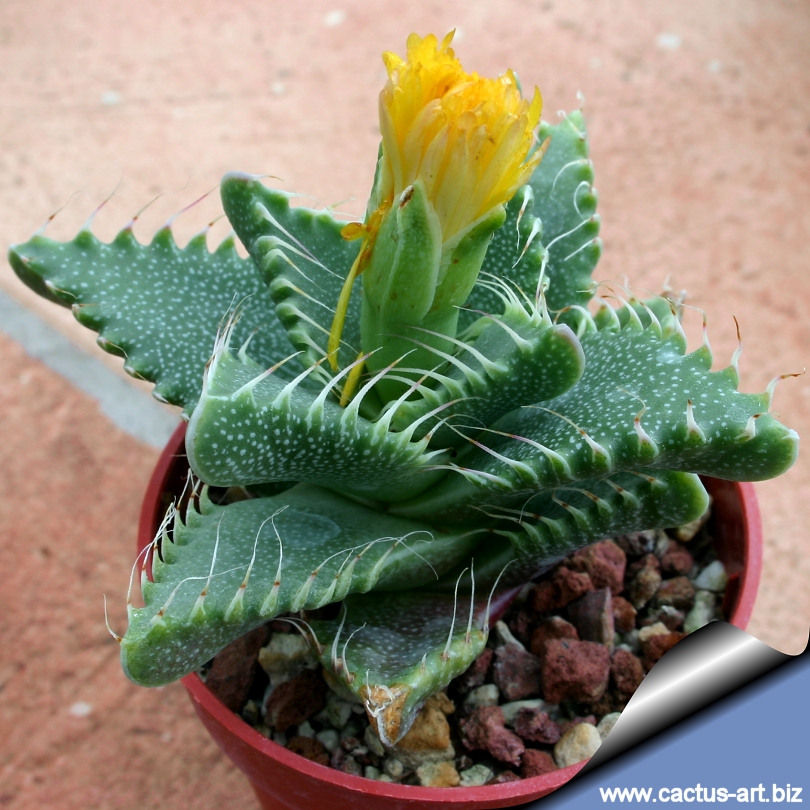
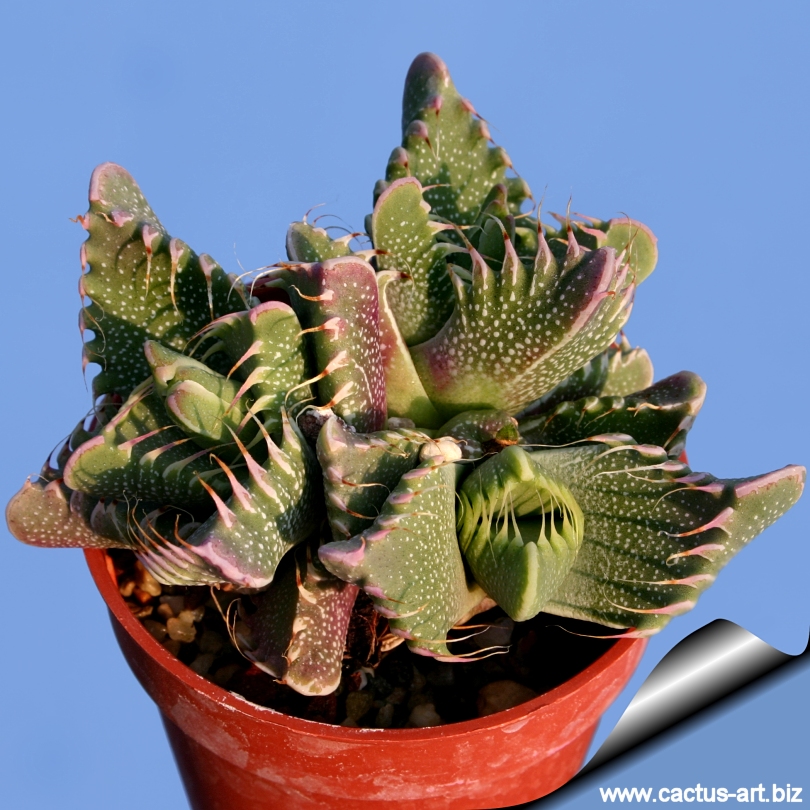
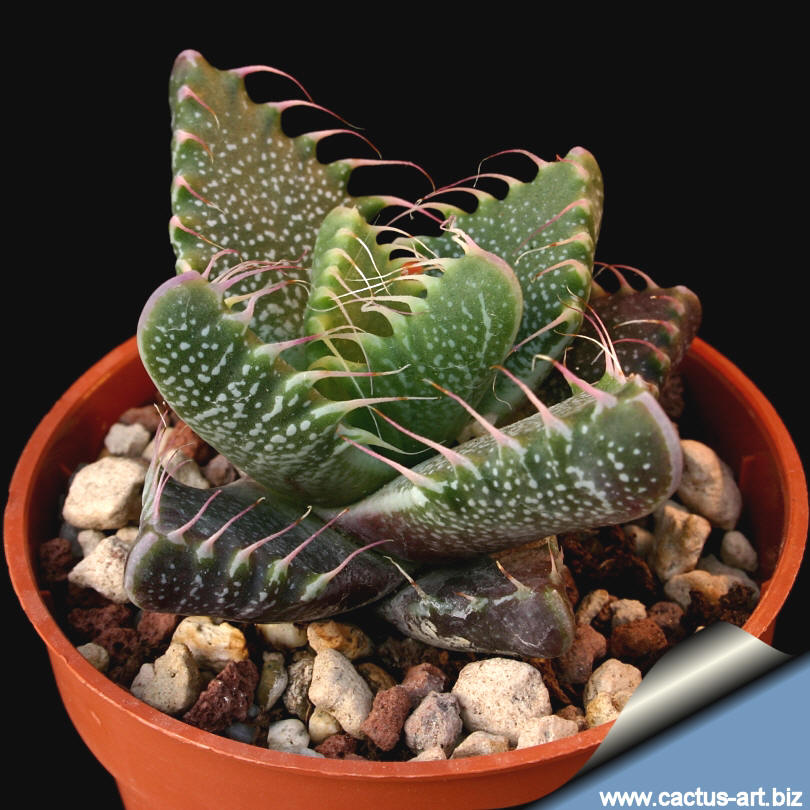
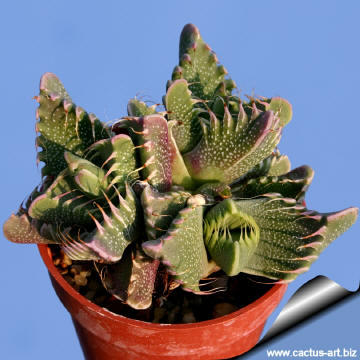
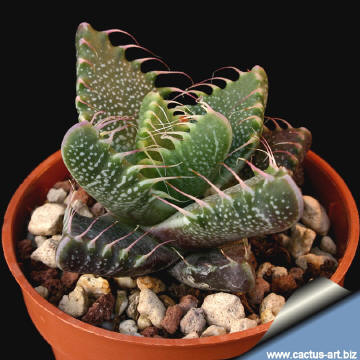
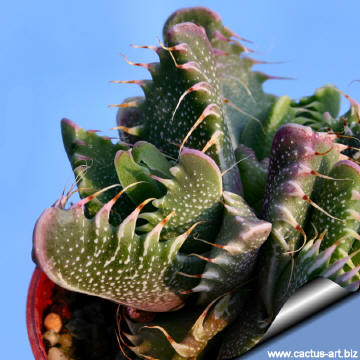
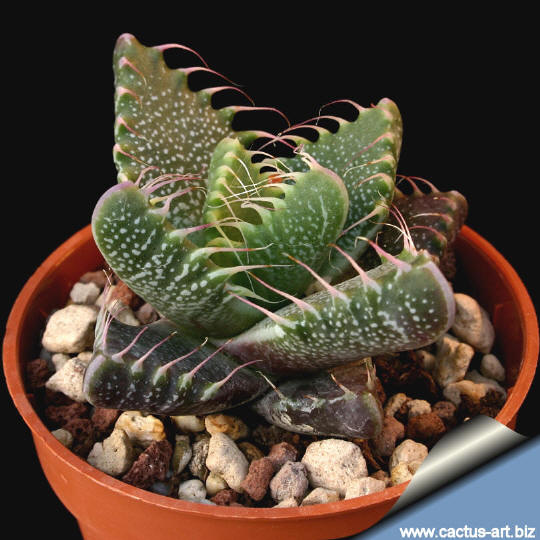
Faucaria tigrina (Locality Grahamston) are very handsome plants with soft white
teeth along the edges.
They look like little alligator jaws. In the garden they slowly sucker
growing in a circle larger and larger until they come up upon another
plant making a unique carpet of plant completely covering the ground.
|
|
 |
 |
|
. |
 |
 |
|
. |
 |
 |
|


Advertising
|
|
|
|
|
Family: Mesebrianthemaceae (Aizoaceae)
Scientific name:
Faucaria tigrina (Haw.) Schwantes
Origin: South Africa (Eastern Cape Province: Albany))
Common Names include: Tiger Jaws, Shark's Jaws
Etymology: The genus name Faucaria is Latin
for "jaws" due to the teeth-like structure on the leaf margins.
Note: Faucaria tigrina is a variable
taxon that now comprises many Faucaria’s form previously considered
independent the species.
Synonyms:
- Mesembryanthemum tigrinum
|
|
Decription: Succulent clump-forming perennial, rosettes, usually
stemless (but can builds short woody stems with age). It clumps more
than the plants in the 'felina' group and has often a reddish tinge.
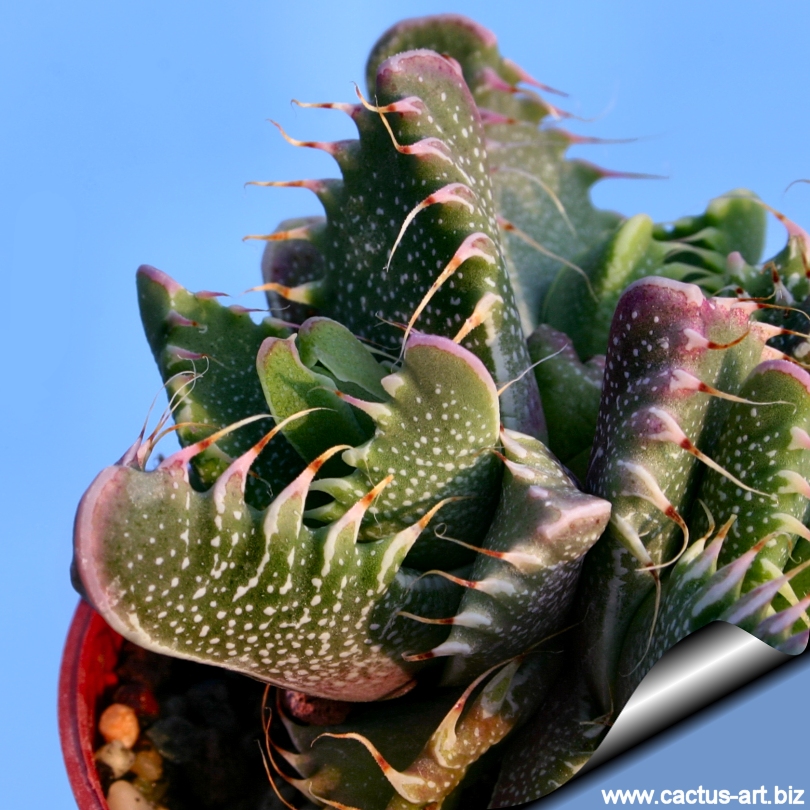
Leaves: Thick, green triangular with up to 10 (ten) pointed
curved soft translucent slightly recurved "teeth" along the edges,
making them look like open jaws: The upper surface is slightly rough
with a profusion of tiny white dots upon close inspection and with a
rounded interface.
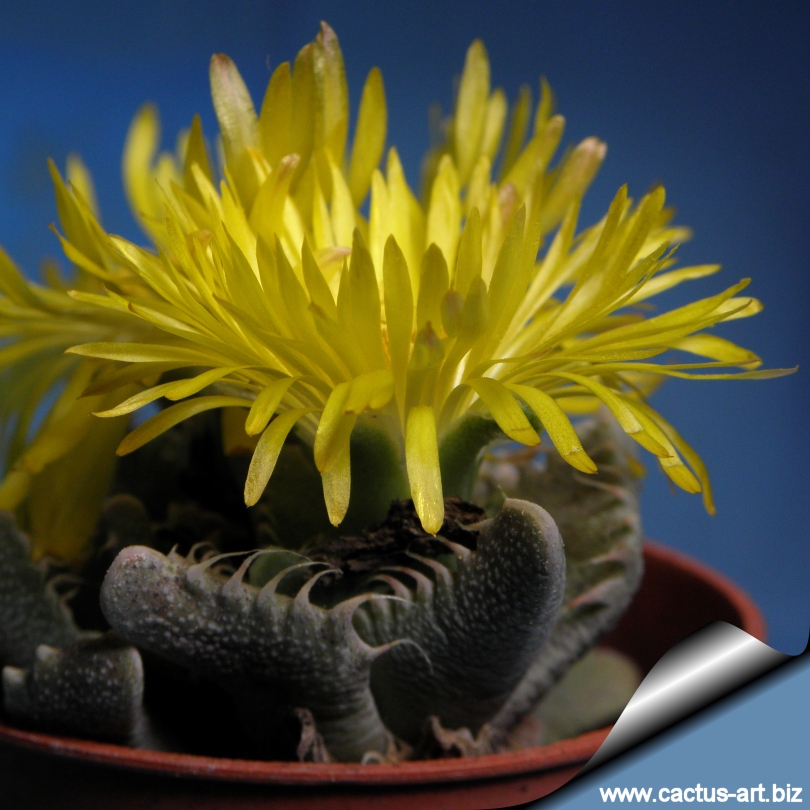
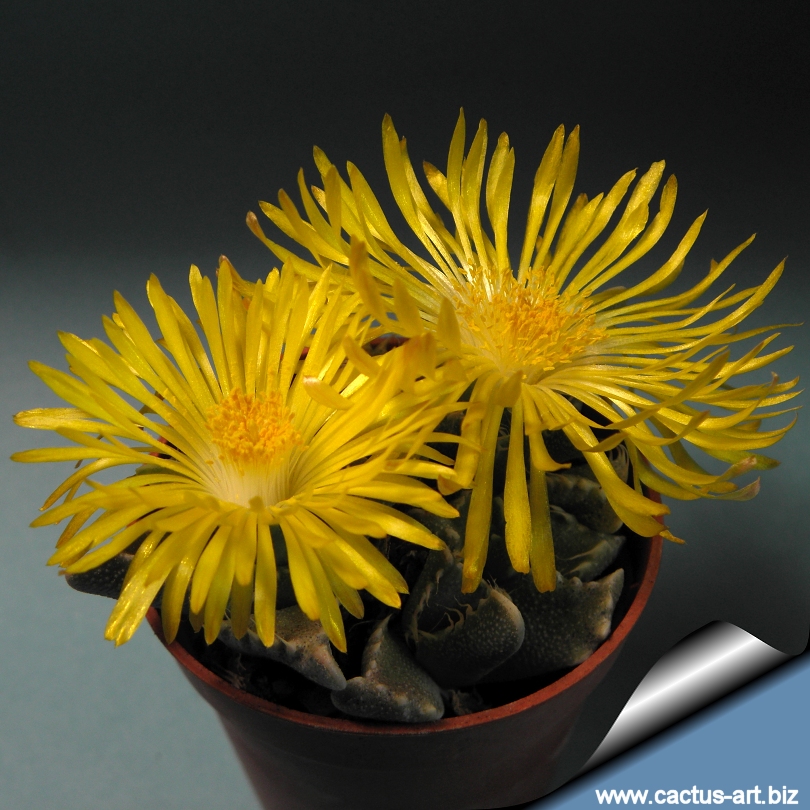
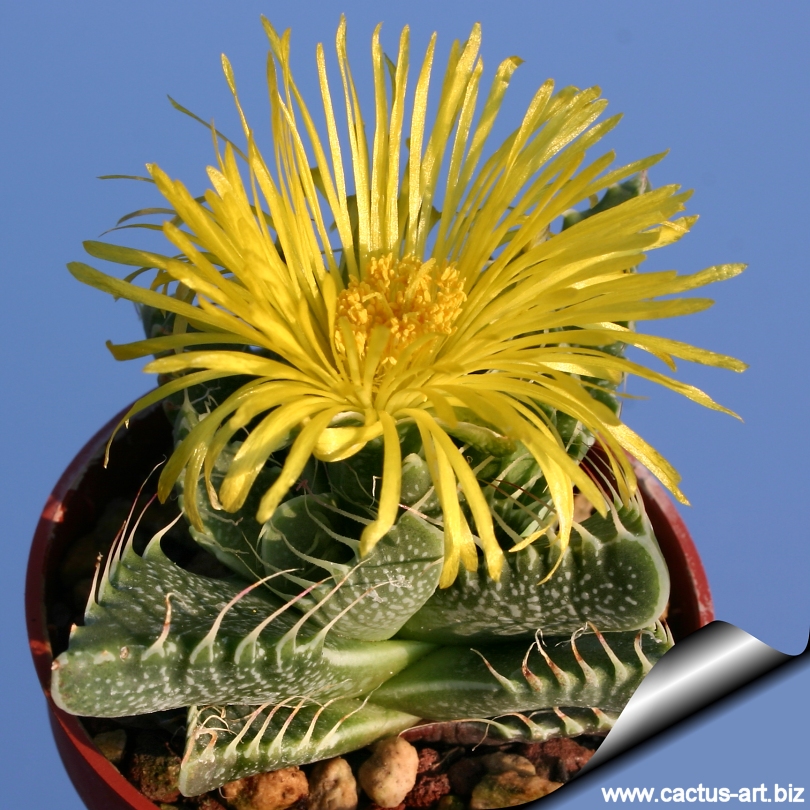
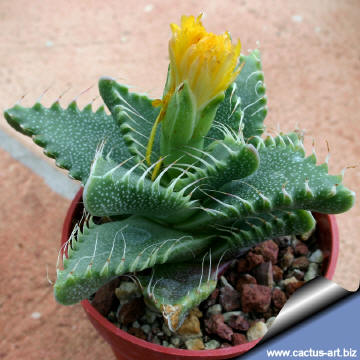
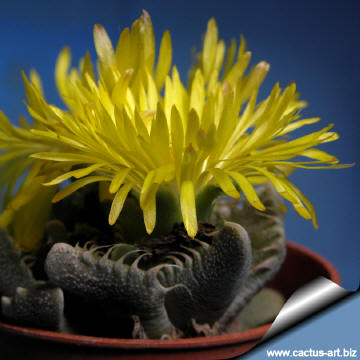
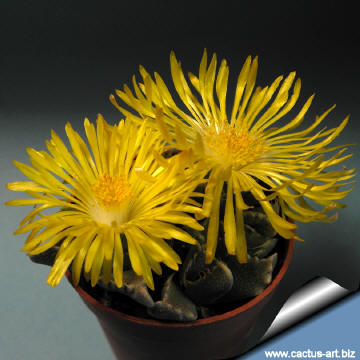
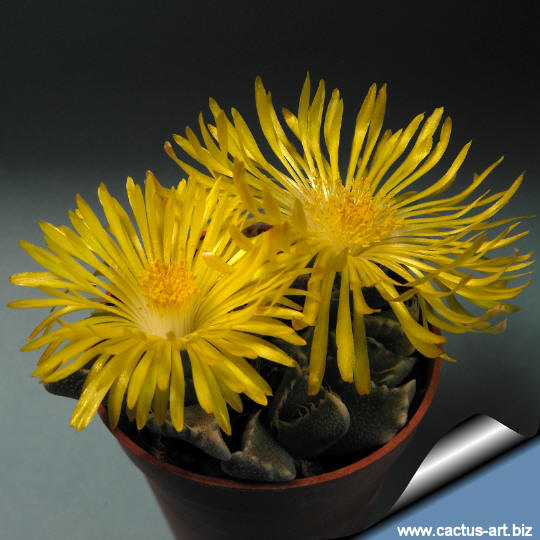
Flowers: Numerous, silky yellow, up to 5 cm wide, attractive
daisy like, appearing from the centre of the rosette.
Blooming season: Autumn to early winter. They need full sun to
open, open around noon and close at night.
|
|
|
|
Note:
The several species of this South African genus of succulents are so
similar that many may be hybrids.
Cultivation: The plants in this genus
represent some of the more easily cultivated succulent species ;
These plants grow on winter rain and were heading for
spring-summer dormancy. Requires little water otherwise their epidermis
breaks (resulting in unsightly scars).
Water moderately from the middle of summer
to the end of winter, and keep the compost almost dry when the plants
are dormant. Water minimally in spring and
summer, only when the plant starts shrivelling (, but they will
generally grow even in summer if given water) In areas prone to frost,
grow in an intermediate greenhouse or conservatory, in pots of cactus
compost, obtainable from good garden centres. Keep cool and shaded in
summer, but provide maximum light the rest of the year.
|
|


 Cultivation
and Mail Sale
Cultivation
and Mail Sale