|
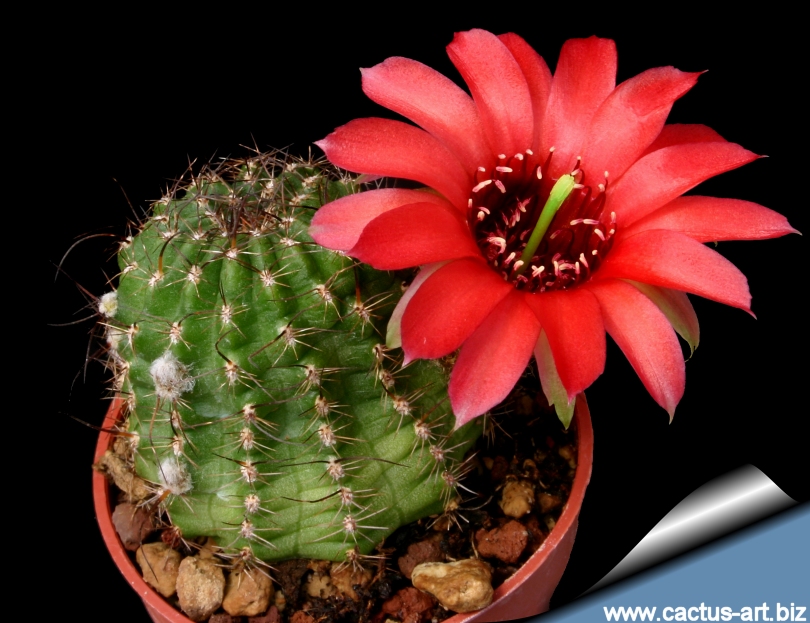
L. saltensis
is a very interesting but variable species with several forms and
variety.
Description:
Small cactus, usually
solitary, or heavily clustering.
Stem:
Flattish, egg-shaped or skightly elongated, up to 12 cm tall, 9 cm in
diameter, bright green to dark green or almost black.
Areoles:
5-7 mm
apart.
Ribs:
17-18.
Root:
Tap
root.
Radial
spines:
12-14 Thin, reddish.
Central
spines:
1-4, whisker-like, twisted, asymmetrical, more or less long, interlaced
up
and in disorder curved up
to 3 cm long. The length of spines greatly depends on sun exposure and
plant's age.
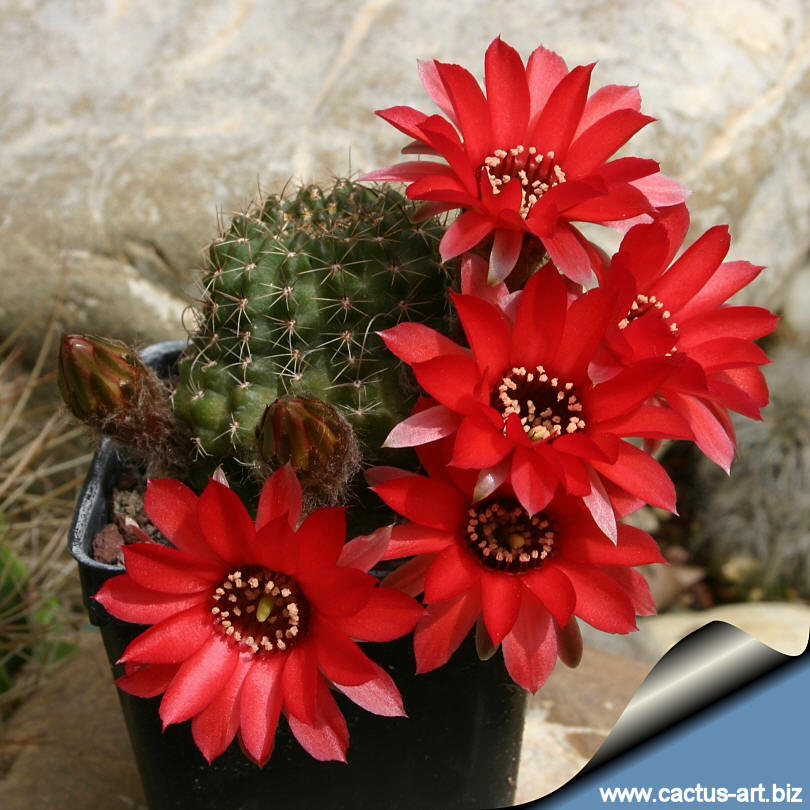
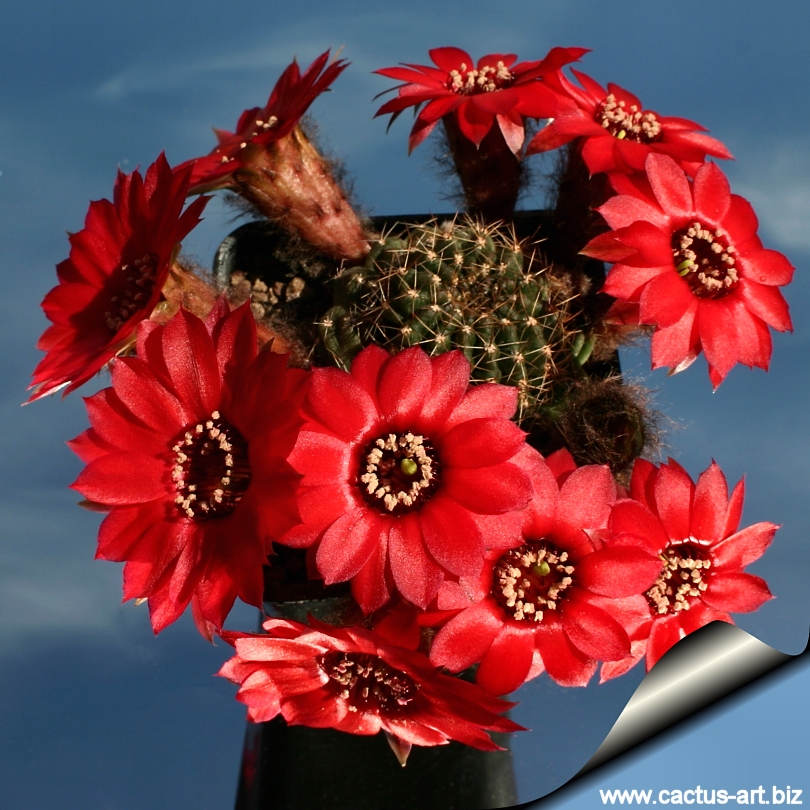
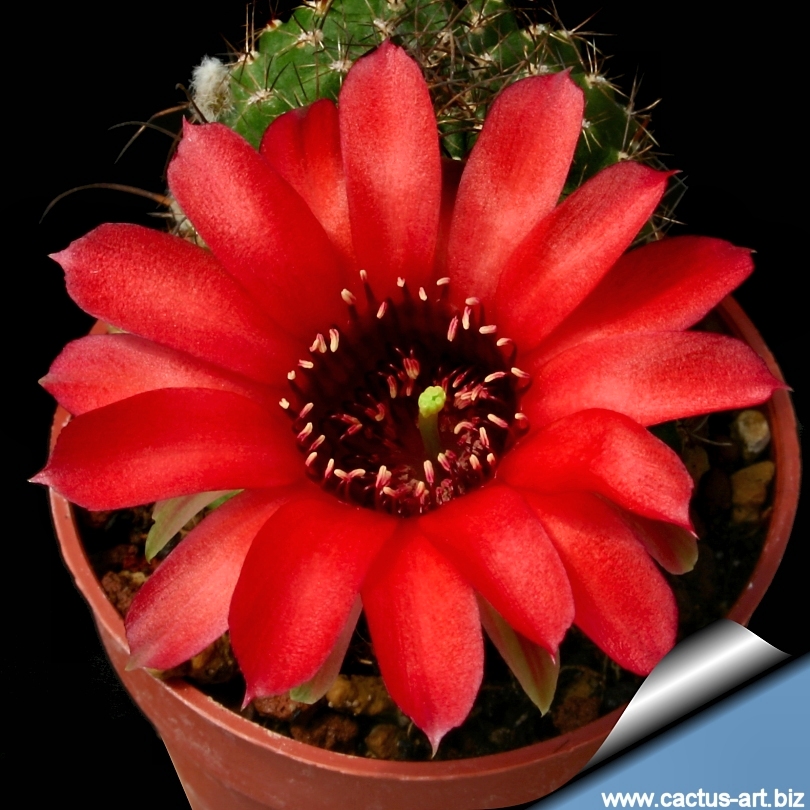
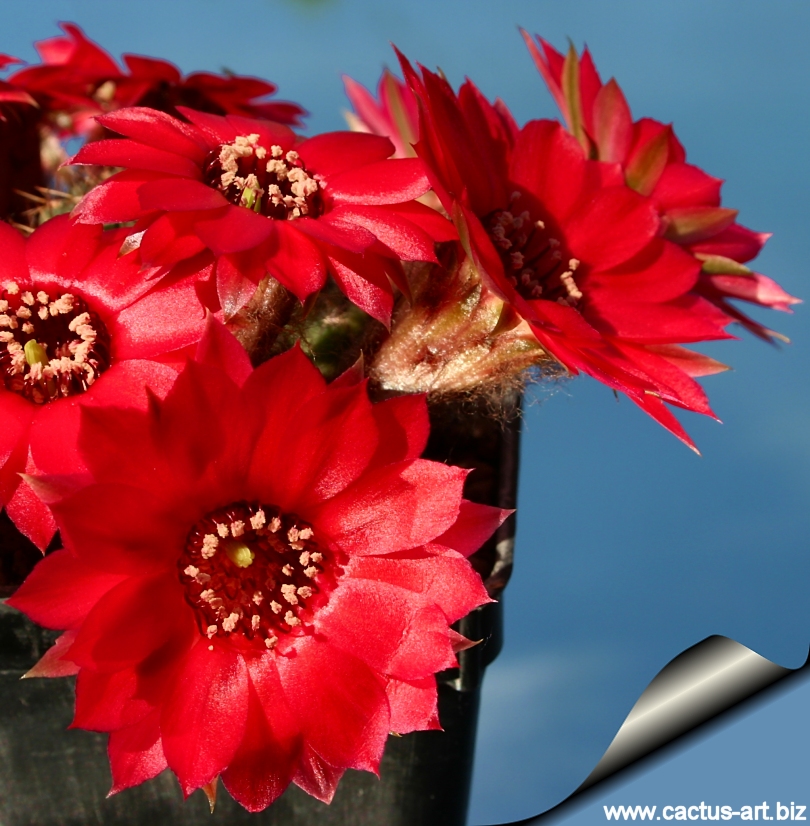
Flowers:
Pretty, shining, small up to
5 cm long, unscented, somewhat bell-shaped-bulgy,
dark
orange-red or crimson that appears almost black when starting to open.
The stamen's filaments are dark red, and bear cream-white contrasting
anthers. The stigma lobes are greenish.
Blooming
season (Europe):
The greater part of flowers appears in spring in the first flowering,
but the plant can erratically produce some flowers in summer too.
Fruit: Globular, 5 mm in diameter,
with little brown wool, up-drying.
Seed: Globular, small grained.
There are a number of
controversial varieties of this highly variable cactus species, but not
all are universally recognized. Some authorities recognize the following
varieties.
L. saltensis
var. saltensis Plants with the
relatively short petals and dark-coloured Stamens.
Origin between Tucuman and Salta (
from Alemania to close to Cafayate).
L. saltensis var. multicostata
The plant of this
population are similar to Lobivia saItensis, however with 20 and more
ribs, closer spaced Areoles and therefore also closer, broom-like
Spination. Flower and fruit are alike.
Origin:
Cuesta de Lajar.
L. saltensis var. pseudocachensis
Only a few cm small, clumping green
bodies, with a long carrot root. Ribs about 14 straight. The plants in
this population are quite variable and comprises both individuals with
long central spines and individuals with short radial spines without
central (They have respectively named by Backeberg
L. emmae
and
L. emmae var. brevispina)
The flower is 4-6 cm long and broad, light red to carmine coloured. The
fruit and seed are similar to those of the other Varieties.
Origin:
Escoype.
L. saltensis var. nealeana
This plant has usually
somewhat larger
solitary body
than the near var. pseudocachensis,
sometimes also with long, curved Central-spines, the red blooms are more
spread and rarely yellow too.
The fruit and
seed are similar to those of the other Varieties.
L. saltensis var. zapallarensis
This is the smallest form from the
Sierra Zapallar it has only9-11 sharp-edged ribs, the epidermis is
black-green, often also violet coloured with red to orange flowers, the
fruit is more oval, however otherwise nearly like Lobivia saltensis
|


 Cultivation
and Mail Sale
Cultivation
and Mail Sale