|
|
|

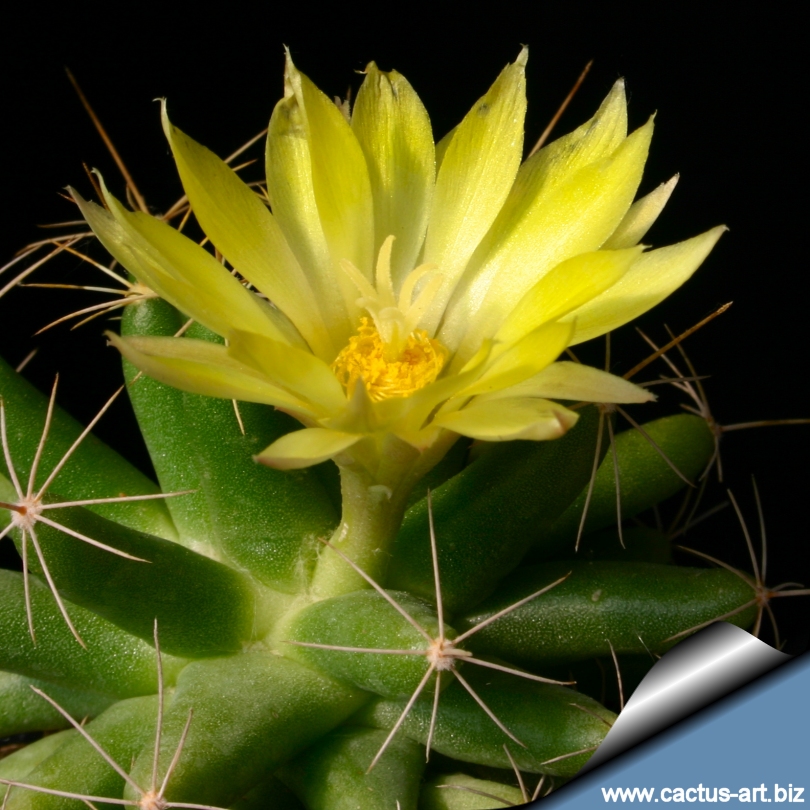
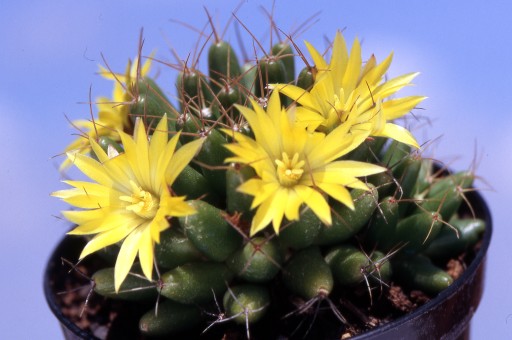
The lemon yellow flowers are very large for this genus (6 cm in diameter
) and are produced in abundance in summer.
|
Description: At first
solitary, but clustering very young and forming dense clusters to 15 cm
or more broad. With 10-30(-50) braches.
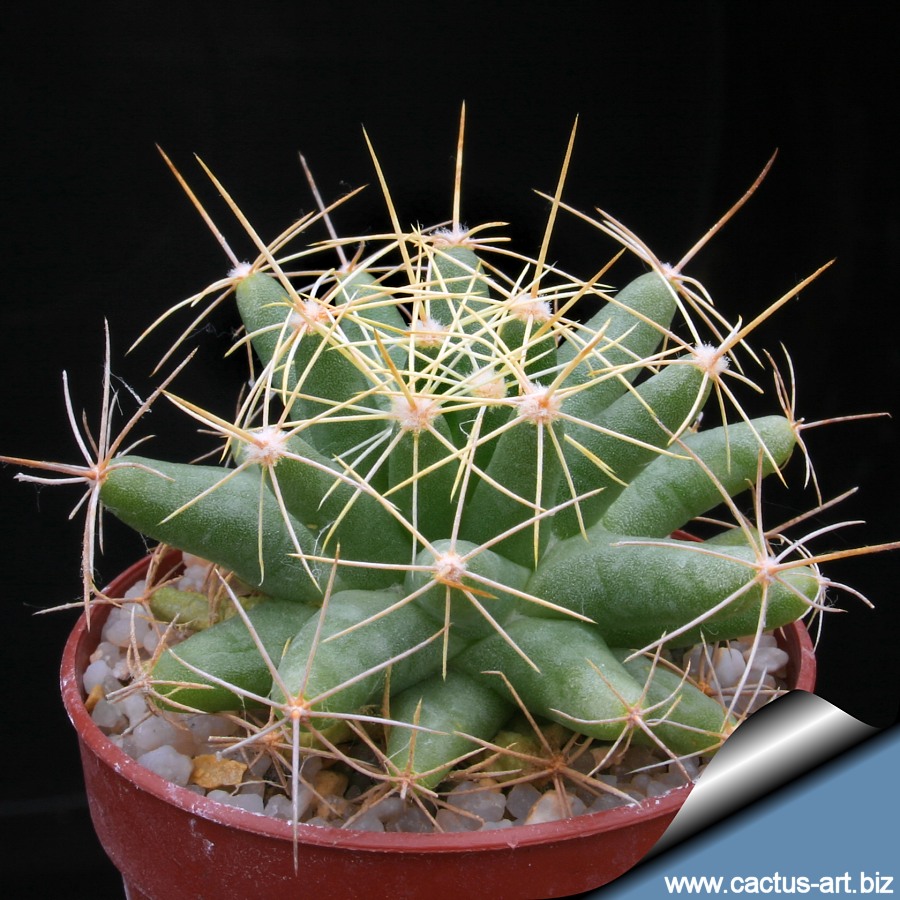
Stem: Spherical, green, 3-6(12 cm) cm in diameter, up to 10 tall. Without
latex.
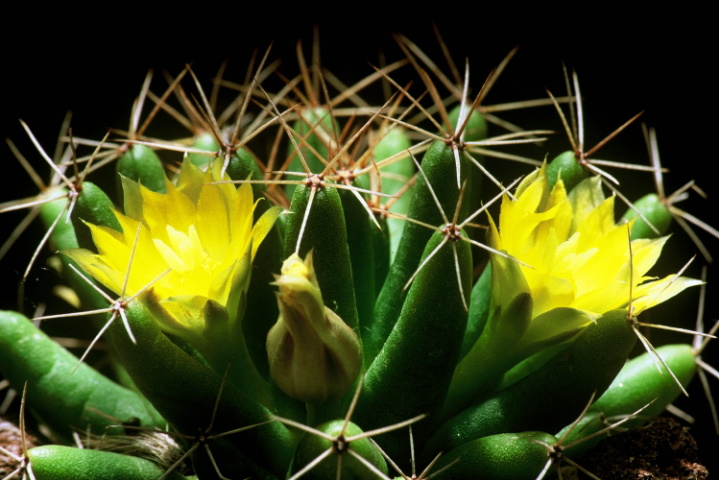
Tubercles: Very long soft and flaccid 12-25 × 5-8 mm.
Axil: Sparsely wooly, without bristles
Radial spines: About 8 to 10 for 12 to 20 mm long white-yellowish
or brown.
Central spines: Usually 1 central spine, to 25 mm long, not hooked or
curved, similar to radial spines. No Central spine for the var. uberiformis.
Flowers: Very large for this genus, 4-6 cm. long, 4.5-6 cm. wide
with bright yellow petals in May-July. , stigmas yellow.
Fruit: yellowish to green.
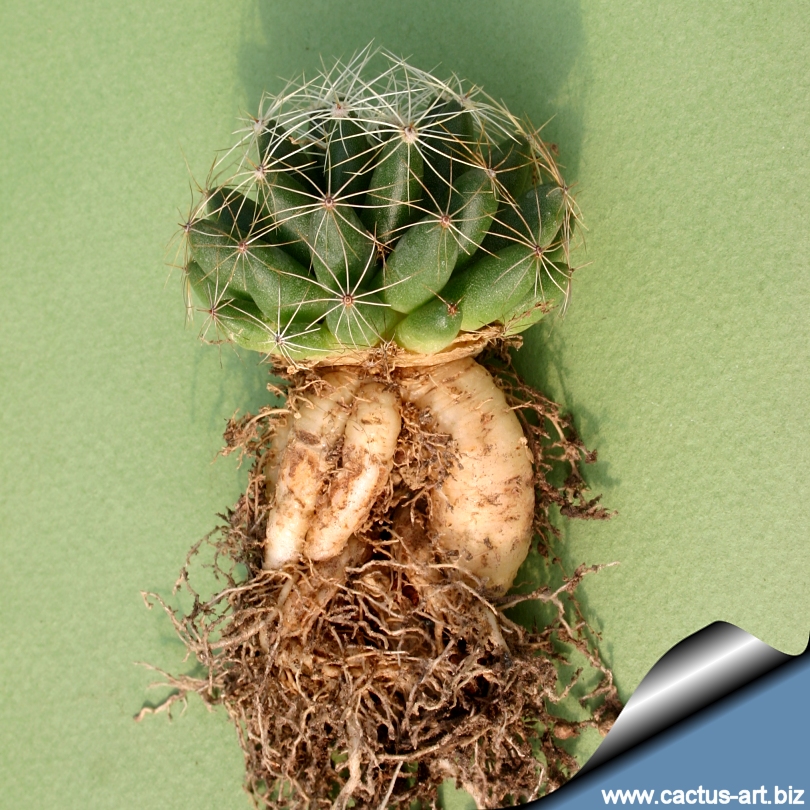
Roots: Thick taproots, large in upper portion.
|
 |
 |
|
. |
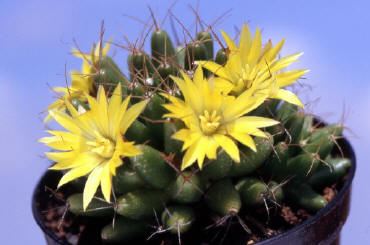
Photo and © copyright by
Andrea B. (Bologna, Italy) |
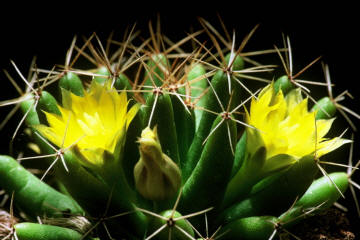
Photo &
©
copyright
by
Irwin Lightstone
|
|
Cultivation: An
easy species that will form large clumps with age. Mammillaria longimamma
has a fairly large tap root, and should be kept in a deep pot with a
very draining mineral substrate. Watering during the active growing
season (spring and summer); this will encourage steady growth, and
prevent the large tubercles from becoming flabby. But be careful with
watering, which all thick rooted species require (rot sensitive). Keep
dry during the winter rest, when the plant may pull near the surface of
the potting mix.
Fertilize every 2 weeks with diluted high potassium fertilizer when the
plant is in bud. Need light shade to shade. Propagation: Seeds,
offsets, tubercles (Tubercles can be removed from the plant, let to dry
a day or 2, and planted) |
|

 Advertising |
|
|
|
|
Scientific name:
Mammillaria longimamma
A. P. de
Candolle 1828.
Origin: Mexico (Hidalgo, Querétaro between
1000 and 2200m altitude)
Conservation status: Listed in
CITES appendix 2.
Common English Names include: "Finger Mound", "Peyotillo"
, "Nipple Cactus"
Etymology: The species name "longimamma" comes
from the Latin for "long nipple" which refers to the
tubercles of the plant, while "uberiformis" which appears
in Dolichothele uberiformis means "shaped as an
utter".
Synonyms:
- Neomammillaria longimamma,
- Cactus longimamma,
- Dolichothele longimamma,
- Dolichothele uberiformis,
- Mammillaria longimamma var. uberiformis,
- Dolichothele longimamma ssp. uberiformis,
- Cactus uberiformis,
- Mammillaria uberiformis,
- Neomammillaria uberiformis,
- Cactus alpinus,
- Mammillaria alpina,
- Mammillaria laeta
|
|
|
|

The tubercles are very pronounced.
 |
|
Photo of conspecific taxa, varieties,
forms and cultivars of Mammillaria longimamma:
|
|


 Cultivation and
Mail Sale
Cultivation and
Mail Sale