|
|
Family:
Cactaceae (Cactus
Family)
Scientific Name:
Pediocactus bradyi
L.D.Benson1969 S.L.
Welsh & S. Goodrich 1980
Major L.F. Brady collected this species in July 1958, and it is named
after him.
Common Name:
-
Marble Canyon Cactus
-
Brady Plains Cactus
Conservation status: Listed in
CITES appendix I
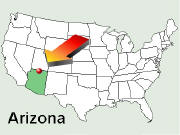
Origin: From Navajo Bridge
to House Rock Valley, (northern Arizona), USA. 1140-1350 m. of elevation.
Scattered populations along both sides that tend to be endemics.
Habitat:
Grows in gravelly, gently sloping benches and terraces in
open, exposed,
sunny situations. Mycorrhiza are associated with the roots of this
cactus. The fungus is acquired from the parent plant (the seed
germinating immediately alongside the parent plant) or from the roots of
grasses. The plants retracts in the ground during dry periods.
Taxon
synonyms:
-
Toumeya
bradyi
(L. Benson) W.H.
Earle 1963
Published in: Cacti of
the Southwest, ed. 2, 97, 1963.a
- Pediocactus bradyi
ssp.bradyi (Engelmann) L. Benson
Published in: Cact. & Succt. J. (US) 34:19,
1962
- Pediocactus simpsonii
subsp. bradyi
- Puebloa bradyi
|
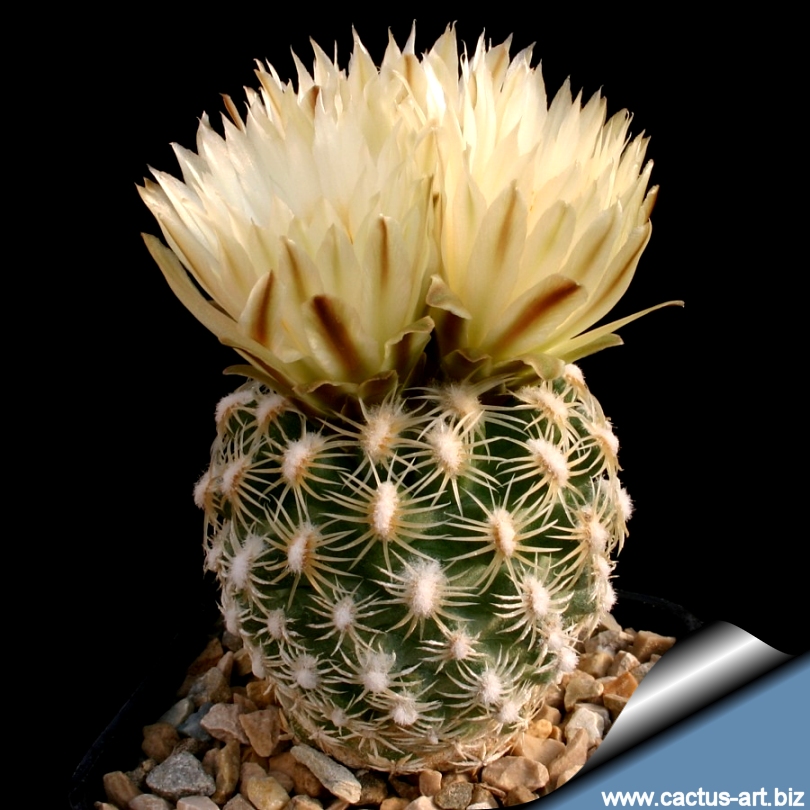
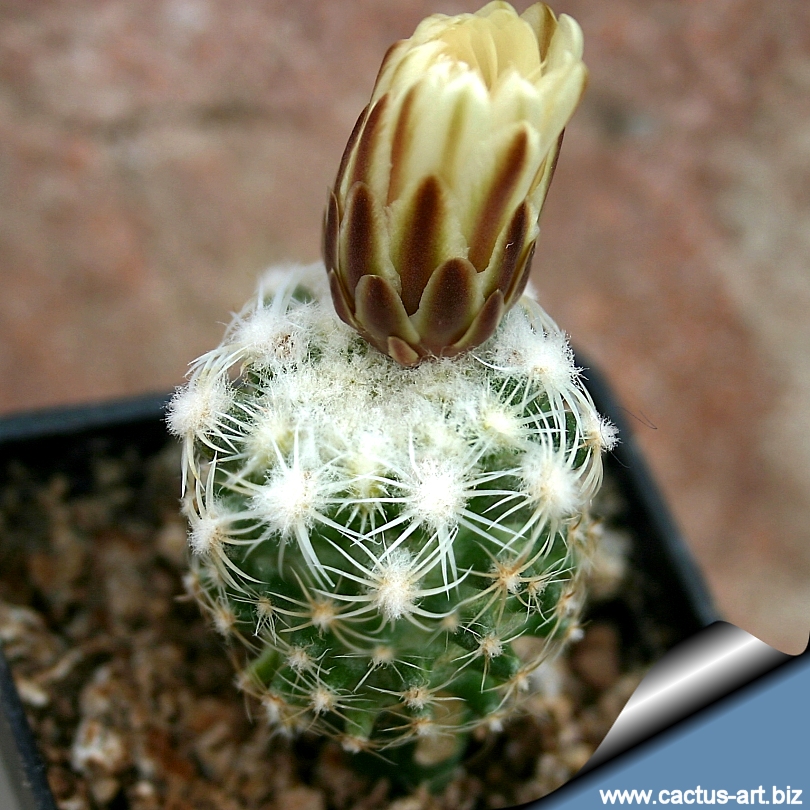
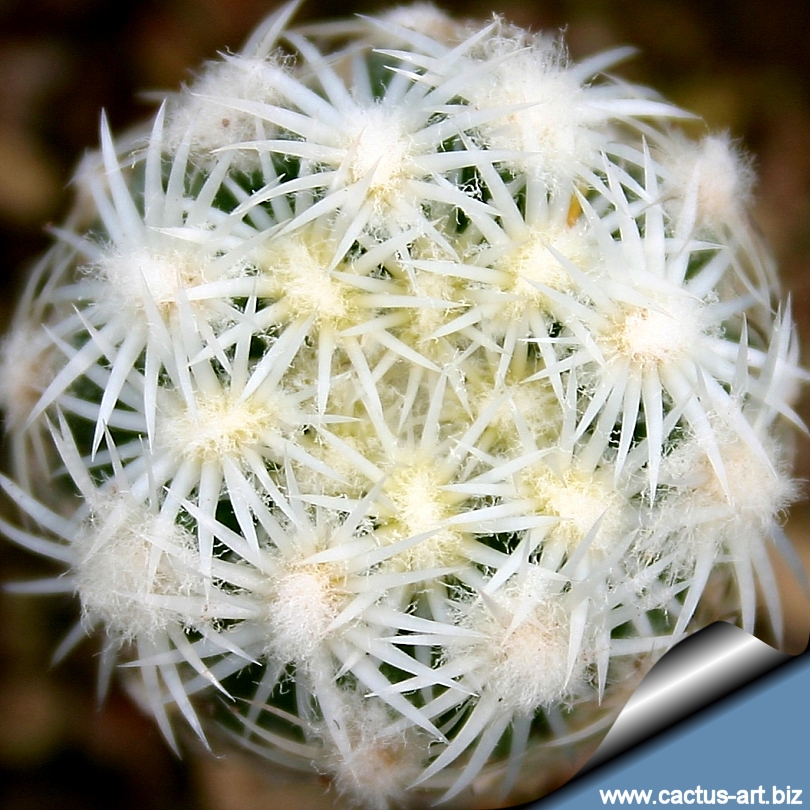
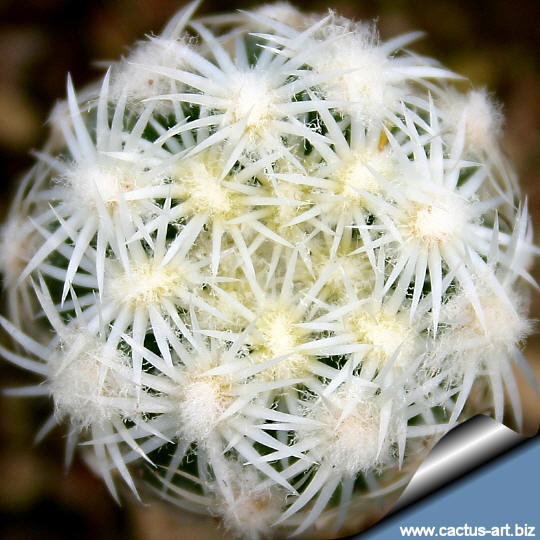
Description: Small globular semi-globose stem,
4-6 cm tall ,5 cm in diameter (in habitat forms clumps
are only 1 - 2 cm
across) elliptic areoles, densely felted; generally no central spine; 12
to 15 short spreading radial spines, almost pectinate, white to yellow,
2 to 6mm long
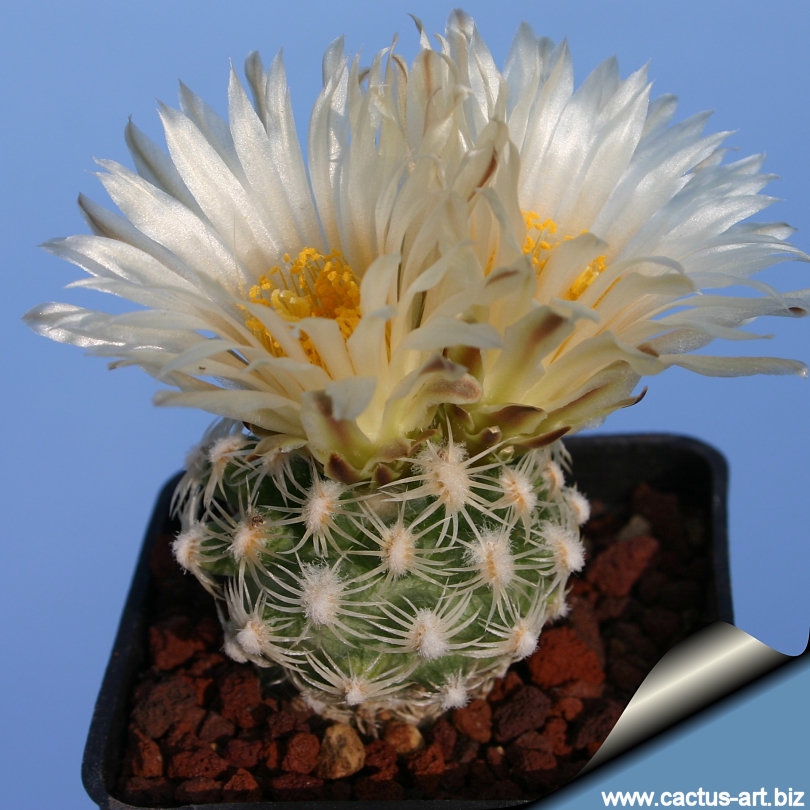
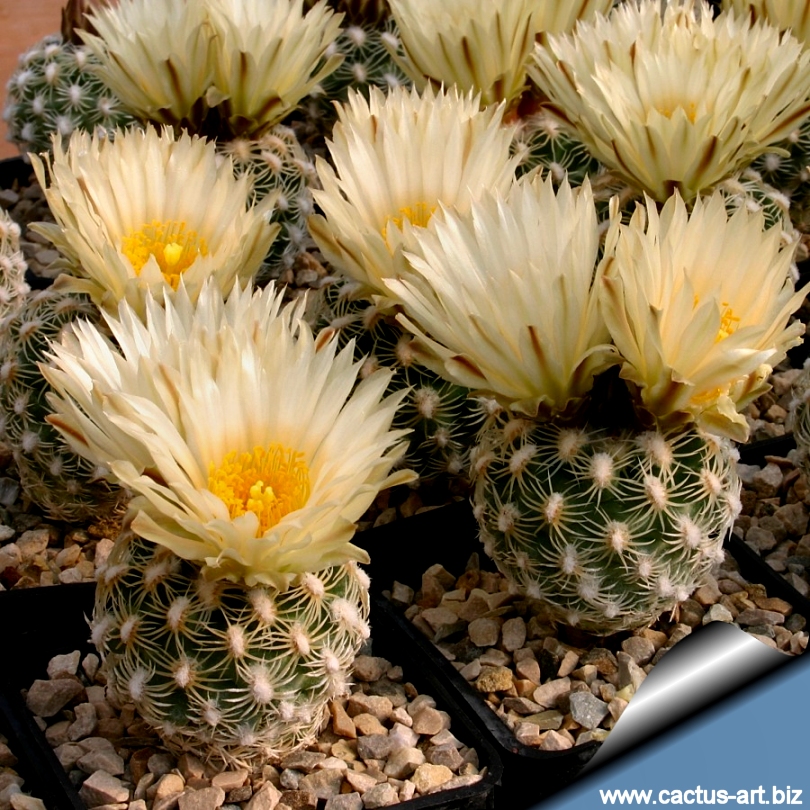
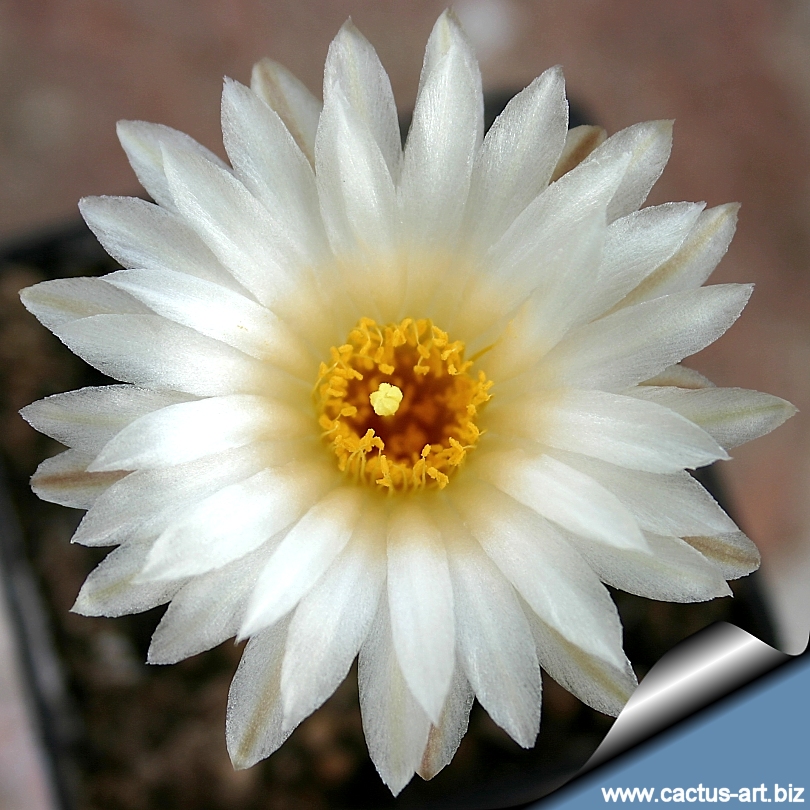
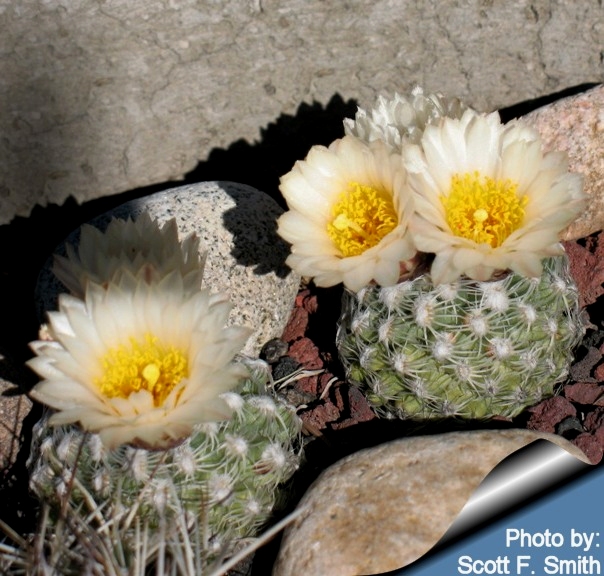
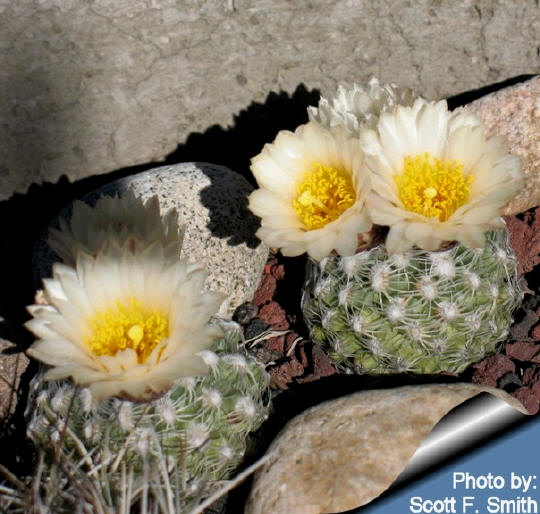
Flowers: Yellow to olive-white silky, 2.5-4 cm in diameter, 2 cm
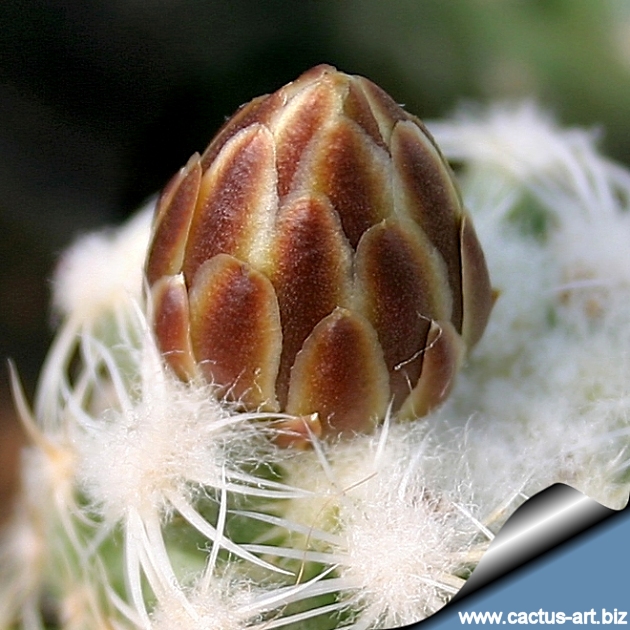
high in early March-April. Back of petals brown-edged in white.
|
|
|
|
|
|
|
Cultivation: Under cool temperatures and wet conditions, it is
highly susceptible to root rot. For this reason it is usually cultivated
as a grafted plant, which is very easy to cultivate and free flowering.
Best for full sun exposures.
The flowers
buds stay
dormant on the plant
apex all winter, they will then open in
spring when the temperature rises.
To avoid any damage to
the buds don’t let grafted plants that stay in the heated
greenhouse completely dry out.
Some light watering in winter
is
useful for keeping the flower
hydrated and
healthy.
|
|

 |
|


 Cultivation and Mail Sale