|
|
|
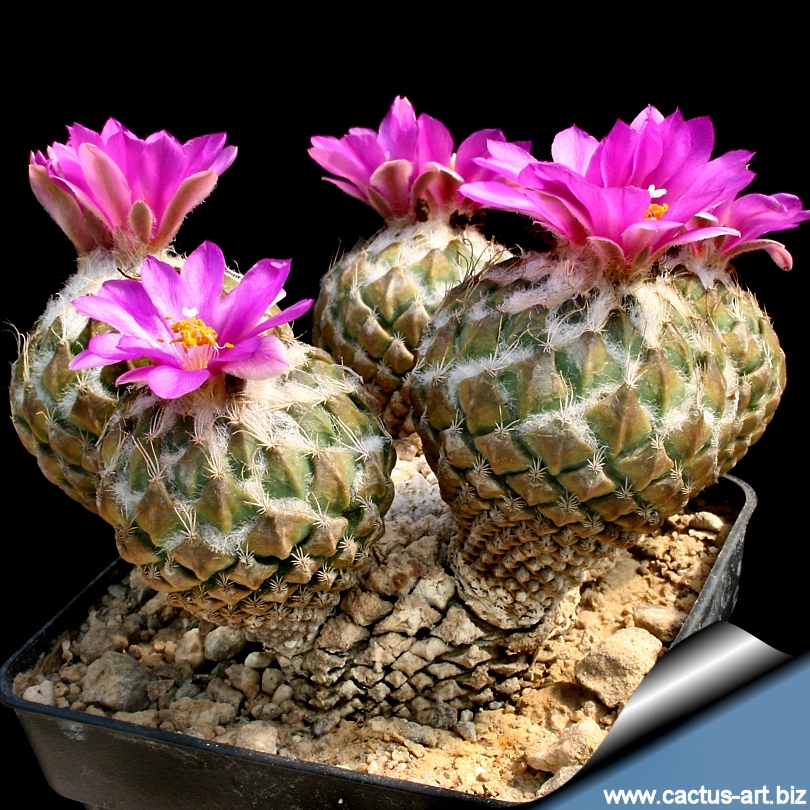
Encephalocarpus (Pelecyphora) strobiliformis
A very
slow growing, choice Mexican
species,
commonly called
the "Pinecone Cactus" for its resemblance to a pine
cone.
|
|
Description:
Slow-growing
geophytic succulent, with solitary or multiple stems barely rising
above ground level.
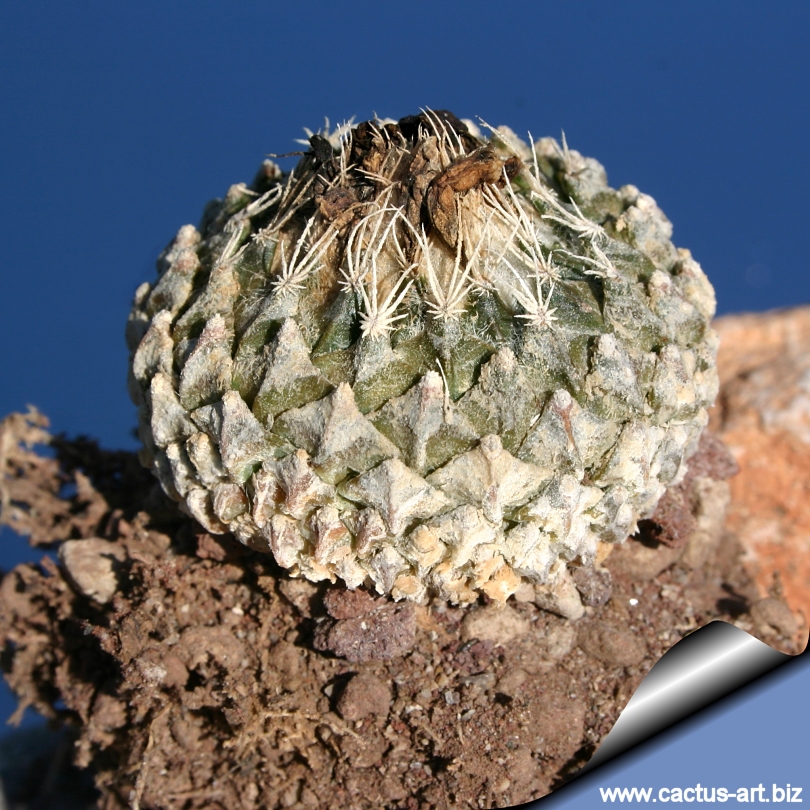
Stem: Spherical to flattened globose, greenish to
yellowish-green, somewhat resembling a pine cone and vaguely reminiscent
of Ariocarpus, 2-4 cm tall, 4 to 6 cm in diameter (or more, in
cultivation).
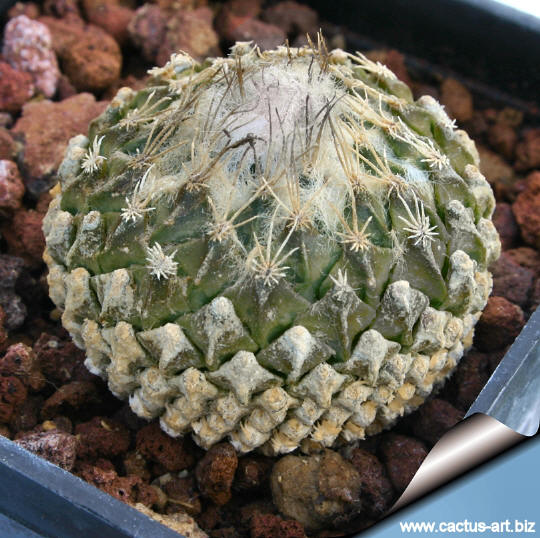
Tubercles: Spirally arranged overlapping. They are scale-like,
imbricated, and closely applied to each other, flat and convex on the
inside and
carinate on the outside. The base is woolly.
Areoles and spines:
Dimorphic, with the spines-producing portion on the outer part and
the flower-producing portion at the base of the tubercle. Small, oval,
woolly on the new growth in the inner portion of the pointed tubercles
apex. While the new growth continues, these areoles produce a few short,
more or less pectinate spines. With age, the areoles disappear and the
oldest tubercles have a bare, blunter apex.
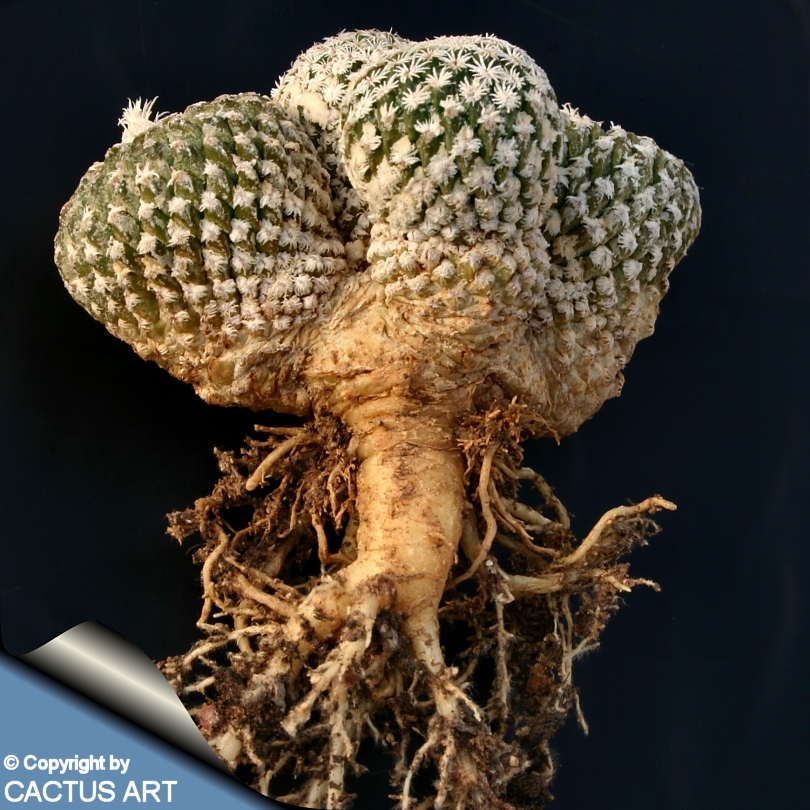
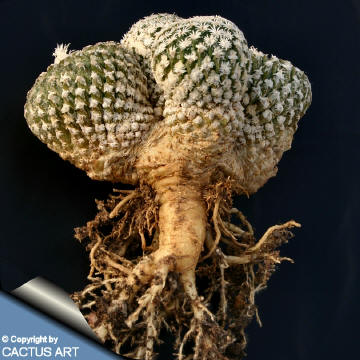
Root: Large,
spindle shaped, compressed taproot.
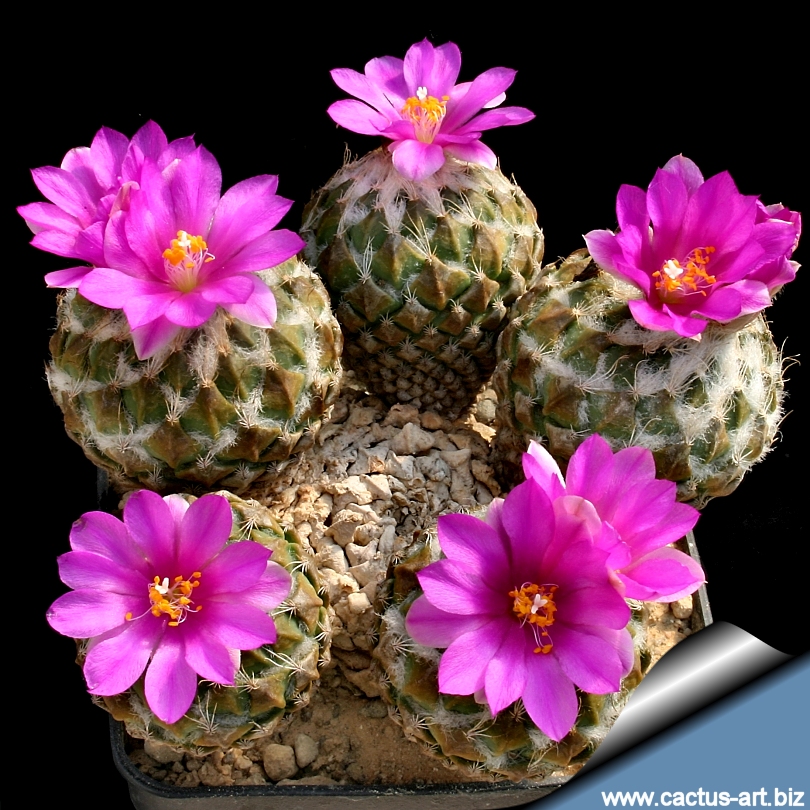
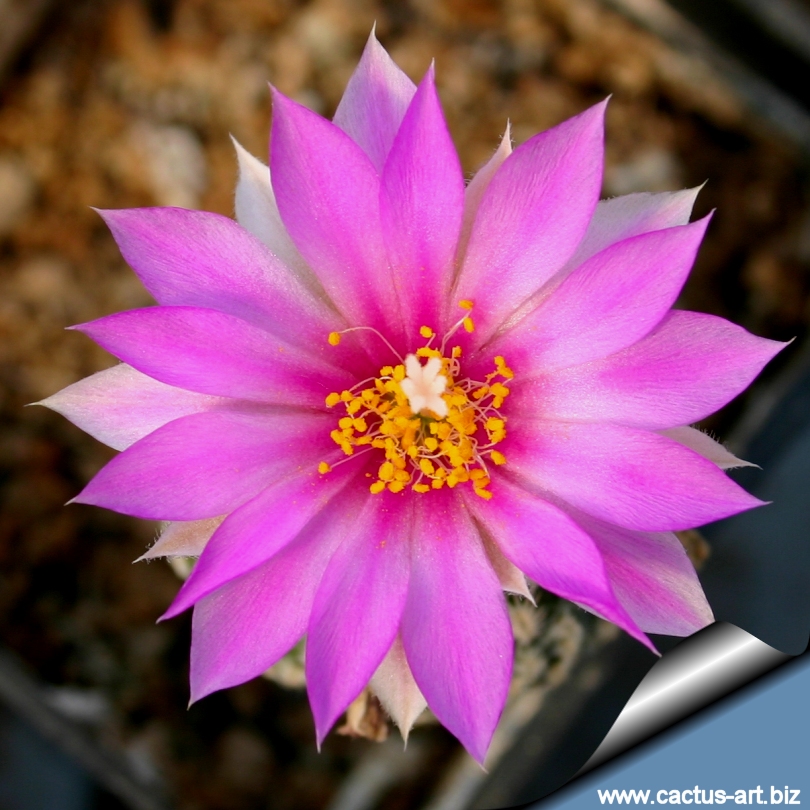
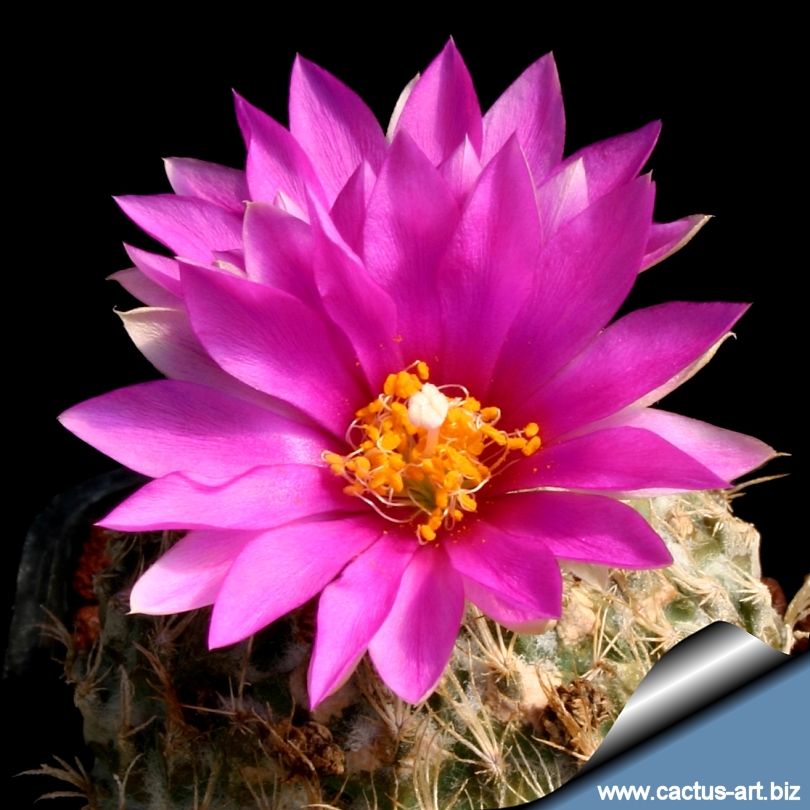
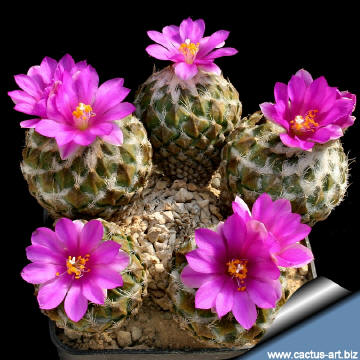
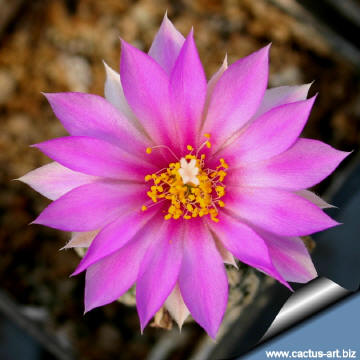
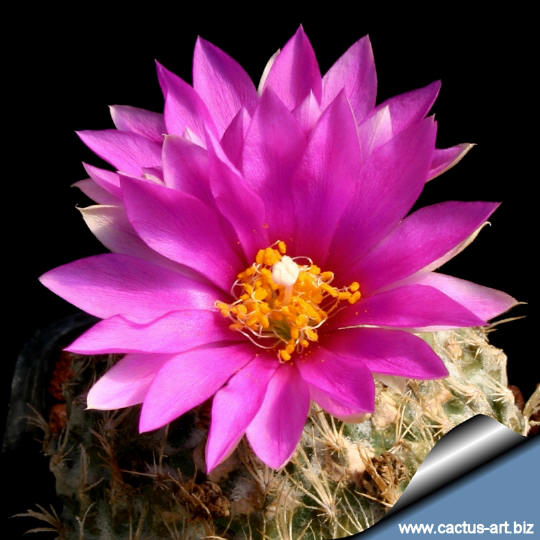
Flowers: Borne at the base of young tubercles near the top of the
plant, diurnal, bell-shaped or funnelform, brilliant, pink to
reddish-purple, about 3 cm long, with greenish outer segments and
incised or curly inner segments.
Although adult specimens of
Encephalocarpus strobiliformis bear scale-like tubercles,
which are very different from the laterally compressed tubercles of
Pelecyphora aselliformis, all the other characteristics
clearly show that they are
congeneric, while a third species,
Pelecyphora valdeziana, does not seem to clearly belong to
this genus, and it is now brought into synonymy with Turbinicarpus.
|
 |
 |
|
|
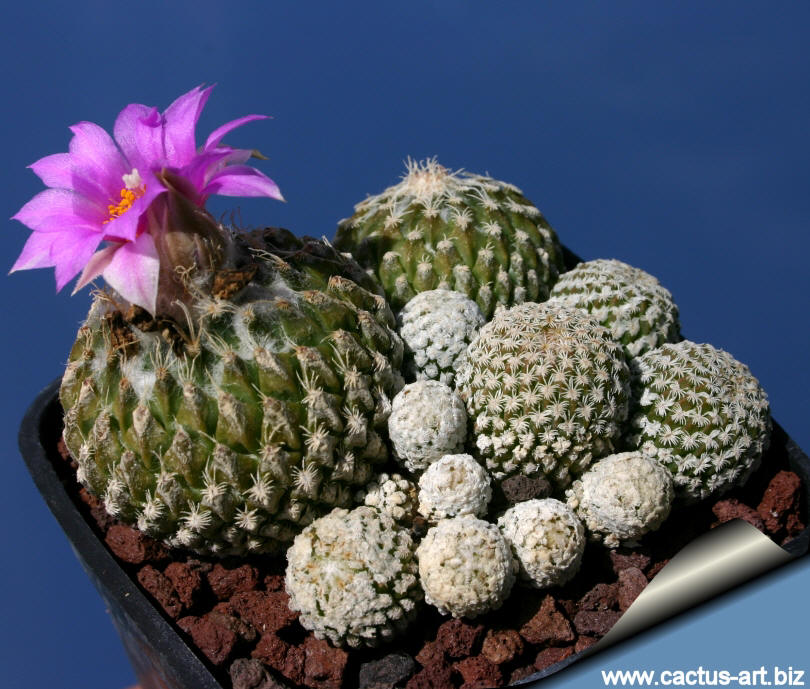
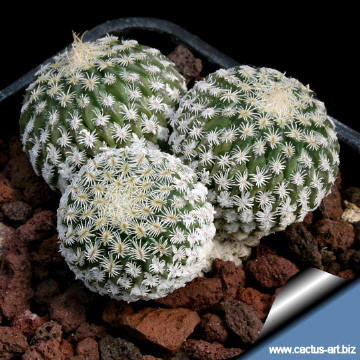
A
dichotomously branched specimen.
|
 |
|
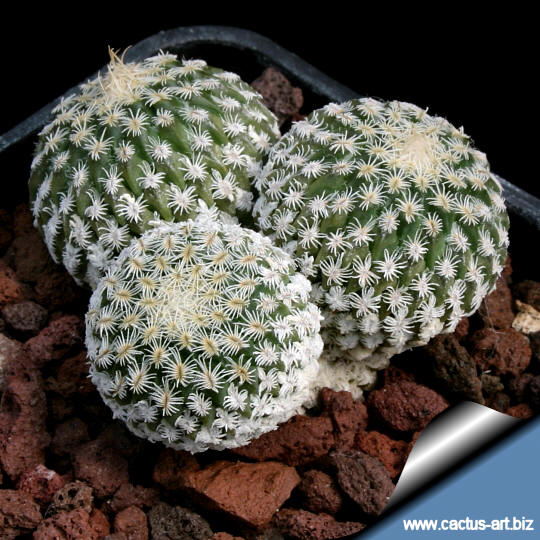
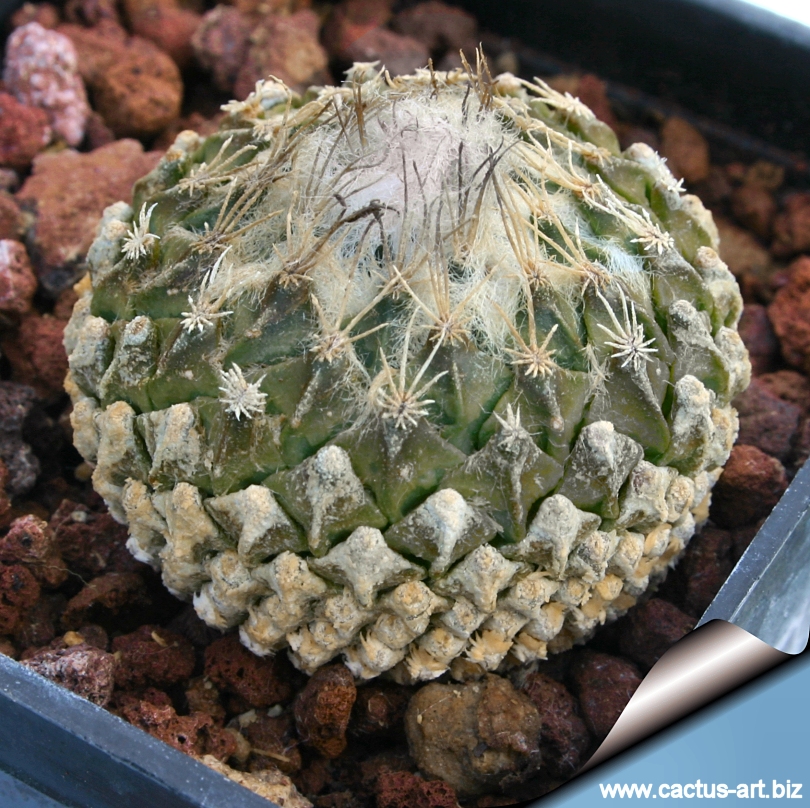
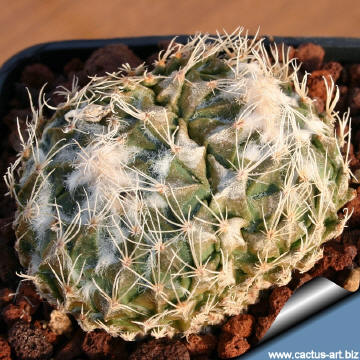
A
young plant showing
subadult features (spines
and
tubercles are intermediate in appearance from those of fully
adult and
juvenile
individuals) |
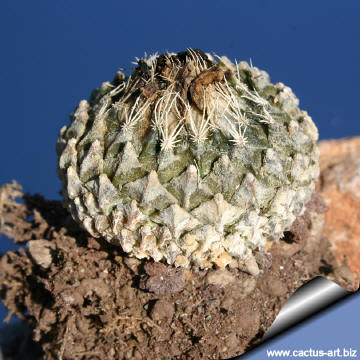
A 15 years old seedlings showing adult feature |
|
Advertising
|
|
|
|
|
Family:
Cactaceae (Cactus
Family)
Scientific Name: Pelecyphora
strobiliformis (Werdermann) Frič
& Schelle ex Kreuzinger
Published in: Kreuzlnger,
Verzeichnis 9 (1935)
Origin:
Mexico (Chihuahuan desert - Nuevo León, San Luis Potosí,
Tamaulipas)
Conservation status: Listed in
CITES appendix I
Synonyms:
- Encephalocarpus strobiliformis
(Werdermann) A. Berger
Published in:
Kakteen 332 (1929)
- Ariocarpus
strobiliformis
Werderm.
Published
in:
Zeits. Sukk. 3:126 (1927
Common names: Peyote,
peyotillo, Pinecone Cactus
Etymology: The generic name comes from the
Greek en (in), kephale (head),
and karpos (fruit), because first the flowers and
then the fruit appear at the apex of the stem. The specific name refers
to the shape of its tubercles, which are reminiscent of the scales on
the strobilus -- or cone -- of a conifer.
|
|
|
|
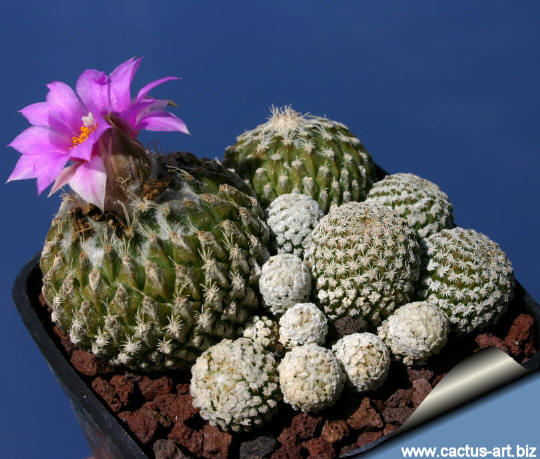
The arrangement of the tubercles resembles a
pine-cone, which is what is meant by the specific name 'strobiliformis'.
Cultivation: It’s a fairly easy species to cultivate, but very
slow-growing. It needs a very well drained soil, and requires strong
sun to part sun to develop good spinal growth. Waterings should be
rather infrequent, to keep the plant compact and avoid it becoming
excessively elongated and unnatural in appearance. Keep dry in winter
or when night-time temperatures remain below 10° C. It is hardy to -4°C
for a short period. Assure good ventilation.
Propagation: Old plants put
forth basal shoots, but growth is slow;. Propagation is mainly by seed.
Photo of conspecific taxa, varieties, forms and
cultivars of Pelecyphora
strobiliformis:

 |
|


 Cultivation and Mail Sale