|
|
|
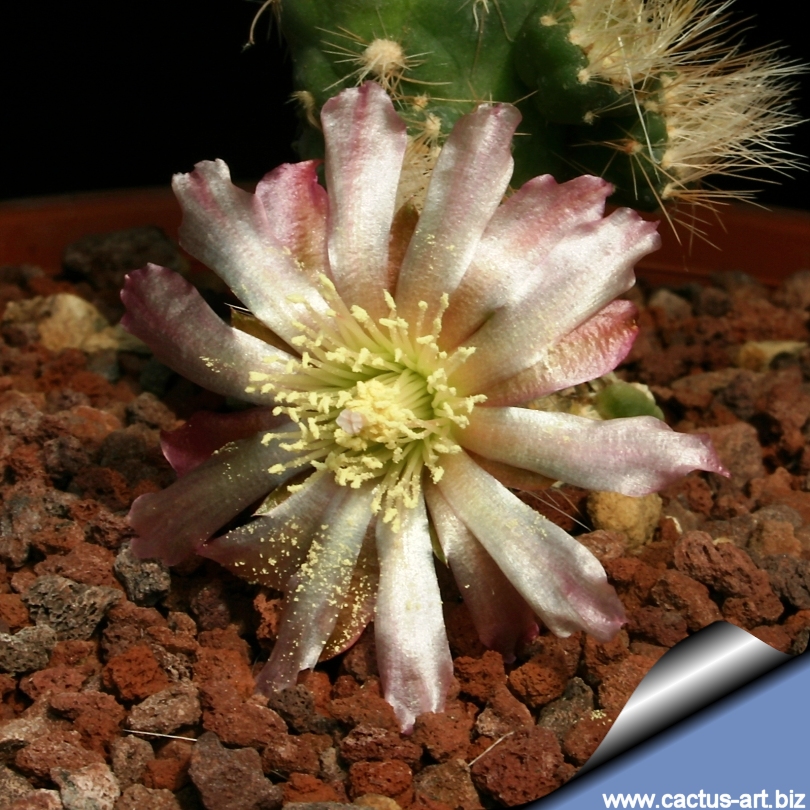
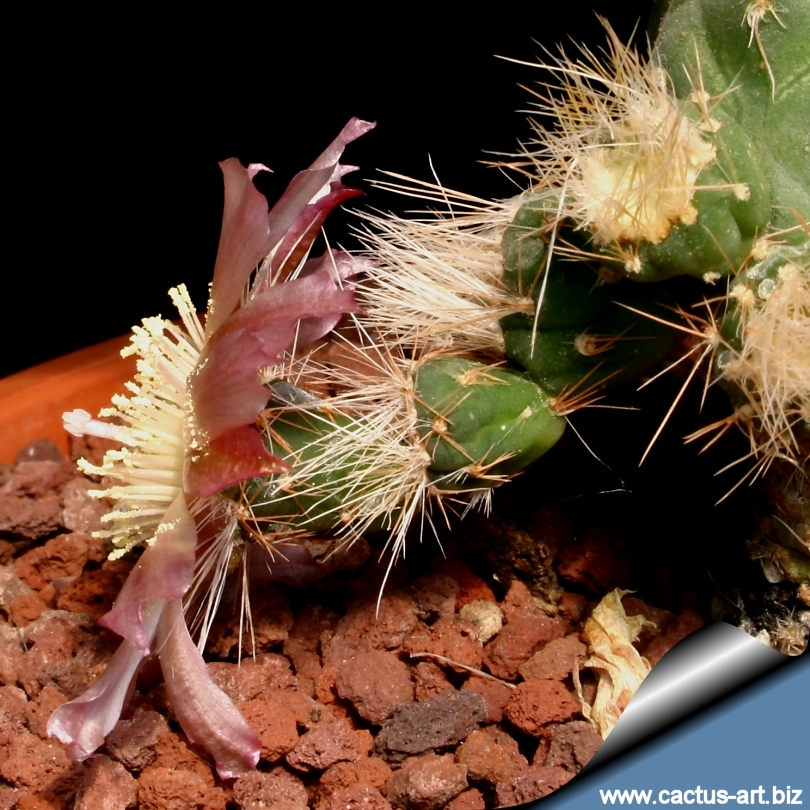
Flower up to 3 cm in diameter range from brown to
deep rose red to a pale yellowish rose and rare, but possible with
almost white.
|
Morphology
(Identifying
Characteristics):
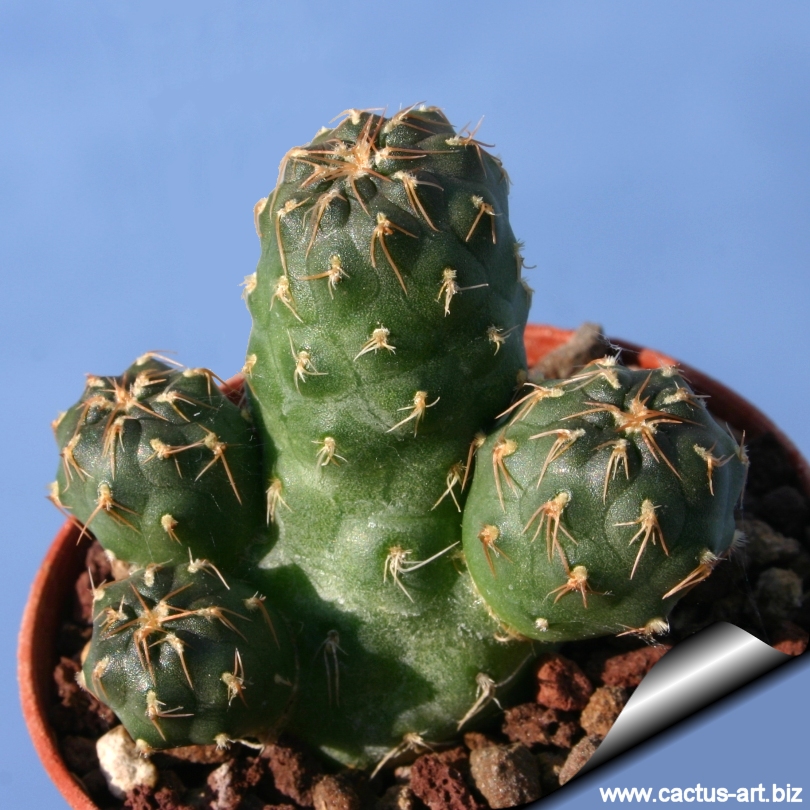
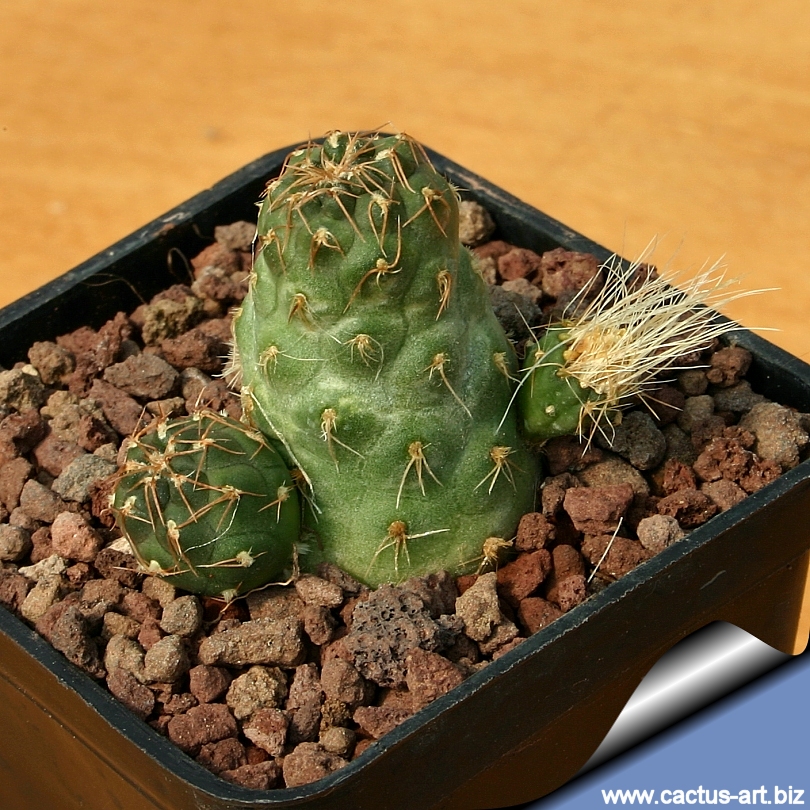
Small plant
geophytic
opuntioid cacti
with very tuberous root which in remains half buried in habitat, showing
approximately 1 cm. from the ground. Plants have usually few segments
(up to 6). But at the northern localities this species can grow with
dozends of segments.
The form "incahuasii" with greener and thinner stems
forms large clumps with more than 100 heads.
This species is very variable and there are many forms of Puna
subterranea.
It looks like a small Tephrocactus, but the
bloom,
fruit and the
seeds clearly show its autonomous nature.
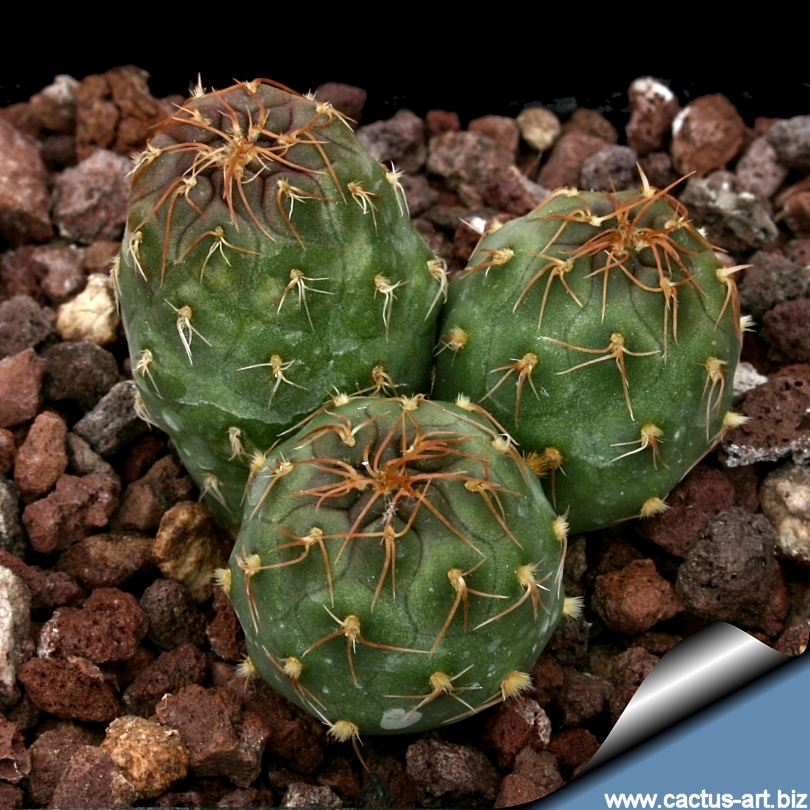
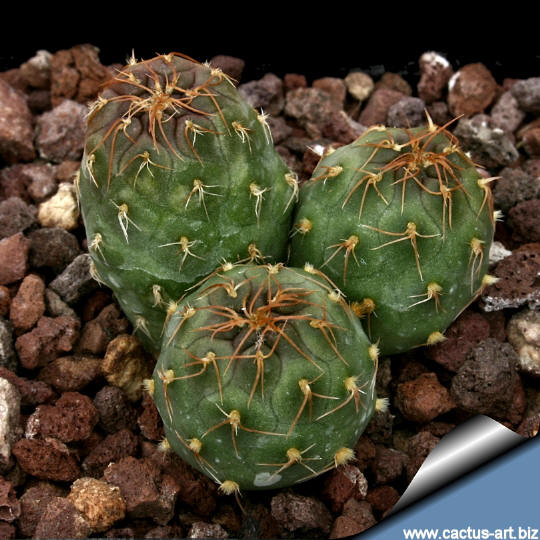
Stem: Grayish-green, to brownish, round in cross section,
elongate, up to 6 cm wide and (but usually less around 15-18 mm in
diameter) and 2-4 cm tall. The stems reduces greatly in volume during
the dry season often retracting the plant underground.
Tubercles: Rhomboidal.
Roots: This plant has deep tuberous roots with only 1 to 3 cm
growing above ground level.
Spines: 1 to 7(-10) pectinated, more or less bent toward the
plants body.
Glochids: None or few in the basal areoles about 1 mm long.
Leaves: The leaves are very small and fall off early.
Flowers: The blossoms 2,5 to 3 cm. long have a larger diameter
than the segments is one of the reasons why Puna subterranea
sometimes is named 'Rebutia of the Opuntias'. At North of Argentina the
colour of the blossoms is rather variable; each specimen seem to show a
different colour. The flower colour ranges from brown to deep rose red
to a pale yellowish rose and rare, but possible with almost white.
Pericarpels without areoles but with a few scales bearing hairs and long
bristles in the axils.
Blooming: Time The flowering is diurnal and takes place during
the summer.
Fruit: Globose, 12-15 mm in diameter, dry indehiscent (it cannot
open by itself )
Seed: 4 mm large covered with a tender arillum.
|
|
 |
 |
|
. |
|
 |
 |
|
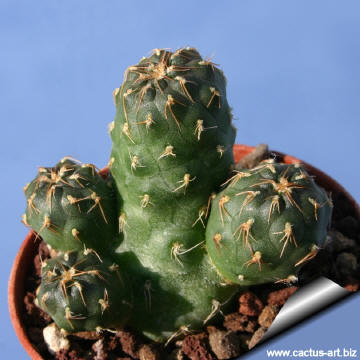
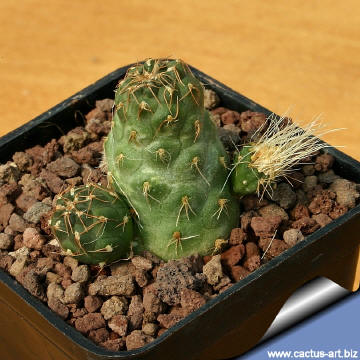
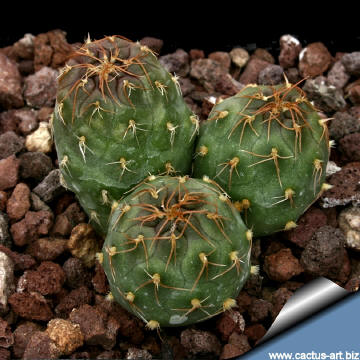
Photo of conspecific taxa, varieties, forms and
cultivars of Puna
subterranea.
|
|
Advertising
|
|
|
|
|
Family:
Cactaceae (Cactus
Family)
Scientific Name:
Puna subterranea (R. E. Fries) R. Kiesling
Published in: Hickenia 1982
Conservation status:
Listed
in
CITES Appendix II
Distribution:
Northwest of Argentina, province of Jujuy to, Potosí, Bolivia at high
elevations.
Habitat:
Grows not on
mountain slopes but in the Punas, the plateaus of the the high Andes.
This area is not so dry as that of P. clavarioides and is relatively
mild and can support at least some shrubs and grasses. Altitude
3000-3500 m.
Etymology:
The
genus
name
“Puna”
derives from the
indigenous word
"Puna" that
indicate the western region up to 4500 m that extends from the Peru,
going throughout Bolivia to the Argentinean North. Delimited at
west by a costal chain of high volcanic picks
and by the Cordillera mountainous chain to the east. The Argentinean
Puna is the natural continuation of the
Bolivian highland.
Synonyms:
- Maihuenopsis subterranea (R. E. Fries) E. F.
Anderson 1999
- Opuntia subterranea R. E. Fries 1905
- Pseudotephrocactus subterraneus (R. E. Fries)
Kreuzinger 1935
- Tephrocactus subterraneus (R. E. Fries) Backeberg
1935
- Cumulopuntia subterranea (R. E. Fries) F. Ritter
1980
- Puna variiflorus
- Tephrocactus variflorus Backeberg 1962 (non val.
publ.)
|
|
|
|
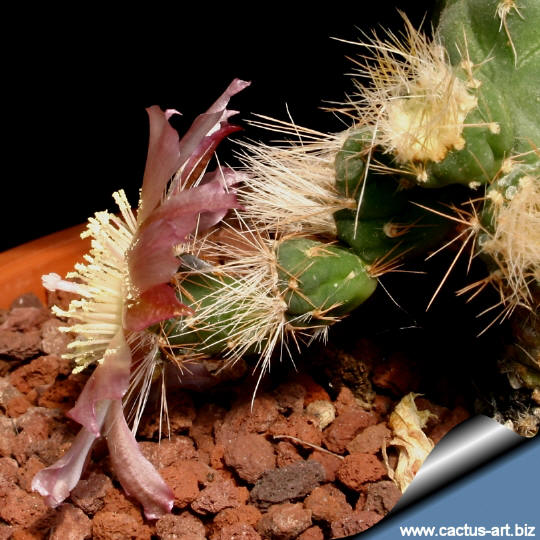
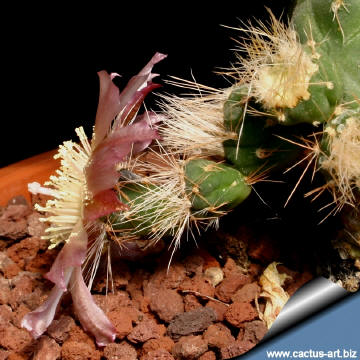
Sometime Puna subterranea produces flowers from the areoles on the
hypantium of another flower. In the photo it is showed a chain of
three flower originated on the flower tube of the previously produced
flower. Growing tips: This species resists cold well
if it is dry and need to be kept
in a cool place during
winter rest (this is important for the flowers as well as for their
health) Without this cool winter period they normally wont get many
buds.. This
mountain cactus - because of the
elongated fat
taproot - necessitate deep
pots
and a well
drained
mineral potting mix. They
are
susceptible to
overwatering, but need enough water during
vegetation. Requires full sun. Specimens in culture,
in special grafted ones, presents a bigger amount of glochids than the
ones growing in their habitat.
Need a sufficient
amount of air.
Propagation: Usually propagated by
cuttings and
grafting . Grafted plants in culture are most common and sprout
strongly. But it is also feasible
to root them but they grow much slower on their own roots and takes
various years prior to they
bloom.


|
|