|
|
|
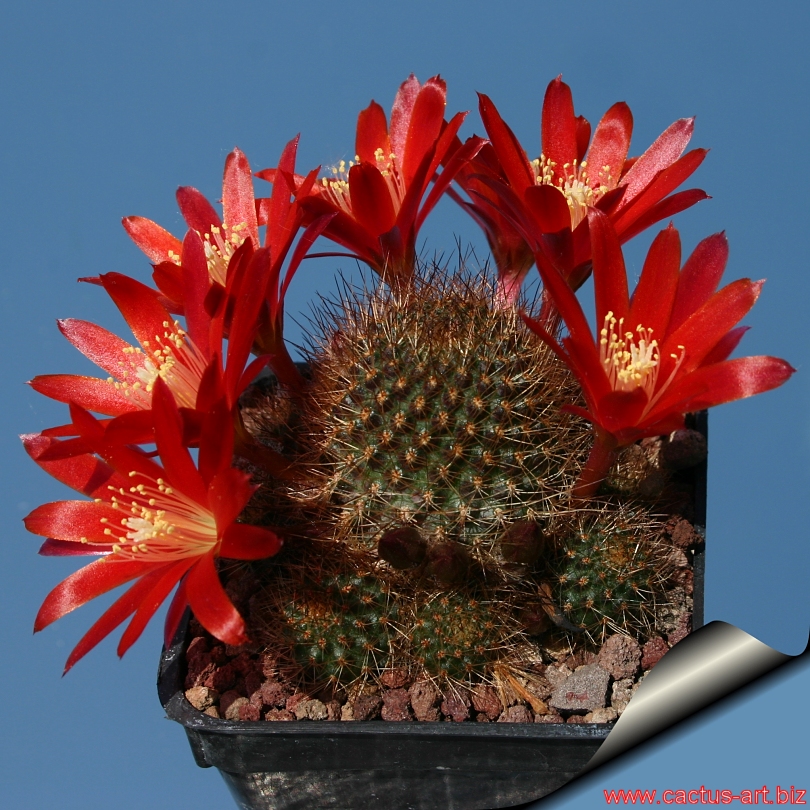
Rebutia fuviseta WR
319 Tarija, Tarija, Bolivia.
This is a great favourite among the small clustering
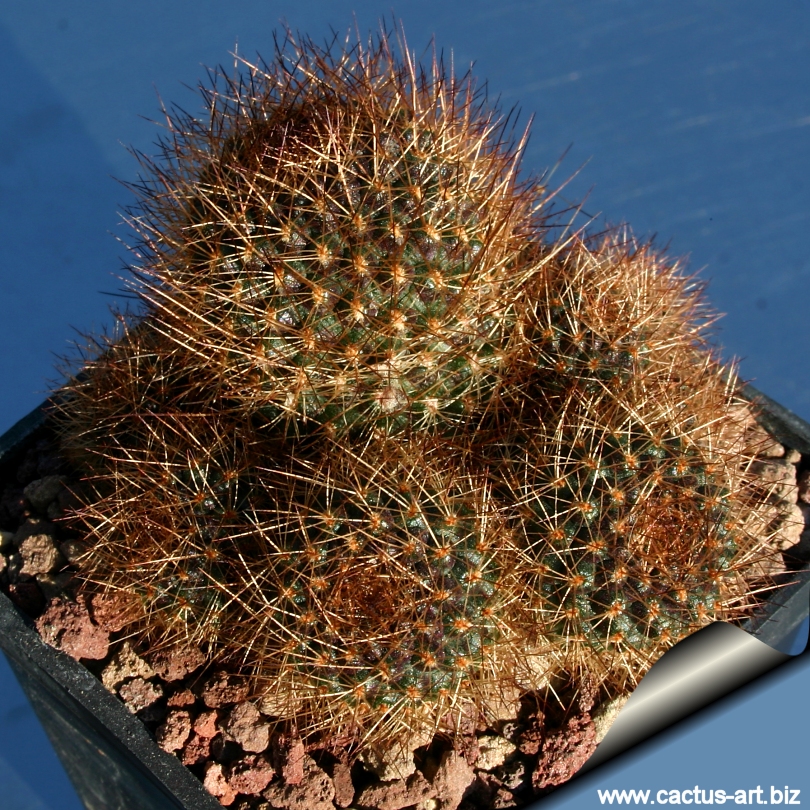
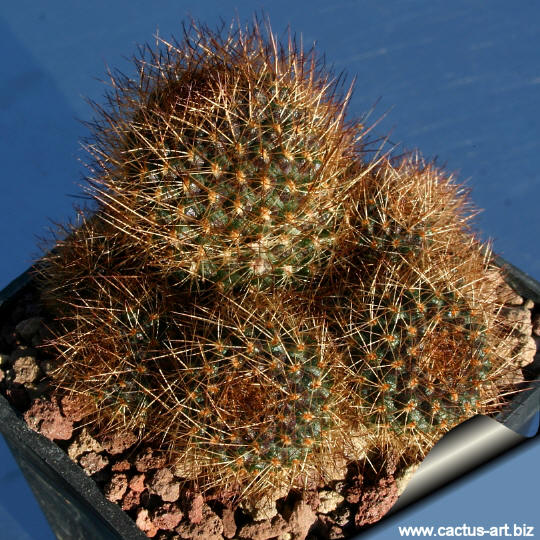
rebutias. It has a dark reddish body with dense soft tawny-red spines.
|
|
|
Description: Single or
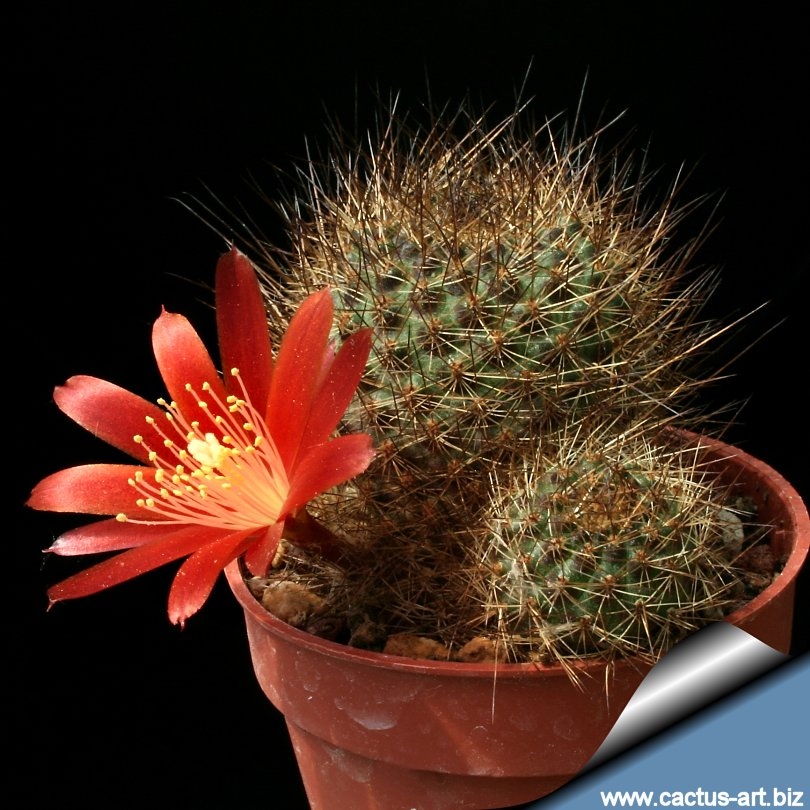
clustering (mat forming) cactus. Probably a very decorative variety of
Rebutia deminuta. Maximum dimensions: 6 cm tall, 10 cm wide.
Stem: Globular or vaguely elongated, 1 cm in diameter, 1,5 cm tall.
The epidermis is very dark tan, green, or brown, almost black,
with the a
reddish-violet nuance.
Ribs: Up to 16 tuberculate and spiralling.
Areoles: Round or oval, with a brown indumentum.
Spines: 10-12 radials and 1-3 centrals, about 6-10 mm long, Thin,
divergent, tawny or reddish-brown with darker tips, that
give to
the plant its characteristic bristled-up form.
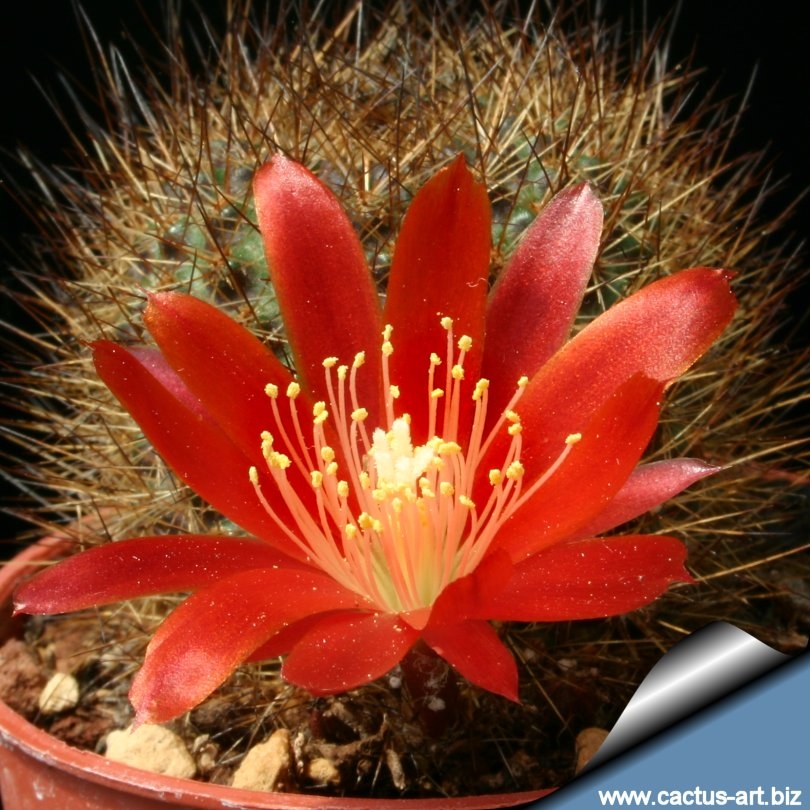
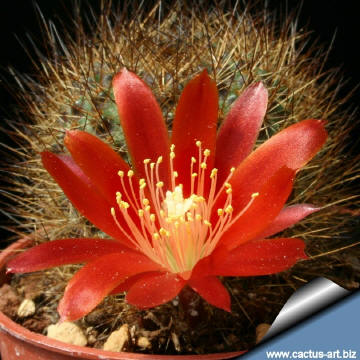
Flowers: Funnel-shaped, thin-petaled (spidery), dark red, 2,5cm in
diameter and length, arising from the base of the stem, with a long
stretched out pistil and showy white stamens.
Blooming time: Diurnal in spring.
Fruit: Spherical, dark red, up to 4 mm. |
|
Cultivation: Needs a very
bright exposure but not direct sun. Water
regularly in summer but do not over-water. Keep dry in winter.
Hardy to
-4°C.
It is better that they be repotted regularly.
Repotting will increase
the number and size of stems, and will increase the number of flowers
produced. Repot yearly until reaching about 40-50mm
in size, then every two or three years will suffice. Repotting is best
done at the end of winter, but it
can be done at other times, too.
Do not water
for a couple of weeks after repotting, to reduce risk of root rot via
broken roots
Propagation: Offsets, seeds |
|


Advertising
|
|
|
|
|
Family:
Cactaceae (Cactus
Family) |
|
Scientific name:
Rebutia fulviseta Rausch,
In:
Kakt.u.a.Sukk. 21(2):29 (1970);
Subgenus: Aylostera Section: Aylostera.
Origin: Bolivia, Tarija, Arque, near Padcaya, 2200 m;
Argentina, Salta, Santa Victoria to Caspala, to Santa Ana, to the east
from Humahuaca.
Conservation status: Listed in
CITES appendix 2.
|
Synonyms:
- Aylostera fulviseta
Rausch
|
|
|
|
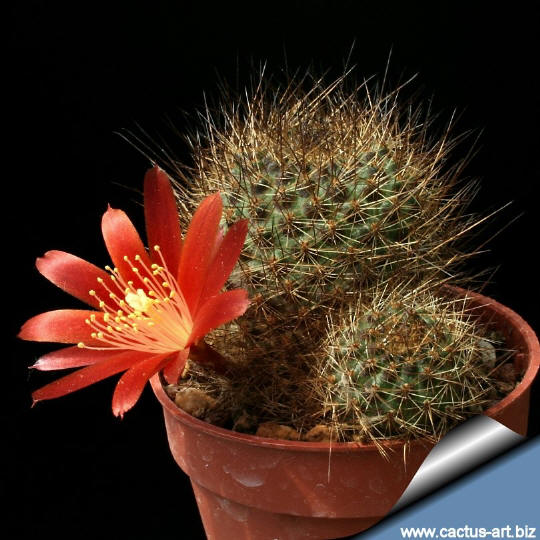
The flowers are diurnal, dark red
with thin petals (spidery) and many showy
white stamens.
|
|


 Cultivation
and Mail Sale
Cultivation
and Mail Sale