Home | E-mail | Photo gallery | Mail Sale Catalogue | Grafting Guestbook | News | Dictionary |  Winter test | Links | Search

  Stapelia gigantea
(Syn: Stapelia nobilis)
CACTUS ART
NURSERY

Cultivation and Mail Sale
of Cacti and Succulents.


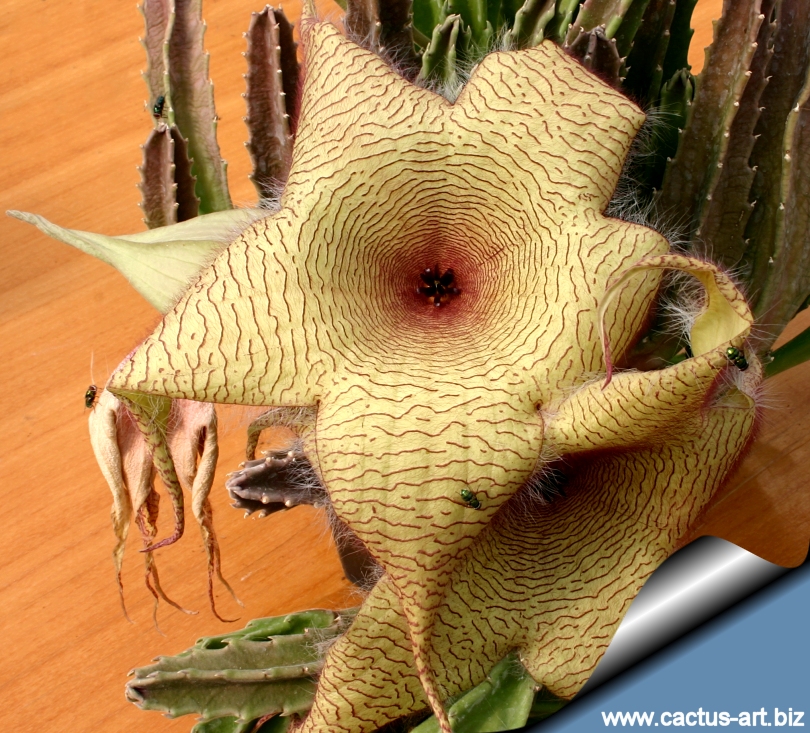
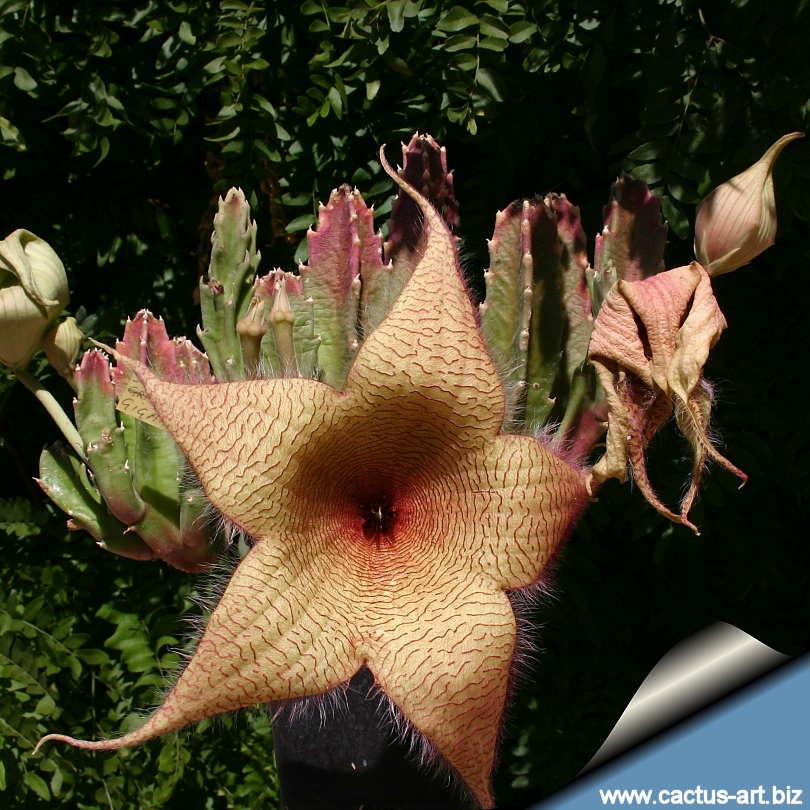
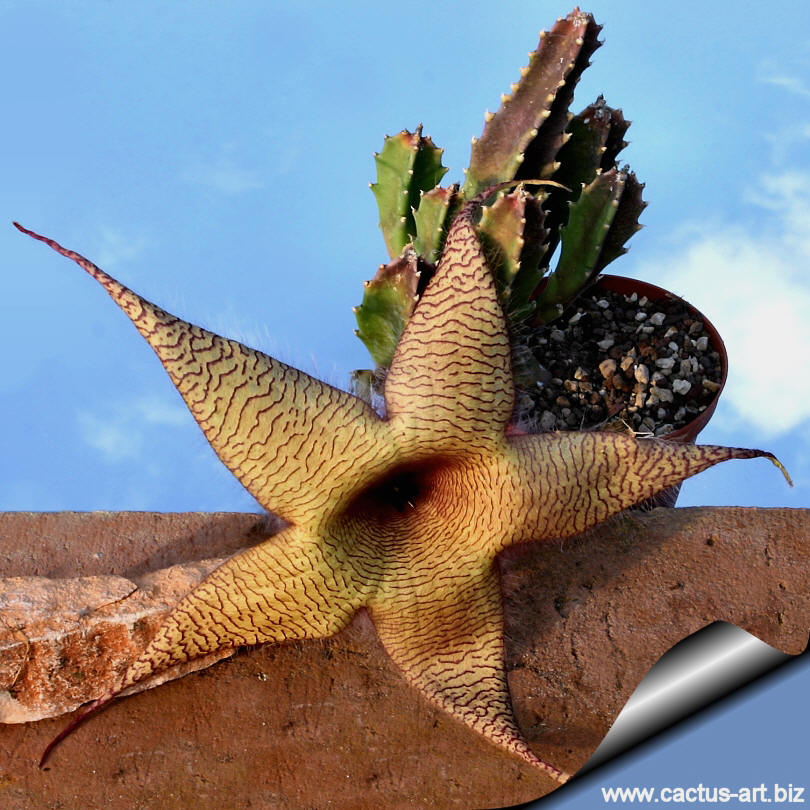
The flowers are among the largest of the genus and can reach a diameter up to 30 cm (or more)


Growth Habits: S. gigantea is a stem succulent that resembles a cactus; the branches are velvety, spineless, quadrangular in cross-section and determinate, ceasing growth when about 10 to 30cm tall, may form big clumps up to1 m in spread.
 
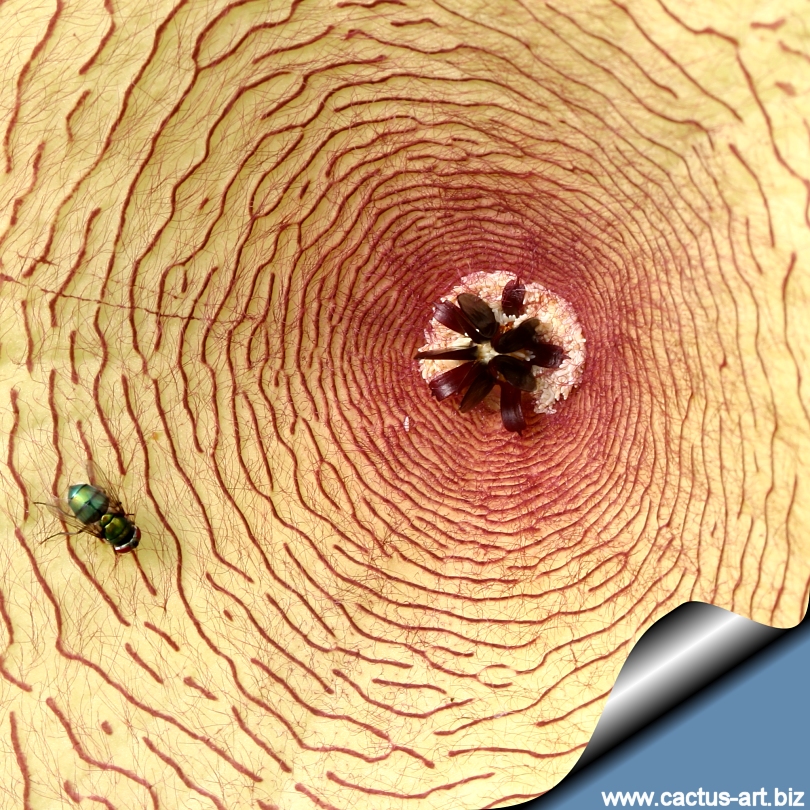
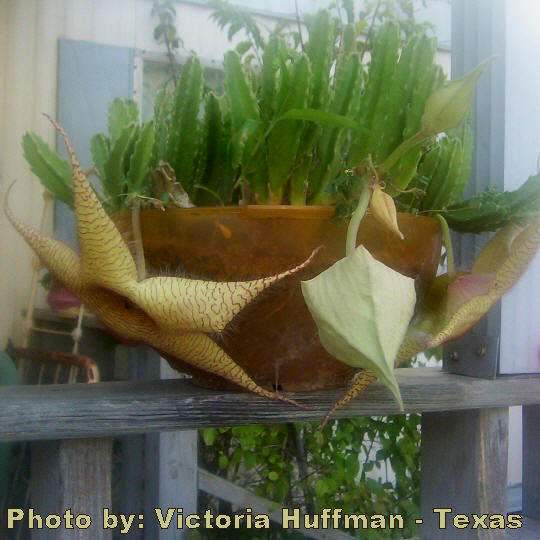
Blooming Time: October. The inflorescence arises near the base of a branch; on this plant the inflorescence had two buds with scale-like leaves at the base of the petioles. When this flower opened., the second bud was aborted. Flowers are extremely large, fleshy, star-shaped and give off a pestilent smell that attracts flies that ensure the successful pollination of this species.
The flowers have a leathery texture mimic the rotting flesh of a dead animal and vary from pale yellow to reddish brown with an elaborate pattern of dark reddish stripes. Fringes of soft white hairs on the corolla segments superficially resemble a layer of mold growing on rotting matter.


Culture: Fertilize once during the growing season with a balanced fertilizer diluted to ½ the strength recommended on the label. They need a well-drained potting-mix and can withstand extreme heat but avoid direct sun in summer. Best in partial sun or light shade.
Frost Tolerance: They need a cool, dry rest period in winter but keep above 10°C and avoid any frost.

Propagation: are propagated by stem cuttings. Take cutting in spring when new growth begins. Let cuttings callus up for 2-3 weeks before planting.


Photo gallery: Alphabetical listing of Cactus and Succulent pictures published in this site.

Photo gallery STAPELIA


Family: Asclepiadaceae (Apocynaceae)  (Milkweeds family)

Scientific name: Stapelia gigantea N.E. Br.

Origin: Southern Africa, Zambia

Synonym: Stapelia nobilis

Common names: Carrion Flower, Star Fish Flower, Giant Zulu, Giant toad plant.


The flower mimic the rotting flesh and putrid smell of a dead animal.

Sun-bleached hairs. Leathery surfaces. Soft and pulpy to the touch. Red, orange, and yellow tissue, like meat and fat rotting in the hot sun. Striped like drying flesh peeling back from the bone. And give off a pestilent disgusting smell that attracts pollinating flies.


A yellow coloured specimen
(Photo by: Victoria Huffman - Texas)


A Special Thanks to all Those Who help us to make this web site
This plant description is based on research and personal experiences and is too short to provide a comprehensive coverage of the subject. Do you see an error in what is shown? Or do you know more about the species than we are showing? Your help is greatly appreciated. Why not send us an email with further information or photos so that we can correct or extend the information provided?

The photos in  this site are subject to copyright. Images may not be copied, downloaded, or used in any way without the expressed, written permission of CACTUS ART nursery and the original photographer.

Home | E-mail | Photo gallery | Mail Sale Catalogue | Grafting Guestbook | Dictionary |  Winter test | Links | Search