|
|
|
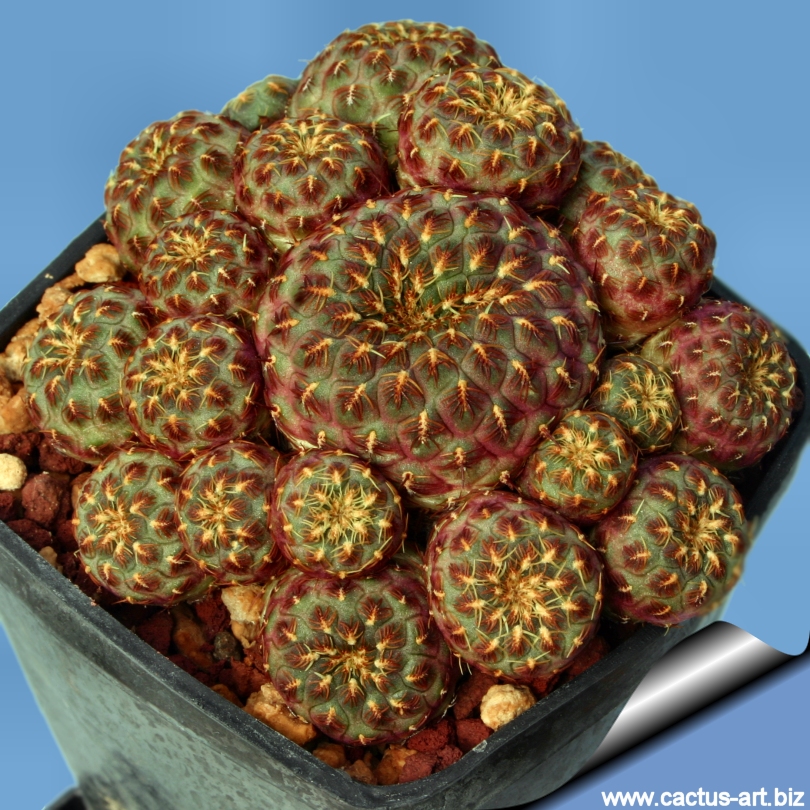
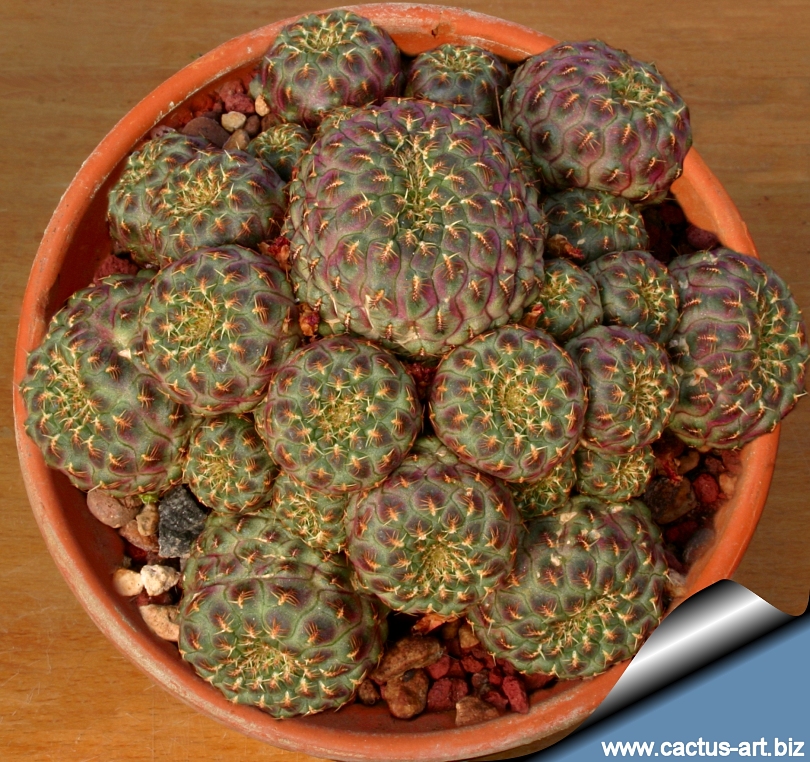
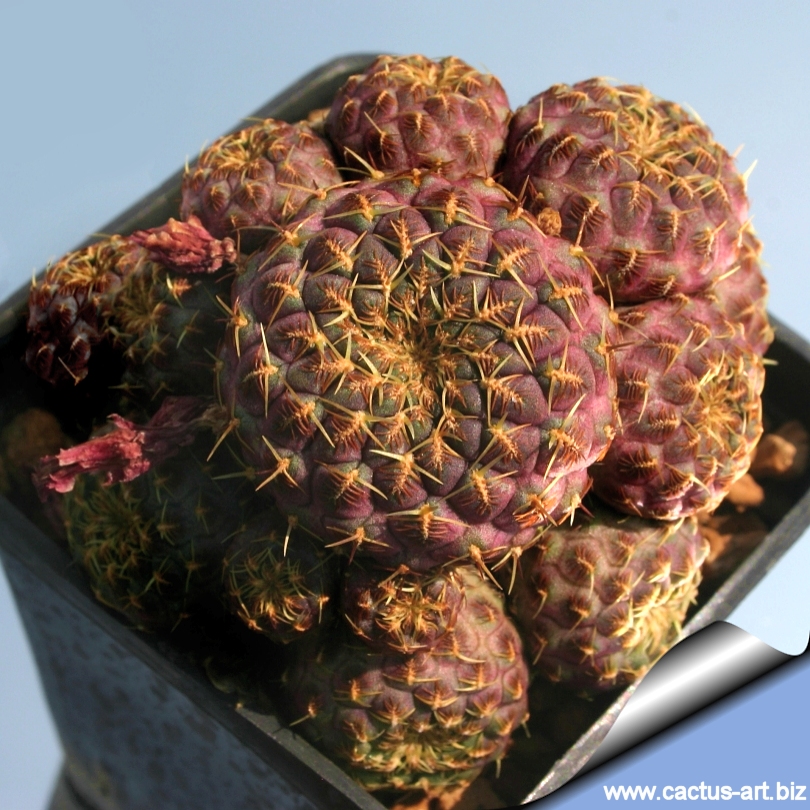
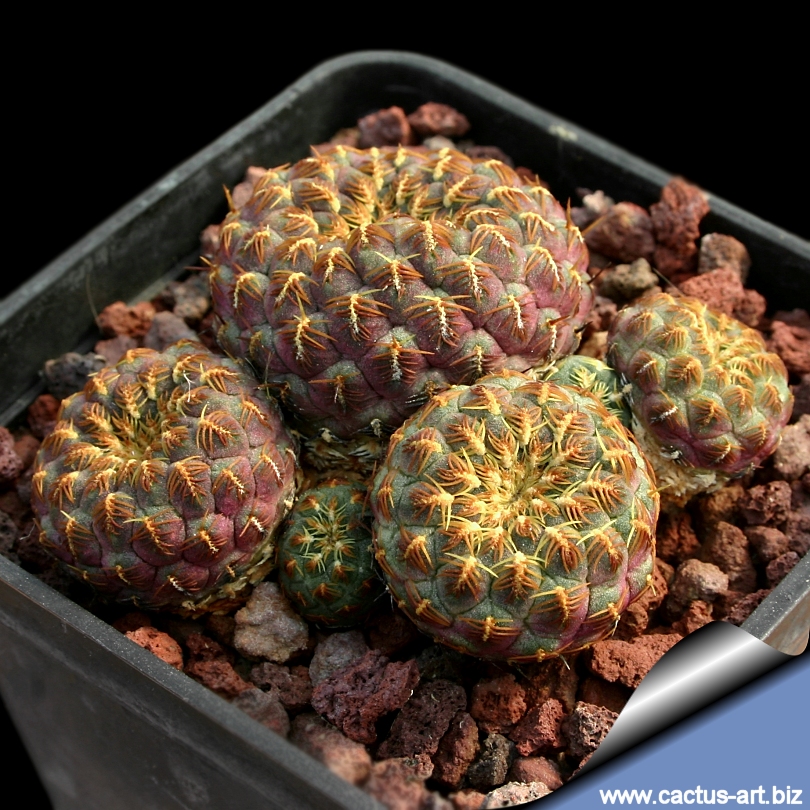
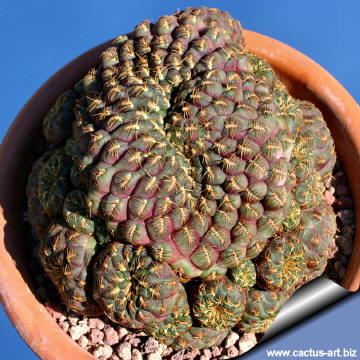
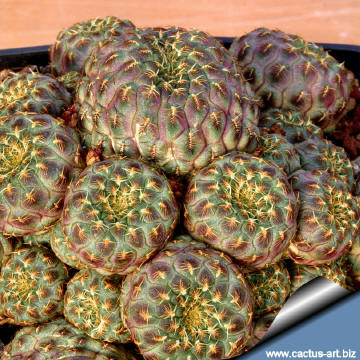
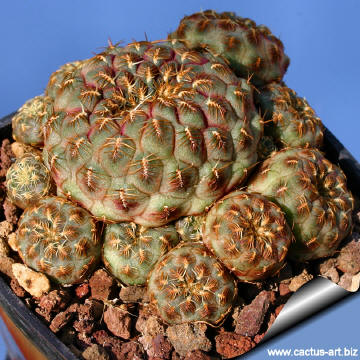
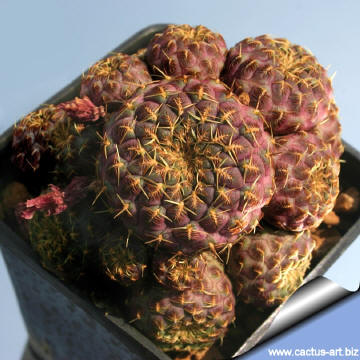
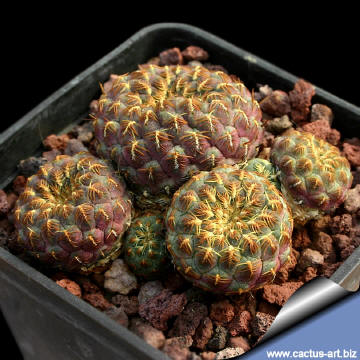
Sulcorebutia rauschii "Yellow spines"
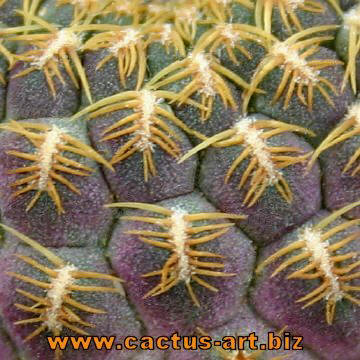
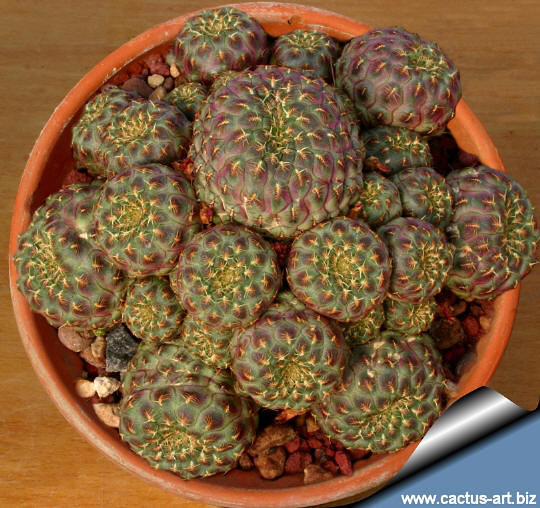
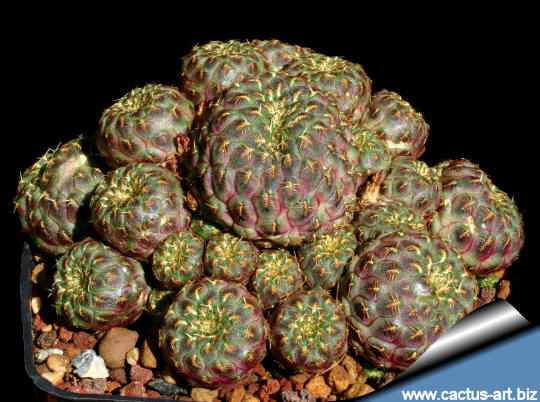
This form has short yellow
pectinate
spines on a mauve
body. Very nice and distinctive.
|
|
Description:
Miniature
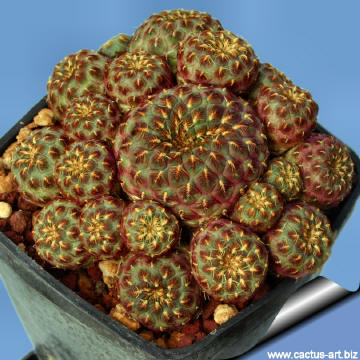
clustering species, readily forms
clumps of many
heads
Stem:
Individual stems 2(4) cm tall, 3(5) cm in diameter. The stem is
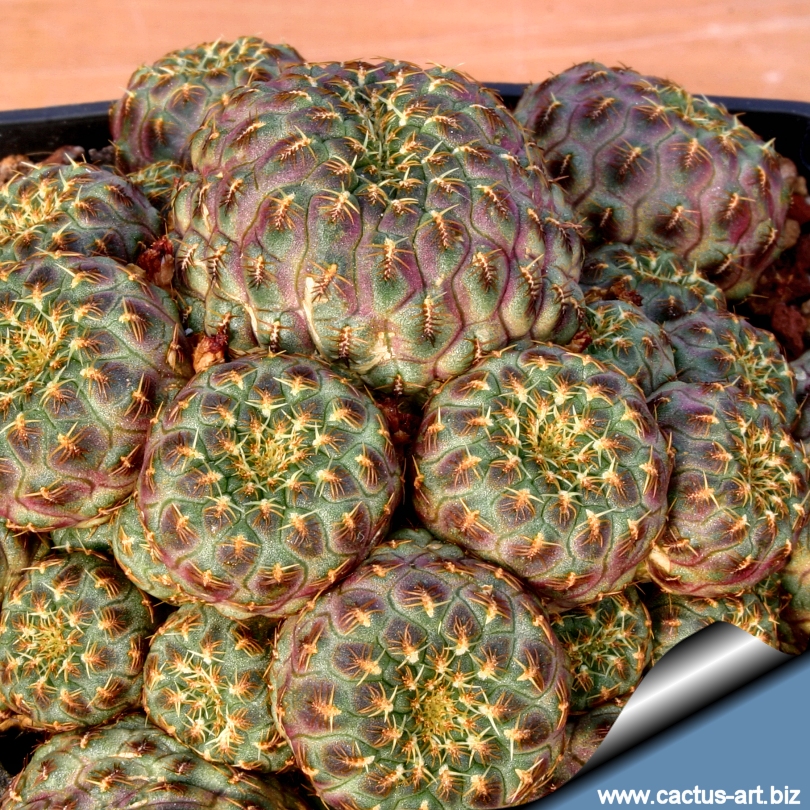
covered by flat mauve and green coloured
tubercles (about 5 mm wide)
Areoles : Long
narrow with short white
felt.
Spines:
9-11 short yellow
radial spines, 1 to 5 mm long, pointing diagonally and downward,
completely flattened against the
tubercles, they take the characteristic form of a fishbone.
Roots:
Conical
Flower:
20 - 50 mm long, 35 - 50 mm wide;
floral tube
funnel-shaped yellowish green with tan coloured
scales, tepals deep magenta with a clearer
throat.
Phenology:
Blossoming time:
late spring.
|
|
 |
 |
|
. |
|
 |
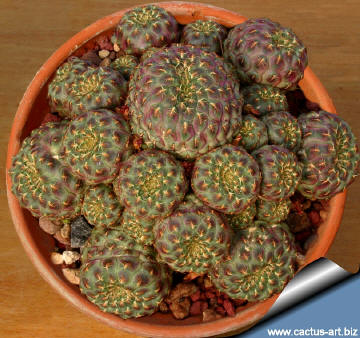
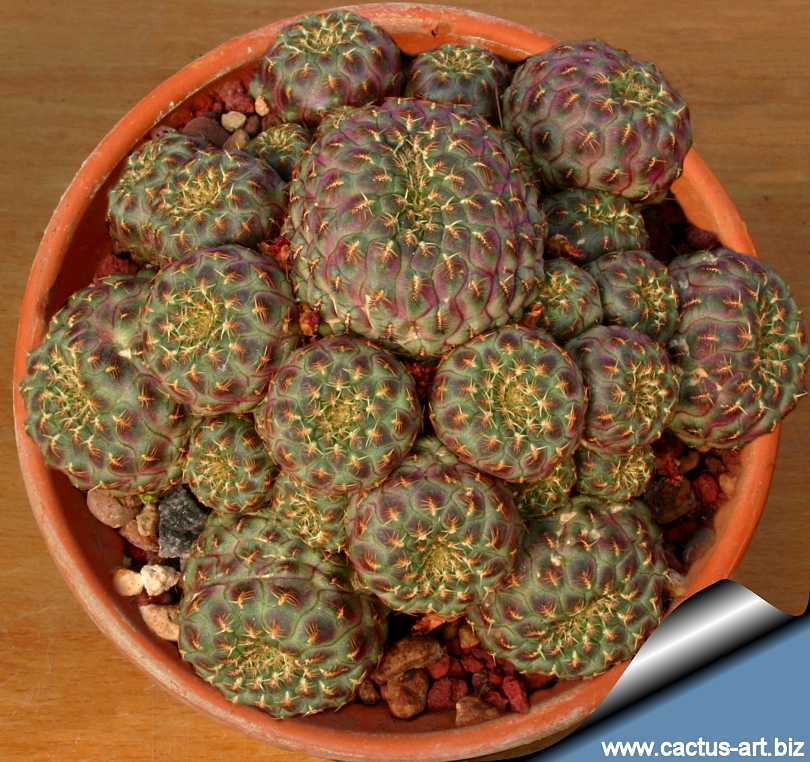
It will slowly forms large cushion with many heads.
|
|
. |
|
 |
 |
|
. |
|
 |
 |
|
Advertising
|
|
|
|
Family:
Cactaceae
(Cactus
Family)
Sulcorebutia rauschii
G. Franck 1969
Published
in: Frank G., Kakt. und and. Sukk., 20 (12): 238 - 239 (1969)
cv. "Yellow
spines"
Origin:
Garden origin (Nursery
produced cultivar)
Conservation status: Listed in
CITES appendix 2.
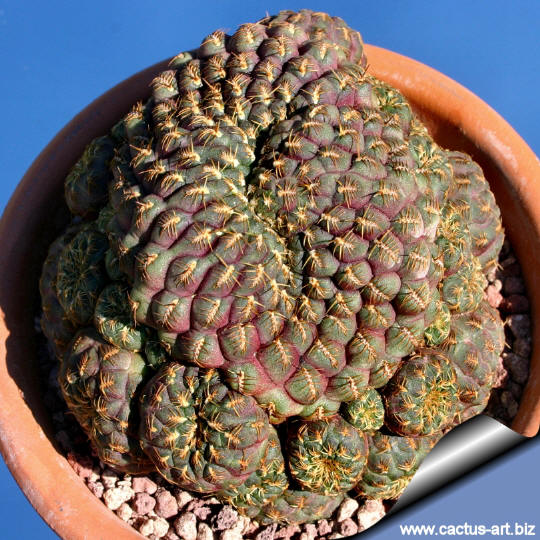
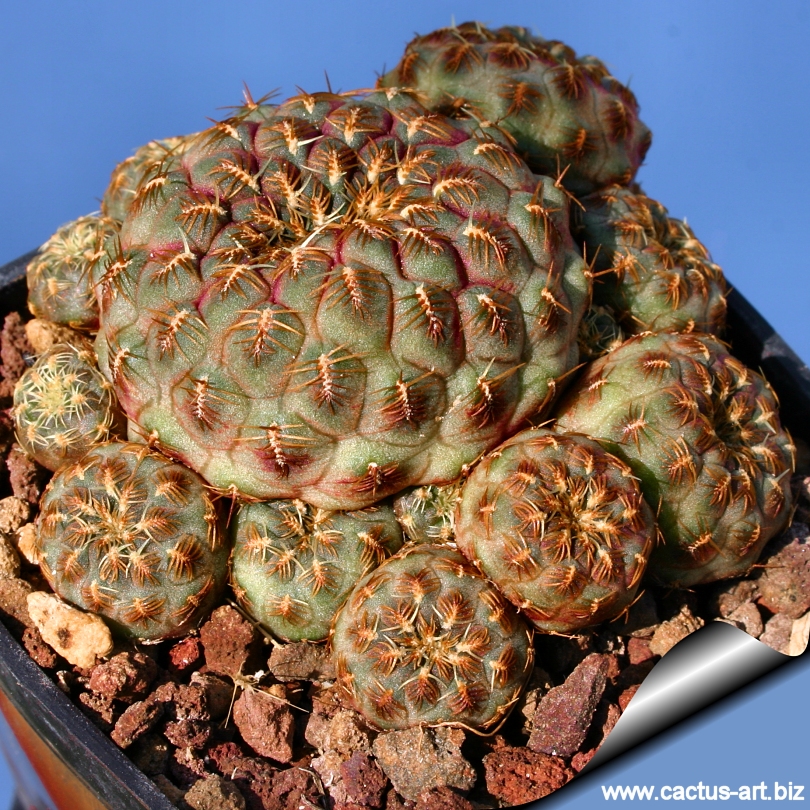
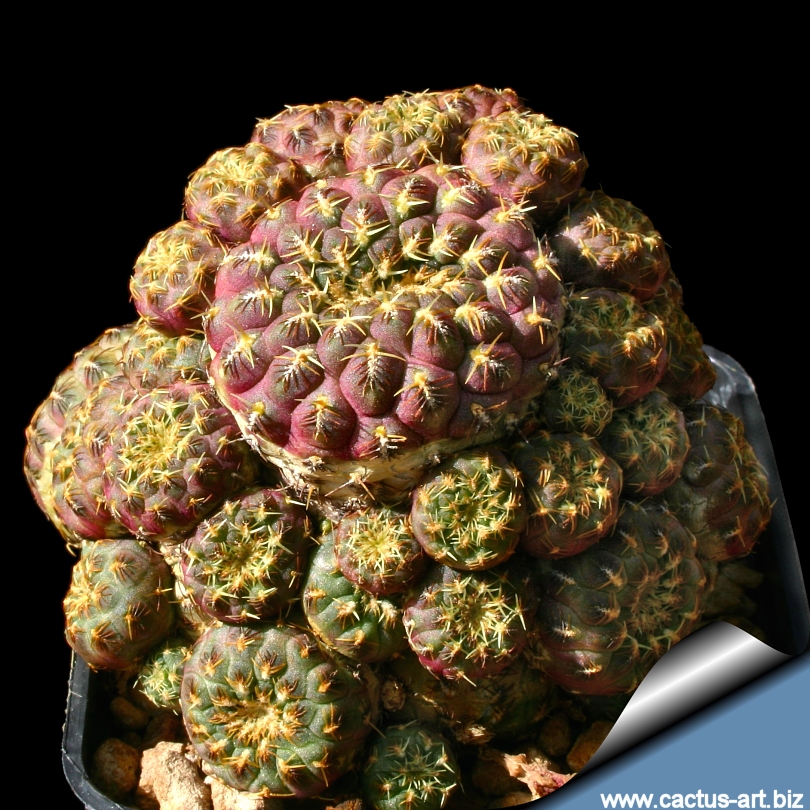
A plant with an elonged apical
meristem line (Cresting?)
|
|
|
|
Cultivation:
Very difficult to find high quality plants of this species in
cultivation, S. rauschii loves a very
permeable, coarse
mineral soil as well as to be strictly
kept dry throughout the
winter quiescent period since it is very
sensitive to any
moisture excesses, To prevent
rottenness it is also advisable to surround its
root neck by very rough
sand or
grit, this help a fast water
drainage and an appropriate
air circulation.
For its
sensitive roots this species is frequently
grafted to avoid root problems. Plants grafted on
Opuntia compressa are easy to grow and quite
frost hardy -5 (-10)° C
Water moderately in the
growing season, keep
dry during the
winter rest.
Overwinter this plant in a cool place (at 0/10°C) this is important for
the flowers as well as for plants
health. Without this cool winter period they normally wont get
any
buds.
Sun Exposure:
Needs a full sun exposure ( light shadow my be useful in the
hottest summer days)
Propagation: Seed,
cutting,
grafting Photo of
conspecific taxa, varieties, forms and cultivars of
plants belonging to the Lobivia
canigueralli complex
(This
Taxon has lots of synonyms whit
several controversial varieties and subspecies and comprises a multitude
of different forms, but where each form is linked to others by
populations of plants with intermediate characteristics):


|
|


 Cultivation and Mail Sale