|
|
|
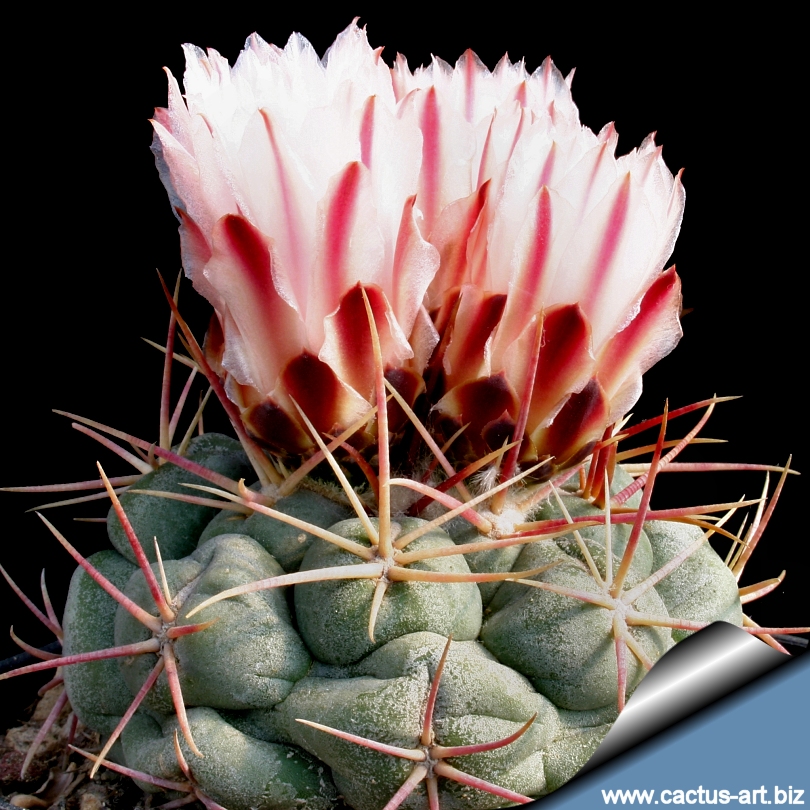
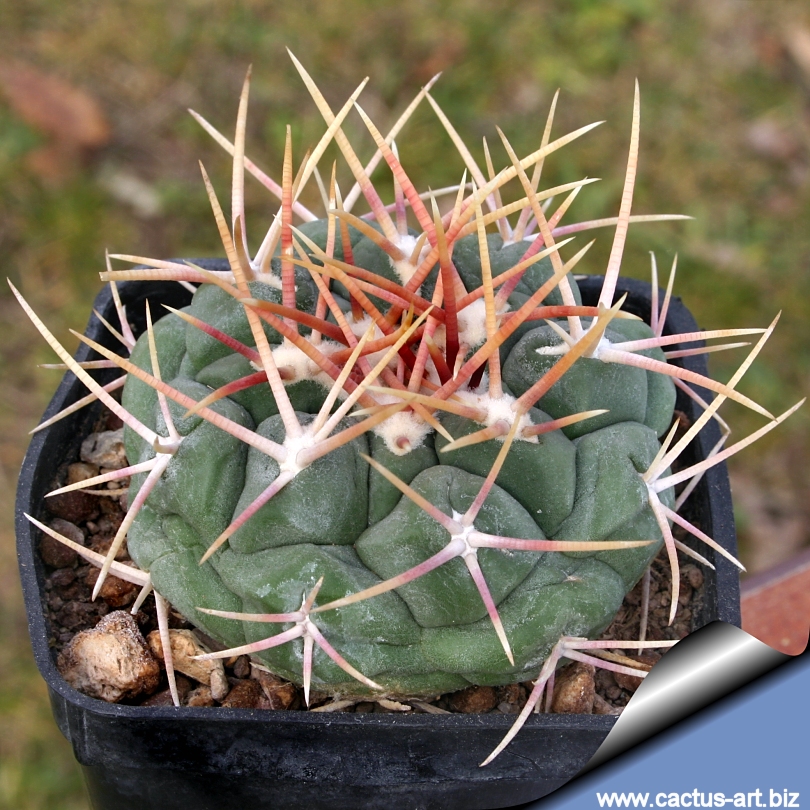
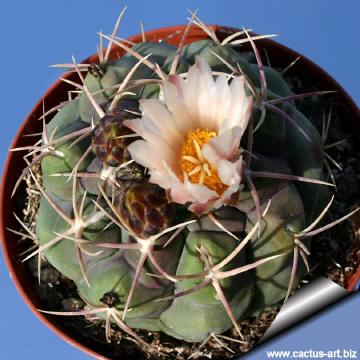
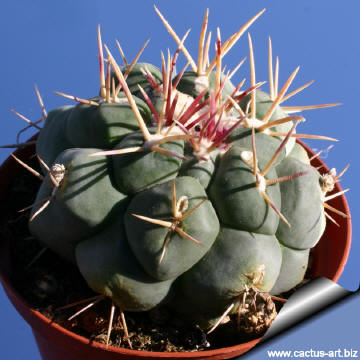
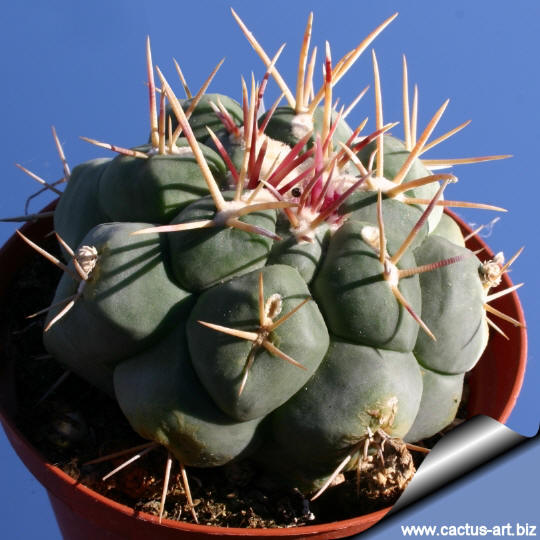
Thelocactus lloydii SB113 Salinas, SLP, Mexico
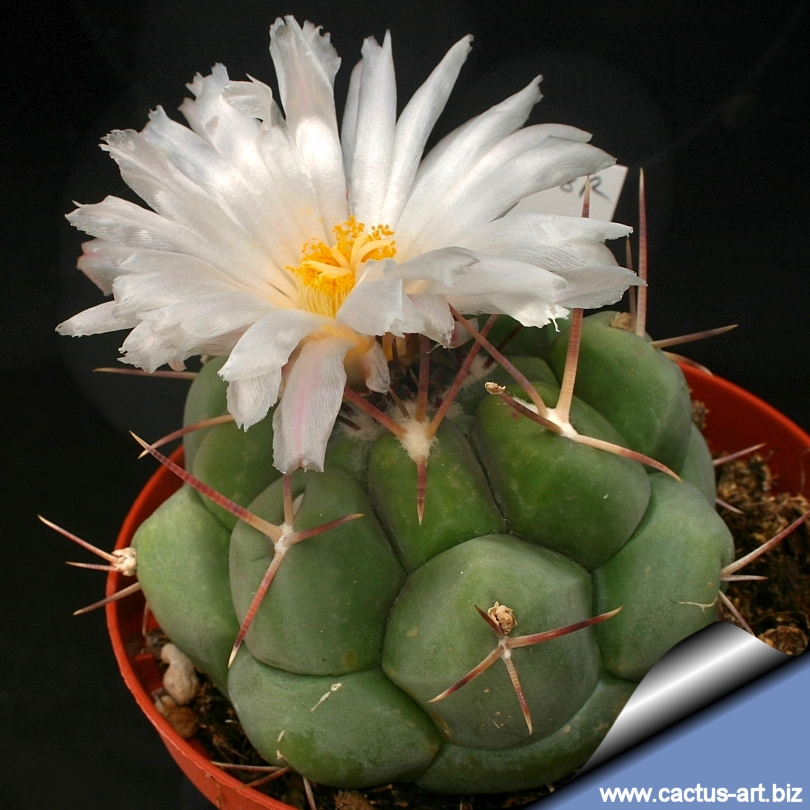
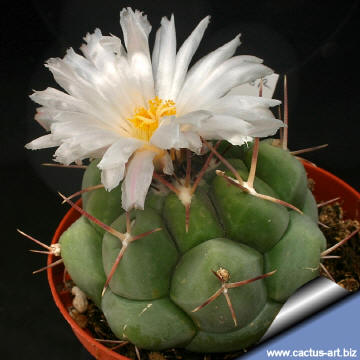
This species has thick grey stems with fat flat tubercles which
have
polygonal bases to fit together without chins.
|
|
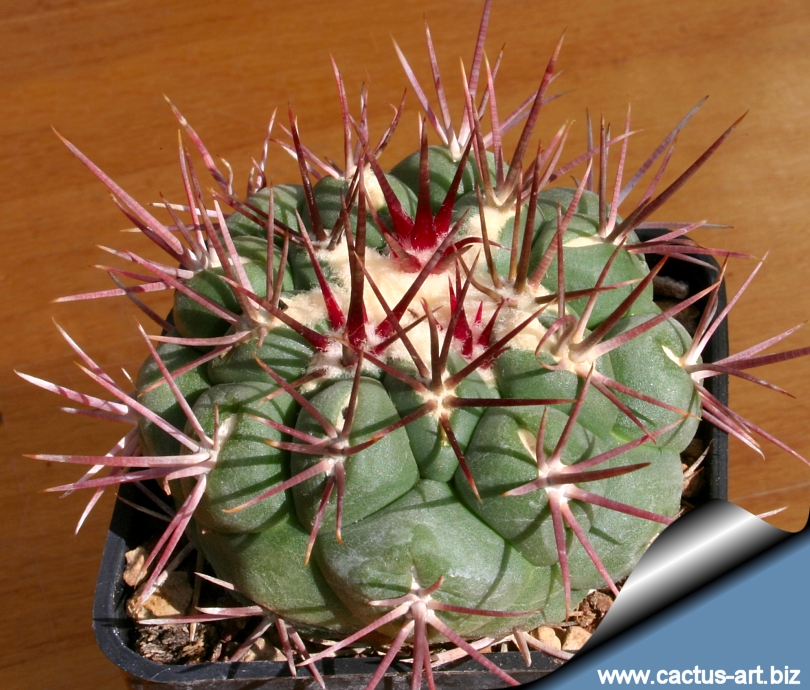
Description: Solitary and strongly armed cactus.
Stem: Depressed-globose, 8 to 12 cm broad, grey to bluish-green,
covered by a
glaucous/grey
pruina.
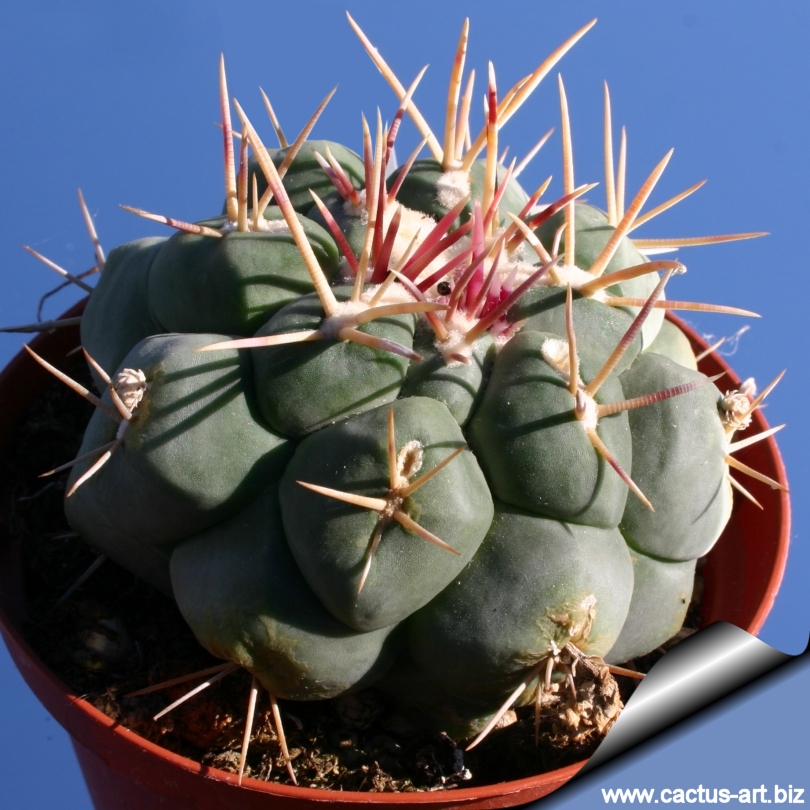
Tubercles: Thick but low, often wider than long, sometimes 4 cm.
wide; flowering groove rather conspicuous but narrow, extending from
spines to about half-way to axil of tubercle;
Spines: It has 1-3 reddish-white-brown central spines with sharp
yellowish-crimson tips, the longer ones up to 6 cm,
and 6-8 reddish-white brown radial spines per areole. Ascending from and
curved outward from middle, terete and somewhat angled at base. The
spines are often highly coloured and maintain that bright tint on at
least part of the spines for a long time but bleach out to a pale
grey-brown as they became older.
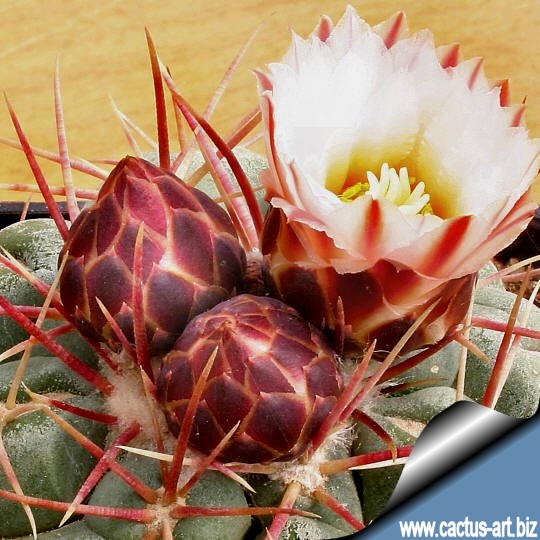
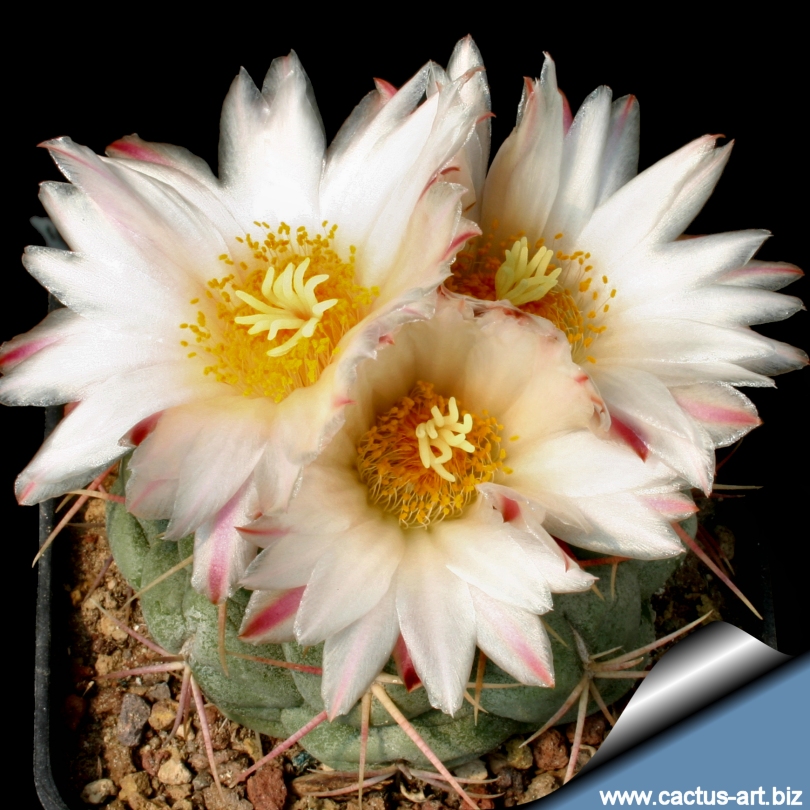
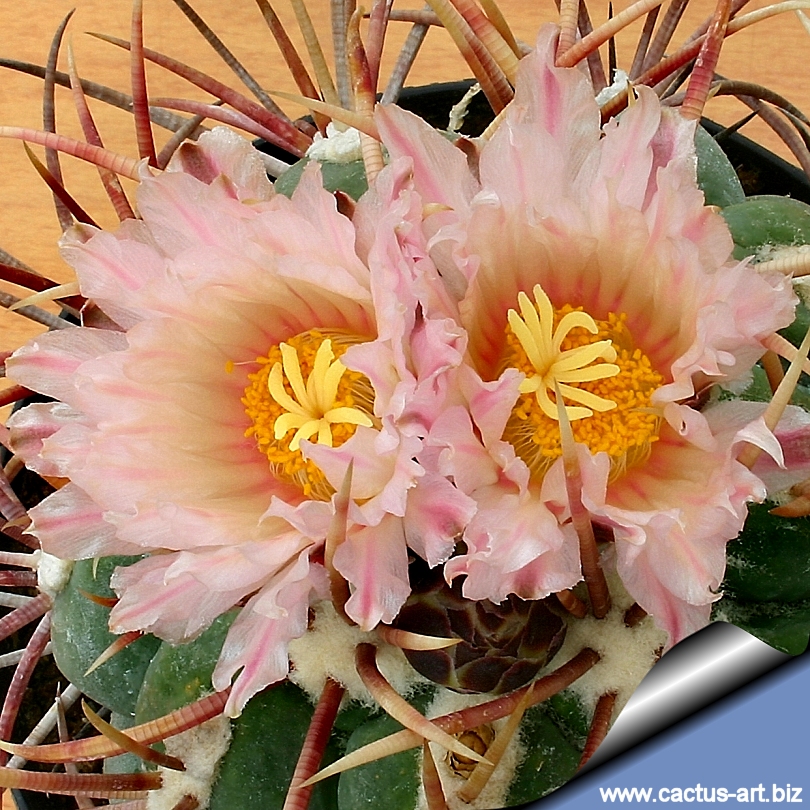
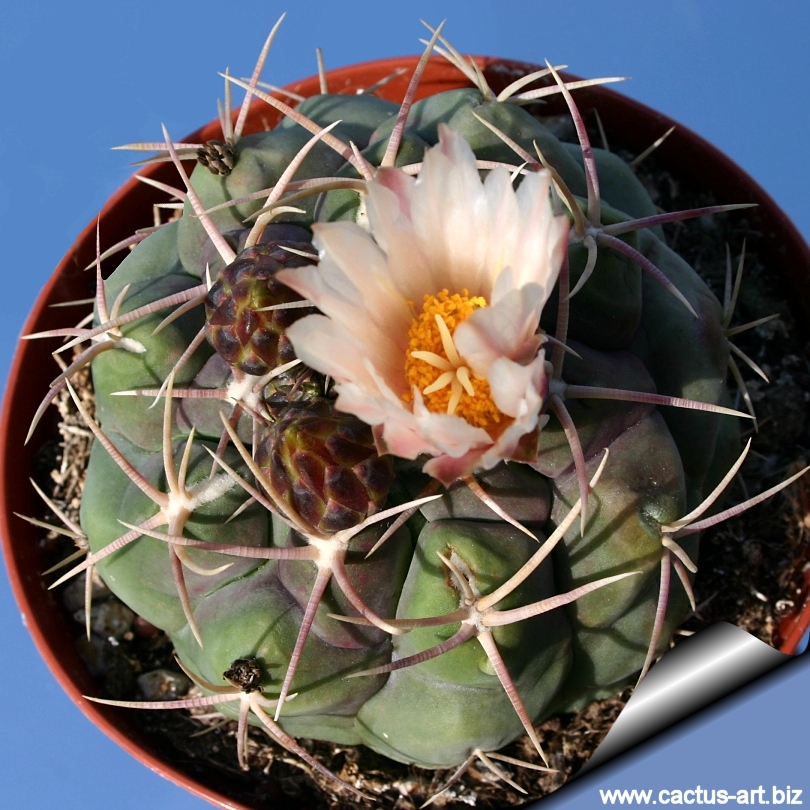
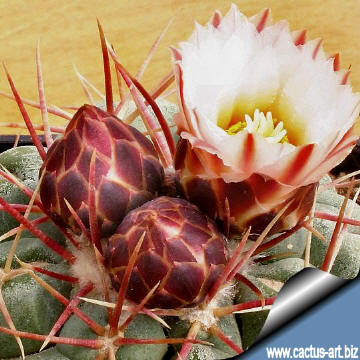
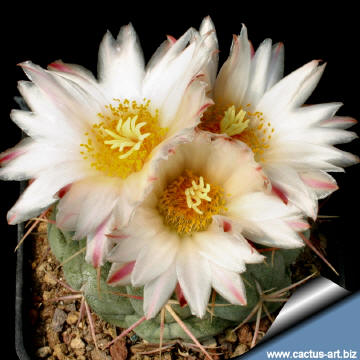
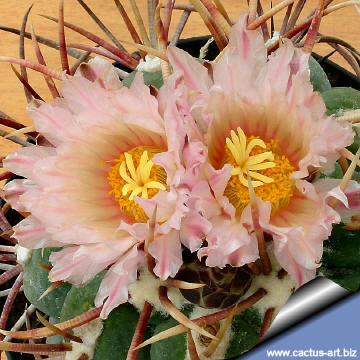
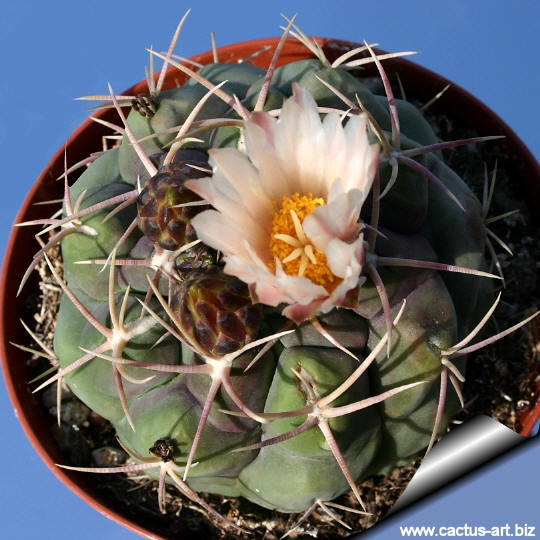
Flowers: Light pink to almost white with a darker midline, never
deep purplish pink. Filaments whitish, anthers honey/yellow, style
yellowish, (eventually pinkish at top), stigma lobes pinkish/yellowish.
|
|
|
|
|
. |
|
 |
 |
|
. |
|
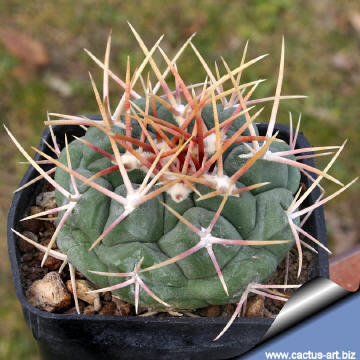
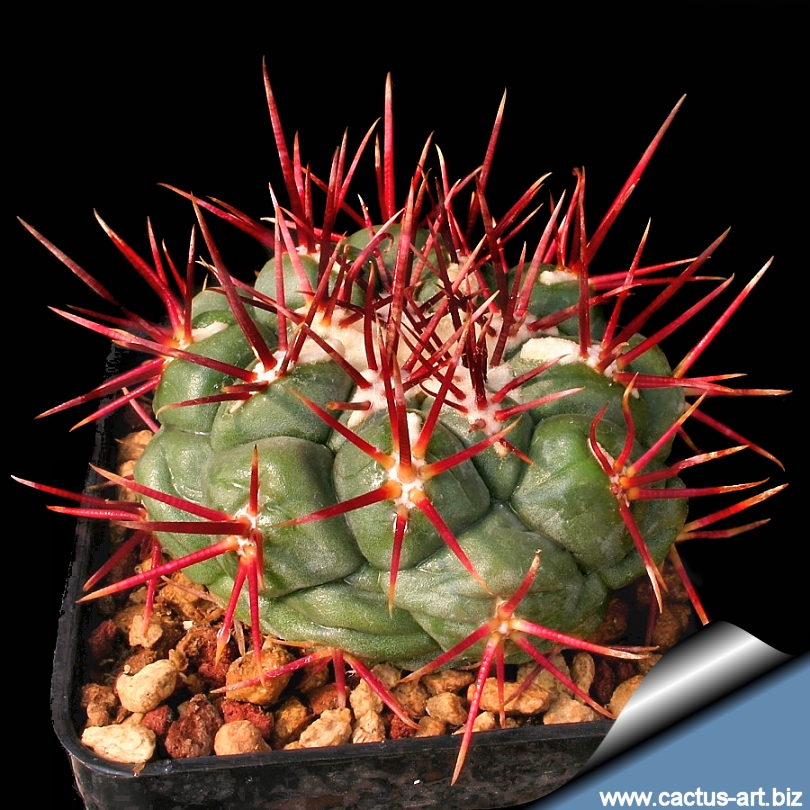
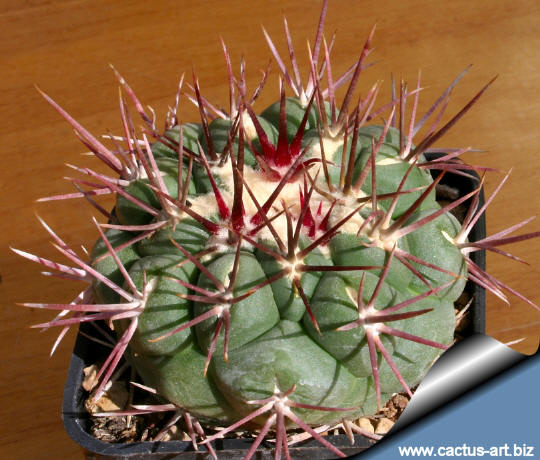
Spines are creamy-white to greysh-pink |
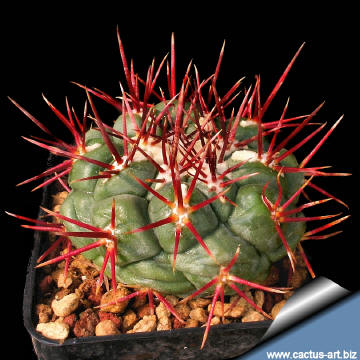
but wet spines are are bright red. |
|
. |
 |
 |
|
. |
|
|
|
|
Family:
Cactaceae
(Cactus Family)
Scientific name:
Thelocactus lloydii
Britton & Rose
In: Cact. 4: 11 (1923)
Collected by F. E. Lloyd in northern Zacatecas, Mexico, May 25, 1908
(No. 33).
Synonyms:
- Thelocactus hexaedrophorus ssp. Lloydii (Britton &
Rose) N.P.Taylor 1998
- Thelocactus hexaedrophorus var. lloydii
Conservation status: Listed in
CITES Appendix II
|
|
|
|
Cultivation: It is a summer
growing species, easy to cultivate. Water regularly from Spring to
Autumn, but do not
overwater. It
can become too elongated if the compost is too rich. Requires full sun
or light shade and careful watering to keep plant compact with strong
coloured spines. It needs good drainage and a very porous potting mix.
In Winter, keep dry.
Reproduction: From seed, since the plant rarely produces plantlets.
Photo of conspecific taxa, varieties, forms and
cultivars of plants belonging to the
Thelocactus hexaedrophorus
complex:

 |
|


 Cultivation and Mail Sale