|
Morphology (Identifying
Characteristics):
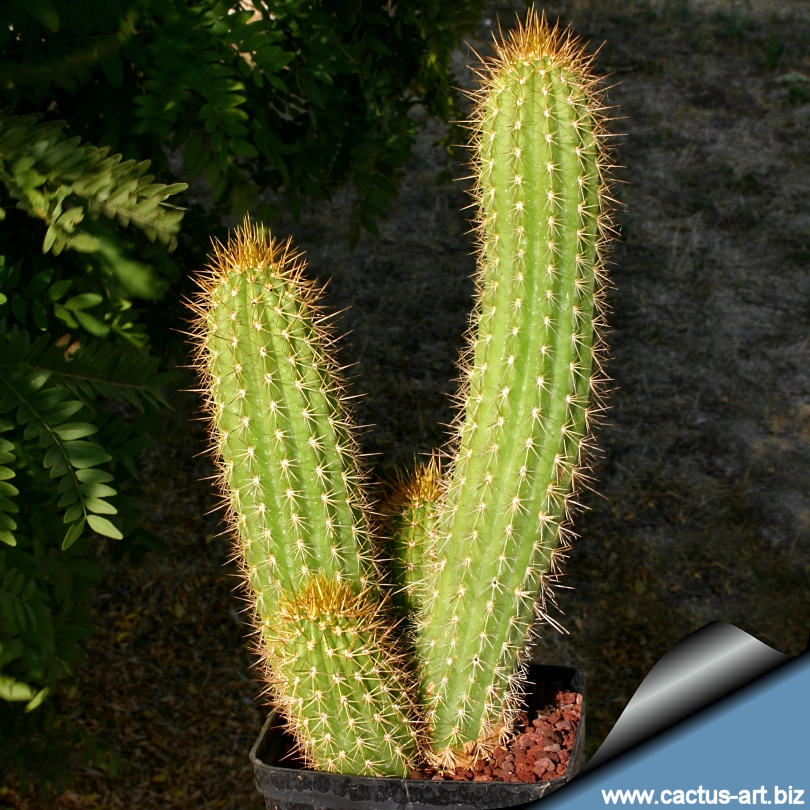
Habit: Multi-stemmed columnar
cactus
Stem:
Stem
upright, at first simple, later profusely branching at the base;
branches ascending parallel with the main stem.
Up to about 2 mt, but usually smaller,
5 to 6 cm. in diameter, columnar; ribs 10 to 15,
obtuse,
rounded;
Areoles :
About
1 cm. apart, large, covered with curly yellow wool,
turning white or grey as they
age;
Spines: Radial
spines 8 to 10, 6 mm to 1 cm. long, spreading, stiff,
sharp, amber-yellow to brown;
central
1 to 3 yellowish centrals, 12 mm long,
stronger and longer than the radials; all the spines later
becoming grey.
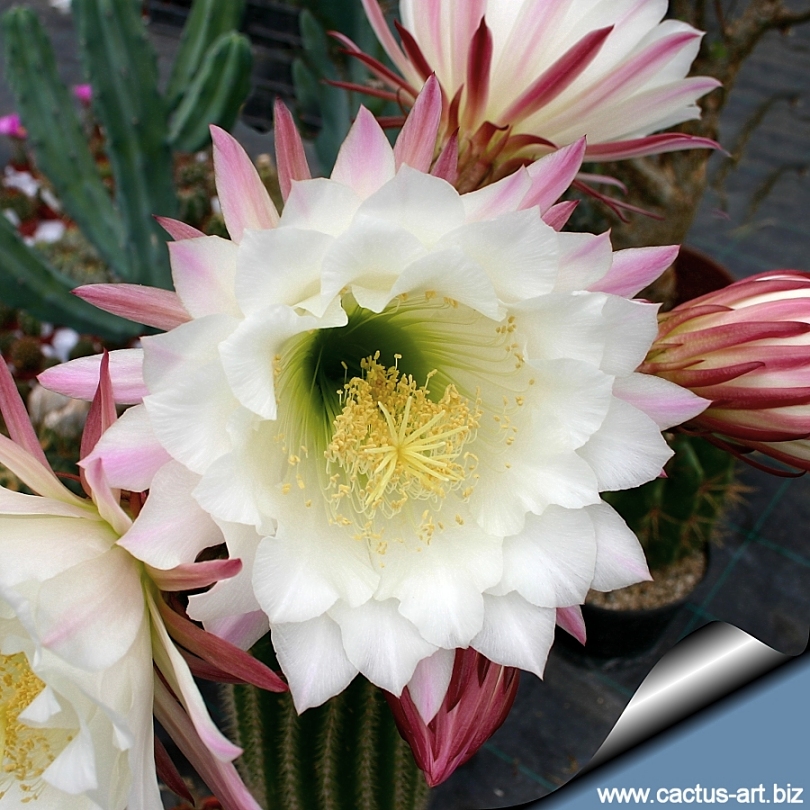
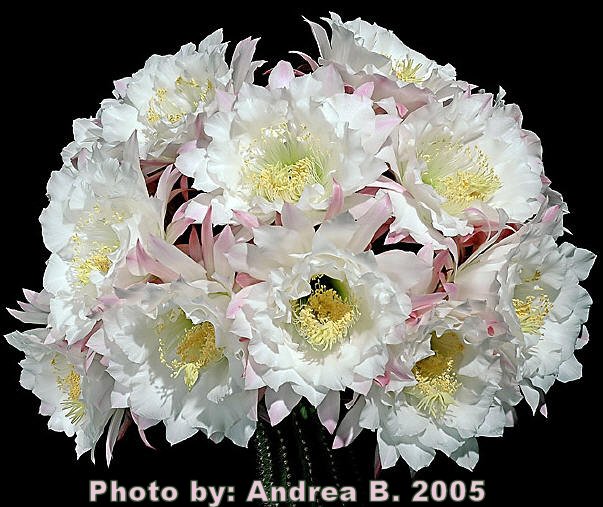
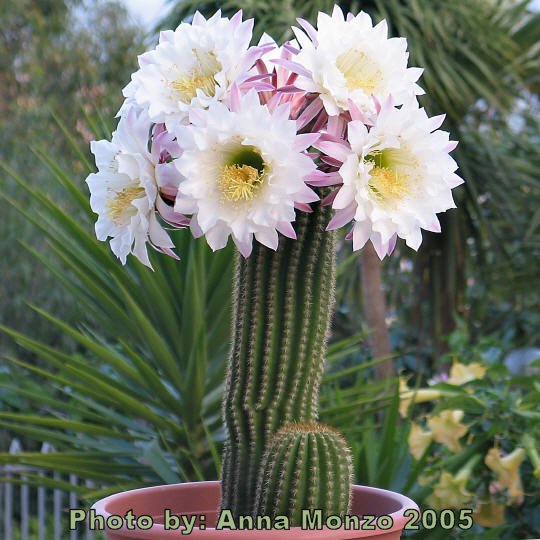
Flower:
Nocturnal, white,
about 20 cm. long and 15 cm. in diameter
lasting about 24 hours from one sunset to the following one.
Blooming time is
in late
spring.
|


 Cultivation and Mail Sale