|
|
|
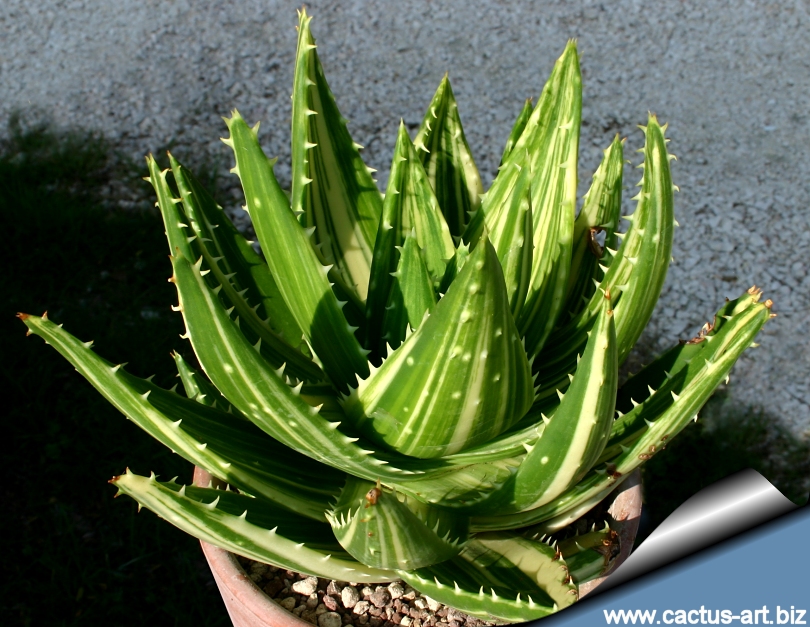
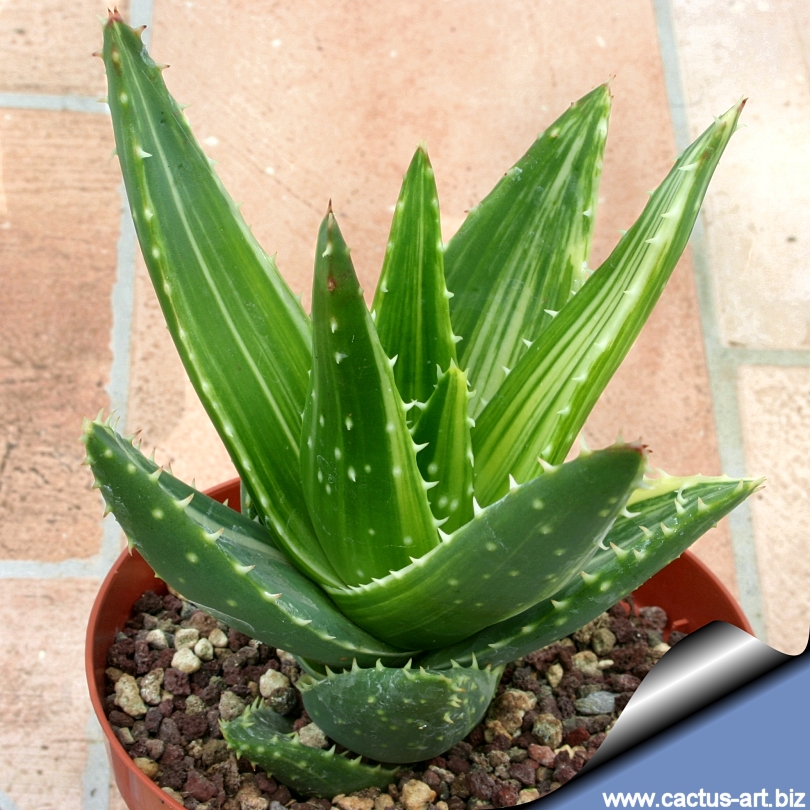
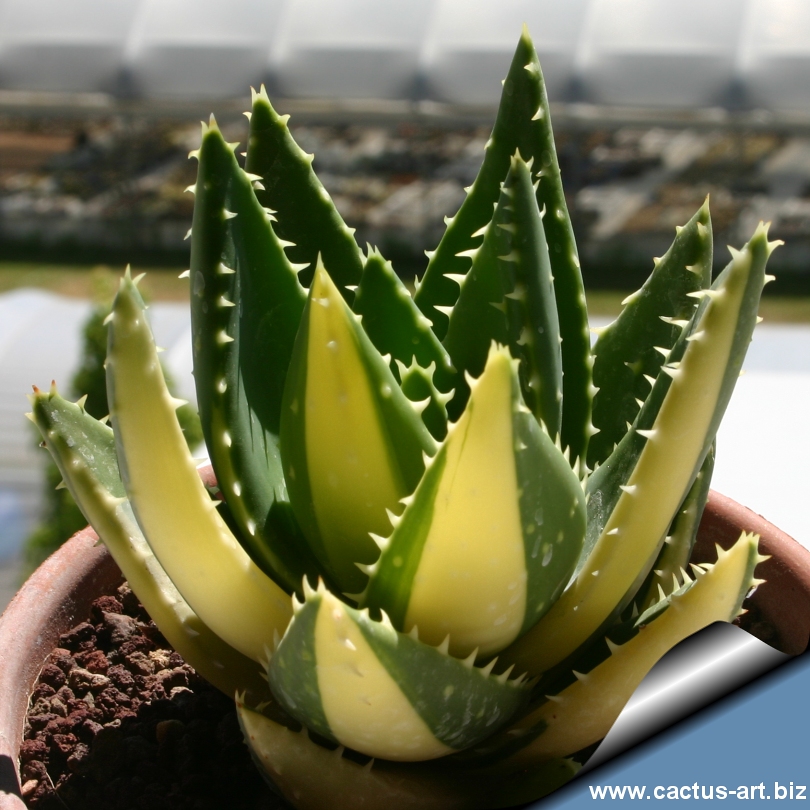
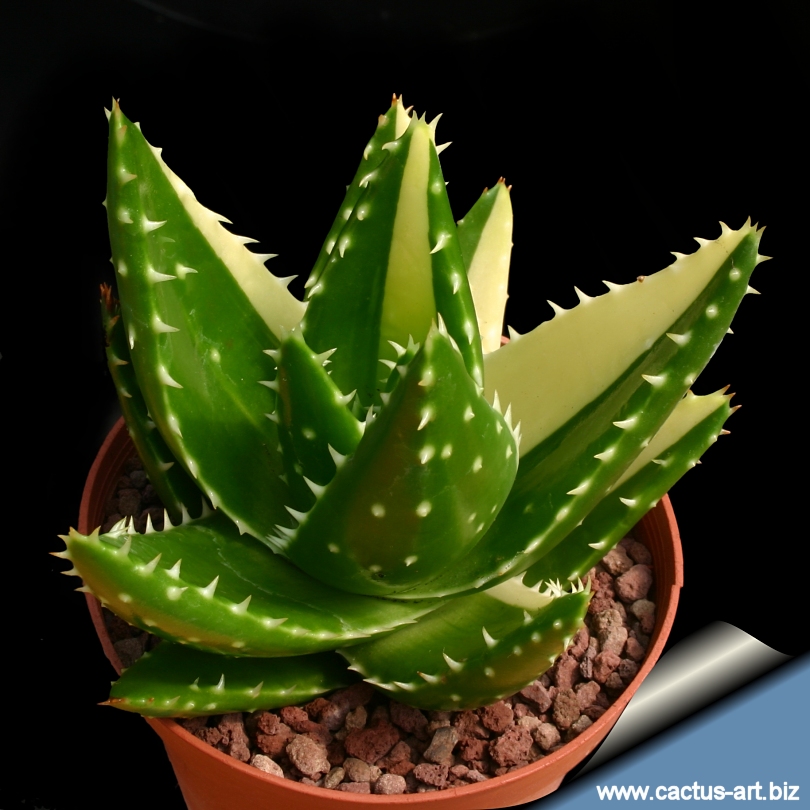
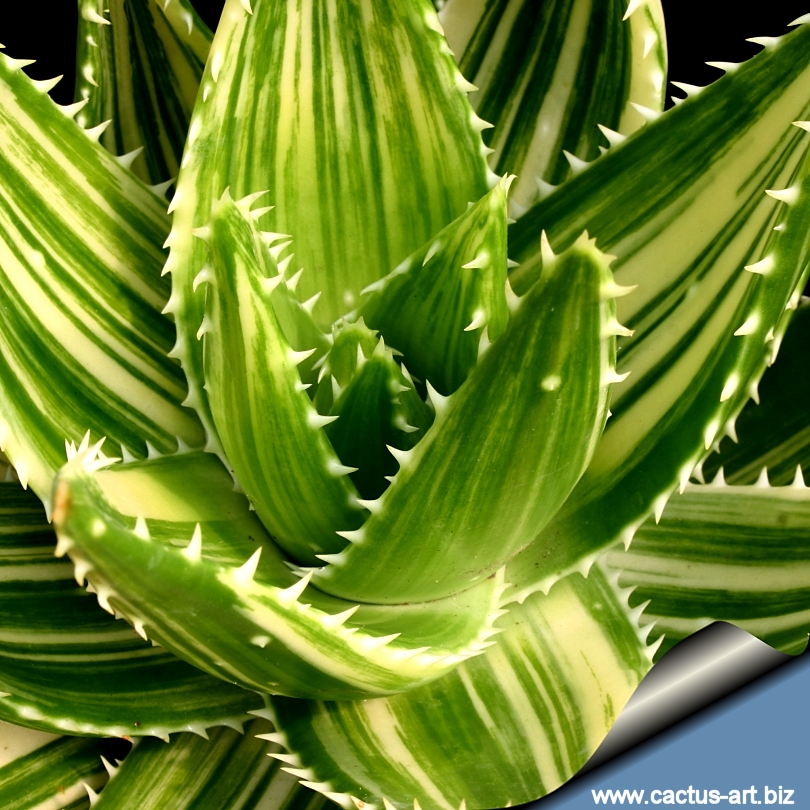
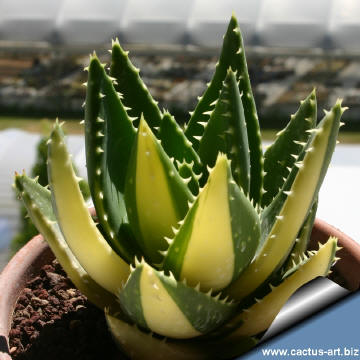
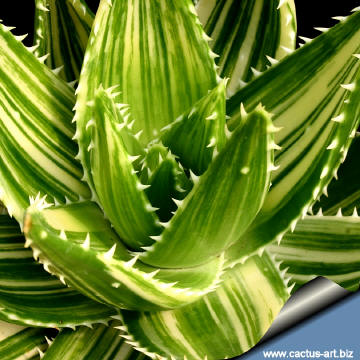
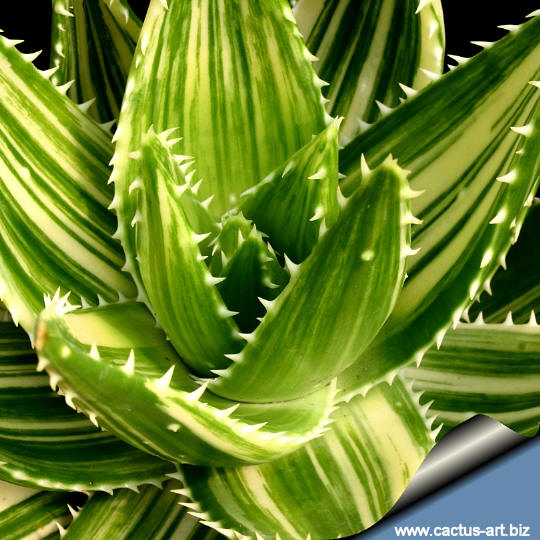
Beautiful variegated form. The bright orange-red flowers make this
particular aloe quite irresistible, but this species has a lot more to
offer than just pretty flowers.
|
|
Description: Hardy clustering succulent
forming groups of rosettes in small colonies. Plants sprawl along the
ground with ends ascending and leafy. Aloe mitriformis is very
variable and it is difficult to single out specific characteristics that
distinguish it from other creeping aloes.
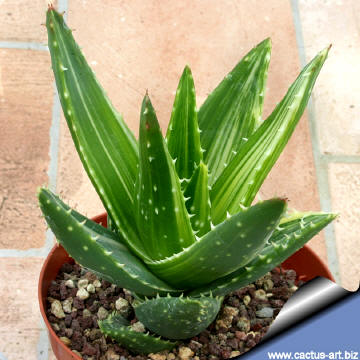
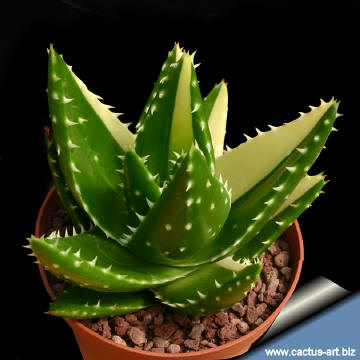
Leaves: Leaves short, broad, fleshy and bluish-green in colour.
The leaves, are arranged in rosettes (circular leaf attachments), heads
(15 to 18 cm across and up to 30 cm tall) may spread erectly or curve
inward. Plants that are in full sun often have more bluish leaves than
those that are in shady areas which have more dark green leaves. The
plants that are fully exposed have a tighter leaf arrangements as
opposed to the more spaced leaves on shaded specimens. Most leaves are
without spots or lines but the leaf margins are armed with harmless,
small white teeth, which turn yellow to dark brown as leaves become
older. The slightly incurved leaves and variably coloured marginal
spines appear to be consistent features of the species.
Stem: Fairly thin and not strong enough to support the large
rosettes in an erect position.
Flower: Dull scarlet to bright red crowded in dense very short
raceme on the branched stalks, flowers are tubular and droop. Up to five
flowering branches may be present at one time. The shape of the racemes
varies from cone-shaped to head-shaped or rounded.
Blooming season: Flowers in the summer months.
Fruit: It is a capsule, that grows quickly and splits into three
parts at the end of the summer.
Seeds: Small, up to 4 mm and slightly winged, enabling it to be
dispersed by the wind
|
|
 |
 |
|
. |
|
 |
 |
|
Advertising
|
|
|
|
|
|
|
Family: Asphodelaceae
Scientific name:
Aloe mitriformis Mill. forma
variegata
Origin: South Africa (Western and Northern Cape from
near Genadendal in the south to the Bokkeveld Mountains near
Nieuwoudtville in the north)
Habitat: Aloe mitriformis (perfoliata)
is a mountain and winter rainfall
species that grows at altitudes of 1200 to 1500 m. Plants
are found characteristically among rubble-like sandstone slabs and
granite outcrops, rocky ridges and lower slopes.
In its natural habitat, the plants have long and creeping stems that
often have secondary side shoots along their lengths. Instead
of making upright stems, they tend to follow a sprawling habit with
prostrate stems reaching up to 2 m long. They
typically lie along the ground with only the terminal leaf-bearing
portion erect. It occurs mostly in
groups and also may grow down vertical cliffs.
Common Names include: Mitre
Aloe
Etymology: The genus name Aloe is derived from the Arabic,
alloch and translated as allal in Greek and Hebrew, literally meaning
bitter or bitter sap which is descriptive of Aloe sap. The species
mitriformis derived it's name from the shape of it's rosette that
resembles a mitre or a bishop's cap, especially during times of drought.
Synonyms:
|
 |
|
|
|
Cultivation: Very commonly encountered, it is a resistant
plant that usually does not give many problems in cultivation, and many
people grow it without giving it a name.
It is a particularly fast-growing, tough
and adaptable species. Full sun for a good coloration of its decorative
leaves and for flourishing well, light shade tolerated. Abundant
irrigation at time of growth. The plants favour mild to hot summers.
They can resist some cold and occasional snow in the rainy season
although the frosts produce wounds
and burns that disfigure their aspect. Needs protection only against
severe frost. (The leaf tips get damaged below -2°C)
Grow it in light, fertile, well-drained, moderate soils, with a slightly
acidic pH (5-6). .
Plant in rock gardens and flower pots. Also suitable for coastal
planting.
It is a profusely suckering species, and one plant can eventually cover
a large area. The plant in itself is very tough and can survive often
for several seasons without water, at which point the leaves turn a
reddish colour, a sign generally associated with stress.
Maintenance: Removal of old flower
stalks; Divide the crowded
clumps periodically. During the
winter months, the plants should be grown cool to initiate flower
development (about 5-10°C )
Reproduction: By
division
of
offshoots
that develop around the outside of the main rosette in
spring
or by seed. The best results are achieved by simply making stem
cuttings. Allow cuttings to dry for a few days and insert into river
sand and keep moist. The roots appear after about two weeks. Seeds must
be sown as fresh as possible. Fresh seeds
germinate
quickly at 18°C.


|
|