Bijlia cana CACTUS ART
NURSERY

Cultivation and Mail Sale
of Cacti and Succulents.


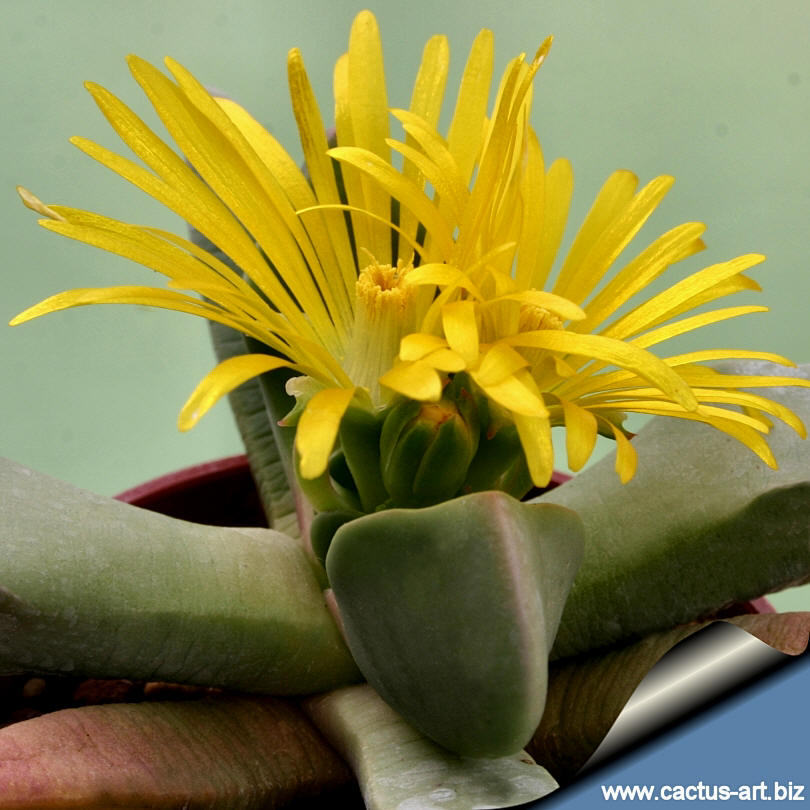
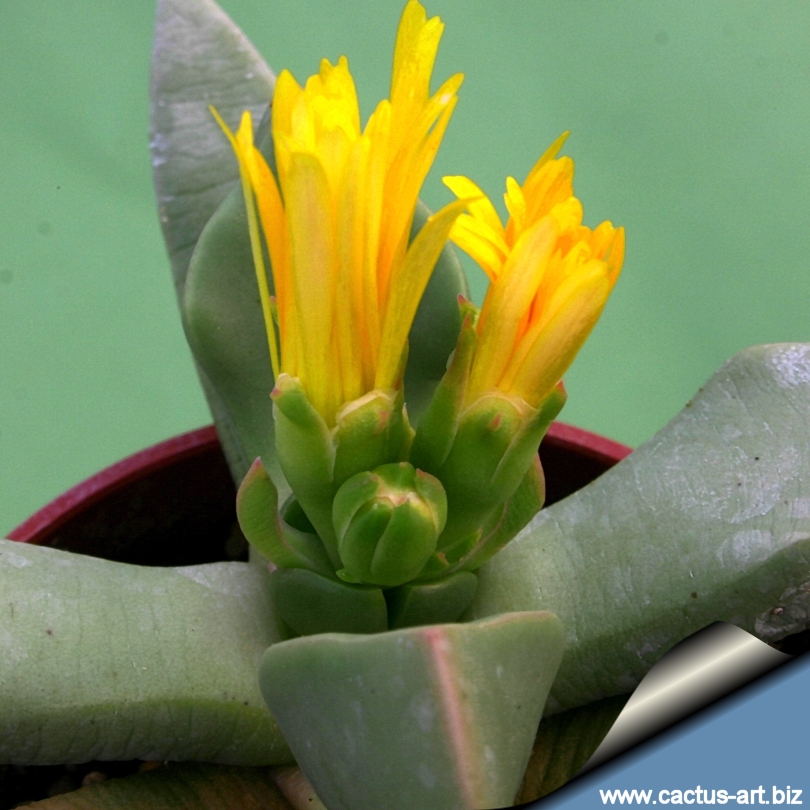
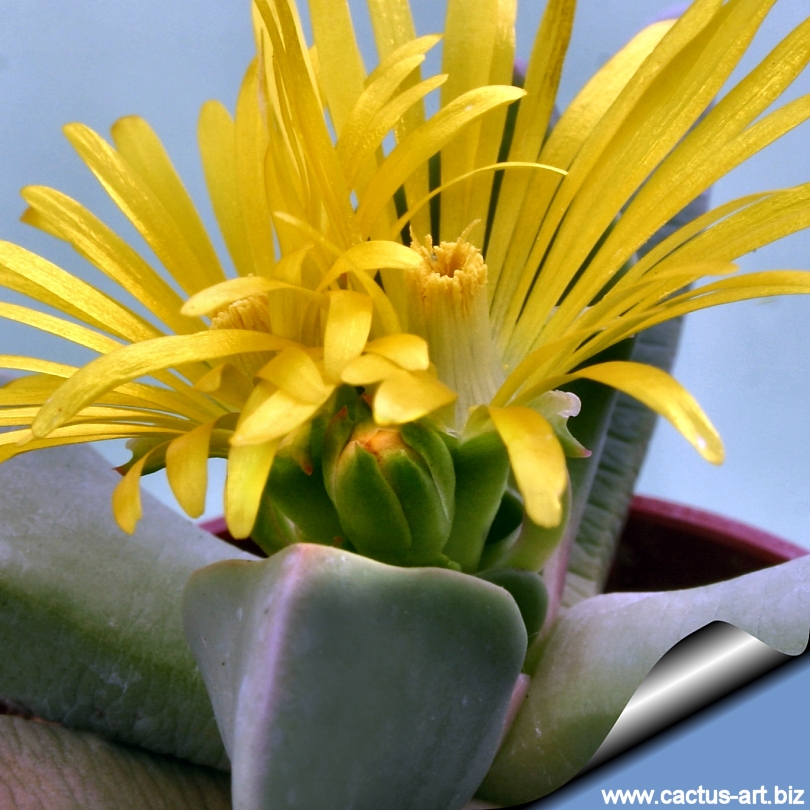
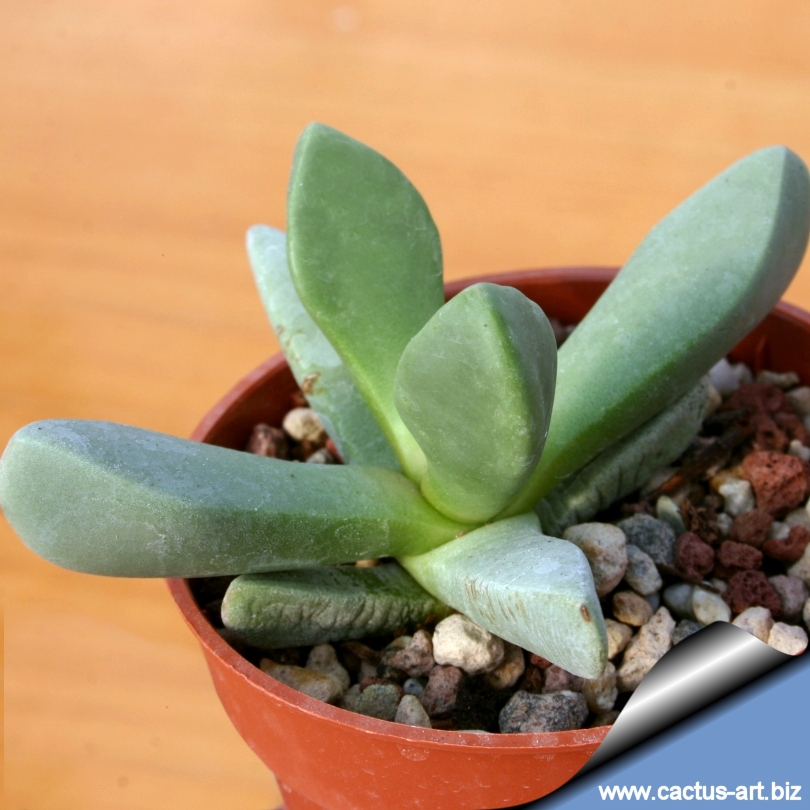
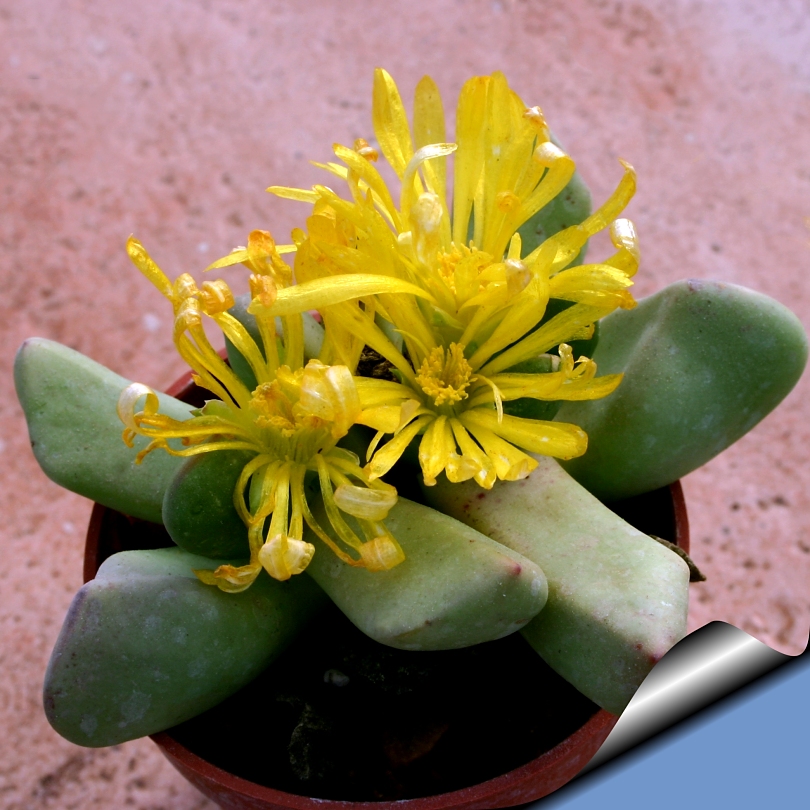
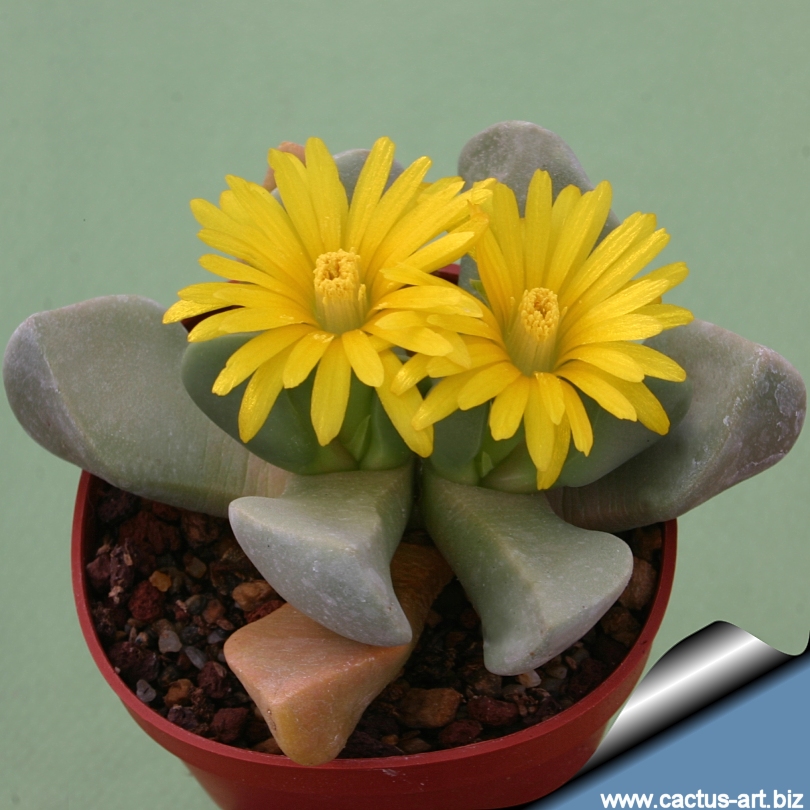
A slow growing tongue like leaved mesemb. It is notable for its midwinter show of long-lasting bright yellow flowers, organized in groups of 1 to 3.

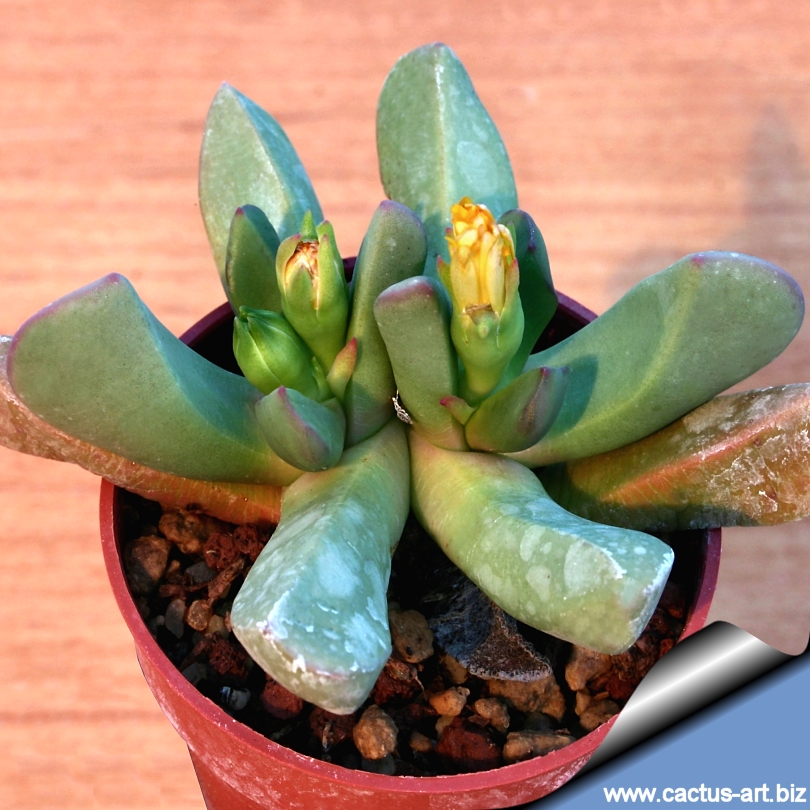
Description:  Perennial clumping, mat forming succulents.
Leaves:
Fleshy smooth 12-15 mm wide and 30 mm long. Every year a few new leaves grow from the central stem.
Flowers: Many petaled daisy-like up to 25 mm (or more) in diameter, golden yellow, long lasing organized in groups of 1 to 3. Calyx with 5 sepals.
Blooming season: It flowers through the winter.


Cultivation: Bijlia is easy to grow. These plants grow on winter rain and were heading for summer dormancy. Requires little water otherwise its epidermis breaks (resulting in unsightly scars). Water minimally in summer, only when the plant starts shrivelling but
will generally grow even in summer if given water. Requires good drainage. Keep cool and shaded in summer, need full sun or light shade. Hardy to -2°C


Propagation: Seeds, cuttings


Photo gallery: Alphabetical listing of Cactus and Succulent pictures published in this site.

Photo gallery BIJILIA

Family: Mesebrianthemaceae (Aizoaceae)


Scientific name:  Bijlia cana N.E. Brown

Origin:  It is endemic to few sites in the Prince Albert area (South Africa, Great Karoo desert.

Habitat:  Grows on silcrete patches Daisy-like yellow flowers seem to grow out of solid rock, making one wonder how their roots find source of sustenance. The species comprising six populations isolated by 2-30 km.

Conservation status: Listed in CITES appendix 2.

Common Names include: Prince Albert Vygie.

Etymology: This rare plant takes its name from Deborah van der Bijl, who discovered it in about 1930 .

Heterotypic synonyms:
  • Bylia cana
  • Bijlia dilatata