|
|
|
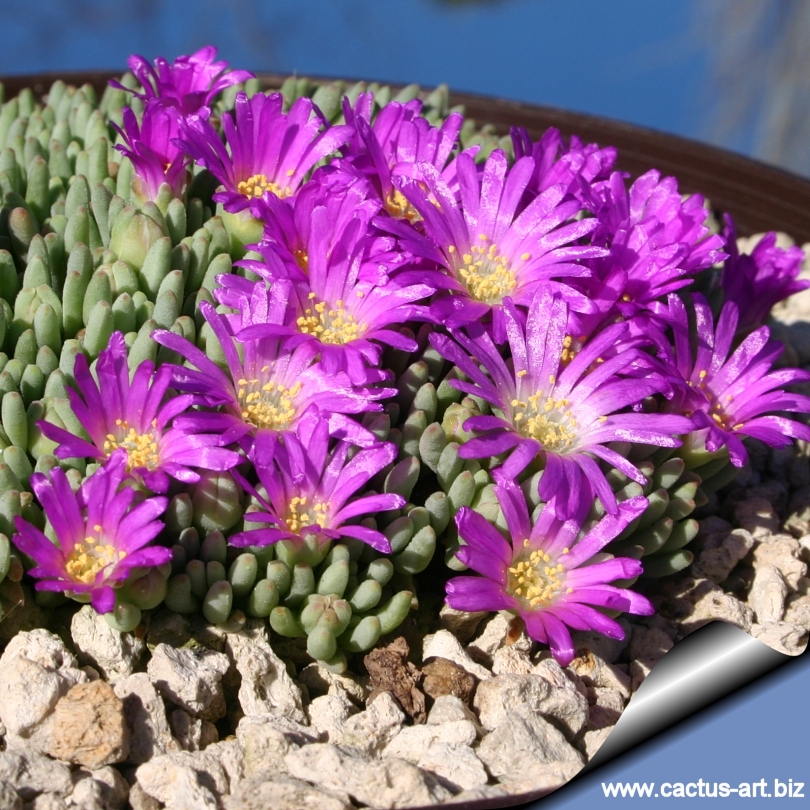
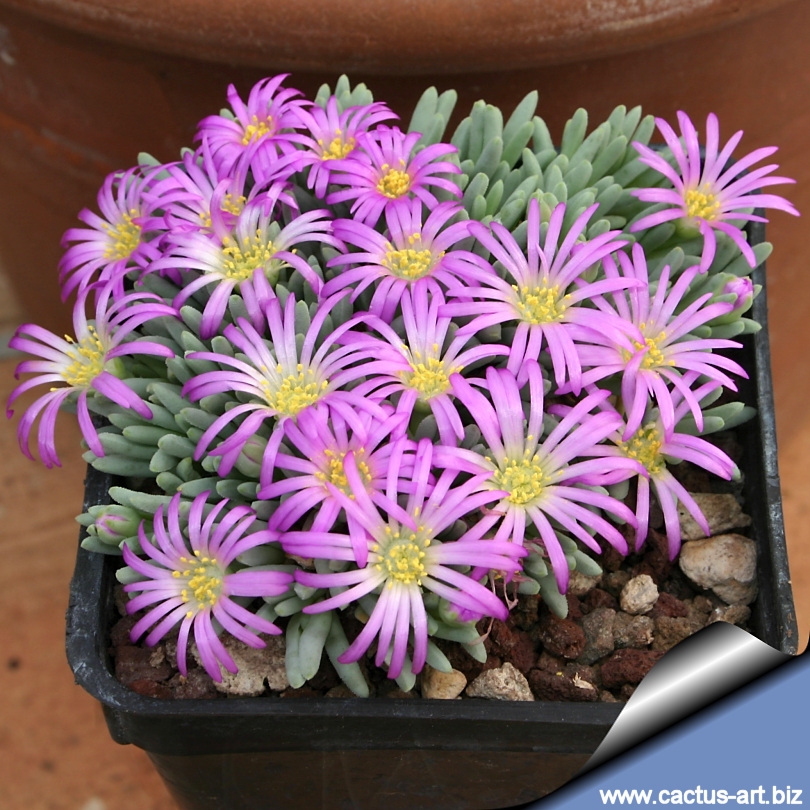
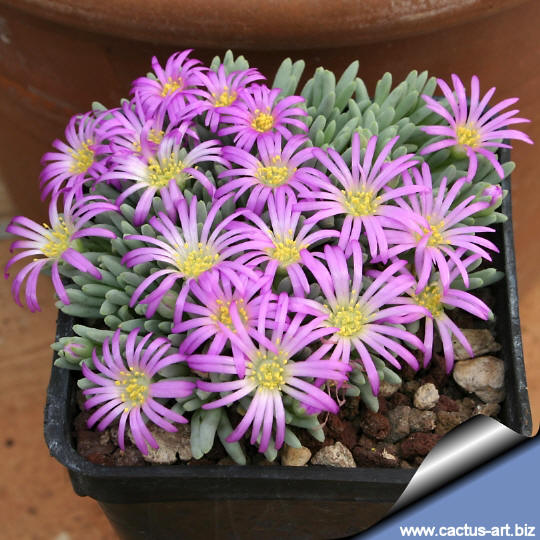
Delosperma sphalmanthoides is an excellent rock garden
plant, a real cutie that blooms in early spring with incredibly profuse
display of jewel-like magenta flowers. It grows only 1-2 cm high by
15-20cm wide, as its so small but also it will take quite severe frost
and can be grown as an alpine. Simply irresistible.
|
|
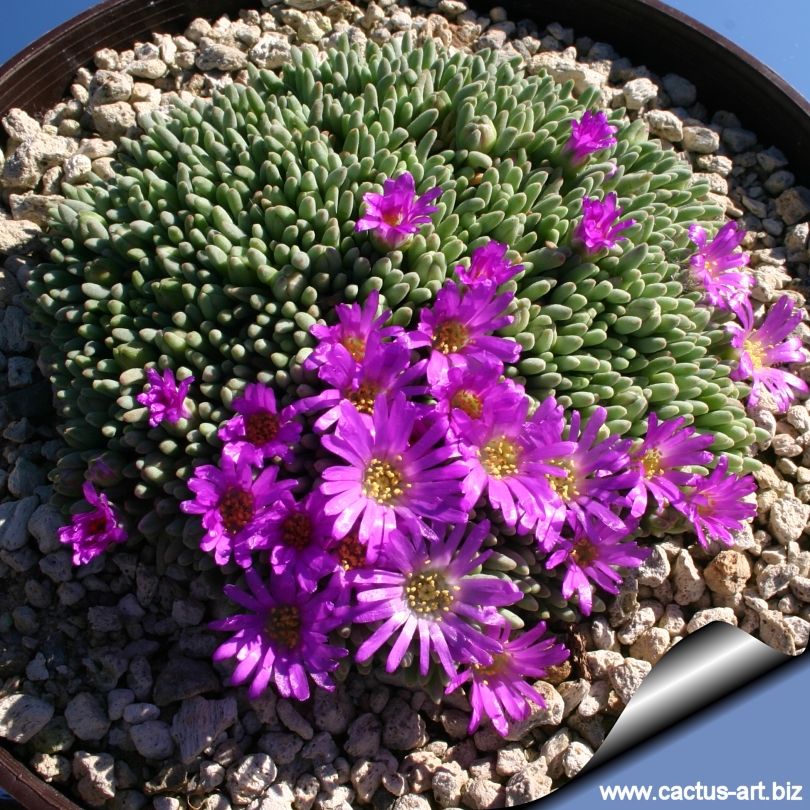
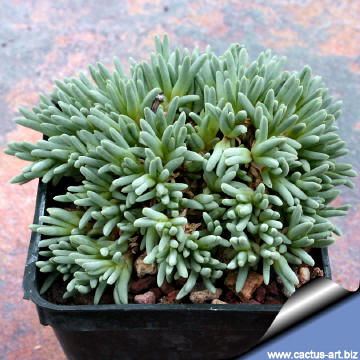
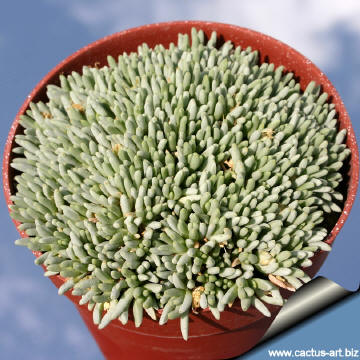
Description: D. sphalmanthoides is a tiny perennial succulent (the
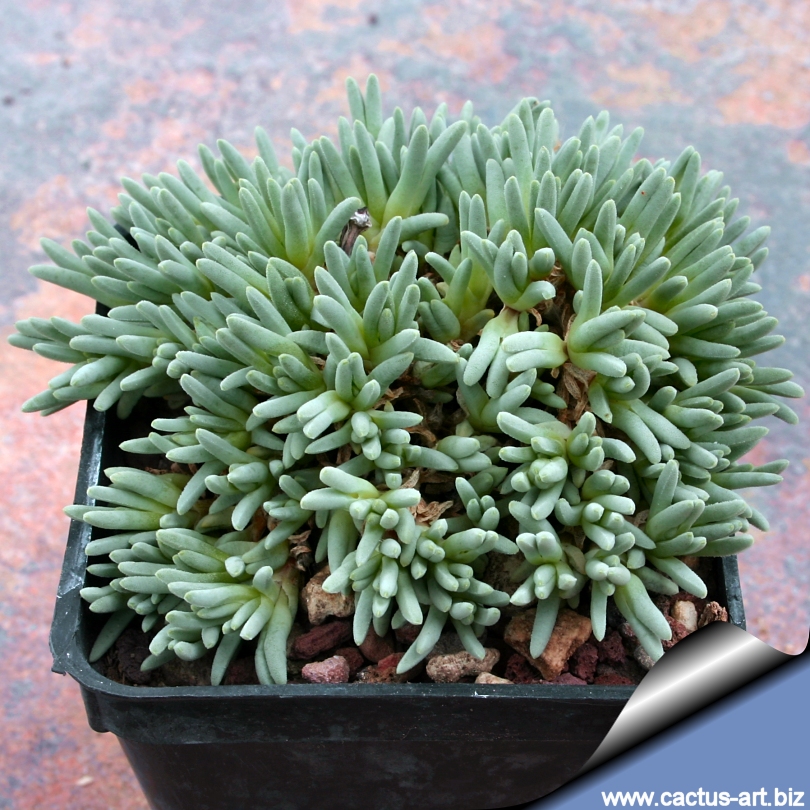
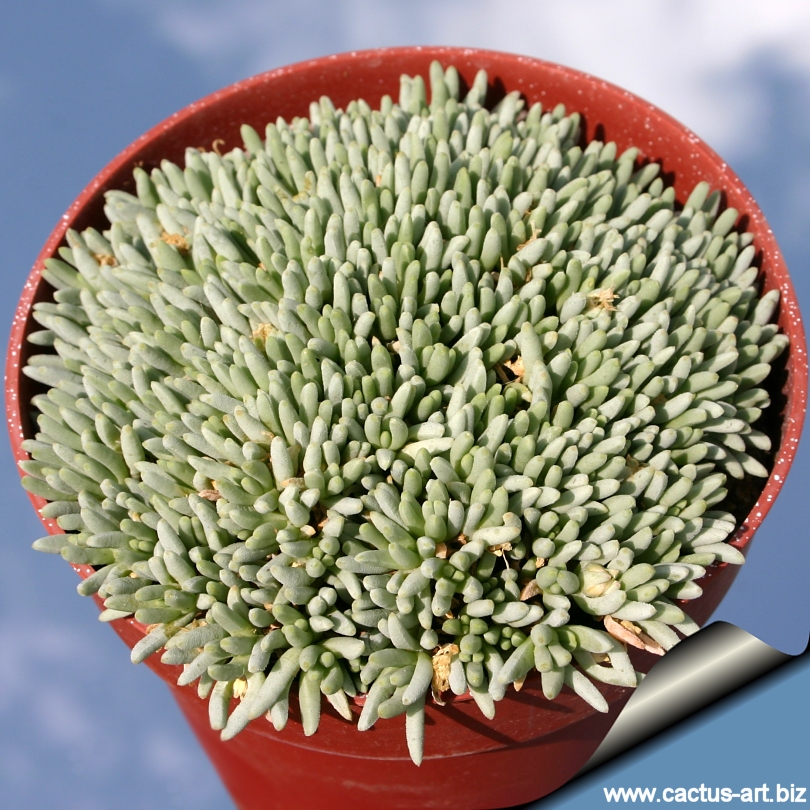
smallest species in the genus) that grow in a tight mat resembling a
small blue-green sea anemone that has anchored itself in the ground. It
stay very compact and rows to 2,5 in height, width 20-30 cm.
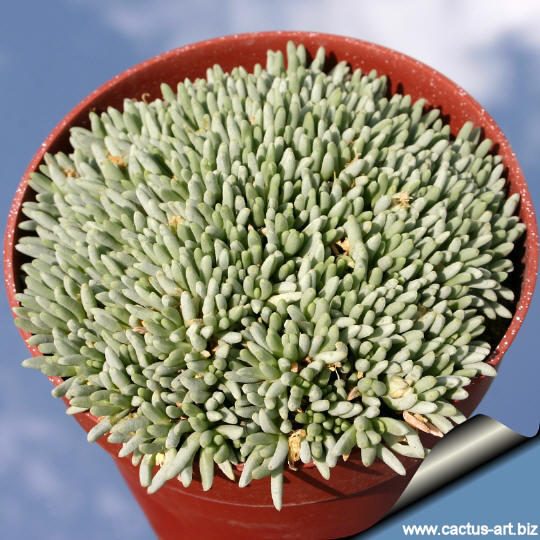
Leaves: Tiny finger-like, plump, blue-gray.
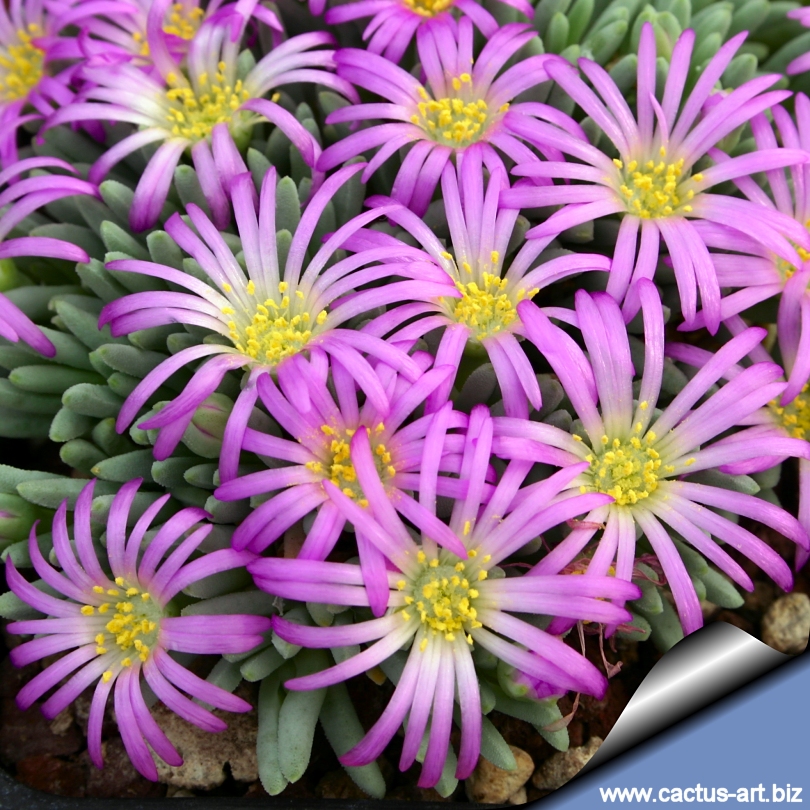
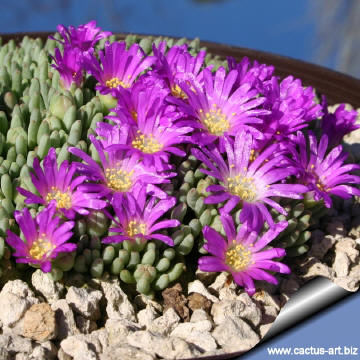
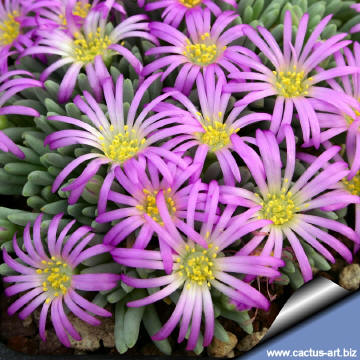
Flowers: Spidery fuchsia-colored.
Blooming season: Flowers in very early spring. The flower buds
become visible in December and excessive dryness after this point
leads to poor flower development.
|
 |
 |
|
. |
|
 |
|


Advertising
|
|
|
|
|
|
|
Family: Mesebrianthemaceae (Aizoaceae)
Scientific name:
Delosperma sphalmanthoides S.A.Hammer
in Cact. Succ. J. (U.S.A.), 1993
Origin: South Africa (Komsberg Mtns of the Cape Province)
Habitat: It is a high altitude alpine
cushion plant from the mountains of the Winter rainfall area of South
Africa and cold hardy. It is found in pockets of gravely soil on a
massive high altitude rock outcropping. II needs moisture all year round
but definitely goes semi-dormant in summer.
Common Names include: Tufted Ice Plant Dwarf Sea Anemone
Iceplant
Etymology: The species name sphalmanthoides comes from the Greek
"oides", resembling; and for the genus Sphalmanthus (Aizoaceae).
 |
|
|
|
Cultivation: Delosperma
is a genus that require very little maintenance. Although they are
succulent they need plenty of water. Treating them like other succulents
with limited watering will cause their untimely death. This species can
withstand severe frost (hardiness to -18° C ) and can be planted out of
doors in northern hemisphere rock-gardens. They seems to enjoy a hot,
full sun position in the rockery, where winter snows melt quickly. They
need
well drained soil with good drainage.
They are good container plant too. Plants in pots prefer light afternoon
shade in hottest summer days while during the winter they can be watered
less often, about every 2-3 weeks. Fertilizing this plant really isn't
needed as it's already a voracious grower. However, a liquid 10-10-10
diluted to half strength or a cactus fertilizer once a month during
spring and summer can benefit the plant. Repotting: Make sure to repot
during its more active period, starting in spring. Prefers a soil with
less organic material; extra pumice or perlite provides excellent
drainage essential to these type of plants. Inside they grow fine on
windowsills, and will even bloom, if they get enough direct sunlight.
Propagation: Offsets that form at the base are the easiest
way to propagate it, cuttings root readily and can form a groundcover
within a short period, but seeds are also an options. Seeds germinate in
7-14 days at 21°C.
If they start to rot there is usually part of the plant that can be
removed and possibly rooted.
|
|


 Cultivation
and Mail Sale
Cultivation
and Mail Sale