|
Description:
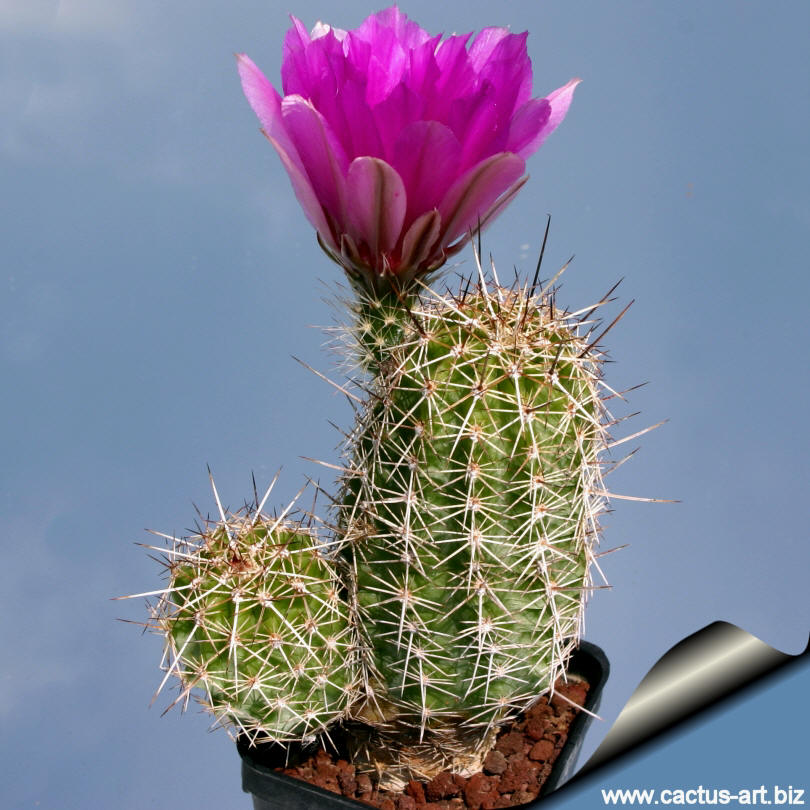
Clumping stems with 5 to
20 heads.
Stem: cylindrical to elongate, green,15-45 cm tall, 4-10 cm in
diameter.
Ribs: 8 to 10, not distinctly tuberculate.
Areoles: circular
Spines: Not obscuring the stem.
Central spines: Usually single (or sometimes 2 to 4, of which one
is
longer), grey to dark brown with darker tips, at right angles to the
stem, going upward at the stem tips, 2.5-8 cm long. The similar
E. engelmannii has 2 to 6
central spines per areole.
Radial spines: 11 to 13 shorter ones, 1.5-2 cm long ones.
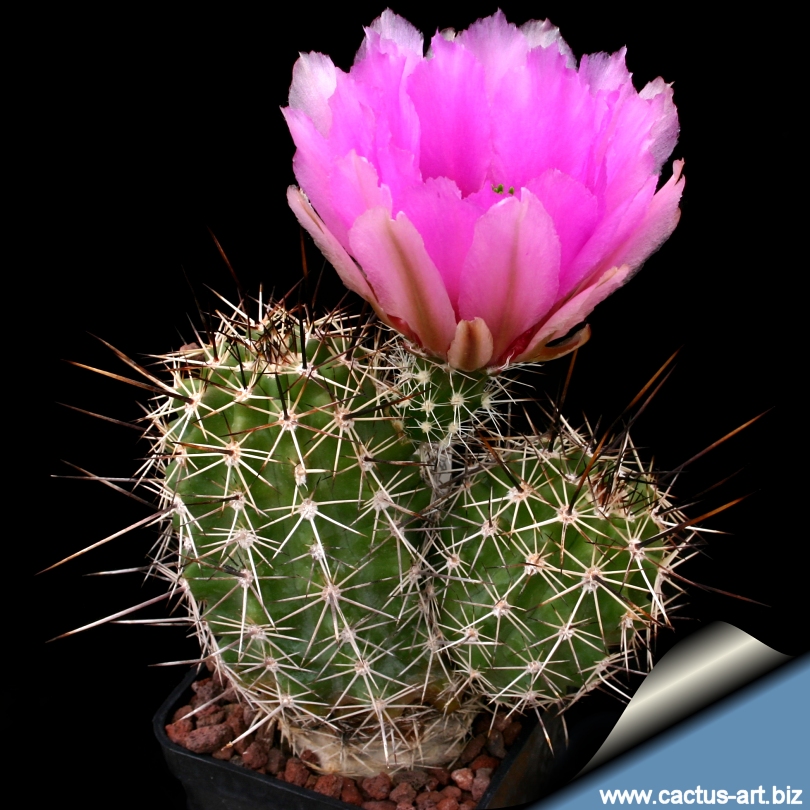
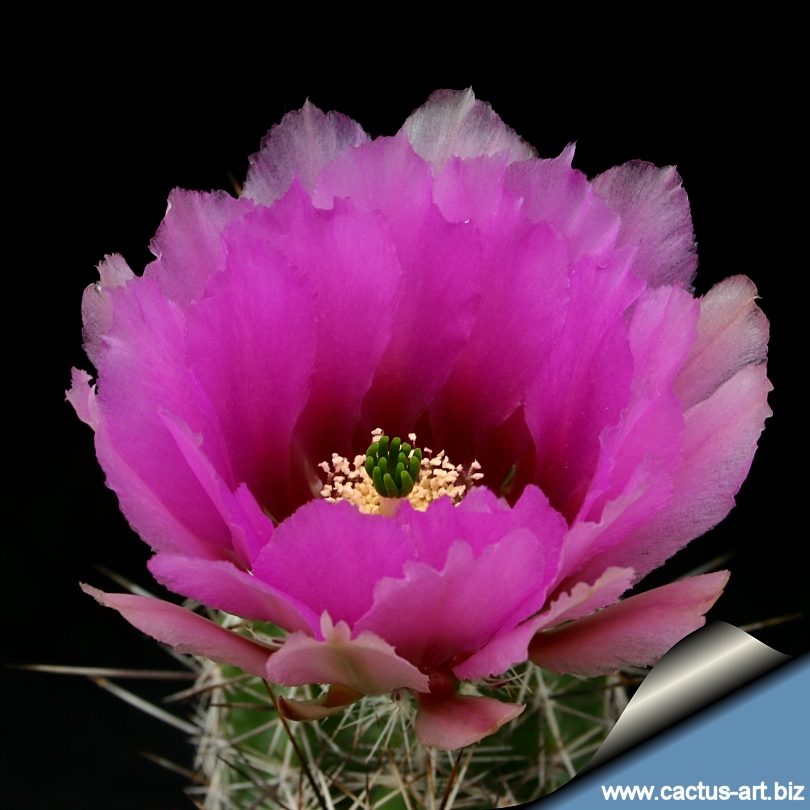
Flowers: Borne on the upper part of the stem, broadly funnel-form,
pink to magenta or reddish purple, 5-6.5 cm long and in diameter.
Blooming phenology: Spring (march to April), flowers are diurnal,
closing at night and reopening in the morning, and last for about five
days.
Fruit: Green, globose, fleshy, 2-3 cm in diameter, turning red as
it ripens. The fruit is edible (if you can reach
it through the
spines). It is said to taste like
strawberries, and is eaten readily by
birds and rodents. Fruiting: May-July.
There are a
number of varieties of E. fascicualtus, but not all are universally
recognized. Some authorities recognize the following varieties:
E. fasciculatus ssp. fasciculatus has grayish central spines
that are 1-3 inches long.
E. fasciculatus ssp. boyce-thompsonii
has straw (yellow-tan),
colored,
and longer central central spines, that are downward pointing , and 2-10
cm long. The flowers are a very deep purple.
E. fasciculatus ssp. bonkerae has fewer stems, and is
shorter. Central spines are 1,5-2,5 cm long, and grayish-white. The
flowers are also deep purple.
Most
of the plants in this group have 4 sets of chromosomes, but at least one variety includes individuals with 2 sets.
Cultivation: It grows rather slowly and is sensitive to
over-watering (rot prone). It needs very good drainage to avoid rotting,
but requires more moisture than true desert cacti, to grow and produce
flowers. Keep drier and cool in winter. It needs full sun. It's cold
resistant to -10° (or less, depending on clones) for short periods of
time. It is a fine plant for a rock garden or container, and contrasts
well with agaves, yuccas, and low-growing flowering plants. It will show
its flowers only provided with an adequate winter rest period.
Propagation: Seeds, can
also be grown from cuttings, as it branches
from the base.
Photo of
conspecific taxa, varieties, forms and cultivars
of plants belonging to the
Echinocereus engelmanni
complex
(This
Taxon has lots of synonyms
whit several controversial varieties and subspecies and comprises a
multitude of different forms, but where each form is linked to others by
populations of plants with intermediate characteristics):
|


 Cultivation
and Mail Sale
Cultivation
and Mail Sale