|
|
|
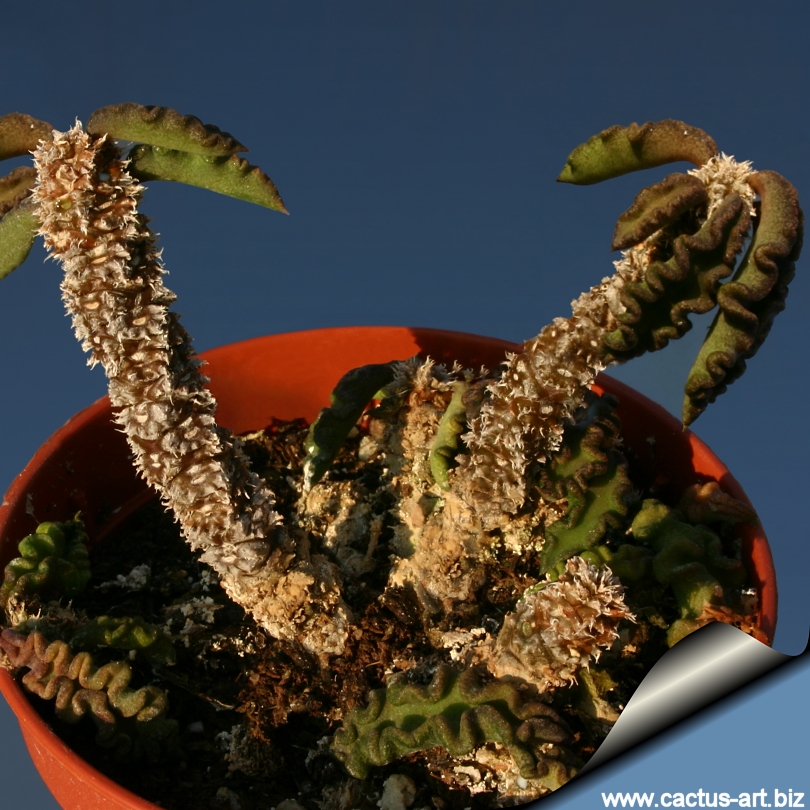 It is surely a bizarre Euphorbia, and has some really unusual thick,
wrinkled leaves. A special plant indeed!
It is surely a bizarre Euphorbia, and has some really unusual thick,
wrinkled leaves. A special plant indeed!
|
|
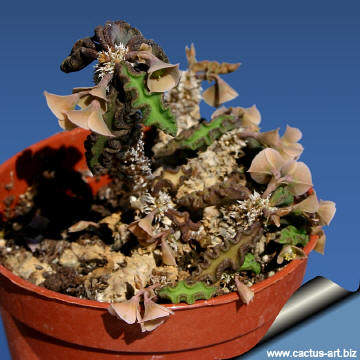
|
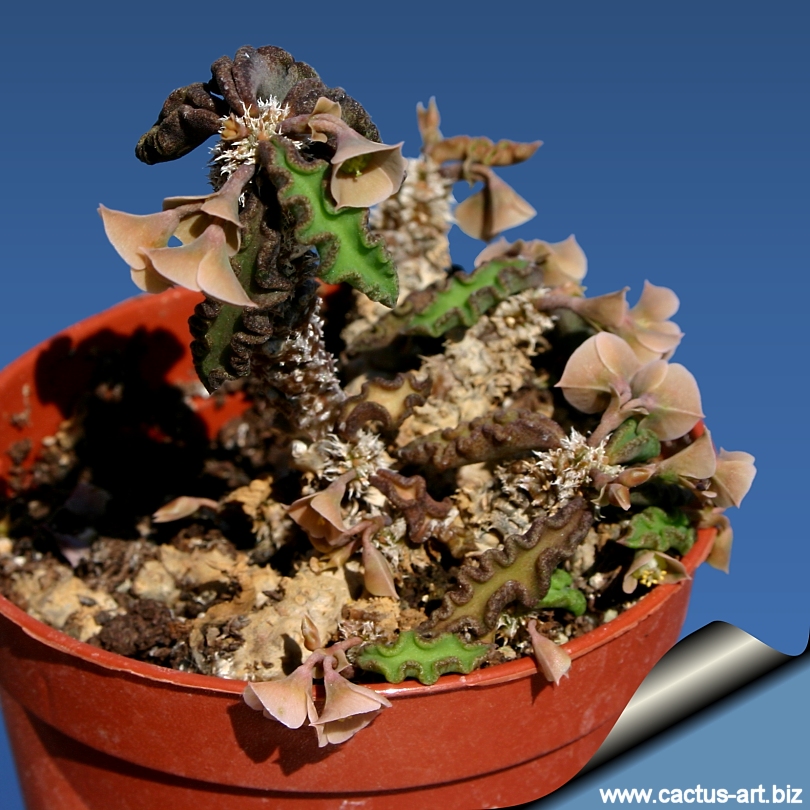
Description: E.
decaryi is a small, leafy succulent with a
shrub-like development and beautiful wavy, zig-zag
edged leaves. It is a mat-forming species and
spreads almost horizontally on the ground by means of rhizomes.
The Euphorbia decaryi
growth form illustrates the typical horizontal habit of most
Madagascan euphorbias.
Stem: Succulent,
partially subterranean, not very thick around,
more or less angled and spiraled.
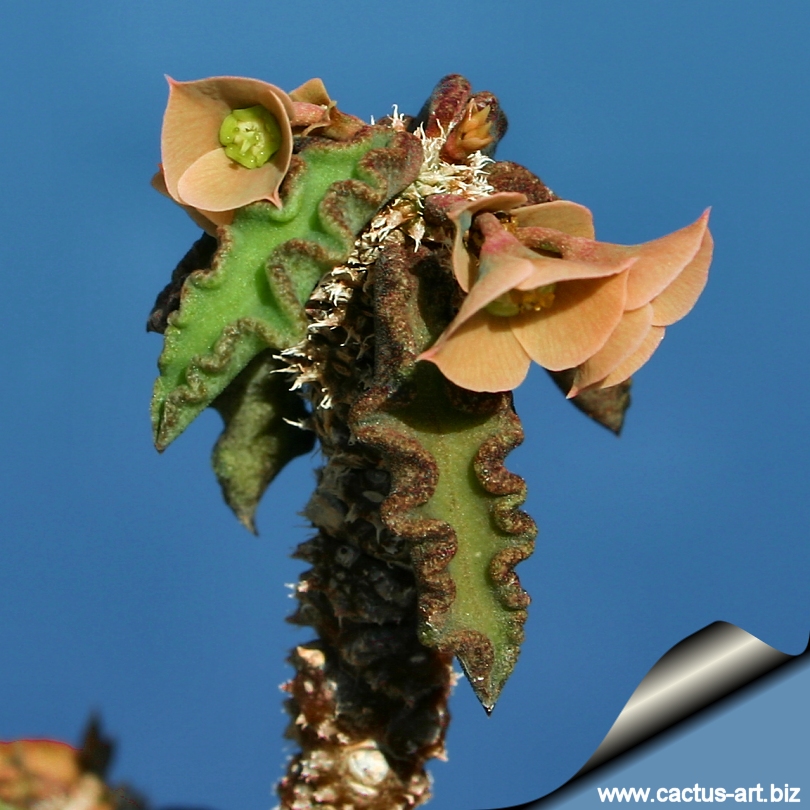
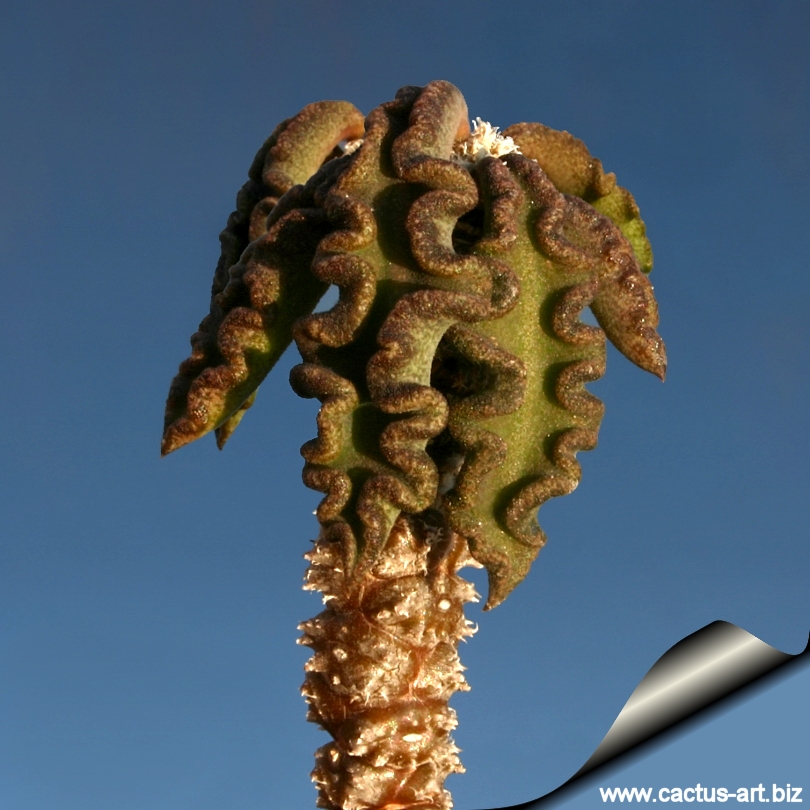
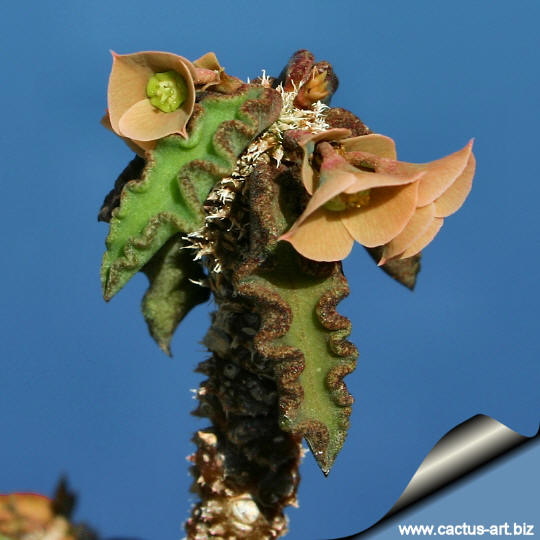
Leaves: Evergreen or semi-deciduous,
deep-red and green coloured, very succulent,
highly undulate, and very attractive.
Leaves form apical rosettes that in summer
assume a nice
purplish-red colouring.
Flowers: Beige, bell-shaped.
NOTE: This is a variable species and there is a lot of
confusion caused by the several horticultural forms that have popped up
in the trade over the years.
|
|
Cultivation:
E. decaryi is one of those plants that turn out to be difficult
if treated as a difficult plant and kept too dry. They are indeed easy
to cultivate although slow growing. In the heat of summer the plant
needs a good amount of water. Even in winter its soil should never
completely dry out. Though it tolerates a dry over-wintering, it then gets
in trouble in spring when it has to produce new roots. These
plants don't seem
to love being blasted by the sun in the summer but
prefer bright light,
and will therefore not make demands on your prime growing space.
The ideal temperature in summer is about 25°C; in winter above 15°C.
They can grow both
in pots and in the ground in areas with mild climate,
but they can even be grown indoors. Reported as
cold sensitive they can indeed survive outdoors,
where they proved to be able to take some light frost with minimal
damage.
Use a very draining loose compost,
and place the
plant in a wide flat bowl. If
the plant remains dormant after repotting, you
can rouse it with a shock (first you have to wait about two weeks
after repotting to let all wounds heal.) Water it with hot water
(40
to 50°C). Healthy plants usually react within 2 to 7 days

 |
|
Advertising
|
|
|
|
|
Family:
Euphorbiaceae
Scientific name:
E. decaryi A.
Guillaumin
Origin: Endemic to Madagascar.
Conservation status: Listed in
CITES appendix 1.
|
|
|
|
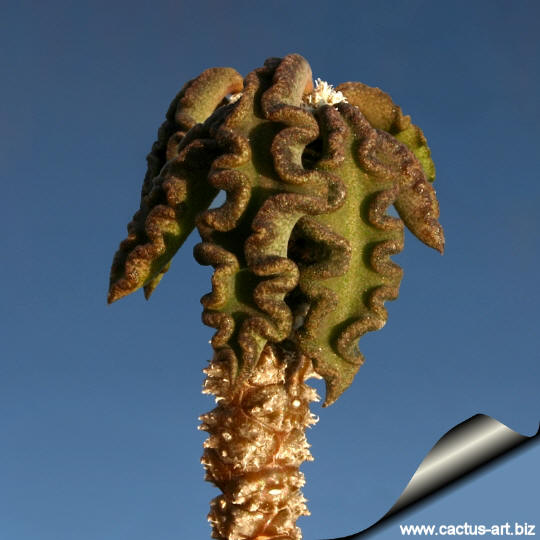
They have characteristic crinkly leaves and are true gems
worthy of any collection
Propagation: Seeds or
(usually) cuttings: First of all if you remove
an offset, you have to wait about two weeks before repotting to
let all wounds heal (cuttings planted too soon easily
rot before they can grow roots).
It is better
to wash the cut to remove the latex. Place the cutting
in a warm,
bright (w/o direct sun) and slightly humid spot, to increase the building of
new roots.
Warning: Like all Euphorbia HANDLE WITH CARE,
the latex/sap is dangerous and can cause skin rash, itching and general
discomfort.
|
|


 Cultivation
and Mail Sale
Cultivation
and Mail Sale