|
|
|
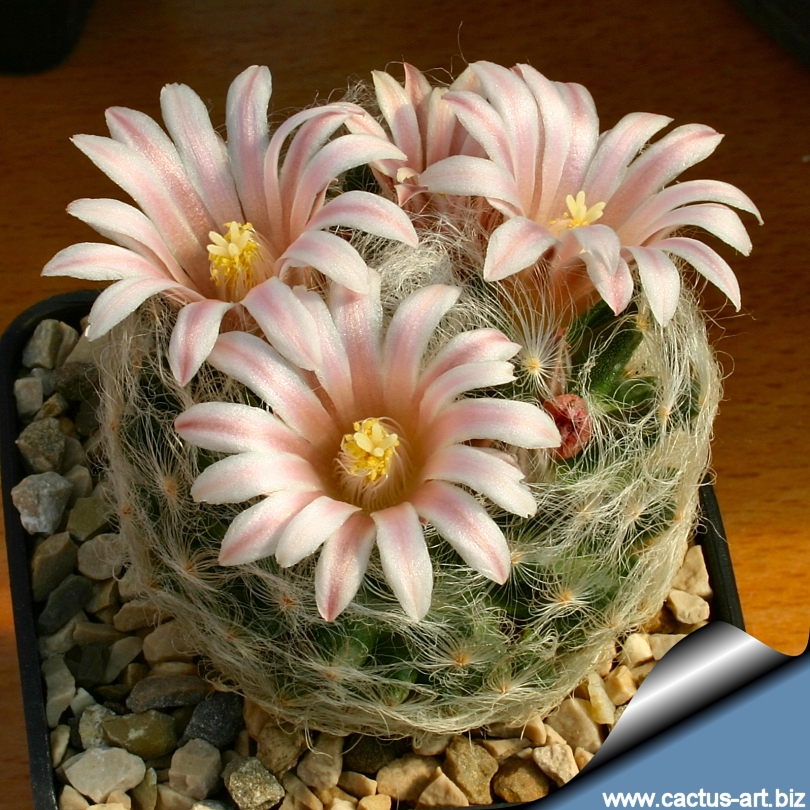
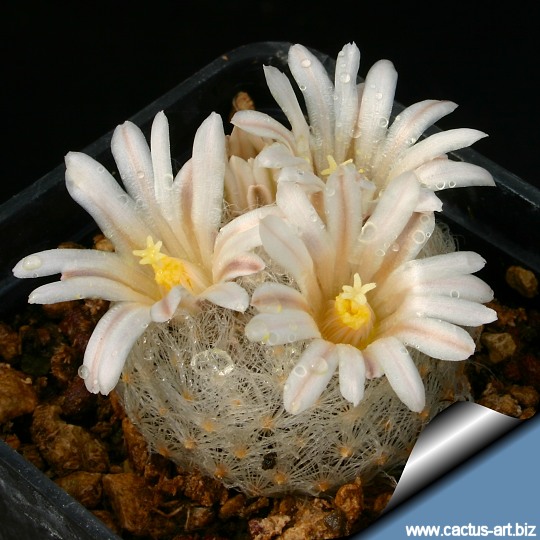
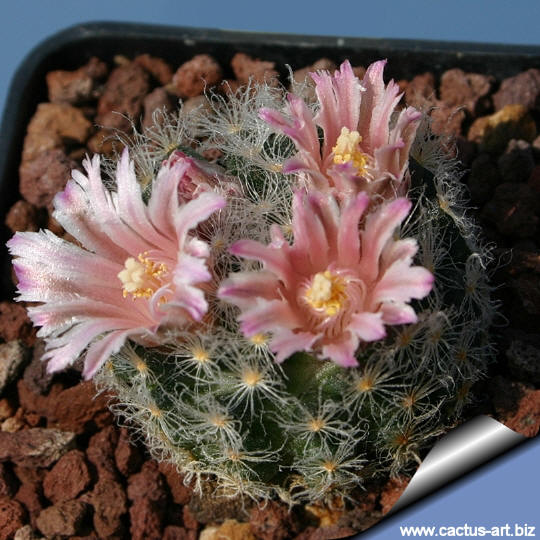
In cultivation it will soon make a showing ball with soft white or
golden hairs and cream-white to pink flowers.
|
|
Description: Globular cactus,
generally solitary.
Stem: Depressed globose, glossy dark green without latex, to 7.5
cm high up to 10 cm in diameter, tuberous basally.
Tubercle: Cylindrical, widely separated,with watery sap, 12 mm.
long, 2-3 mm. wide at base.
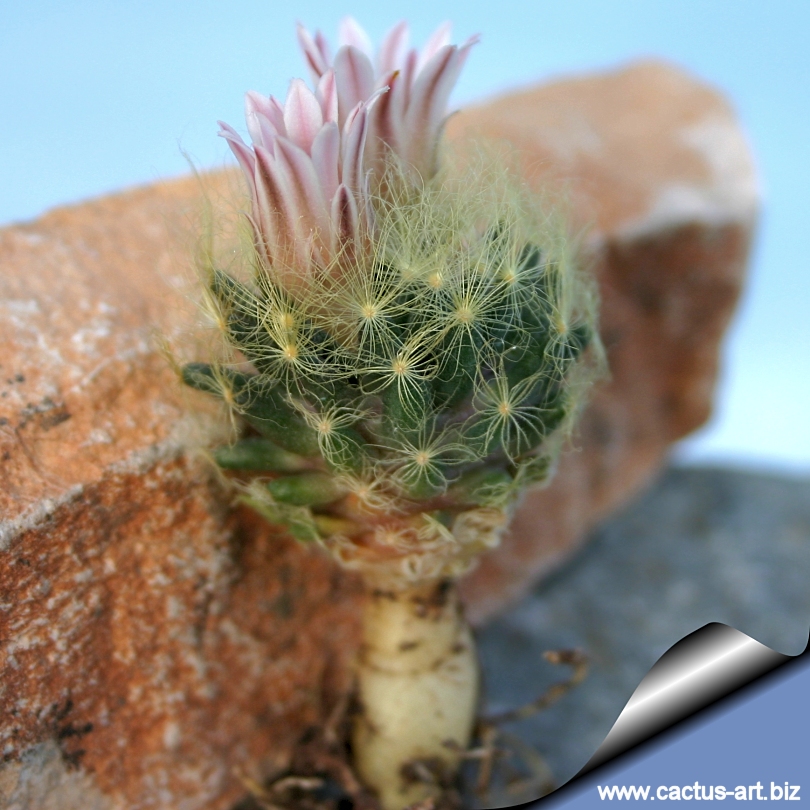
Spines: Only radials 25 - 30, bristly, flexible hair-like
transparent white to yellowish.
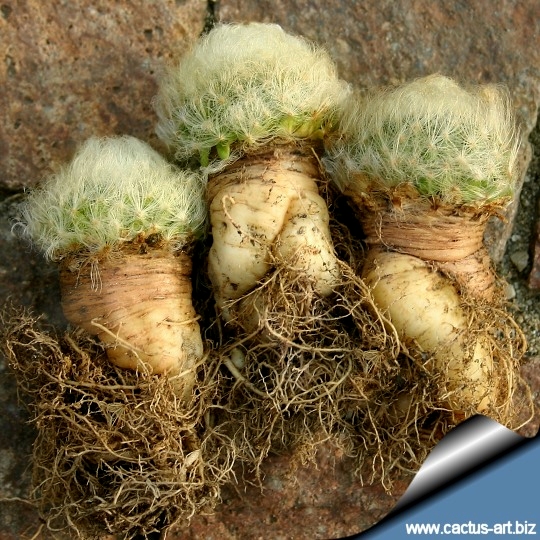
Roots: Fat taproot.
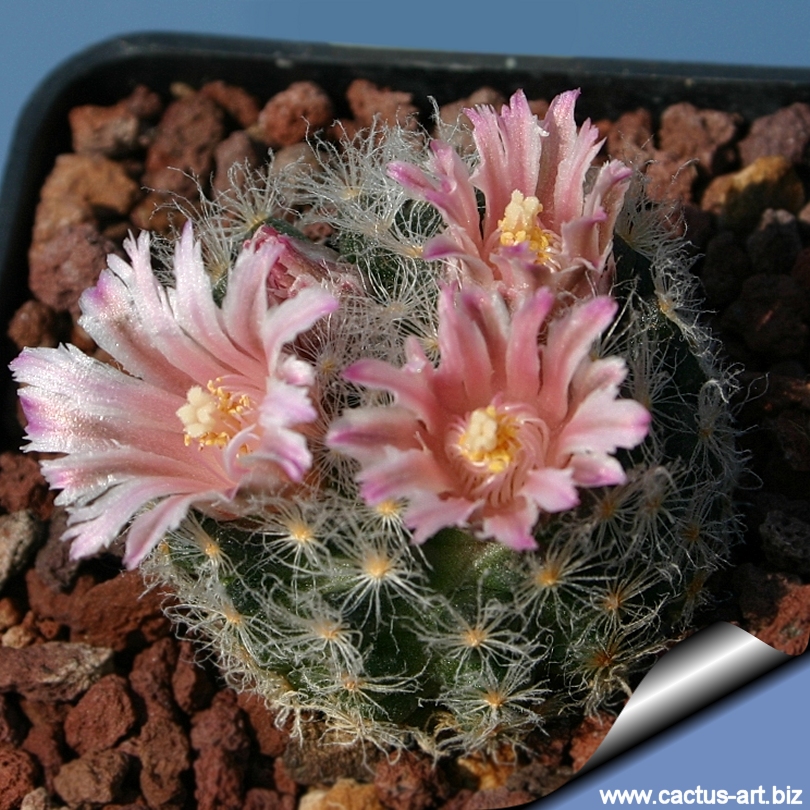
Flowers: Bell shaped, 15 - 30 mm long and in diameter the
Mammillaria aureilanata var. alba has creamy flowers in winter
while the Mammillaria aureilanata var. aureilanata has
large pink flowers.
Blooming season: Flowers from February to April.
Fruit: Pinkish-white, club-shaped.
Seeds: Black.
|
|
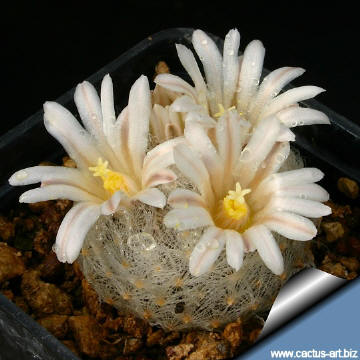
Mammillaria aureilanata "alba" |
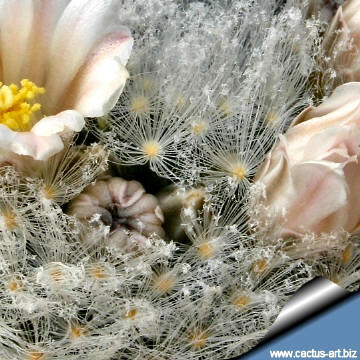
Spines are all radials bristle-like, white to yellowish. |
|
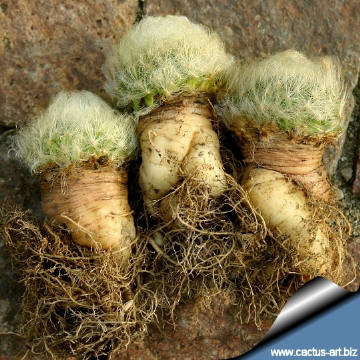
The fat tap roots. |
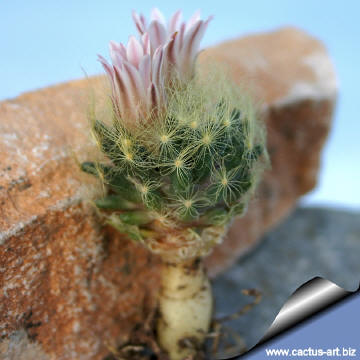
It starts flowering when still very small.
|
|


Advertising
|
|
|
|
|
Family:
Cactaceae (Cactus
Family)
Scientific name:
Mammillaria
aureilanata Backeb.
Published in:: by Backeberg,
Beitr. Sukk. u.-pflege 13 (1938)
Origin: Mexico, State
San Luis Potosi, North of San Luis Potosí in a small area in the lower
parts of Tezontle hill 1300- 1900 m (Villar, Estación La Ventura,
Cerritos, Guadalcázar )
Conservation status: Listed in
CITES appendix 2.
Common Names include:
Etymology: The species name "aureilanata"
comes from the Latin for 'golden wool'. The variety "alba"
has witish to creamy flowers.
Synonyms:
|
|
|
|
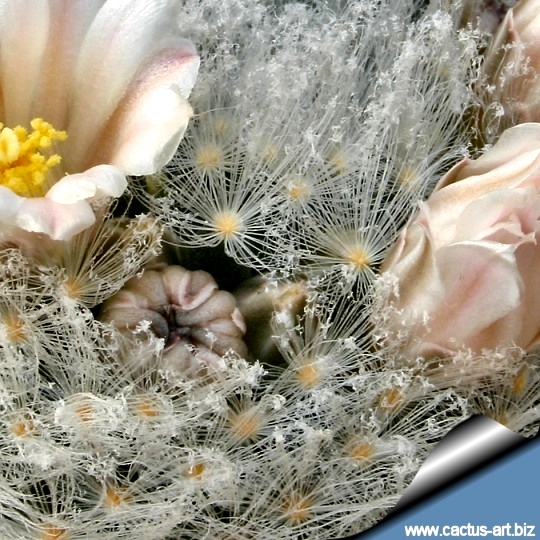
Spines are all radials bristle-like, transparent
white to yellowish.
|
|
Cultivation: It is a rapid growing species
. Water regularly in summer, but do not overwater (Rot
prone) It will need a pot with sufficient
depth to allow the tap root. with good drainage and a very porous
potting media, keep dry in winter.
Feed with a high
potassium fertilizer in summer.
It is quite frost resistant if kept dry (hardy to -5° C)
Outside full sun or afternoon shade, inside needs bright light, and some
direct sun.
Propagation: Direct sow after last frost. (seldom
produces offsets)
|
|


 Cultivation and Mail Sale