|
|
|
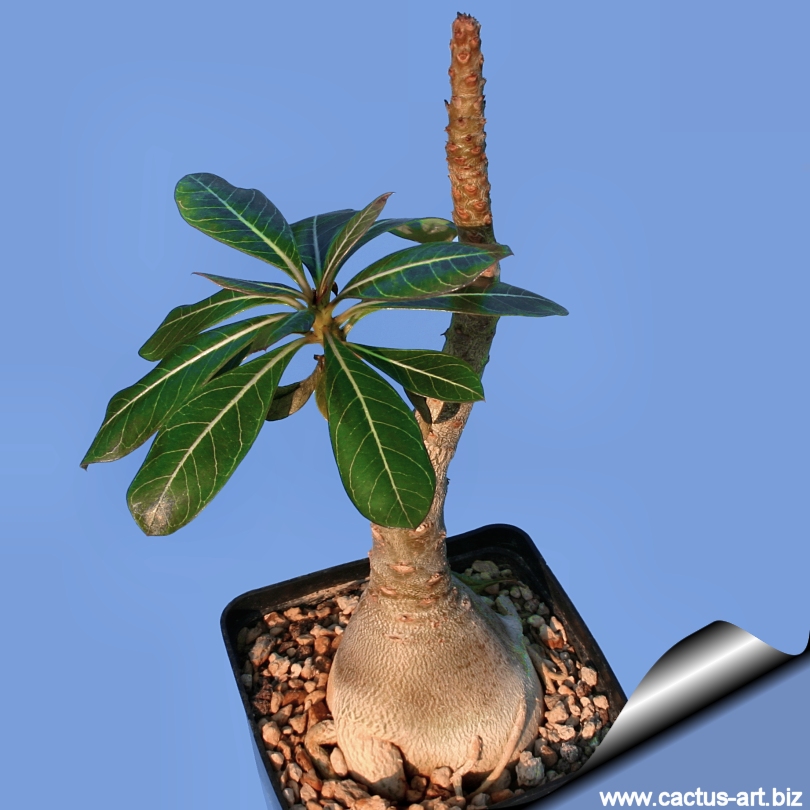
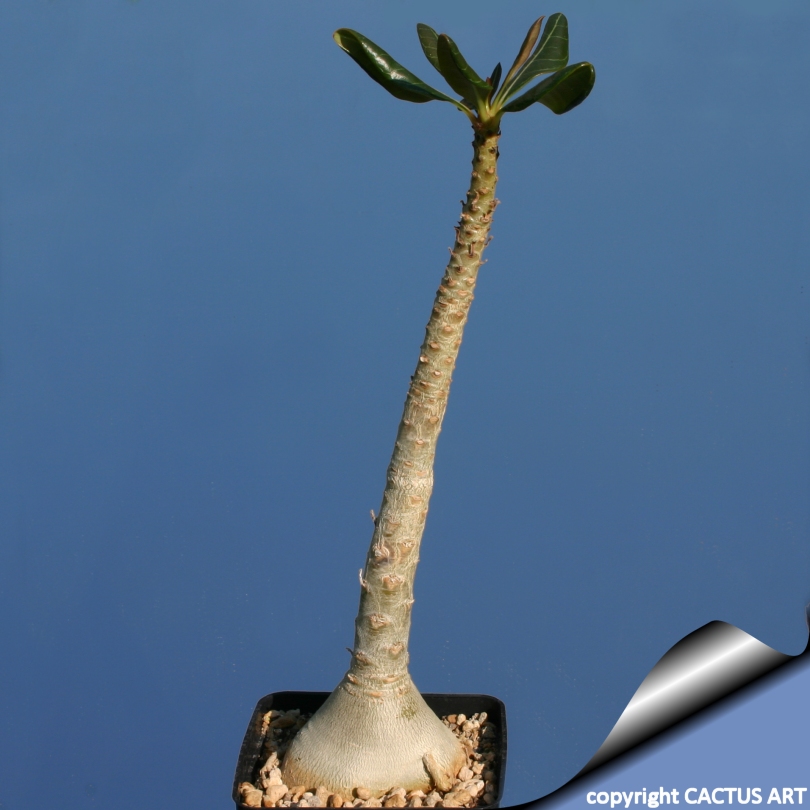
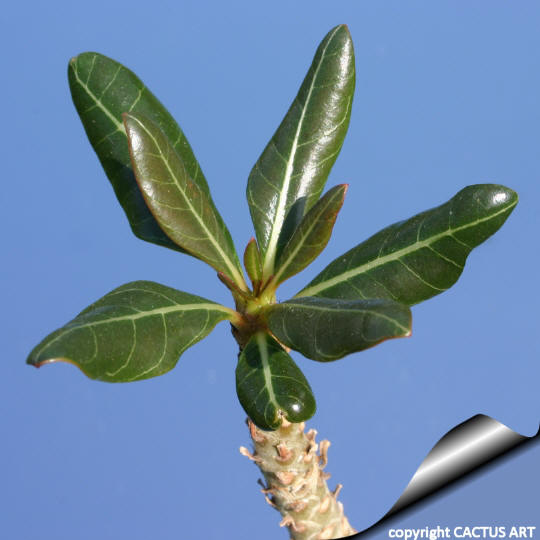
Adenium socotranum.
By far one of the most rare and desirable of all succulents it forms in
age more of a bush than a small tree (like a dwarf baobab)
|
|
Description:
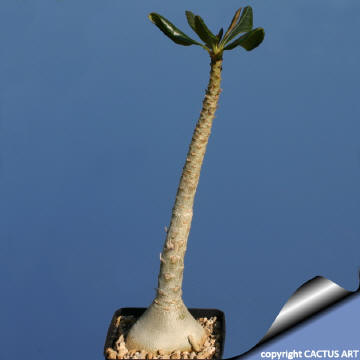
It is the giant of the genus, forming a massive conical trunk/caudex
several metres tall and up to 2.4 m in diameter, the whole plant up to
3,5 meter in height. It resembles a miniature baobab with
surrealistic
forms. Some turn into tall trees while some may grow with their swollen
bases more flat on the soil, This species - virtually unknown in
cultivation - is frequently indicated to be a winter grower but the few
plant observed in European collection are in leaf only during the summer
months, leafing out even later than A. boehmianum.
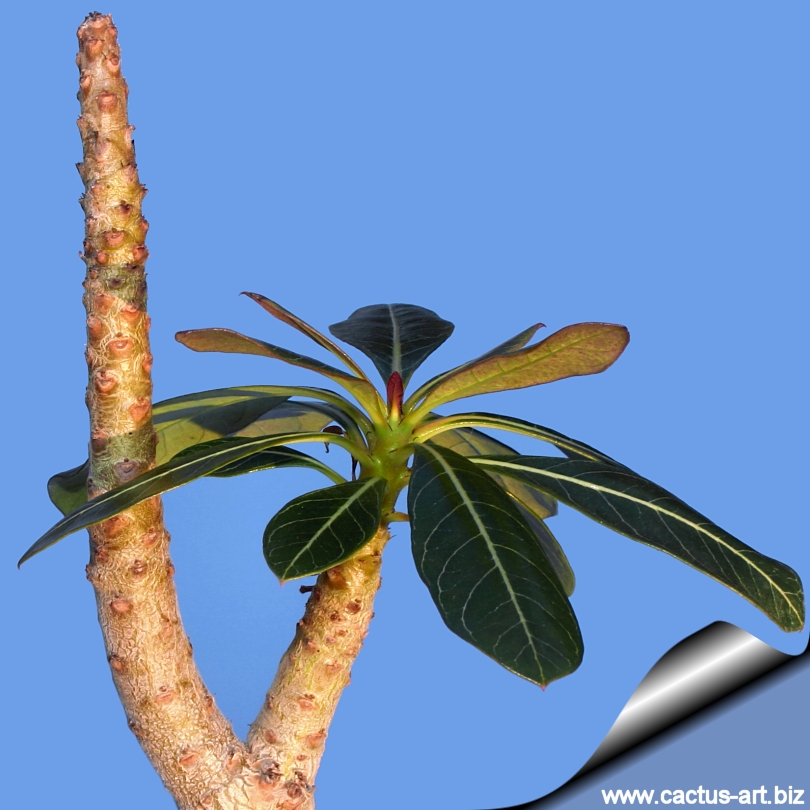
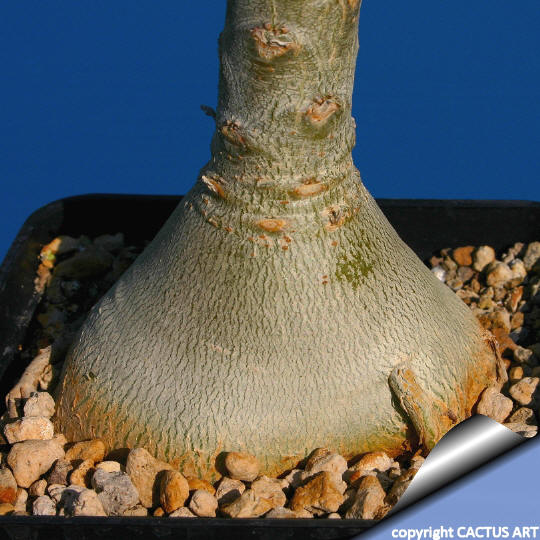
Stem: Solitary or multiple
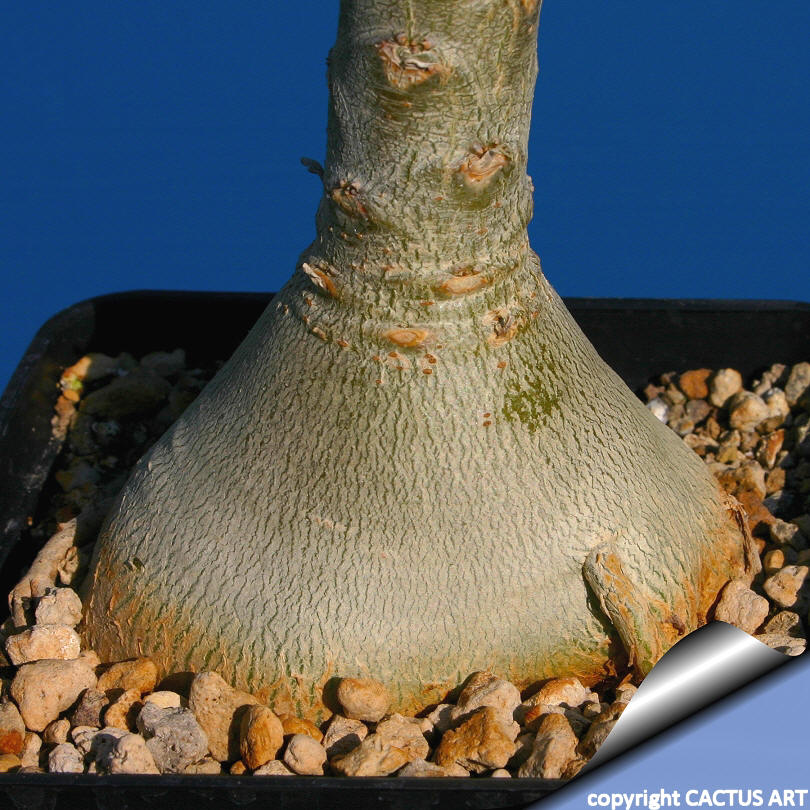
bottle-shaped trunk/caudex, swollen, vertical, conical more or less
distinctly striated (a unique character in the genus) the twiggy
branches are few short and thin.
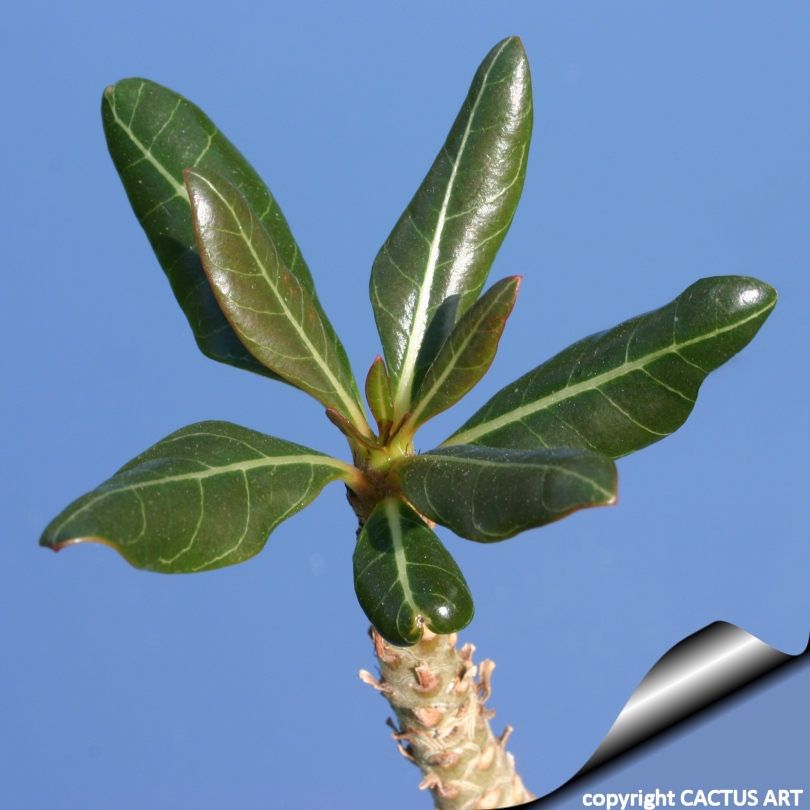
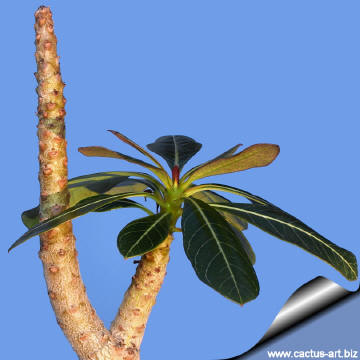
Leaves: About 12 cm long, usually widest near the tip, dark green
with a white midrib and light major veins. They are glabrous in dense
terminal rosettes.
Flowers: Pale to bright pink 10-13 cm in diameter. Very rarely
seen flowered in collection.
Seeds: Big, about 1.5-2 centimeter.
If placed in a large container the
differences between species will become more obvious. A.
socotranum develop a
swollen base while the plant is still quite young more rapidly than it
strictly relatives (such as A. arabicum
and A. multiflorum)
that branch more freely but stay thinner, while some (A.
obesum ssp. boehmianum)
don't develop much of a caudex at all.
|
|
 |
 |
|
Cultivation: Needs lots of light and fresh
air. It will be an indoor bonsai in all but the warmest climates. Keep
in a bright location in winter (minimum temperature 10° C). However, in
the winter, keeping it cool gives the plant a needed rest. In summer, if
possible, move outdoors to a sunny or partly shaded location. Needs
little water during winter, especially when kept cool. Increase water
during growing and blooming periods. The total watering needed is
similar to other succulents, and it will lose leaves if overwatered.
Feed monthly during spring and summer with liquid bonsai fertilizer. It
has a large caudex with few short thin branches and do not need a heavy
pruning after the plant's rest period as requested by other species.
Eventually pruning should be kept to a minimum. The sap is poisonous, so
clean hands after pruning, and avoid getting sap into open wounds.
Repotting: Root prune and repot every two years, after the winter rest
period, in a mix of 2 parts bonsai soil, 2 parts peat, and one part
sand. Can tolerate being pot-bound.
Propagation:
Usually by seeds. It can also propagated
by cutting of branch or stem rooted in a sand-peat mix. (Wait until 2-3
day before you plant. It will reduce rot.)
|
|


Advertising
|
|
|
|
|
Family: Apocynaceae
Scientific name: Adenium socotranum
Friedrich
Vierhapper 1904
Origin:
Endemic from
from the isolated island of Socotra in the Indian Ocean south of the
Arabian peninsula and east of the Horn of Africa. For many years Socotra
hosted a Soviet naval port and was off limits to most everyone,
restricting the availability of plants and seeds. In recent years it is
accessible, but the authorities are very protective of the natural
resources and it is illegal to collect plant material of any type.
Habitat and ecology: Grows among stones in grit or on other well
drained soil. It displays several
morphological and physiological adaptations to cope with the dry climate
and fierce monsoonal winds.
Adenium socotranum has a
special cell sap cycling within the caudex which prevents overheating.
Plant bodies are globular or columnar, with reduced surface areas that
decrease transpiration. Glaucous wax surfaces and micro-anatomical
epidermal emergences reflect radiation.
Synonyms:
-
Adenium obesum ssp. socotranum (Vierhapper) Lavranos
In:
CSJA 38(1): 23, 1996
|
|
|
|
A. socotranum is currently the most beautiful and rarest specie in the
genus and is virtually unknown in cultivation. Occasionally seed
becomes available from the few plants that are in cultivation, and
specialized nurseries are starting to propagate this desirable rarity.
But when the few plants do come on the market, they are expensive!
 |
|
Photo of conspecific taxa, varieties, forms and
cultivars of plants belonging to theAdenium
obesum
complex :
|
|


 Cultivation
and Mail Sale
Cultivation
and Mail Sale