|
|
|
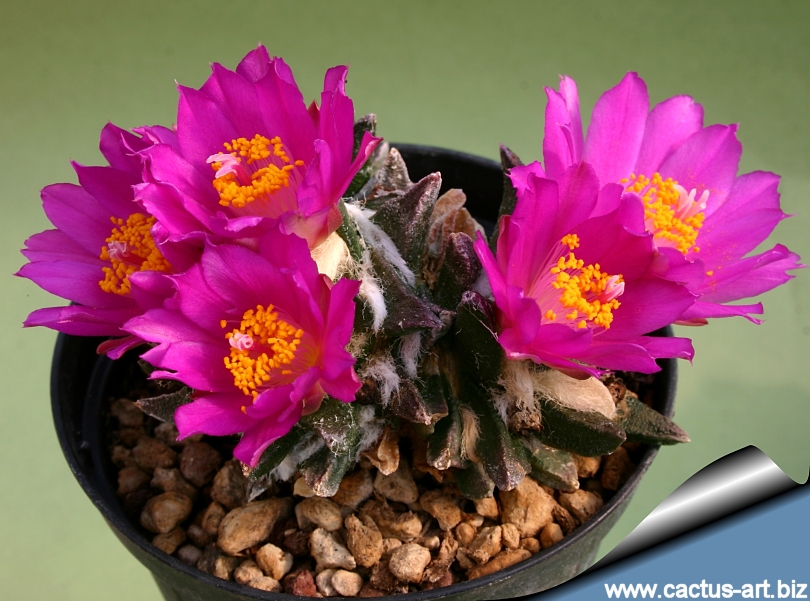
Probably the rarest and more difficult species in cultivation .
|
 |
 |
|
. |
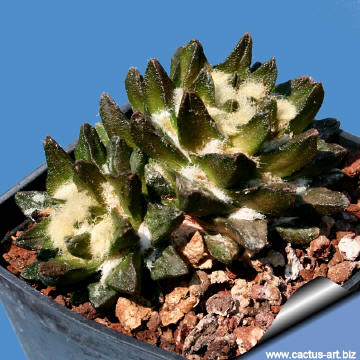
This is undoubtedly one of the slowest growing
and charming species seldom seen in collections.
It is vaguely similar to
A. agavoides except tubercles are more erect and compact. |
 |
|
. |
 |
 |
|
. |
 |
 |
|


Advertising
|
|
|
|
|
|
Scientific Name:
Ariocarpus scapharostrus
Boedecker
Pubblished in:
Monatsschrift fur Kakteenkunde 2 :60-61.
1930
Comments: This specie has been
described in 1930 with
the name A. scapharostrus,
but Hunt proposed to change the name in
A. scaphirostris which is the correct
spelling.
Conservation status: Listed in
CITES appendix I
Origin: Rayones valley (sw
Galeana, n
Cuaxma, Casillas, nr Monterrey)
Habitat:
:
Mexico (Nuevo Leon) in a very limited area within a
single valley of a few hillsides. Grows in
clayey soils on extremely
arid low
limestone hills at 950-1400 m of
elevation.
Etymology:
The
generic name
"Ariocarpus "
is derived from the Greek “aria” meaning “Sorb” (Sorbus
aria – Rosaceae - is the white-beam tree) and the Greek word "karpos
(καρπος)"
meaning “fruit”
( The
Genus name implies:
"fruit similar in appearance to that of the
white-beam")
The
specific name "scapharostrus" derives from the Latin word “Scaphus” meaning
“boat, the hull of a boat”, and the Latin word “Rostrum”meaning
“the beak of a bird”
referring to the
long
tubercles
(The specific name implies: “boat
shaped tubercles”)
|
|
Description:
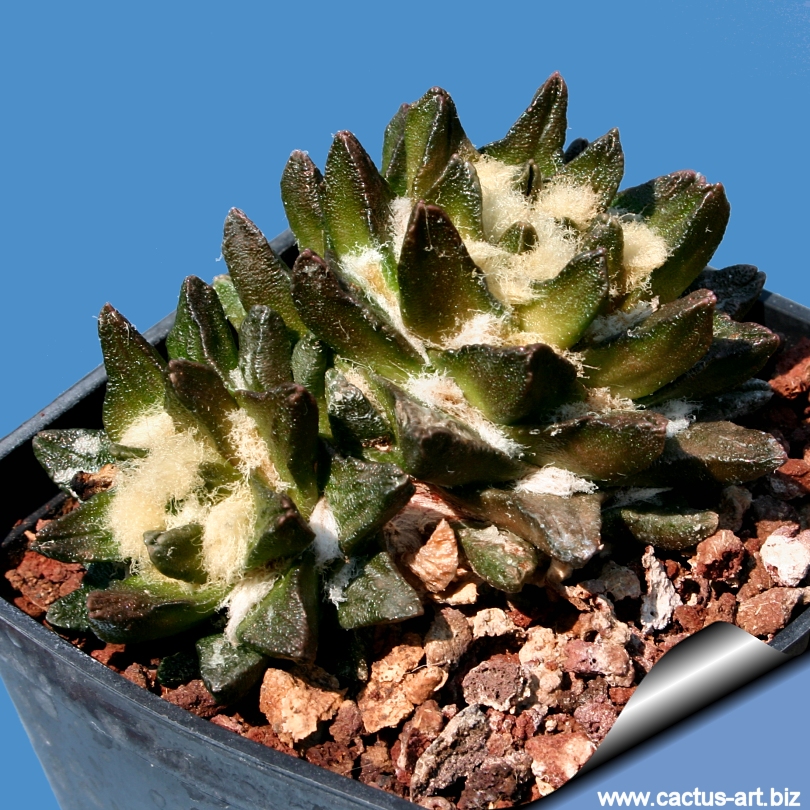
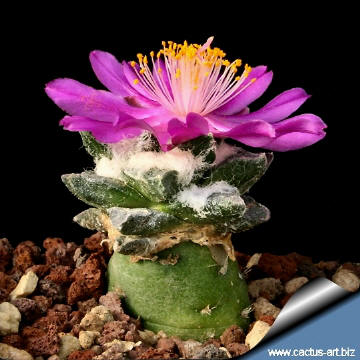
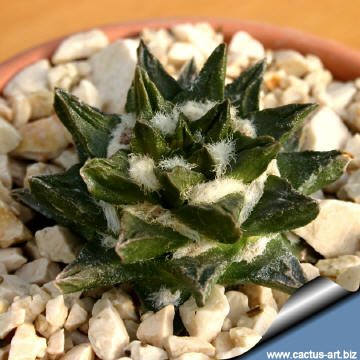
A. scapharostrus is a
slow-growing
grey-green, geophytic
cactus rising barely above ground level.
Stem: Smaller
solitary, subglobose or globose, more or less rounded on top,
diameter 3-6 cm x 2-6 cm tall (occasionally up to
9-15 cm Ø in cultivated plants).
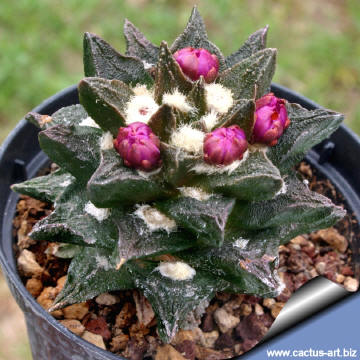
Tubercles: Few divergent,
erect
spineless , not crowded or basally compressed, bluntly pointed at
the apices, flattened and smooth adaxially, fissured, slightly
incurved, 1,5-4 cm long, 5-8 mm broad, at least twice as long as wide,
grey
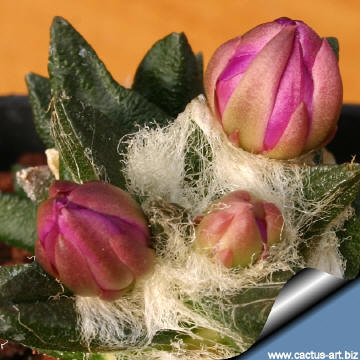
wool between the tubercles.
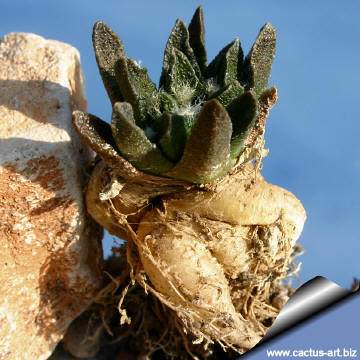
Root: Thick
underground
carrot-like root.
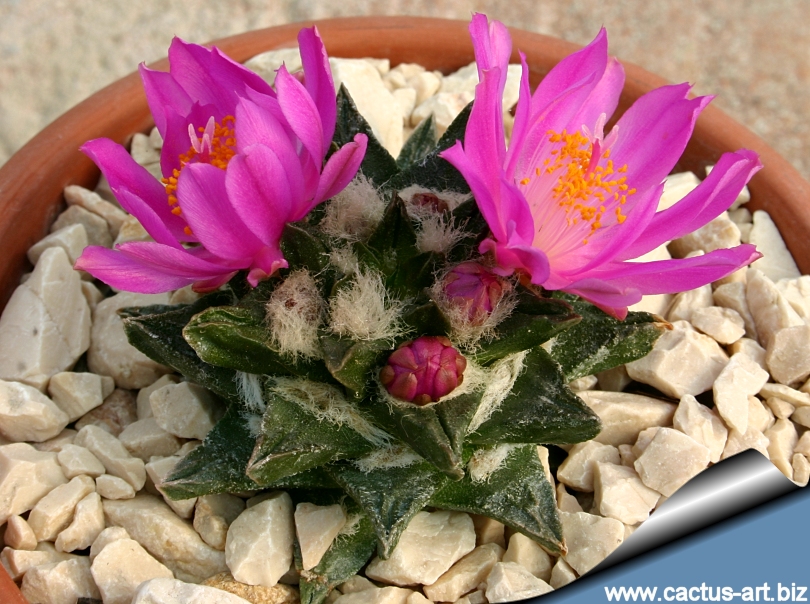
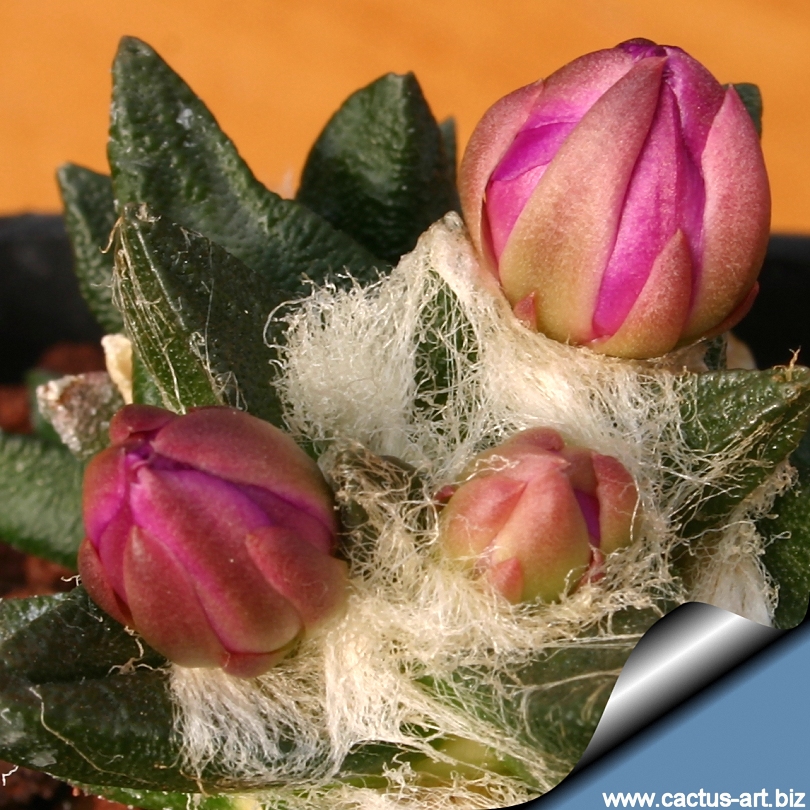
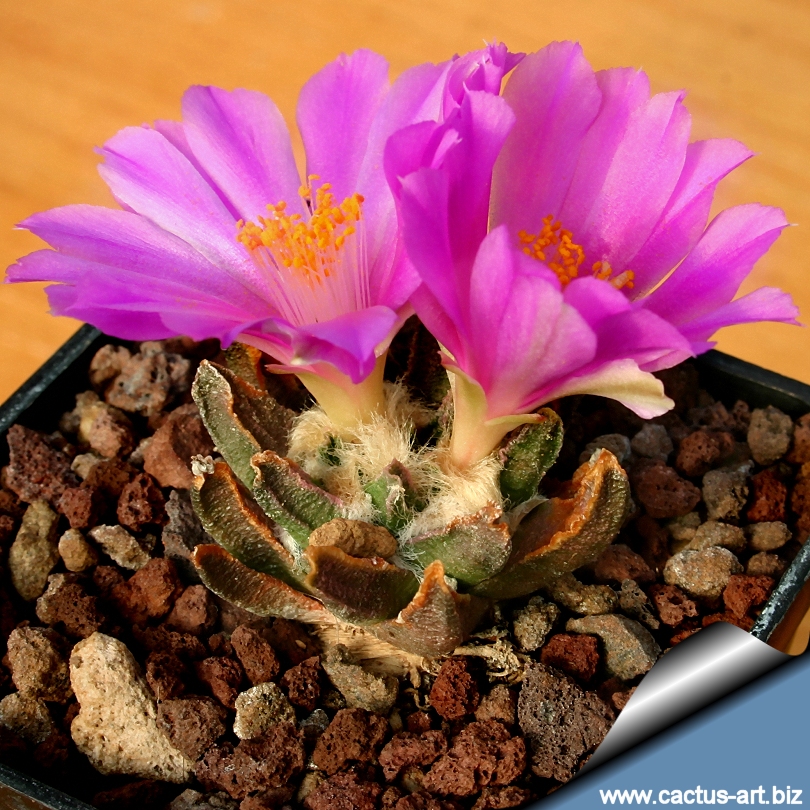
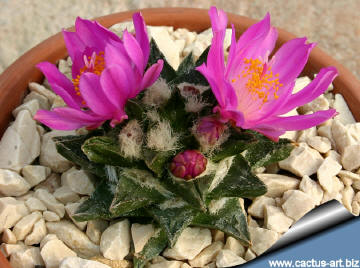
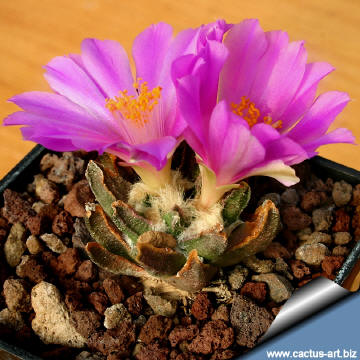
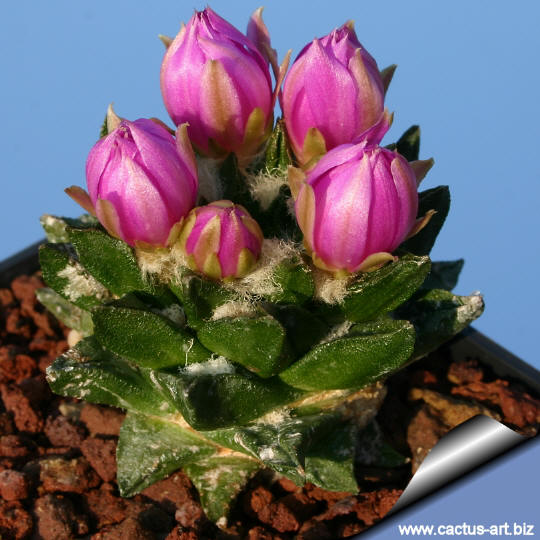
Flowers:
Diurnal,
self-fertile,
bright dark purple , up
to 4 cm.
Blooming season: Flowers in the
Autumn,
it flowers and fruits profusely.
Fruit: Greenish, 9-15mm long 4-8mm in diameter.
Remarks:
All of the Ariocarpus seedlings are spiny and quite
different from adult specimens, though the spines are feather-like.
|
|
|
|

A seedling grafted on Opuntia compressa (diameter 3cm).
Cultivation:
Plants are slow growing and
the flowers are quite rare, it
may
start to
bloom at about 2.5 cm diameter.
It is one of the more difficult Ariocarpus in cultivation,
often
rots,
especially the
old plant. The
seedlings are often
grafted to increase
growth speed, and flowers can then be expected within 2-3 years from
sowing. It requires a hot
sunny position.
Eventually, as they become mature, they reach a
maximum size of 6 to 10 cm. However, old plants become
senile and have a tendency to succumb to
disease and a weak
root system. At this
stage, as is well known, they
die suddenly. So, after they reach 5 cm in diameter grow them
slowly, and adopt a new repotting period, using intervals of every 2
- 3 years. Additionally grow them under drier conditions or with
stronger sunlight. Plants are often
grafted to accelerate growth, as they would generally take at least a
decade to reach
maturity on their own. But the grafted plants are typically rather
tall- growing, compared with plants on their own roots, that are usually
flatter to the
ground. A. scapharostrus starts blooming
at the age of 8-12 years (2,2,5 cm in diameter).
Propagation:
By
seeds, remembering that
seedlings dislike strong
light and
dry conditions, and need to be
repotted frequently.
|
|


 Cultivation and Mail Sale