|
|
|

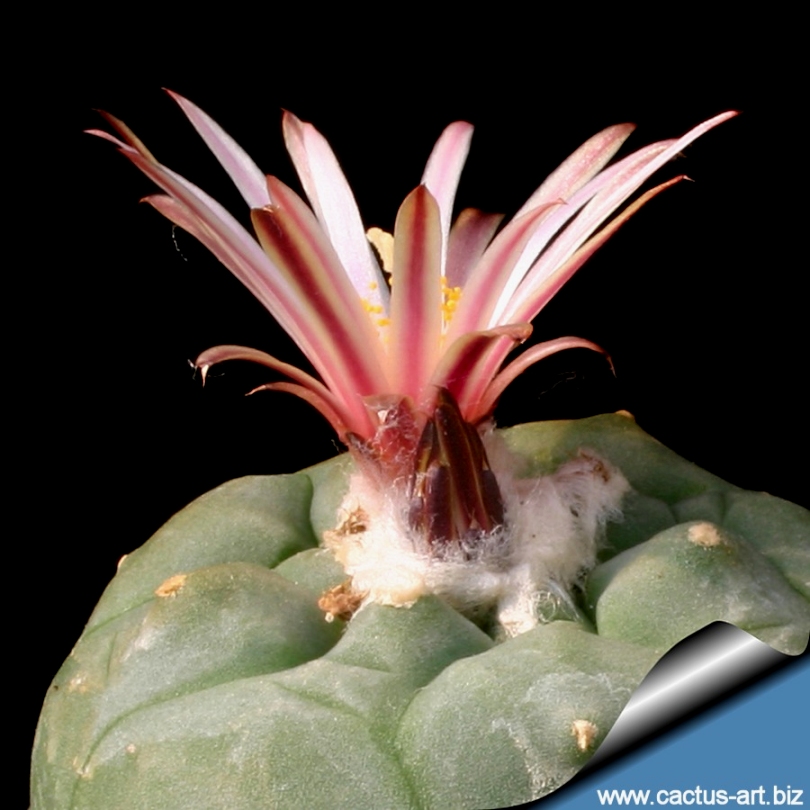
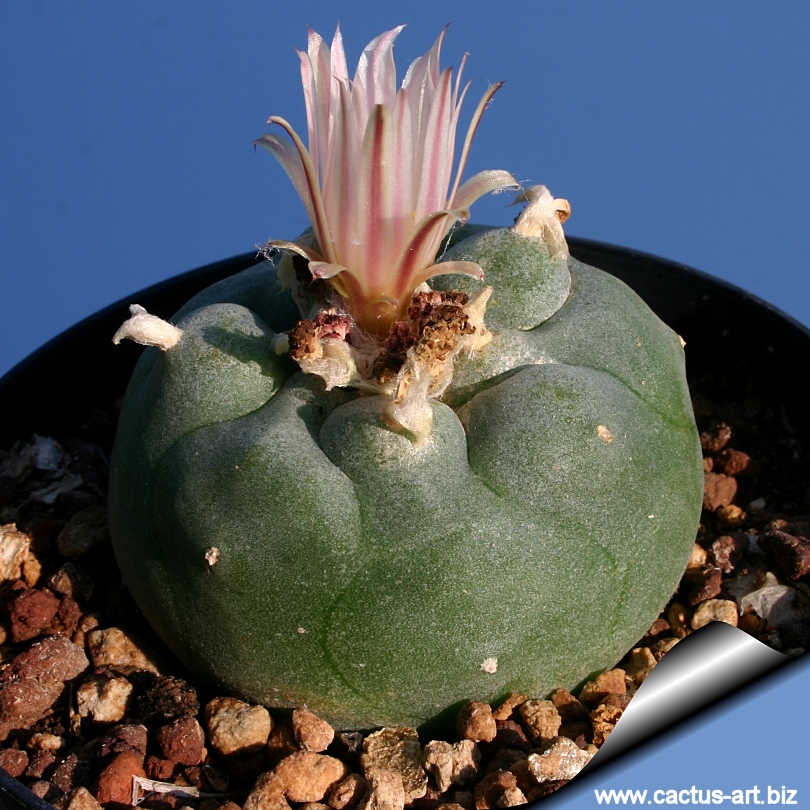
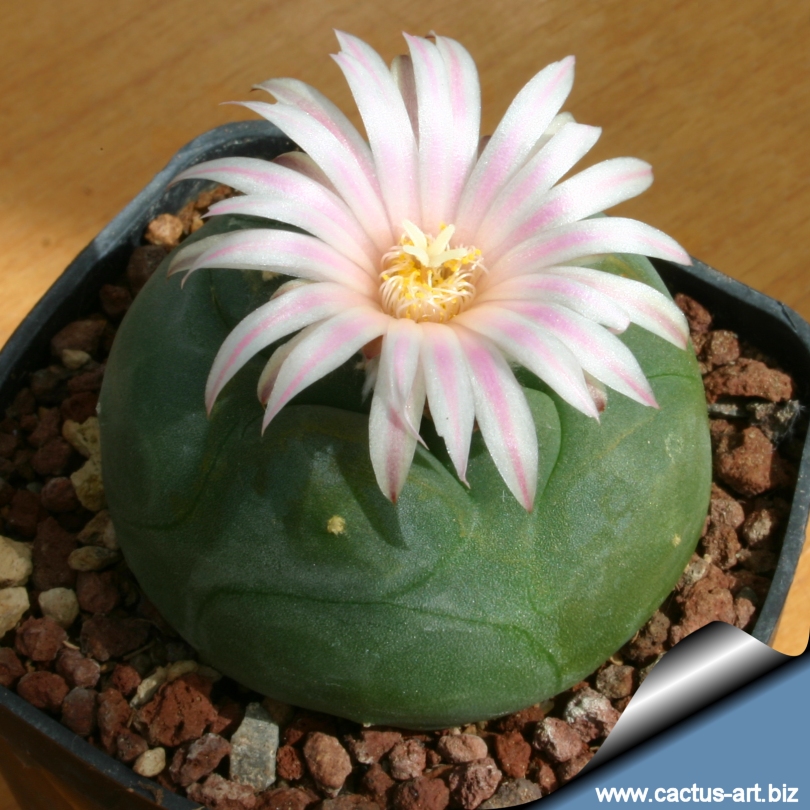
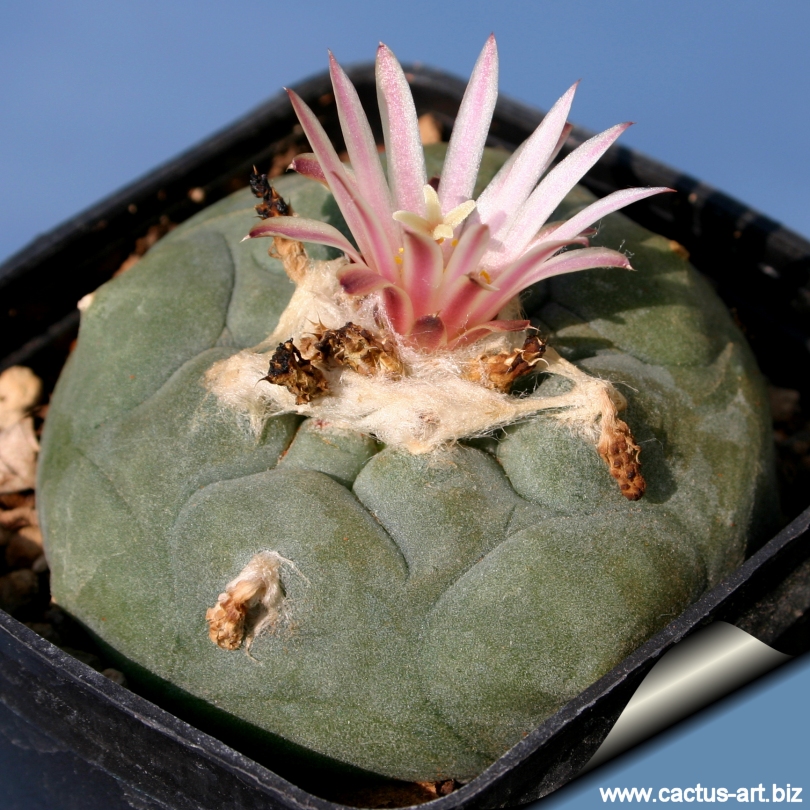
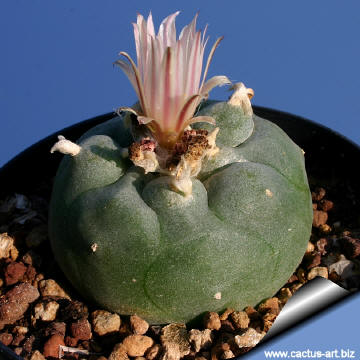
Lophophora diffusa var. koehresii
is probably the smallest Lophophoras.
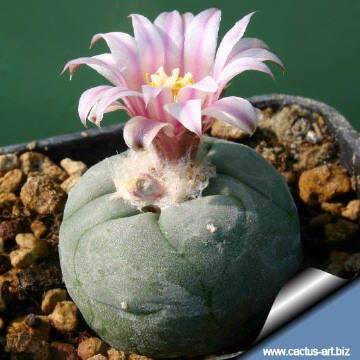
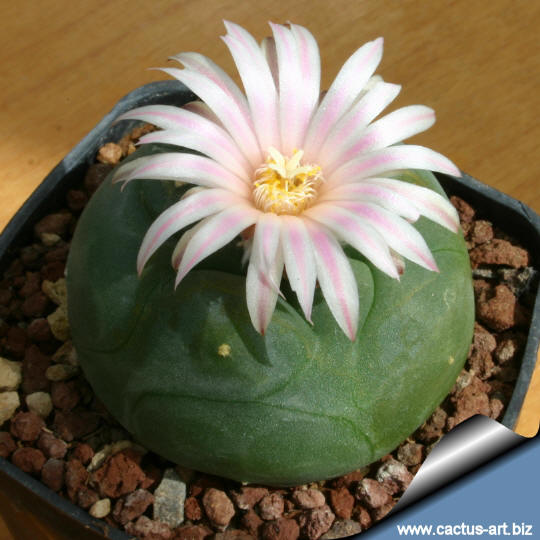
It has big pale pink flowers with darker midstrip.
|
|
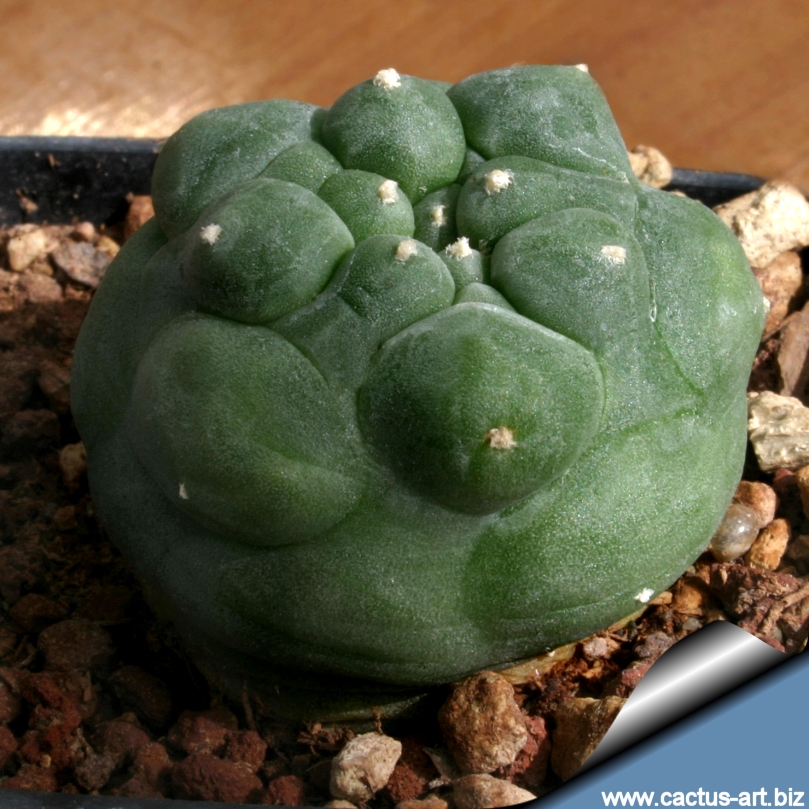
Description: Globular
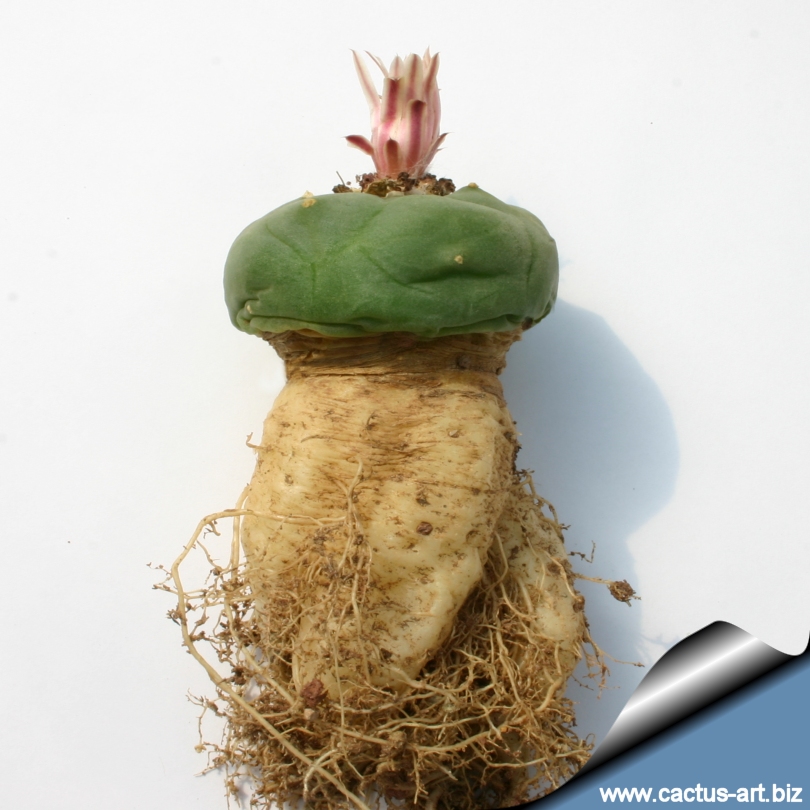
spineless cactus with large tap root.
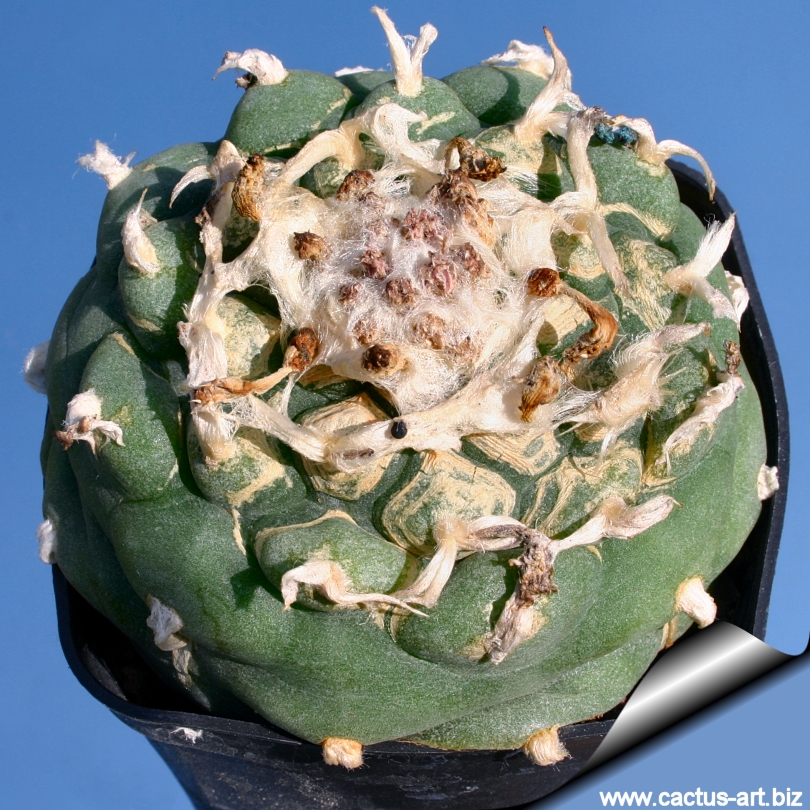
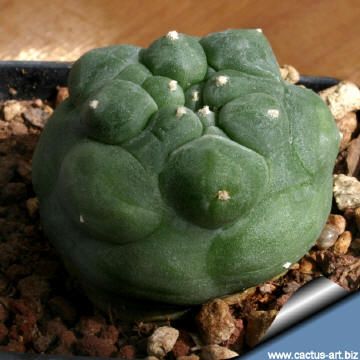
Stem: Up to 12 cm in diameter, it differs from the closely
related L. diffusa by being a characteristically dark green colour. It
is also a smaller size, and the ribs are more strongly in relief.
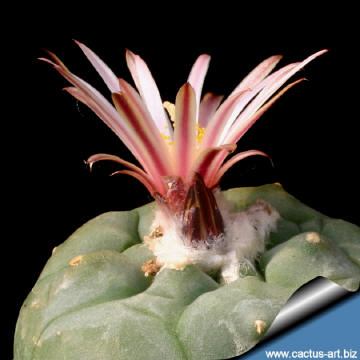
Flowers: Pinkish to cream with a darker pink or brownish midrib,
reaching over 3 cm in diameter. Unlike the somewhat wider flower petals
of L. diffusa and L. williamsii, this variety has unusually thin petals.
Like L. diffusa, it is also self-sterile and requires cross pollination
to produce seed.
Fruit: Pink or white fruit.
|
|
 |
 |
|
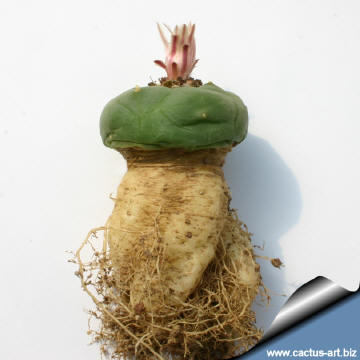
It differs from the closely related L.
diffusa by being a darker green colour with more raised and wavy ribs.
The fat underground tap-root greatly exceeds the size of the aerial
stem. |
|
 |
|
|
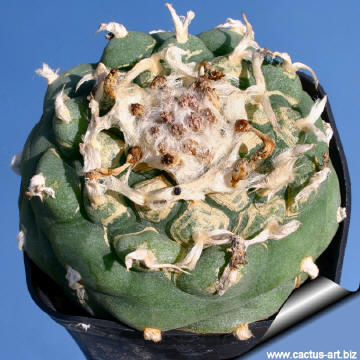
Projecting tubercle |
|
 |
 |
|
Propagation: Seeds. Seeds should be sown in spring, in sterile
cacti mix. Cover with a humidity dome or plastic wrap and leave in a
warm spot in 50-75% shade. Fluctuating temperatures are best (ie. high
day temperature and low night temperature), as they simulate the desert
environment. Keep constantly humid, as seedlings cannot survive if too
dry. Seedlings will emerge in 7-21 days and can be grown in the same
environment for a number of months. Mulch with thin layer of small
quartz gravel (1-2mm diameter). This helps them stay upright, hinders
algae growth and regulates moisture. As they get older, the watering can
become less frequent. Potting up can be done when 5-10
mm in diameter.
|
|
Advertising
|
|
|
|
|
Family:
Cactaceae (Cactus
Family)
Scientific Name:
Lophophora diffusa var.
koehresii Riha 1996
Mesa Garden cat.,
Kaktusy, cf. Repert. Pl. Succ. (I. O. S.), 32 (3): 70-73; 47: 10 (1996
publ. 1997), 2001
Common Name: False peyote.
Origin: Lophophora koehresii grows near the lagoon of Rio
Verde, San Francisco, from Las Tablas to Palomas in the state of San
Luis Potosi, Mexico.
Habitat:
This species is mainly restricted to areas with alluvial soil.
Conservation status: Listed in
CITES appendix 2.
Etymology: Named for the German nurseryman and
cacti enthusiast, Gerhard Koehres.
This is a relative of
Lophophora williamsii, the true Peyote. But although
this species has many
morphological and chemical differences, it does not contain the same
substances as L. williamsii, it is not narcotic,
it is not specifically
named in the law, and it's probably legal to possess
(depending on local legislation)..
|
|
|
|
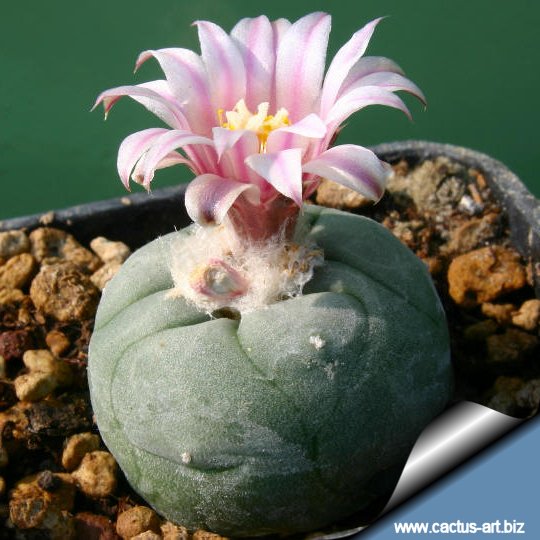
Lophophora diffusa v. koehresii
S. Francisco SLP
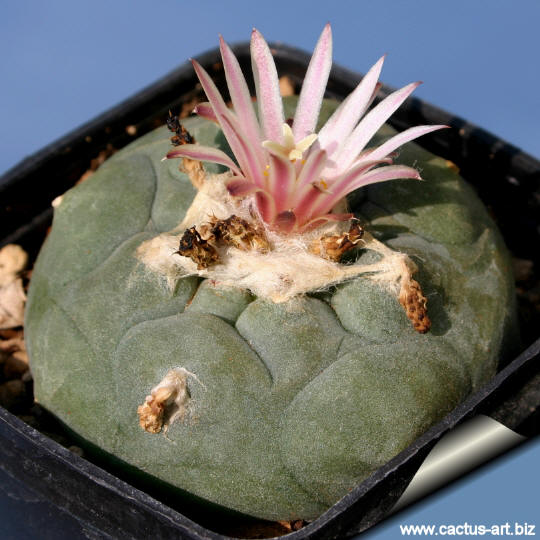
Cultivation: Slow growing, it requires
half-shade in summer, full sun the rest of the year. Grow it in a narrow
and deep container to accommodate the tap root. They are very rot
prone, so use highly gritty compost with much drainage.
Waterings should be rather infrequent, to keep the plant compact and not
to become excessively elongated and unnatural in appearance. Watering
it properly is often difficult, because this plant tends to crack open
or rot if over-watered. The fact that the plant retracts into the soil
and assumes a grey-green colouring between waterings is perfectly
natural, and doesn’t cause any damage. Like other arid zone cacti, they
require a dry and cool over-wintering; otherwise they may succumb to
rot. This also promotes flowering. Assure good ventilation.
Photo of
conspecific taxa, varieties, forms and cultivars of Lophophora
diffusa.

 |
|


 Cultivation and Mail Sale