|
|
|
 |
|
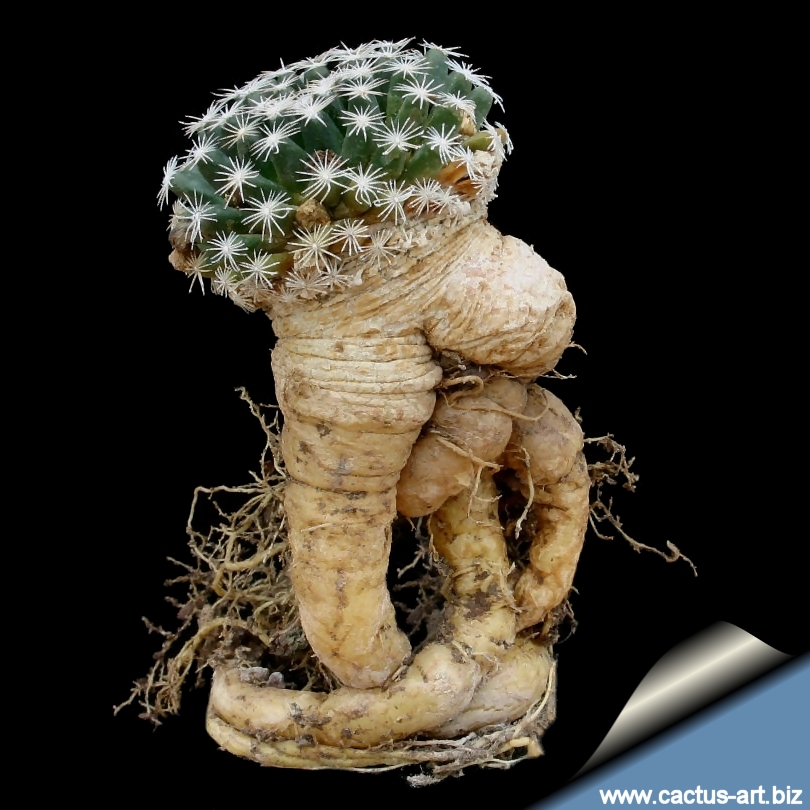
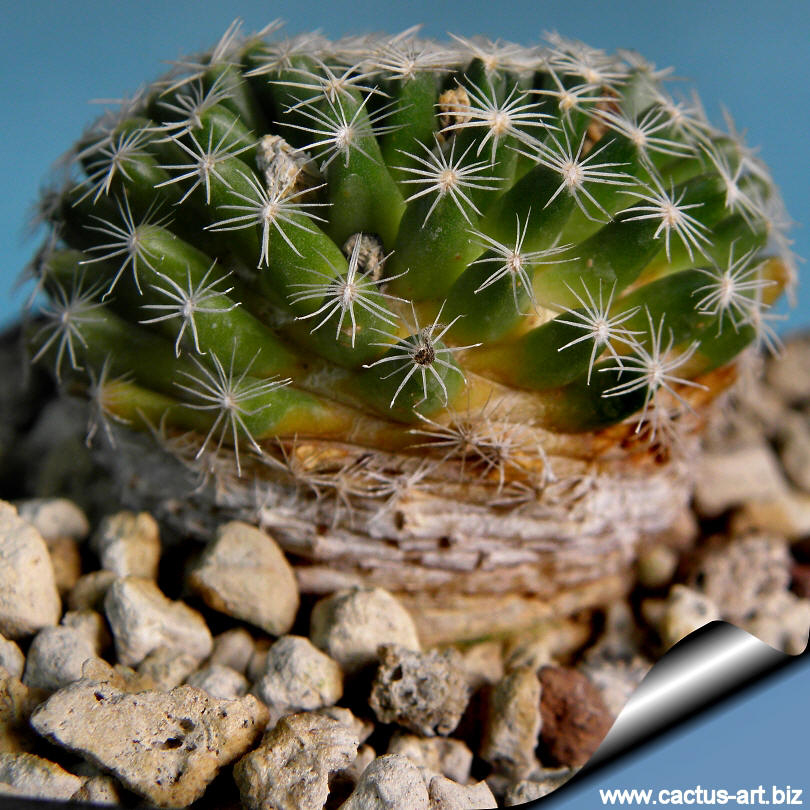
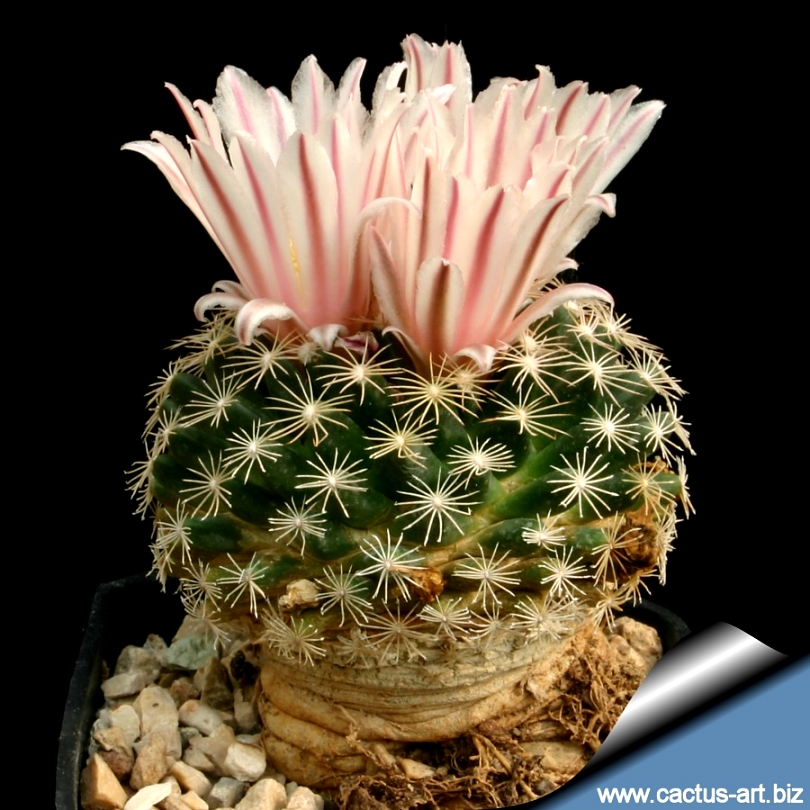
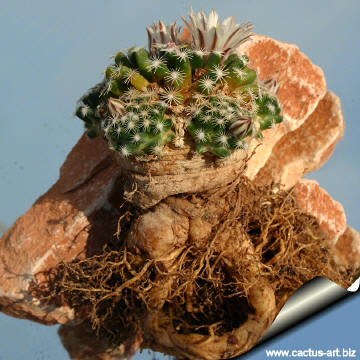
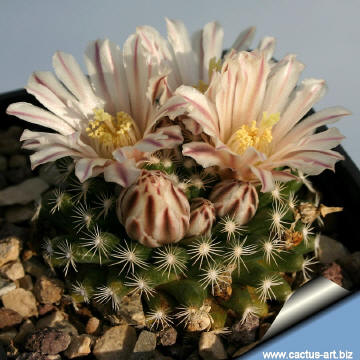
Mammillaria coahuilense SB699 Hipolito,
Coahuila, Mexico.
A
mature
specimen
(nine years
old )
The imposing
tap root
drives
the plant out of the
pot
substrate.
|
 |
 |
|
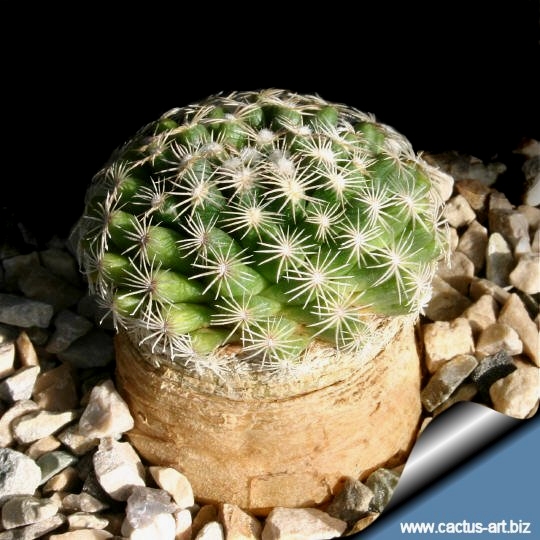
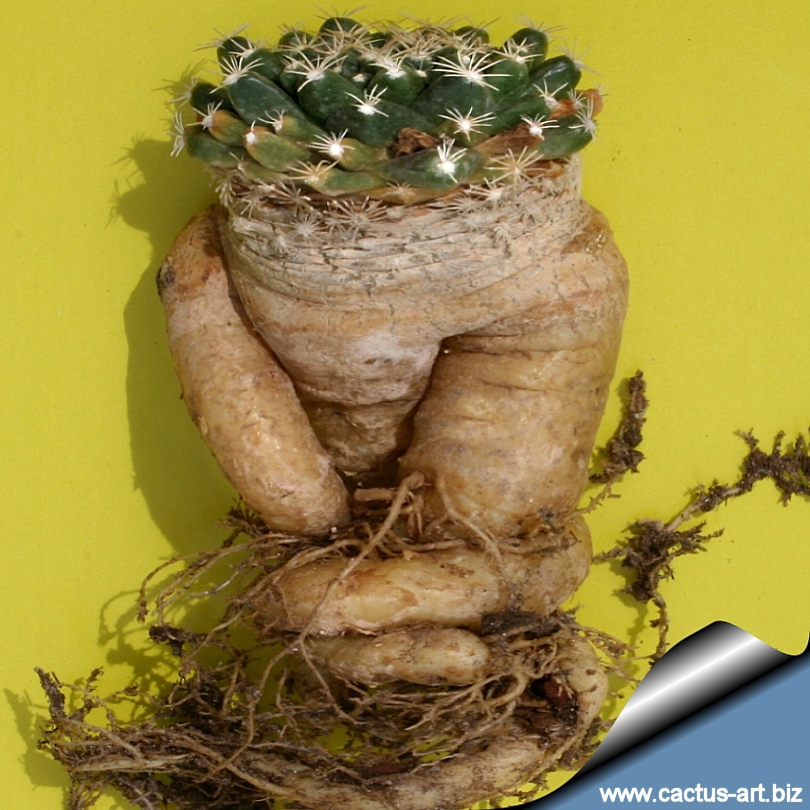
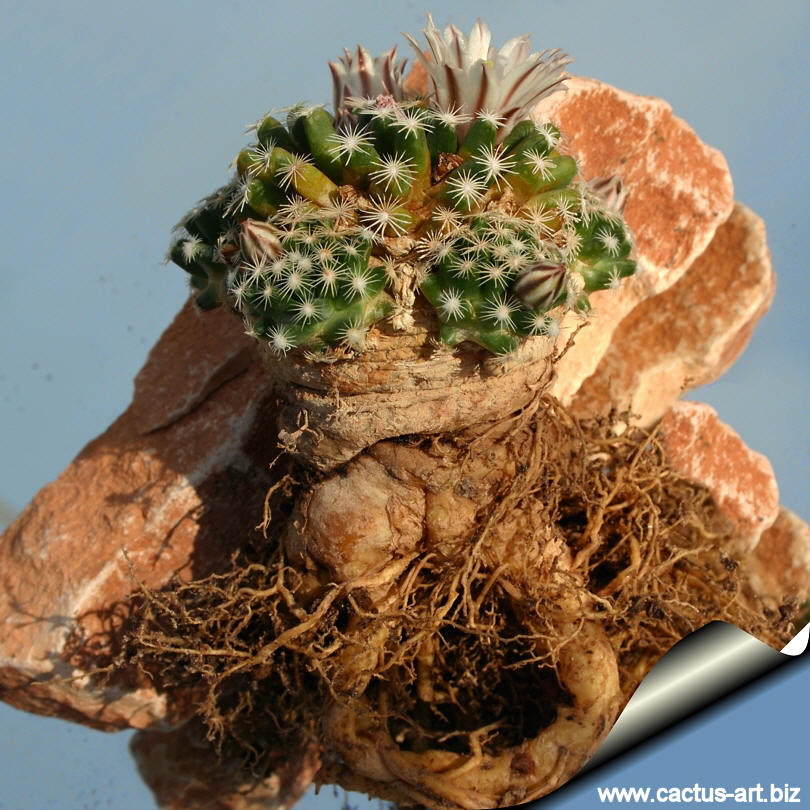
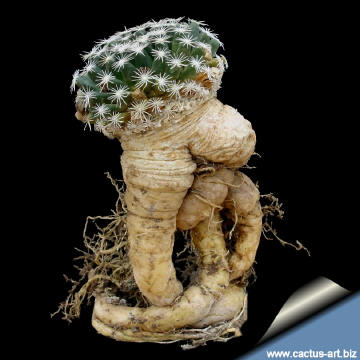
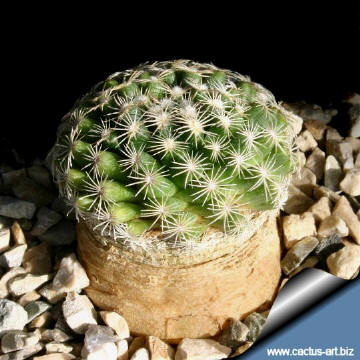
It is a rare and very slow growing dwarf tuberous species, with a heavy
tap root that may exceed the size of the plant above soil level. |
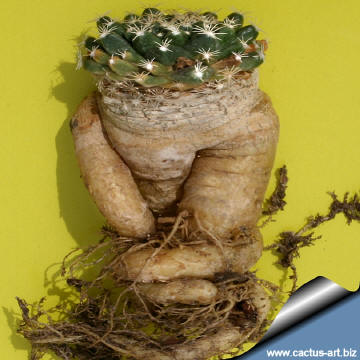
9 years old! |
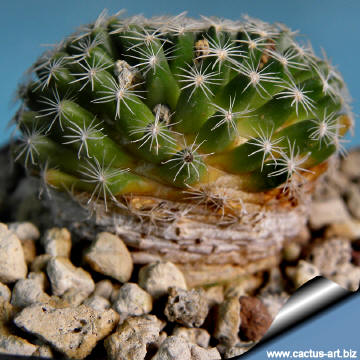
12 years old! |
|
.
|
 |
 |
|
.
|
 |
 |
|
Photo of conspecific taxa, varieties,
forms and cultivars of M. coahuilense.
Advertising
|
|
|
|
|
Family:
Cactaceae (Cactus
Family)
Scientific Name:
Mammillaria coahuilensis
(Boed.) Moran 1953
spp. coahuilensis
R.Gonzalez
G. 1992
First description by Boedeker, Zeitschr. Sukkulentenk.
2: 210 - 213 (1926) - as Porfiria.
Origin: Coahuila, Mexico.
Conservation status: Listed in
CITES appendix 2.
Habitat: This plant is a mud crack dweller,
growing almost sunken
in cracks in the dry lake at the Laguna de Viesca. Altitude 1.000 to
1.230 m
 Habitat:
Coahuila, Mexico. Altitude 1.000 to 1.230 m. Habitat:
Coahuila, Mexico. Altitude 1.000 to 1.230 m.
Synonyms:
- Porfiria coahuilensis Boed.
1926
- Mammillaria coahuilensis subsp.
coahuilensis
- Mammillaria heyderi ssp. coahuilensis
(Boed.) J.M. Luthy 1995
- Mammillaria schwartzii (Fric)
Backeb. (Nom inval.) 1966
- Porfiria schwartzii Fric 1926
|
|
Description: Small
geophyte cactus, with a heavy tap root that may exceed the size of
the plant above soil level. Stems solitary flattened globose,
blue-green, up to 5 cm high and
alsoin diameter.
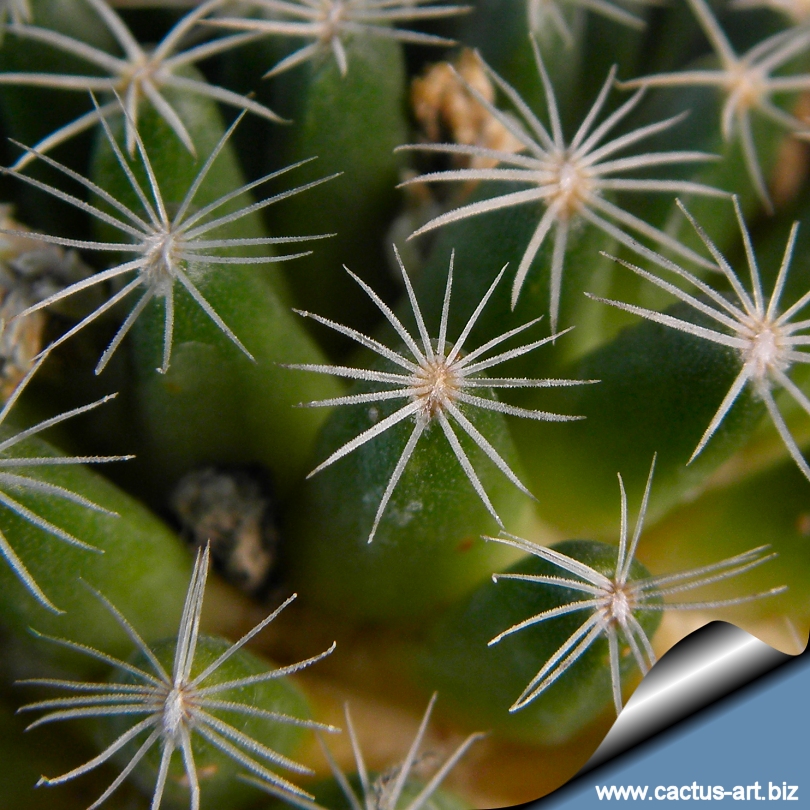
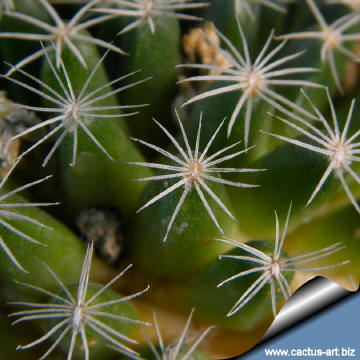
Spines: About 12-16, thin, bristle-like radial spines, slightly
pubescent with darker tips, up to 6 mm long. Central spine: not present or
1, straight, needle-like, darker, up to 6
mm long.
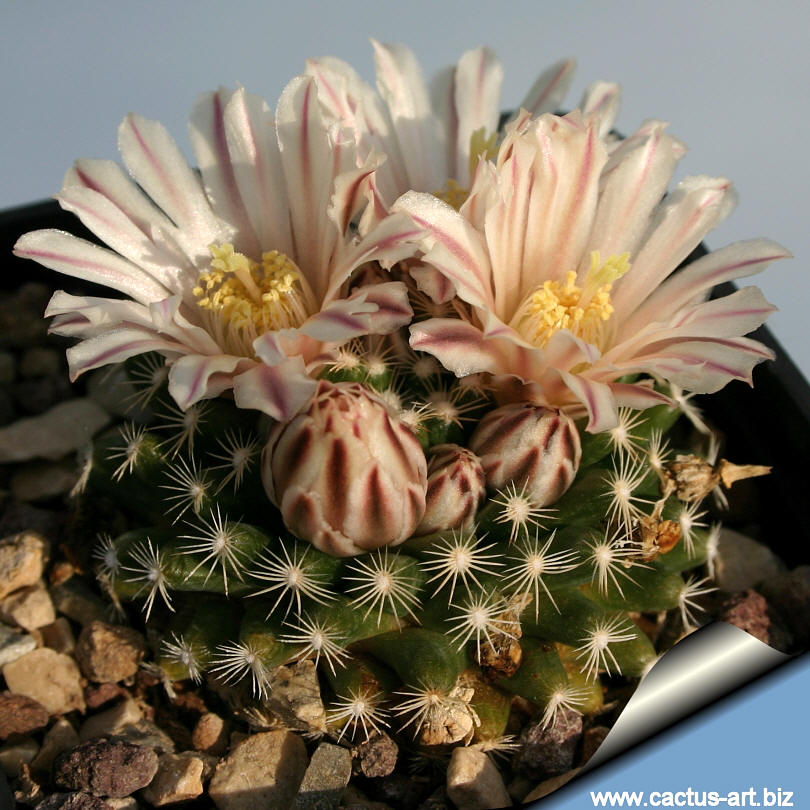
Flower: White with pinkish midveins, very early in the season,
February/March.
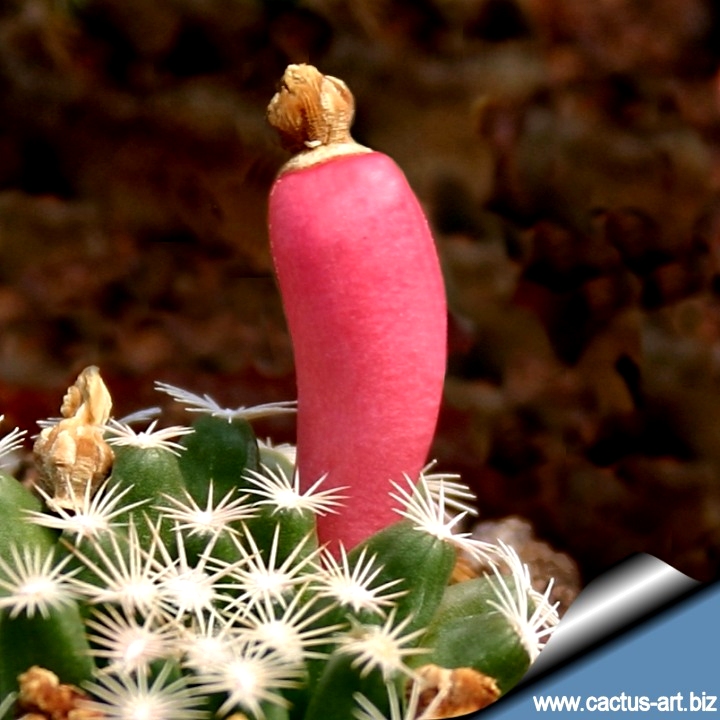
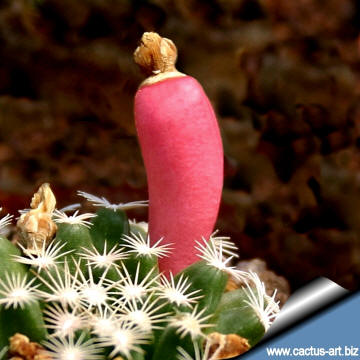
Fruit: Red clavate.
|
|
|
|
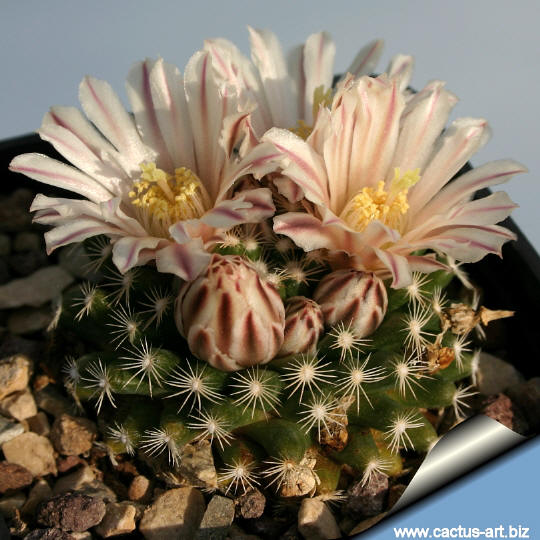
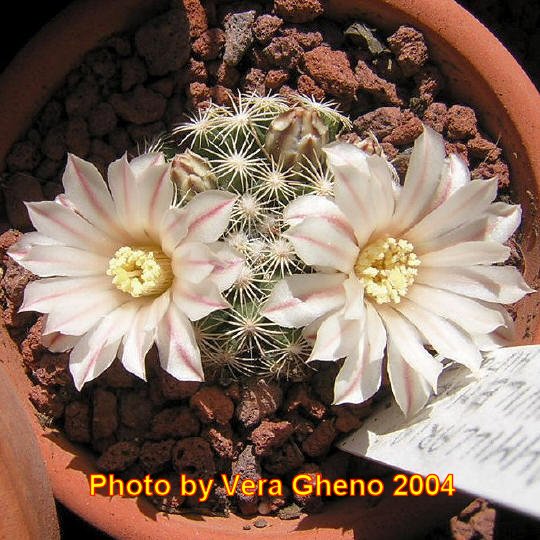
A blooming plant from Vera Gheno collection
Cultivation: This species has few special demands. Whatever view
one adopts, it is worth a place in every Mammillaria collection. The
only problem is that it is very slow growing, a plant for patient
growers.
Like all thick-rooted species, it requires careful watering (rot
sensitive), and patience to match its slow growth. During the winter
rest, the plant may pull near the surface of the potting mix.
Propagation: Direct sow
after last frost. (it usually doesn't produces offsets).

 |
|


 Cultivation and Mail Sale