Family:
Cactaceae (Cactus
Family)
Scientific name:
Ortegocactus
macdougallii Edward Alexander1961,
Synonyms:
Neobesseya macdougallii
Origin:
Mexico (Oaxaca) , San Jose Lachuguiri, in
a small practically inaccessible zone.
Habitat: Grows
in an escarped limestone stone rock top, practically deprived of trees
and scrubs, at a height of 2000 meters
Conservation status: Listed in
CITES appendix 2.
Etymology: It is called
thus in honour of the family Ortega, from San Jose Lachuguiri that
helped Tom MacDougall in the discovery of this plant.
Ortegocactus is a
genus closely related to Mammillaria. The "macdougalli" is the sole species of the
genus Ortegocactus (monospecific). Recent philogenetic studies on of the
DNA locate the Ortegocactus between Neolloydia and
Coryphantha.
Description:
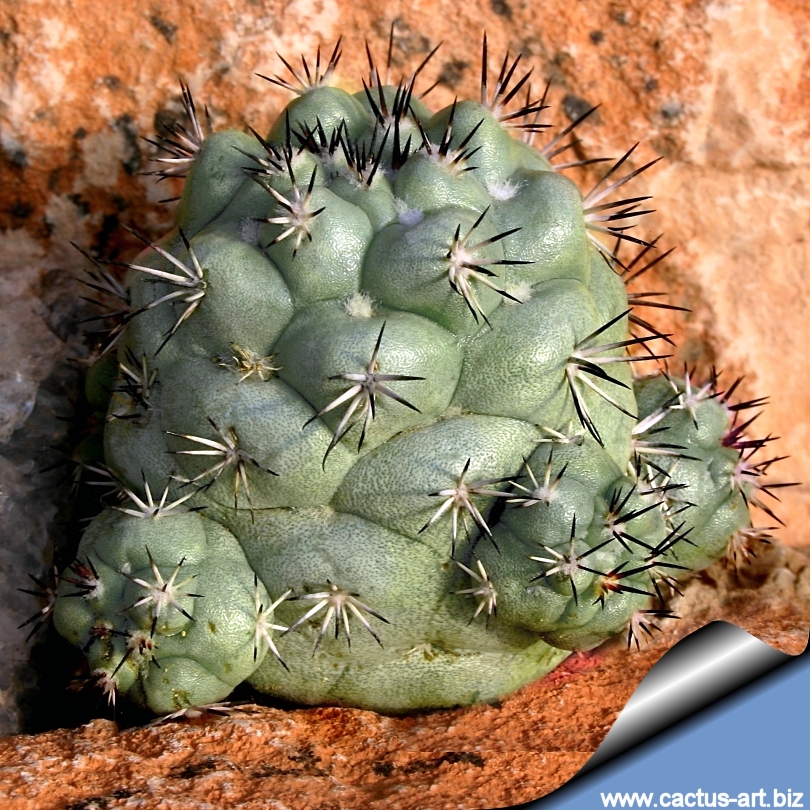
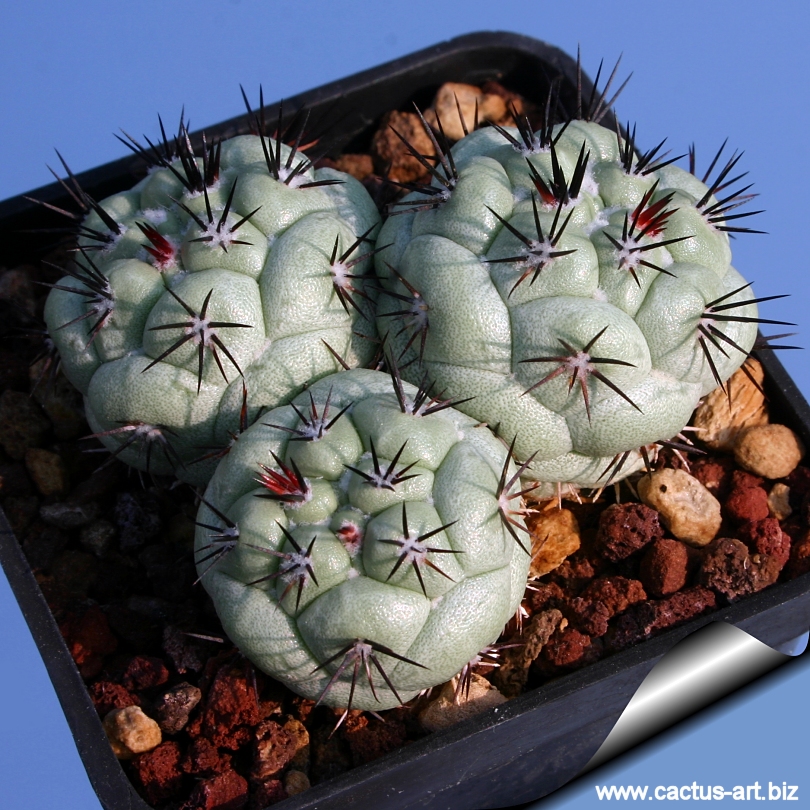
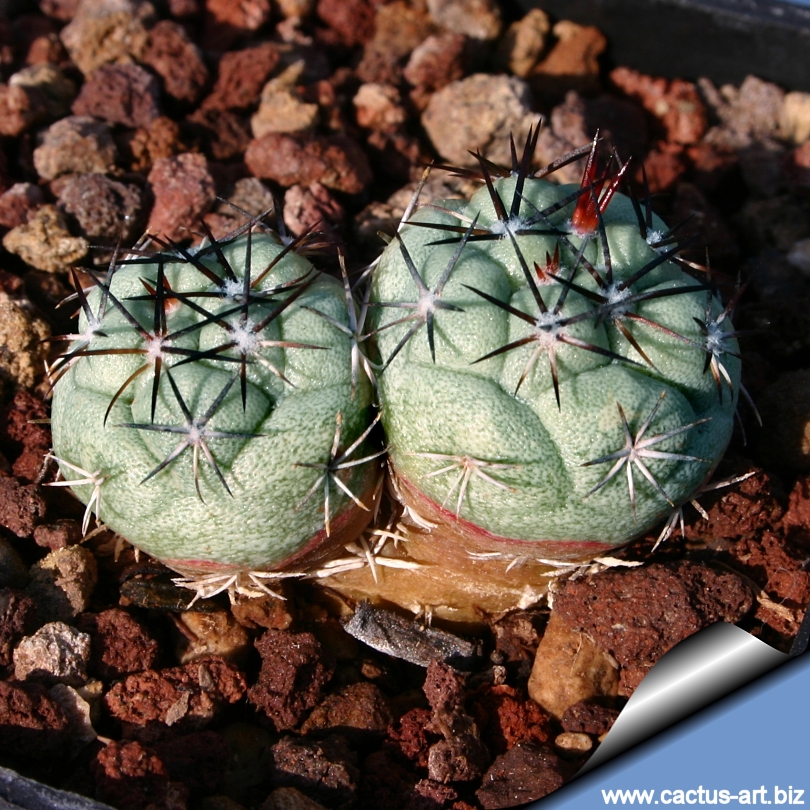
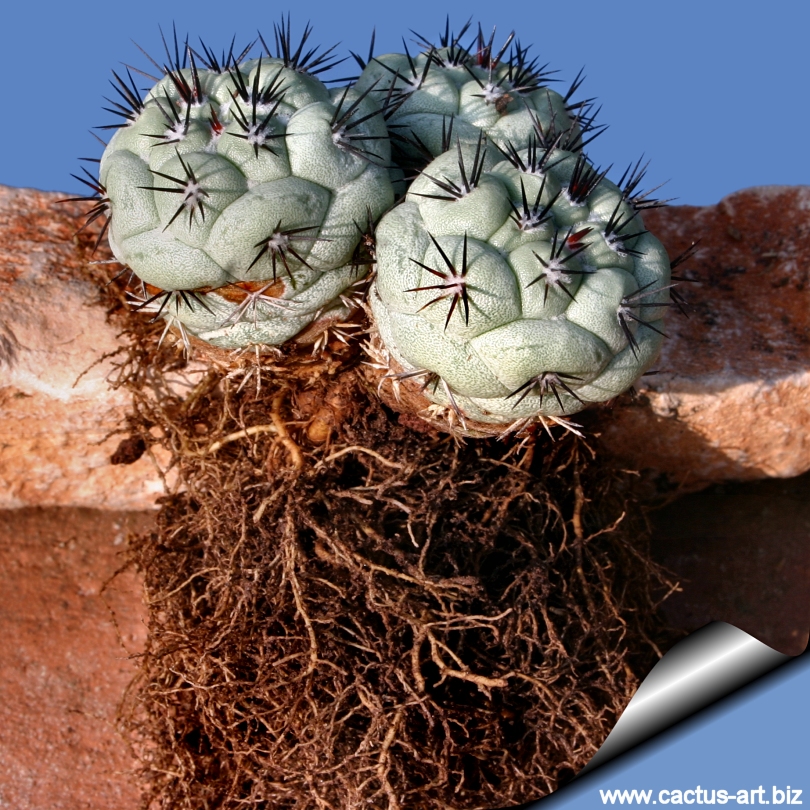
Clumping slow growing small cactus that form tiny bushes.
Stems: This species has a strange and unmistakable
lime-green-grey coloured epidermis, each stem extends with the years,
reaching a diameter of
3 to 4 cm.
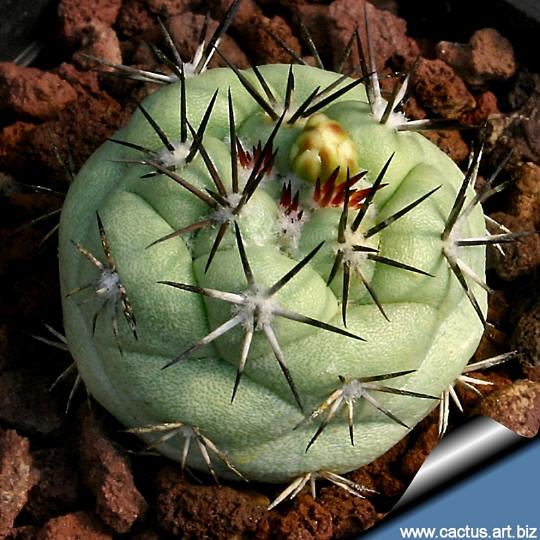
Tubercles: Low, often squashed, rhomboid and arranged in spiral,
of 8 to 10 mm of diameter.
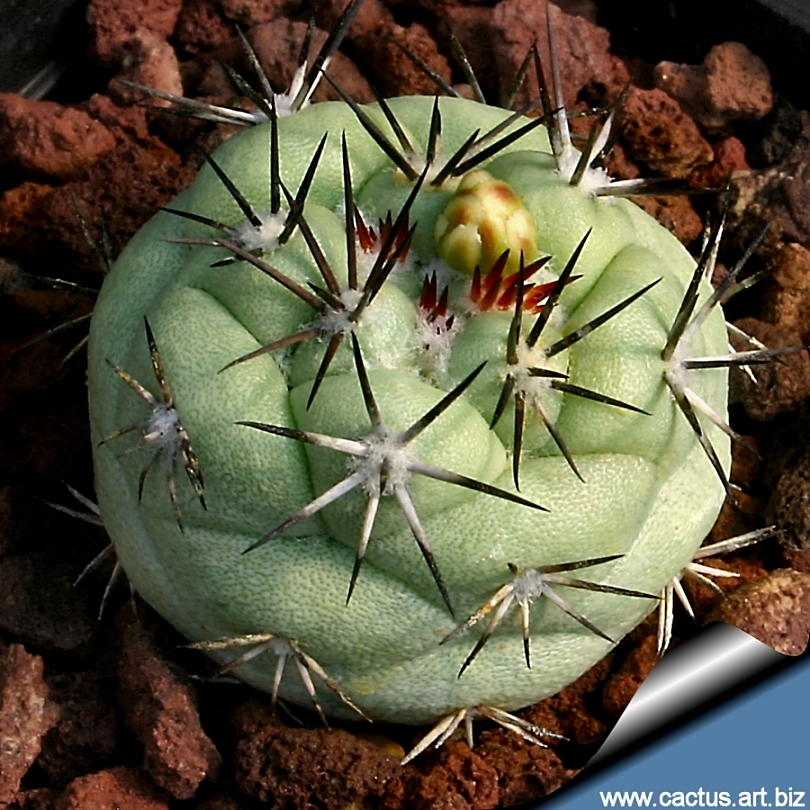
Areoles: Dimorphic, with white felt and spines in the superior
part, some times with furrows.
Central spines: 1 turgid black, or whitish with a black tip 4 to
5 mm in length.
Radial spines: 7 to 8 radial spines of the same colour of 5-10mm
of length.
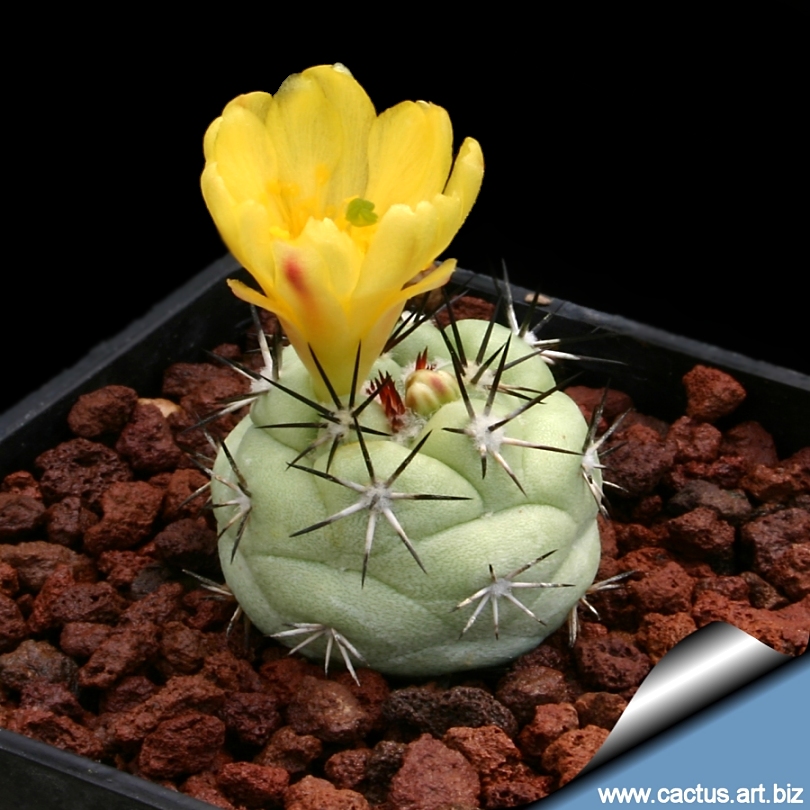
Flowers: Diurnal, funnel-shaped yellow 2 to 3 cm long , and 2,
5-3 (5) cm of diameter in the spring or summer, arises from the base of
the areoles of superior tubercles, They last a couple of days. It is an
auto-fertile plant.
Fruit: Globular, slightly extendended, dry when mature, reddish,
of about 5 mm of diameter, conserves adhered rest of perianth,
indehiscent.
Seed: Almost spherical, brown blacks 1.2 mm in length and 0.9 mm
wide, of a shining black colour.
Root: Fibrous.
|
|
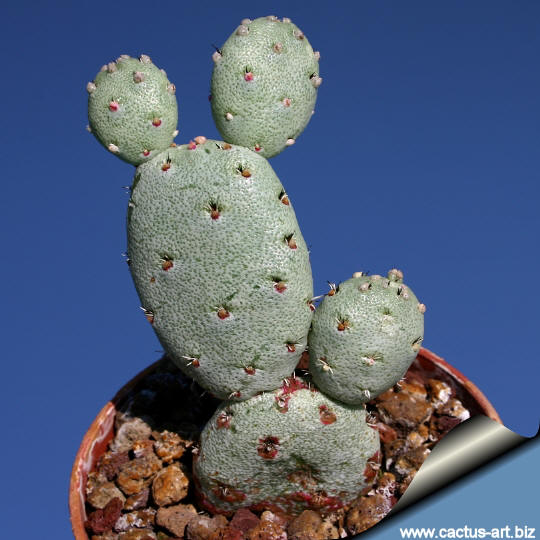
Ortegopuntia cv. PERCY
A new cactus
chimera,
Ortegogactus skin on Opuntia body!!! This original plant appeared unexpectedly in
a plant of Ortegocactus
macdougalli graftred on an
Opuntia compressa stock.
Cultivation: Not the
easiest of plants to grow well and tricky to grow when on its own roots,
this interesting and distinctive looking plant needs a little care with
regard to heat and water. It show a distinct intolerance to over
watering either by rotting off, or by bursting of the epidermis.
Composts should therefore be very open and gritty, use shallow pots,
with good drainage.. To prevent growing a monster totally out of
proportion to their attractive and natural form, one should limit the
fertiliser.
A harmless but unsightly orange discoloration (corkiness) is common at
the base of the stems, though this is not due to disease, and apparently
is unavoidable, cautious examination should periodically be undertaken
to ensure that rot has not set in Re-rooting is not easy.
Propagation: Very slow from seed. Many authors recommend
grafting, first on Pereskiopsis and soon on Myrtillocactus geometrizans.
If it does not reject the stock, it is possible to be cultivated without
problems. If we prefer to cultivate it on its own roots, we can maintain
intact its characteristics without deformities, grafted plants clump
readily and the offsets can be used for make cuttings.
|


 Cultivation and
Mail Sale
Cultivation and
Mail Sale