|
|
|
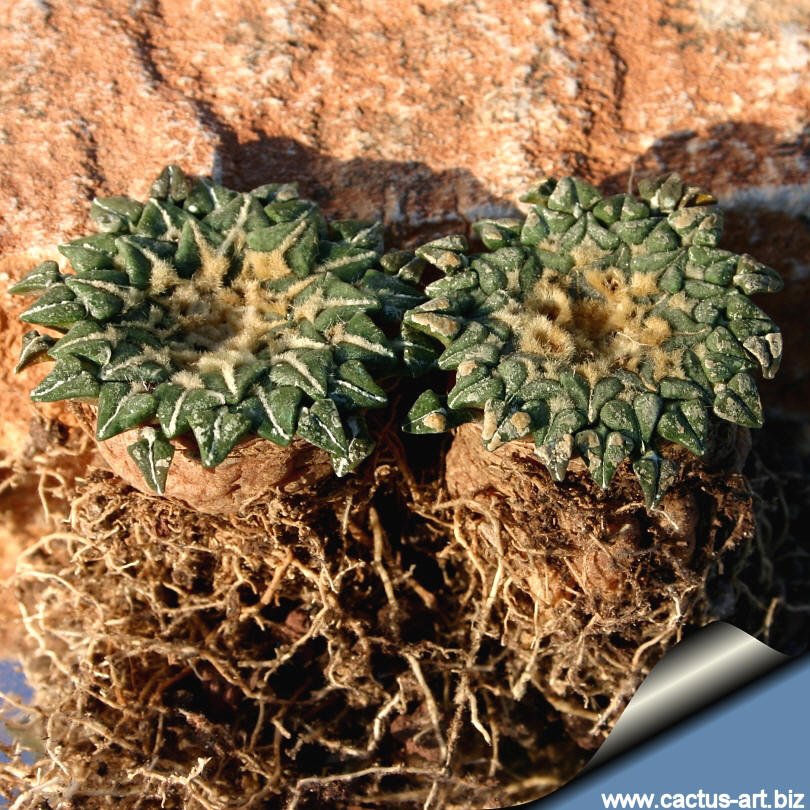
Ariocarpus kotschuobeyanus ssp.
mcdowellii (SB283 Dr Arroyo, Nuevo Leon, Mexico )
These are the northern
populations of the species; they are smaller than the
type, with small beak-like tubercles and pale mauve flowers, often
with a high white content in the outer petals.
|
|
Description: A. kotschoubeyanus
are very flat
geophyte cactus that produce small star-shaped
rosettes. They in most cases don't reach more
than only a few centimetres above the
ground. Although they can form
clumps, often only a small disc of tubercles can be seen flat at the
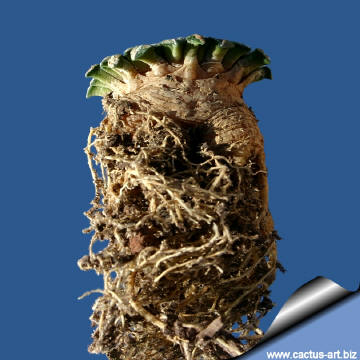
soil surface, however these plants grow a large
tap root below the surface of the compost.
Stem: Usually
solitary, rarely giving rise to side
shoots from old areoles, flattened on top,
depressed centrally.
Tubercles: The
tubercles are
deltoid dark olive green with no
spines and lie flat on the
soil surface. They are more long than wide, closely packed and
divergent, sharply angled apically.
Areoles: The tubecles forms a central longitudinal
areolar groove extending to the tips on the adaxial surfaces of the
tubercles, woolly, 1-3 mm wide, 5-10 mm long.
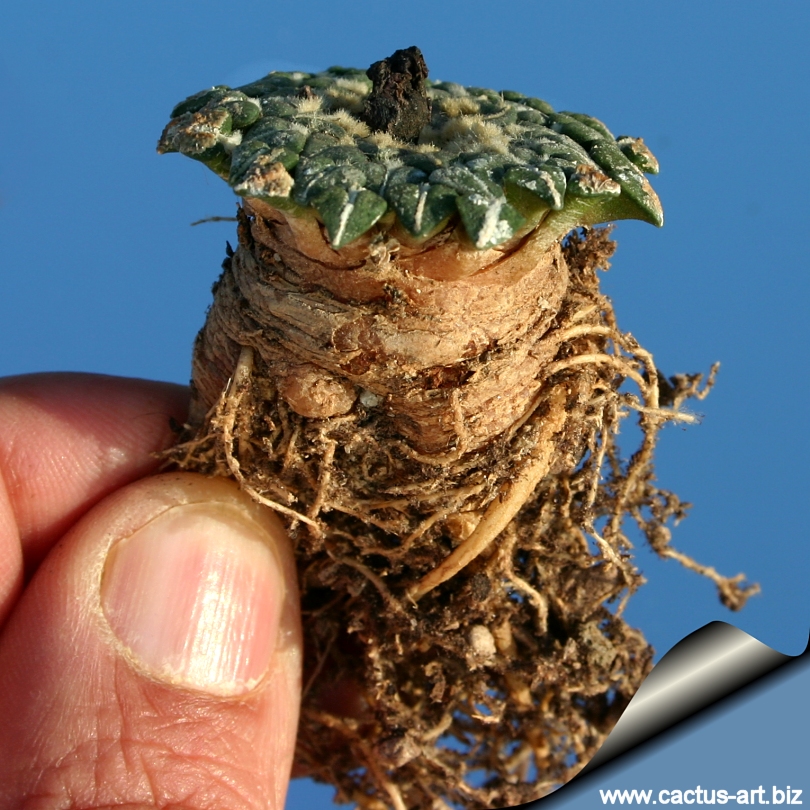
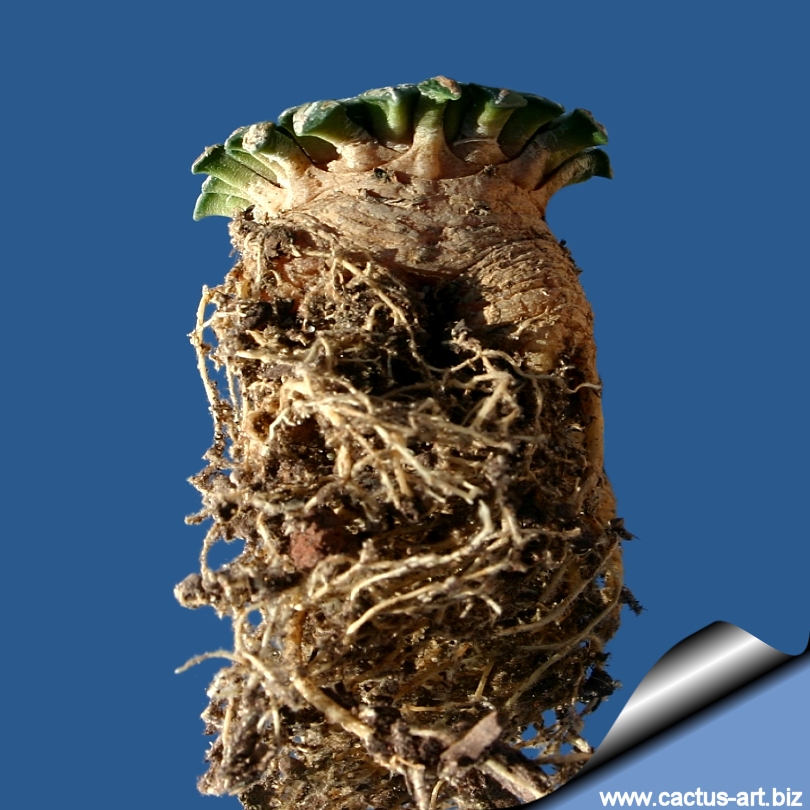
Root: Each plant has a
large
turnip-like taproot, which lies below the soil surface and serves
for
water storage.
Flowers: These plants have a
woolly
crown, from which emerge bright pink-violet
flowers up to 2.5-5 cm, 2 times wider than long when fully expanded.
Flowers are diurnal and last for 3 to 4 days. The white-flowered variety
was described as var. albiflorus.
Blooming time: Mid-September onwards.
Fruits: White or green with lots of
seed.
A. kotschoubeyanus is a
variable species:
As with most other widely
distributed species of this
genus there appears to be geographical
clines, in this case a north - south cline and a west - east cline.
The plants in northern
populations (known as A. kotschoubeyanus. var. macdowellii)
are smaller than the
type, with small beak-like tubercles and pale mauve flowers, often
with a high white content in the outer petals.
In contrast the southerly form ( known as
A. kotschoubeyanus var.
elephantendens) are much larger with larger, highly textured,
triangulate tubercles, and a deep purple flower with little or no
white content.
A. kotschoubeyanus ssp. sladkovskyi differs from the
other red flowering A. kotschoubeyanus (that have a dull and rough
epidermis) for having a smoother and shiny epidermis.
A small growing form with white flowers (known as
A.
kotschoubeyanus var. albiflorus) has been
described in Tamaulipas.
The type species is intermediate between all the above
forms and is to be found off highway 80, between El Huisache
Junction and Santo Domingo.
|
|
 |
 |
|
Advertising
|
|
|
|
Family:
Cactaceae (Cactus
Family)
Scientific name:
Ariocarpus
kotschoubeyanus
var. macdowellii
(Marsh. ex Krainz) Krainz,
Die Kakteen CVlllb.
Conservation status: Listed in
CITES appendix I
Synonyms:
-
Ariocarpus macdowellii Marshall In Marshall and Bock,
Cactaceae 135 (1941), nom. nud
-
Roseocactus kotschoubeyanus (Lem.) Berg. var.
macdowellii (Marsh.) Backbg.,
Cactaceae 5:3075 (1961)
Origin: Mexico, A. scapharostrus is widely
distributed as a large number of small, isolated
populations in a big area extending over 600 km, from central
Coahuila in the north to Queretaro in the south, and the species is also
found in the states of Zacatecas, San Luis Potosi, Nuevo Leon and
Tamaulipas.
A. kotschoubeyanus.
var. macdowellii is the northern population of the species
|
|
|
|

It is very flat and does in most cases not reach more then only
one cm above the
ground and only a small disc of tubercles can be seen flat at
the
soil surface, however these plants grow a large
tap root below the surface of the compost.
Cultivation: The plants need deep
pots to accommodate the
napiform unit formed by the
stem base and the
rootstock , and a loose
mineral soil with a well-drained
substrate. They need a good amount of
light. A place near the roof of the greenhouse helps, drying the pot
after
watering. This can be done weekly during
the
summertime, if the weather is sunny enough, with a little
fertilizer added. Kept this way, plants will show a
healthy, although slow
growth. They are
frost hardy to -10°C.
Propagation: By
seeds, remembering that
seedlings dislike strong
light and
dry conditions and need to be
repotted frequently. Eventually, as they become mature, they attain
a maximum size of 5 to 9 cm. But plants are often
grafted to accelerate growth as they would generally take at least a
decade to reach
maturity on their own, but the grafted plants are typical rather
tall growing, compared with plants on their
own roots, that are usually very flat to the ground.
Photo of conspecific taxa, varieties, forms and cultivars of
Ariocarpus kotschoubeyanus:

 |
|


 Cultivation
and Mail Sale
Cultivation
and Mail Sale