|
|
|
Family:
Cactaceae (Cactus
Family)
Scientific name:
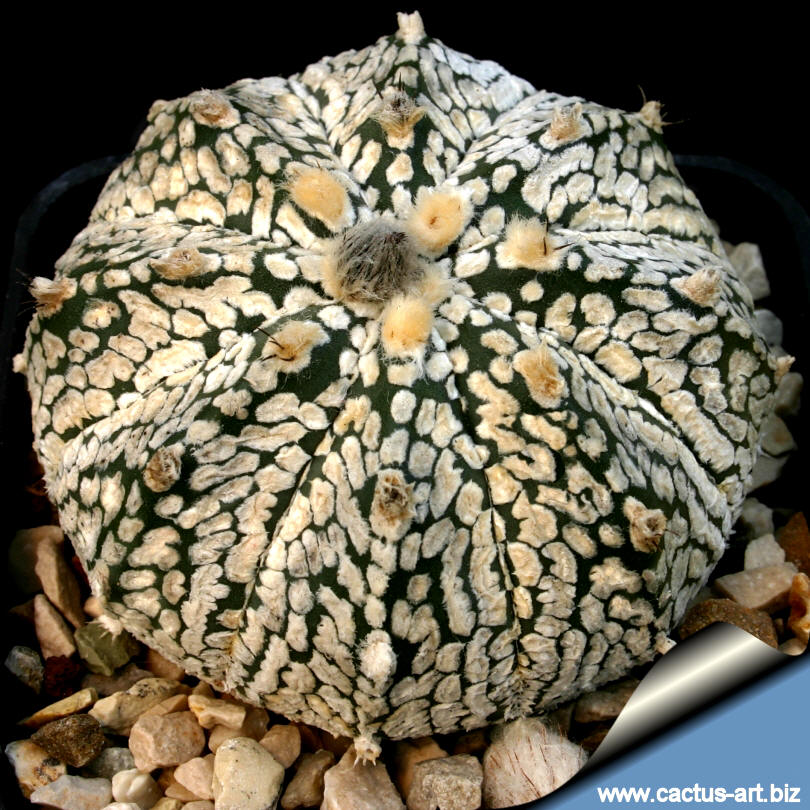
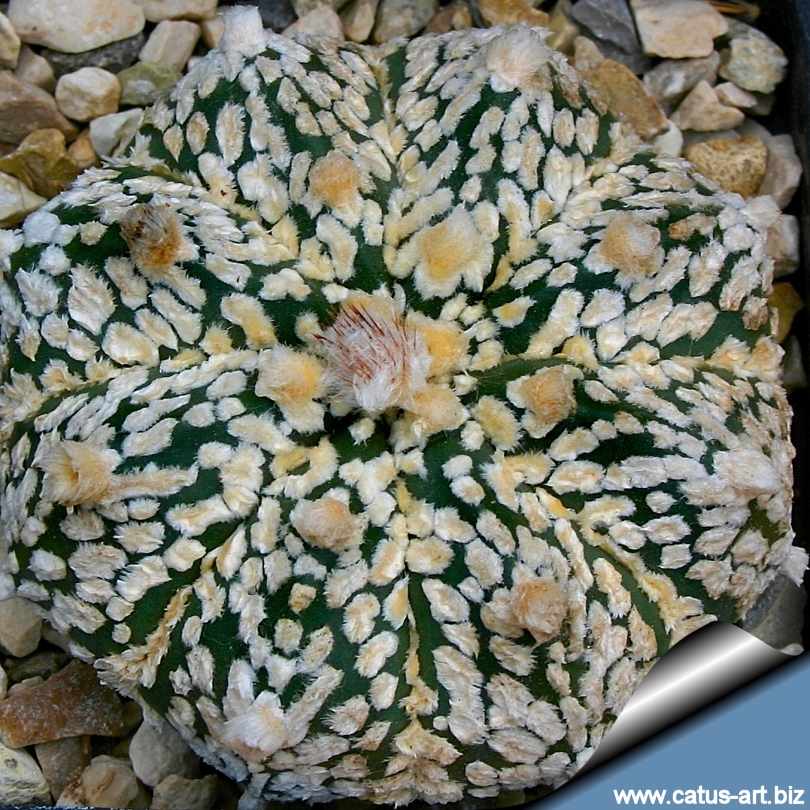
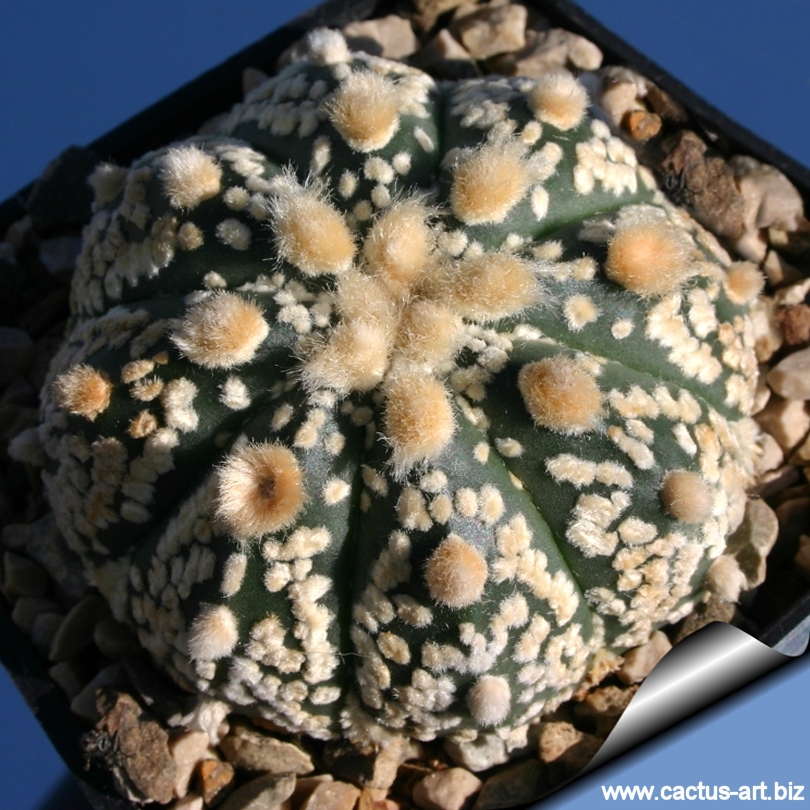
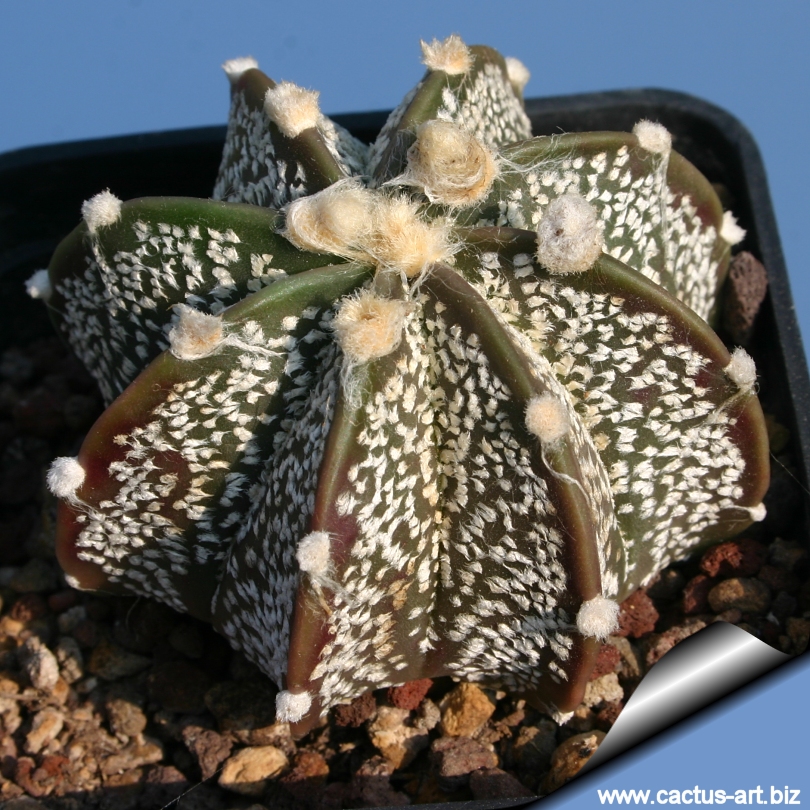
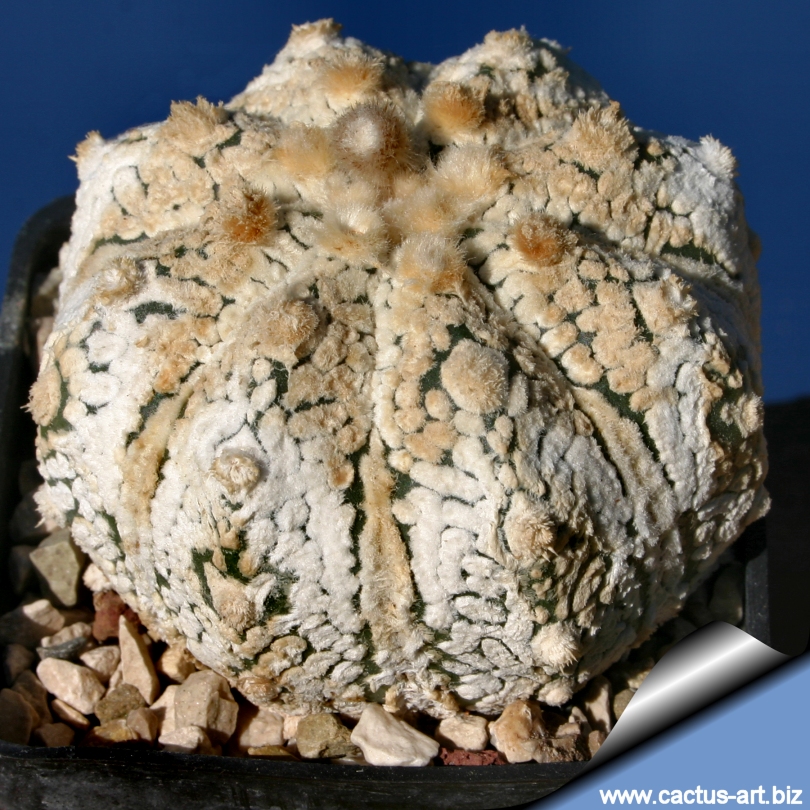
Astrophytum asterias
(Zucc.) Lem
cv. SUPER KABUTO Multi-hybrids with other Astrophytum species and
cultivars)
Origin:
Garden origin (Nursery
produced cultivar)
Conservation status: Listed in
CITES appendix 2. We must however remember that all the
Super Kabuto are the result of
cross-pollinating of the fist plant (That was a mutant of A. asterias
found in the wild) with other normal A. asterias and
A.
capricorne (and possible other Astrophytum species too), it
can be concluded that all the SK actually available are the result of
intraspecific hybridization and SK contains not only A. asterias
genes but also a significant number of A. capricorne genes, and
maybe others. As a result spiny clones appear rather often and the name
Astrophytum asterias cv. Super Kabuto is not quite correct.
|
|
|
|
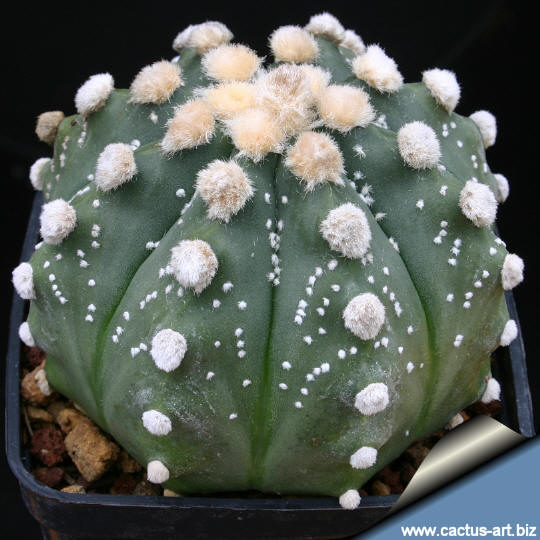
Cultivation is not too difficult in a
greenhouse, although grows quite slowly. The plants need a
loose well-drained
mineral soil. They need a good amount of
light. Watering can be done weekly during
summertime, if the weather is sunny enough, with a little
fertilizer added. Kept this way, plants will show a
healthy, although slow
growth. They are
frost hardy to -4° (-10°) C
Be careful: The epidermis of Superkabuto is harder than in
the normal asterias and cracks easily if plants are overwatered.
Propagation: By
seeds, remembering that
seedlings dislike strong
light and
dry conditions and need to be
repotted frequently. Eventually, as they become mature, they attain
a maximum size of 8-10 cm (20) cm. However, old plants become
senile and have a tendency to succumb to
disease and a weak
root system. At this
stage, as is well known, they
die suddenly. So, after they reach 10 cm in diameter grow them
slowly, and adopt a new repotting period, using intervals of every 2 - 3
years. Additionally grow them under drier conditions or with stronger
sunlight. But plants are often
grafted to accelerate growth as they would generally take at least a
five years to reach
maturity on their own, but the grafted plants are typical rather
tall growing, compared with plants on their own roots that are usually
more flat to the
ground.
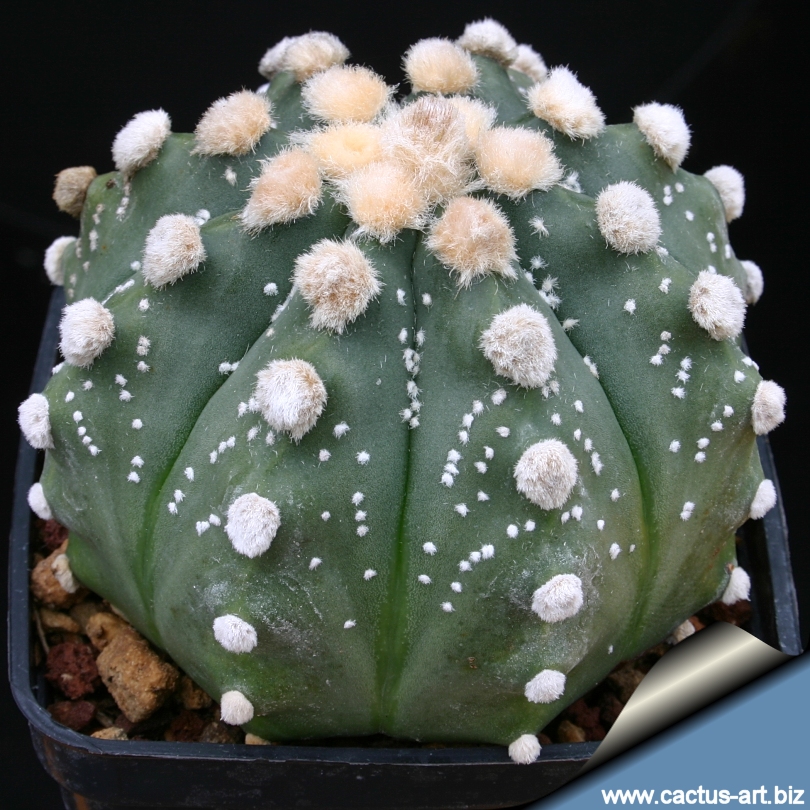
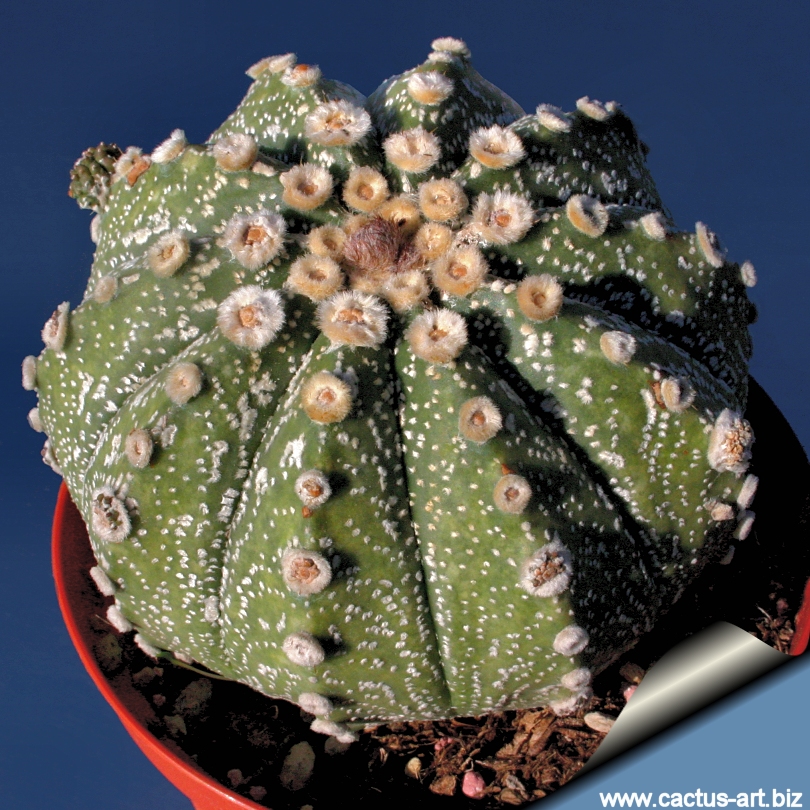
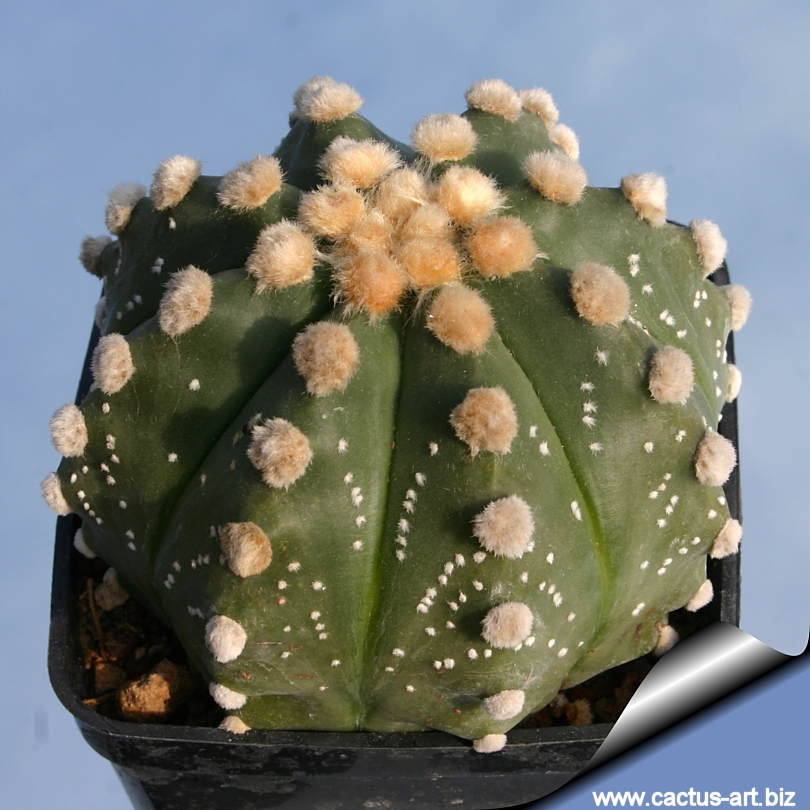
Photo of Astrophytum hybrids:


|
|
 Cultivation
and Mail Sale
Cultivation
and Mail Sale