|
|
|
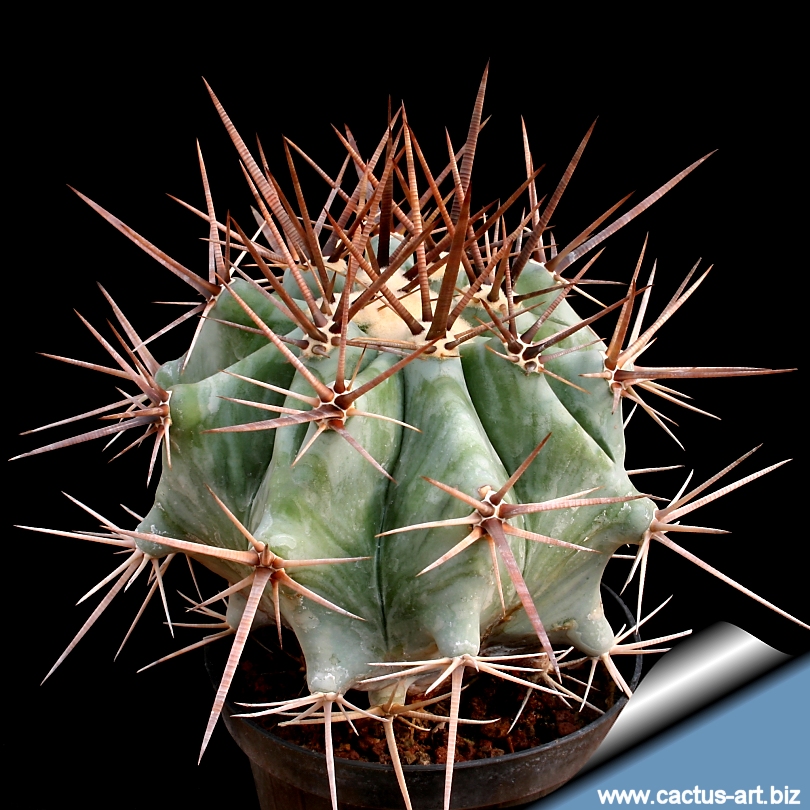
E.
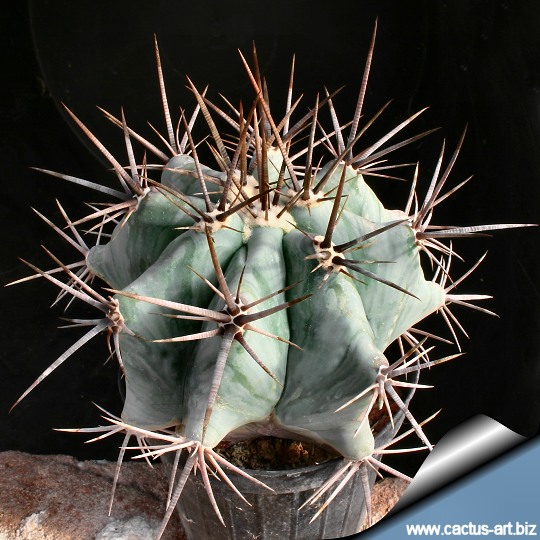
platyacanthus CZ119 Dottor Arroyo, NL.
This is the largest of all barrel cacti, it is grey-blue and nice
when small, but areoles merge and forms a continuous line when it became
large.
|
|
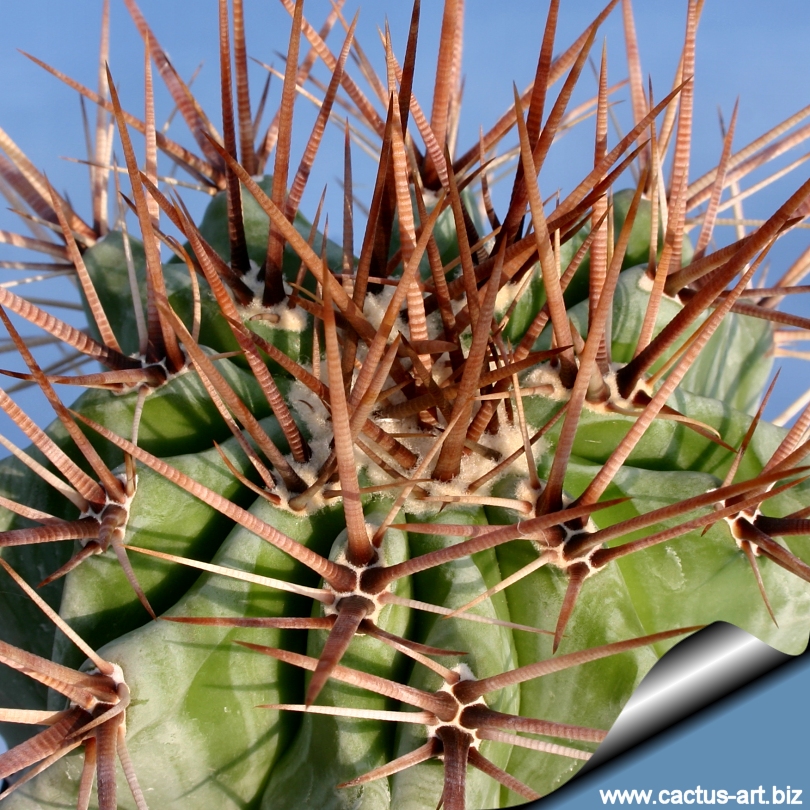
Description: it is a slowly growing massive barrel cactus usually
solitary that grows huge in habitat ( up to 2,5 m tall , 1,5 m wide). It
could live more than a hundred years. The
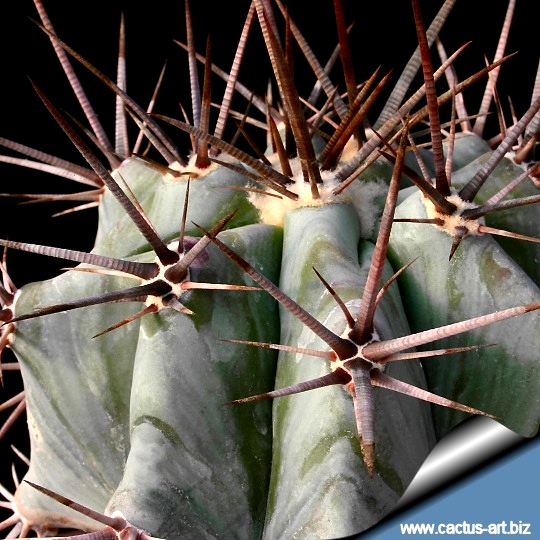
stem is grey-blue ± tuberculate and nice when small, whilst large
plants are heavily
ribbed with numerous
areoles forming a continuous line. Spines areblack.
Flowers: from end of spring to summer only on larger mature
specimens receiving enough
full sun. They are
diurnal, vivid yellow.
Mature specimens often have a somewhat sway-backed, saddle-shaped apex,
densely covered in white wool, where their flowers emerge.
Note: The juvenile Echinocactus look very
different from the mature specimens. In fact like the other Echinocactus
and Ferocactus seedlings, the rib structure is not yet apparent, and
they have pronounced tubercles.
Older specimens take on an
oblong shape with age and can dominate a landscape because of
their large size and impressive bulk. They also tend
to lean to the south or southwest so that the spines can better protect
the body of the plant from the harsh desert sun. In fact, desert
travellers can use the plant as a compass.
|
 |
 |
|
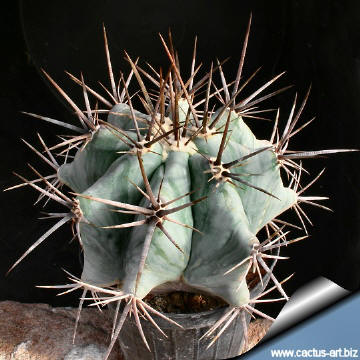
A 10 years old seedling ( this species take at least 20 years to show
the adult features)
|
|
Economical uses: This plants is used to
prepare a traditional candy, the pith is boiled with sugar to produce a
popular sweet called “dulce de biznaga” or "acitrón". In this case the
overcollection of wild plant for making cactus candy is the major threat
to the survival of this species.
This plants were also used by indigenous peoples of Mexico in many
manner, for example the woolly hairs this plant produces have been used
as filling fibres and weaving.
E. platyacanthus (and all the barrel cacti) consists
almost entirely of a very wide
cortex - the
pith is narrow and the wood (vascular
bundle) is very thin. Many non-cactus succulents have very broad
shoots like this, but those are invariably due to a large amount of
parenchymatous wood.
|
|
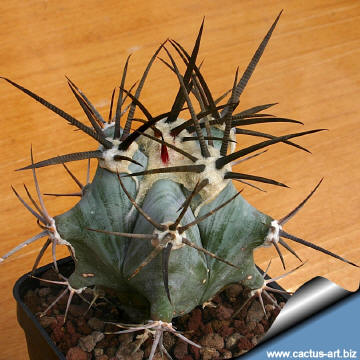
A young specimen. |
Culture:
Frost tender but
resistant to -4°C for short periods;
Cold hardiness increases with improved
drainage, so keep plants as dry as possible in
winter. They grow best in well-drained soil and a position in
full sun, which will help to maintain the lustre of the spines and
longevity of the flowers. Provide the plant with extremely
well-drained soils, as the plant are subject to
crown and
soft rot if it remains too moist. Besides, it performs wonderfully
in containers,
Container media should be coarse as well. Young plants are
prone to
mealy bug and
red spider mite. Propagate from seed.
Photo of conspecific taxa, varieties, forms and cultivars of
Echinocactus platyacanthus.
|
|


Advertising
|
|
|
|
|
Family:
Cactaceae (Cactus
Family)
Scientific Name:
Echinocactus platyacanthus
Link et Otto 1827
Distribution: ranges over much of northeast and central
Mexico. |
Synonyms:
- Echinocactus ingens
- Echinocactus karwinskii
- Echinocactus helophorus
- Echinocactus visnaga
- Echinocactus palmeri
|
|
Vernacular Names: Biznaga Gigante, Biznaga de Dulce; Giant
Viznaga & Large Barrel
Etymology: The species name "platyacanthus" comes
from the Greek for "with wide thorns"
|
|
|
|
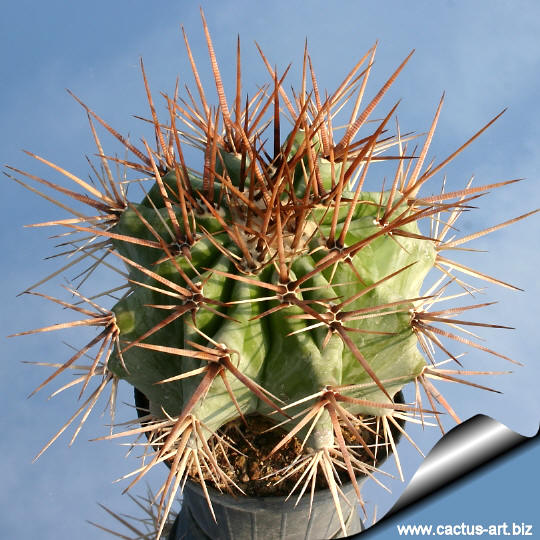
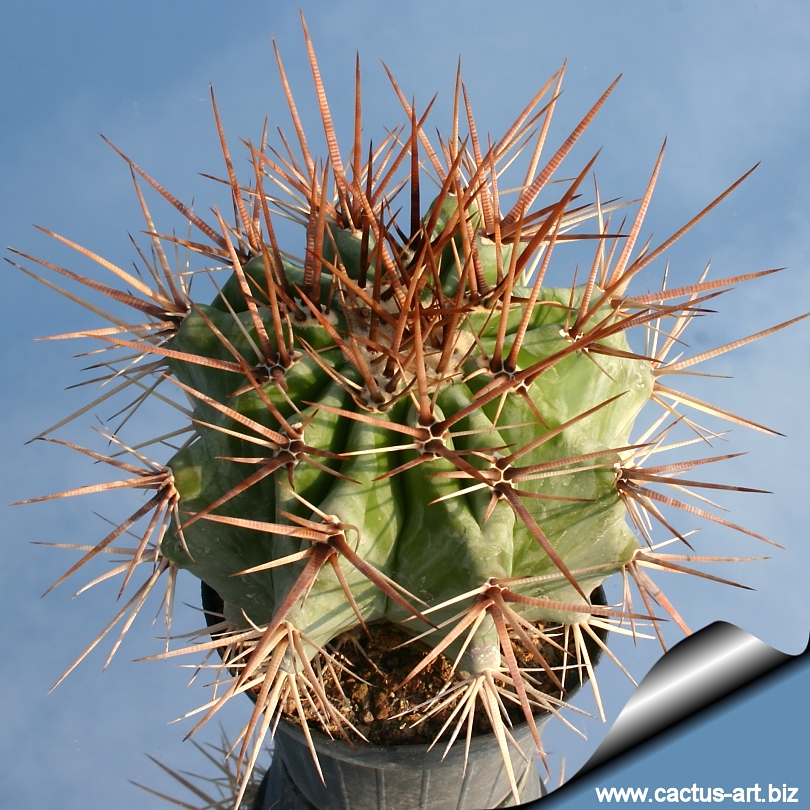
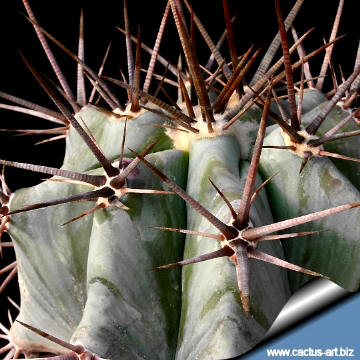
A pale brown spined specimen.
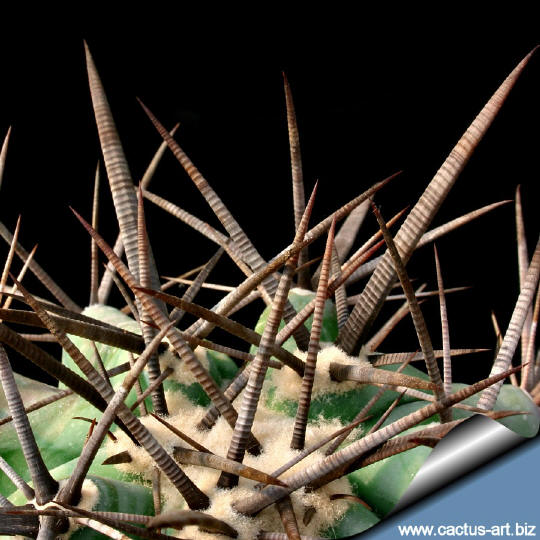
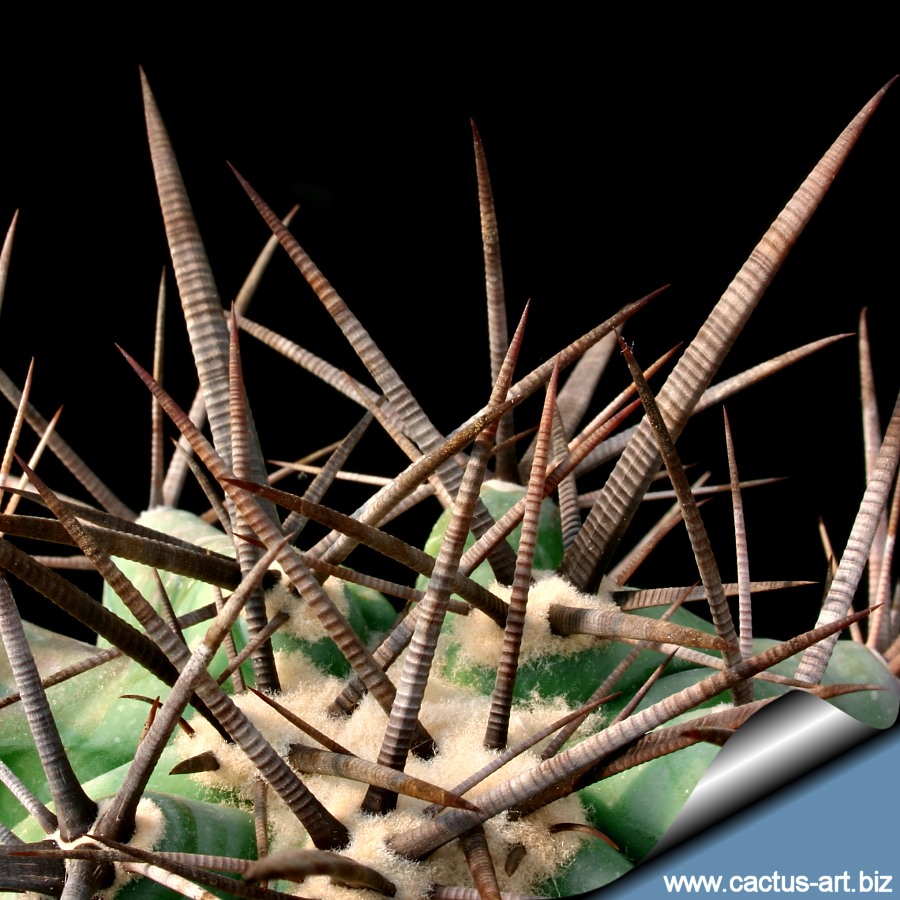
Spines
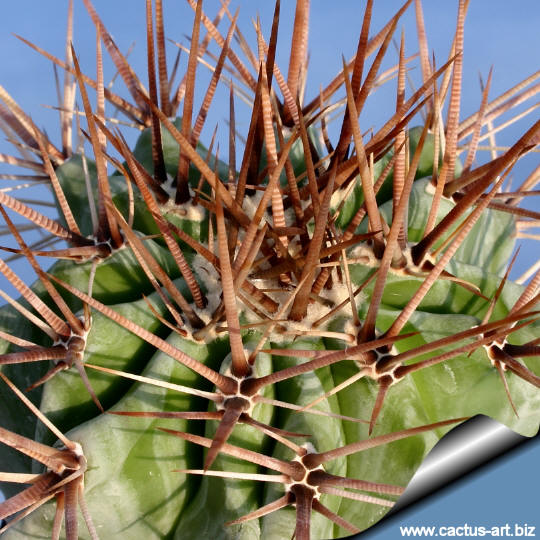
The typical
pruinose coat. |
|


 Cultivation and
Mail Sale
Cultivation and
Mail Sale