|
|
|
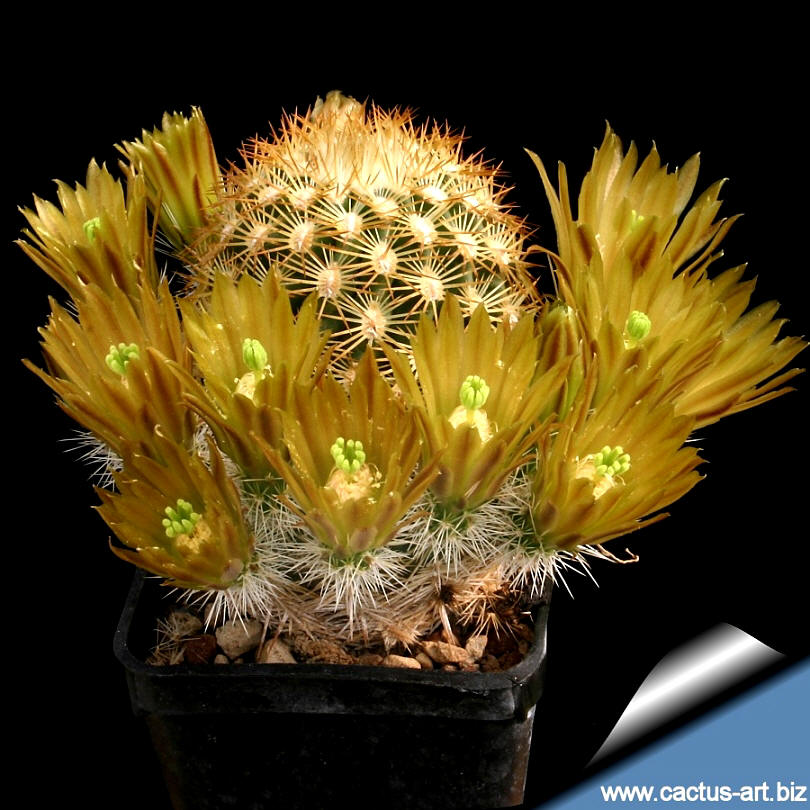
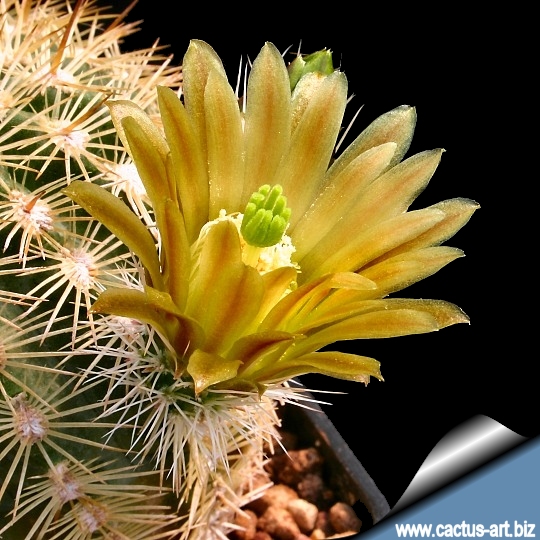
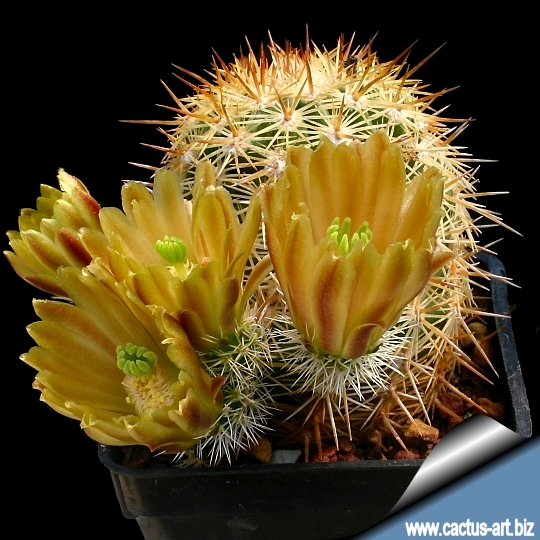
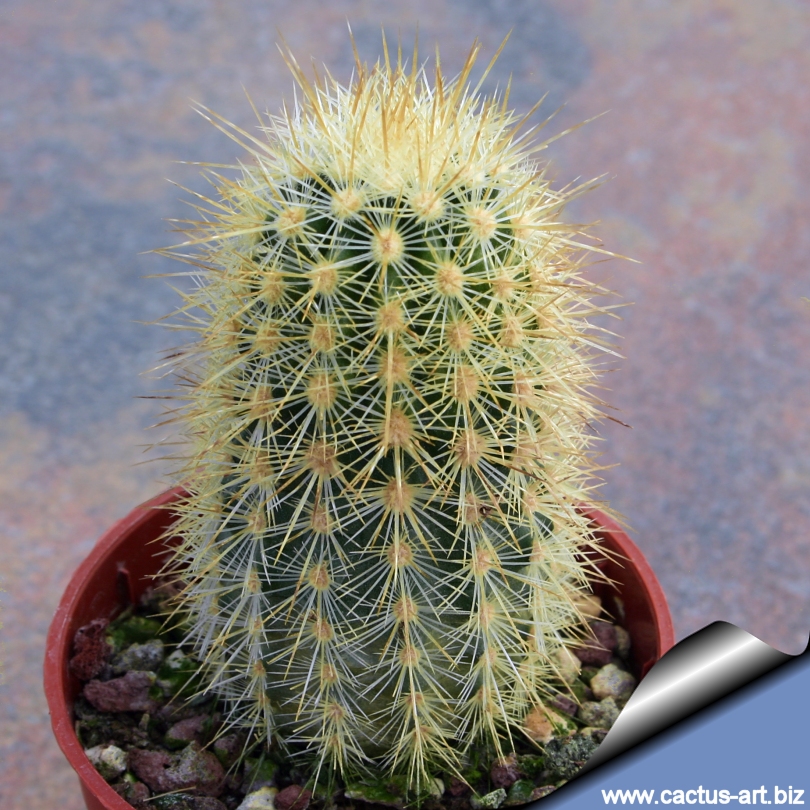
Echinocereus chloranthus v. cylindricus "corellii"
SB743 Marathon, Brewster County, Texas, USA
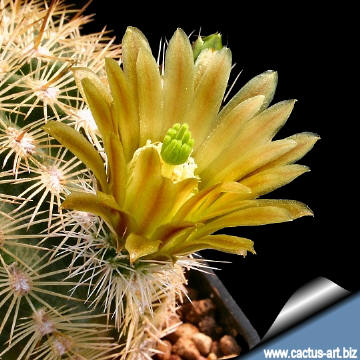
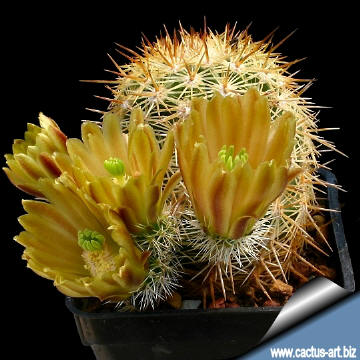
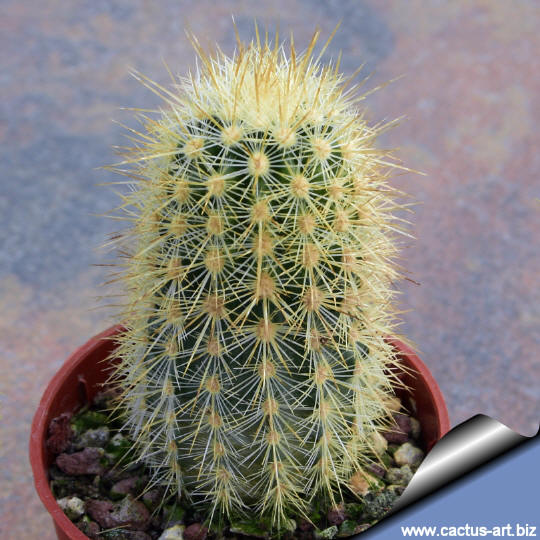
Nice plant with Shiny yellowish spines and brown
yellowish flowers.
|
Description:
Usually grows singly or forms two or more stems , but never forms large
clusters or mounds.
Stems: as much as 7,5 cm in diameter and 15 (25) cm tall.
Spines: This species has short shiny yellowish spines but show a
considerable variability in spine shape, some plants has only radials
while other have a variable number of short centrals.
Flowers: Smaller than others in this genus about 2,5 cm long and
2,5 cm inch broad.
Brown yellowish,
and grow well down on the sides, often forming a band around the middle.
Blooms in March or April.
Fruit: The fruit is small about the size of a small grape, green
at first and later turning a purplish red and spiny.
|
 |
 |
|
The flowers are tiny greenish with rusty-red midlines,
greenish-yellow anthers,
and have a very spiny calyx.
Flowering March June.
Cultivation: Rot
easily it is sensitive to overwatering (rot prone)
needs a very good drainage to avoid rotting,
Keep drier and cool in winter. Need full sun. Cold resistant
above approx - 12C or less for short periods of time.
Propagation: It can be grown from seeds.
|
|
Photo of conspecific taxa,
varieties, forms and cultivars of
plants belonging to the
Echinocereus viridiflorus
complex.
E. chloranthus
is part of the
E. viridiflorus compless that comprises a large number of
infraspecific
taxa, differing in various combinations of flower color, spine color,
number and thickness of central spines, and other characters, including
floral scent. Wherever such taxa are
sympatric they intergrade; all are freely interfertile in the
greenhouse. Among them:
-
E. viridiflorus var. viridiflorus: (Typical form)
With small stems and relatively pure yellow flowers, extends
from central New Mexico and the Texas Panhandle to South Dakota. (E.
viridiflorus var. robustior) is a more robust form but not
sufficiently differentiated and considered merely a local
variant of E. viridiflorus v. viridiflorus.
-
E. viridiflorus var. chloranthus (E. chloranthus) with the
most numerous central spines (five or more per areole), giving the
plants a bristly appearance, are often considered a separate species.
-
E.
viridiflorus var. russanthus (E. russanthus)
: Plants with a bristly appearance usually with reddish
or russet flowers. Yellow-spined plants may occur at high altitudes.
-
E. viridiflorus var. correllii (E.
chloranthus var. Cylindricus "corellii") A poorly
defined, yellow-spined population near Marathon, Texas.
-
E. viridiflorus
var. cylindricus (E. chloranthus var.
Cylindricus) : The common morphotype at middle altitudes in
Texas and southeastern New Mexico has 0-2(-3) central spines.
-
E. viridiflorus var. neocapillus (E.
chloranthus var. neocapillus): Remarkable for its softly
hairy, not sharply spiny, seedlings.
- E. chloranthus subsp. rhyolithensis
Bristly red-spined plants from New Mexico.
Echinocereus viridiflorus in the broad
sense may prove
paraphyletic with respect to
E.
davisii, but they are
phenologically isolated, with E. davisii flowering
earlier and thus appearing reproductively isolated in the wild.
|
|


Advertising
|
|
|
|
Family:
Cactaceae (Cactus
Family)
Scientific Name:
Echinocereus russanthus cylindricus "corellii"
Origin: S. Marathon, Brewster CO, Davis Mts, Texas.
Conservation status: Listed in
CITES Appendix II
Synonyms:
- Echinocereus viridiflorus v corellii Benson
- Echinocereus viridiflorus var. russanthus
- Echinocereus chloranthus var. russanthus (Weniger)
Lamb. ex Rowley
- Echinocereus russanthus ssp. fiehnii
- Echinocereus russanthus var. fiehni
- Echinocereus russanthus ssp. weedinii,
|
|
|
|
|
|
|
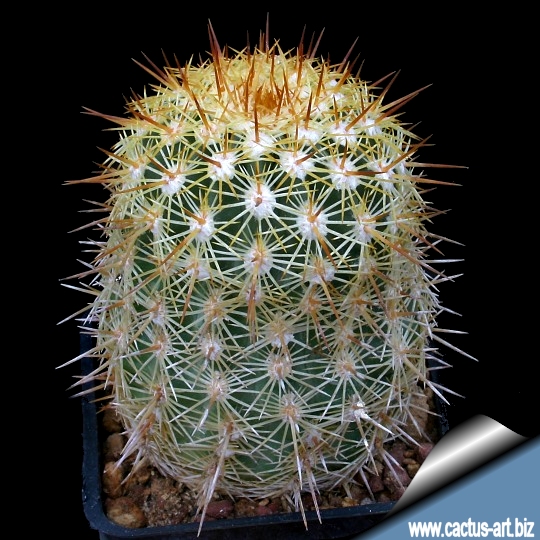
Plant with and without central spine.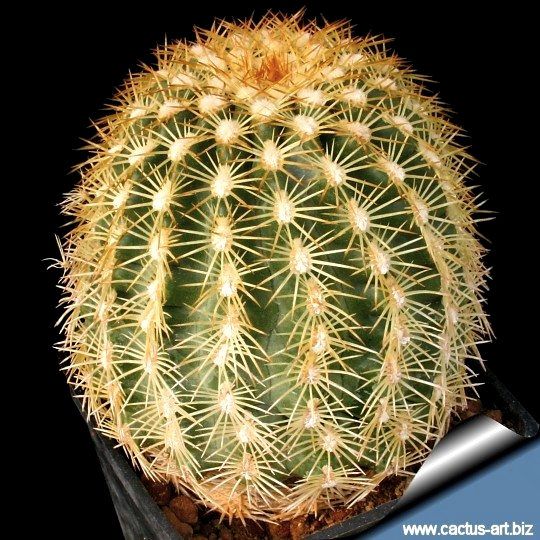 |
|


 Cultivation
and Mail Sale
Cultivation
and Mail Sale