|
|
|
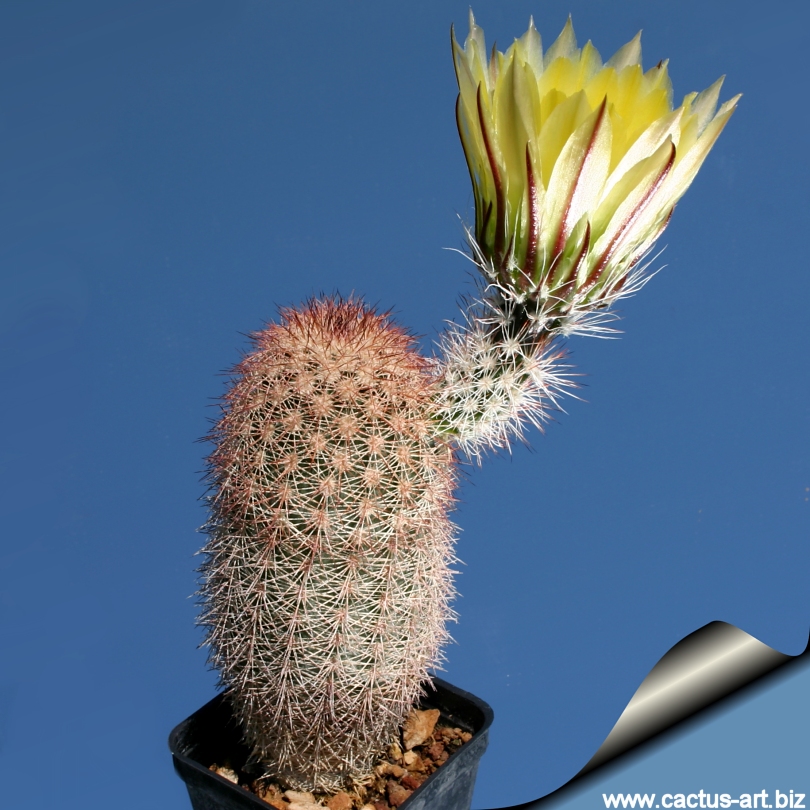
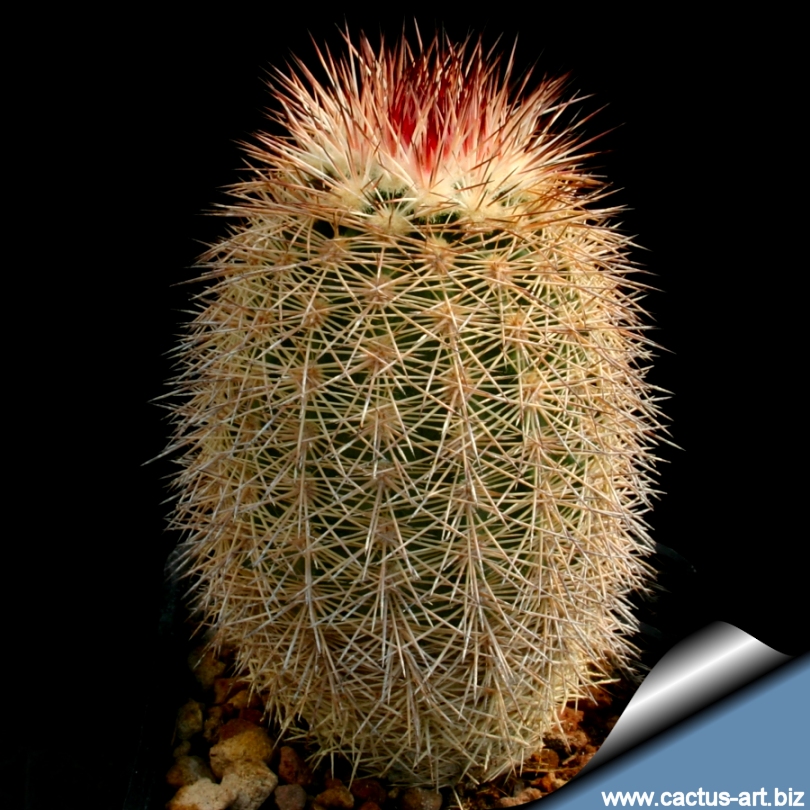
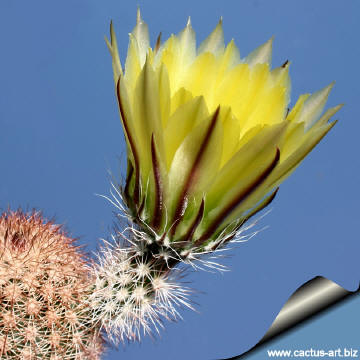
Echinocereus dasyacanthus SB242 Otero Co, NM. USA
A distinctive plant, with its stem completely obscured by a layer of
spines that can
vary in colour depending on growing conditions.
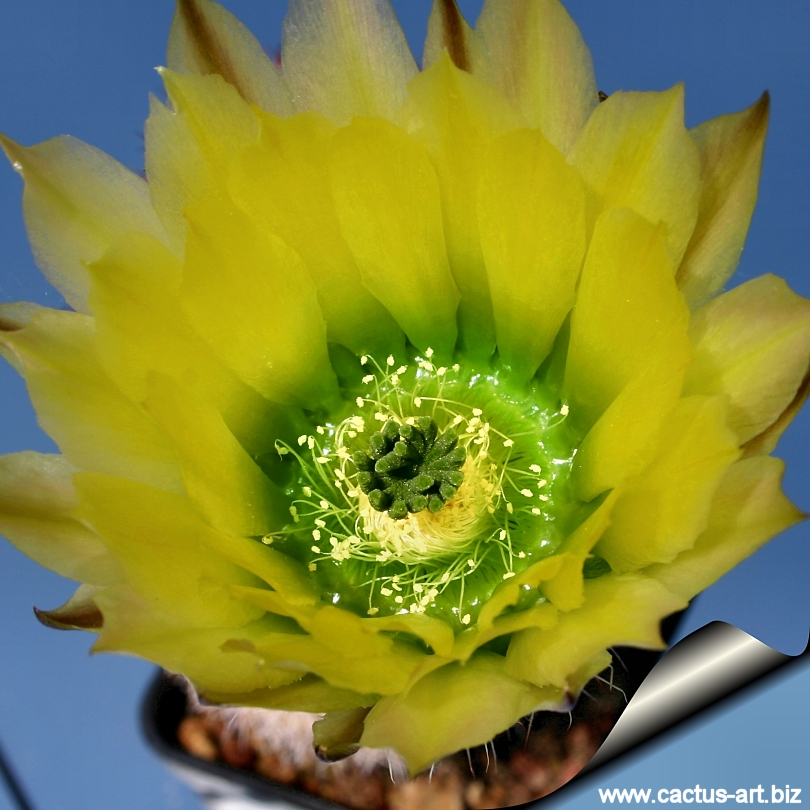
Flower colour is spectacular.
|
|
Description: Unbranched or branching from the
base, forming loose clumps of fewer than 20 stiff branches in old age,
with its stem completely obscured by a layer of spines that can vary in
colour depending on growing conditions.
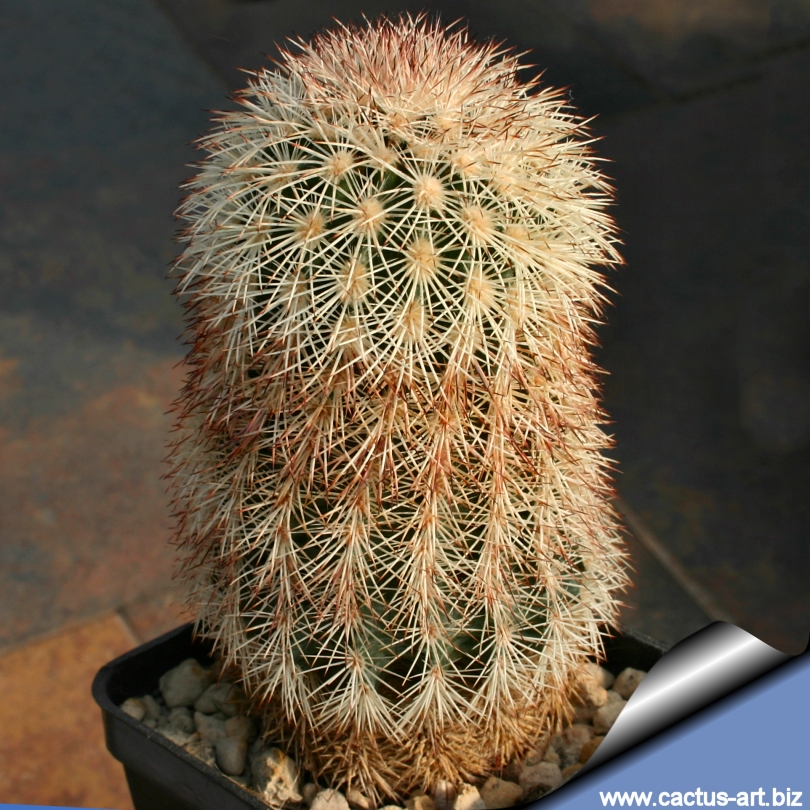
This can give the plant
horizontal coloured bands similar to, but not as bold as, the Arizona
Rainbow Cactus (E. rigidissimus.)
Stems: Ovoid, becoming cylindrical with age, 10-20
(40) cm tall ×
4-7 (10) cm in diameter;
Ribs: Straight, approx 15-20, crests rather sharply undulate;
Areoles: 3-5 (11) mm apart.
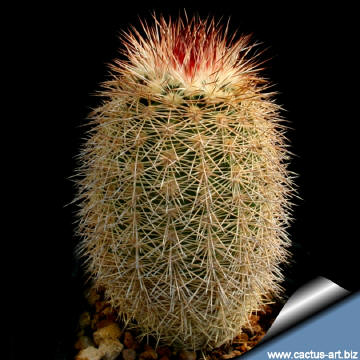
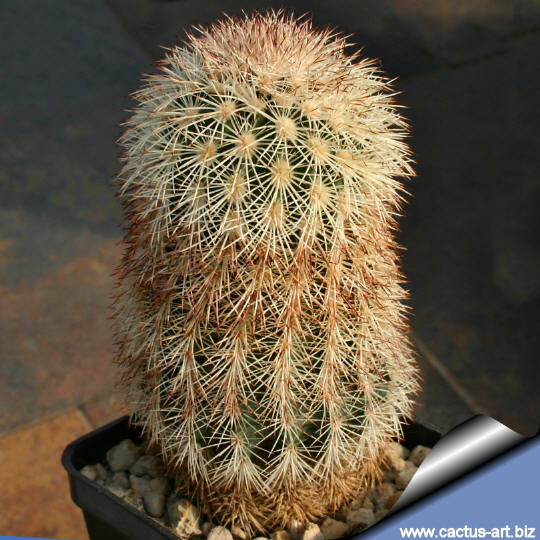
Spines: The stem is completely covered with short spines
presenting a relatively bristly appearance.
They are pink to pale yellow,
white, or tan, less often dark brown or purplish. Annual growth
increments are marked (often vaguely) by rings of spines with contrasting
colours (depending on growing conditions) that grey with age..
Central spine: 3 to 10 central spines, up to 15 mm long, straight,
spreading in all directions.
Radial spines: appressed, 16 to 24, up to 10mm long
|
 |
 |
|
 |
 |
|
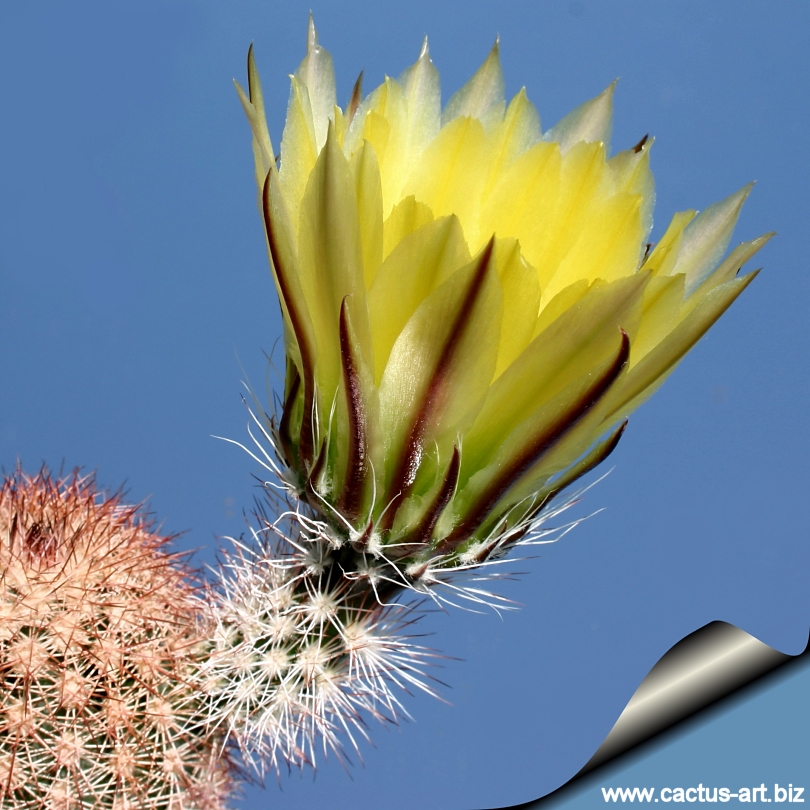
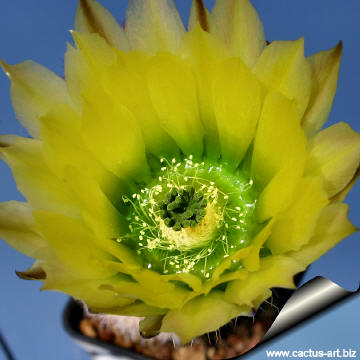
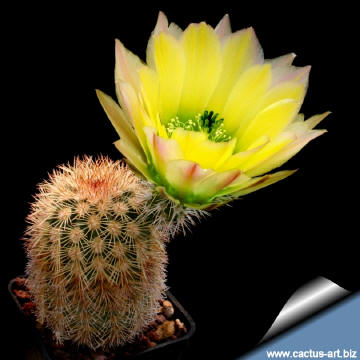
Flowers: 7-10 cm wide × 7-12 cm long; inner tepals, either yellow
or rarely orange-yellow, salmon -pink to magenta with age, basal portion
green in either case, tips relatively thin and delicate; The outer
petals often have a darker or reddish midstripe. Anthers
are yellow. The
stigma has 16-20 lobes.
Flowering time: April-May
Fruits: Dark, dull, purplish to maroon (sometimes remaining green),
2-3.5 cm, pulp white to purplish pink. The spiny fruits are edible,
although acid.
Cultivation:
It rots easily,
as it is sensitive to over-watering (rot prone),
and needs a very
good drainage to avoid rotting. Keep drier and cool in winter. Needs full
sun. Very cold resistant (hardy to -10° C or less) for short periods of
time.
Propagation: Seeds or
cutting (if available)
Photo of conspecific taxa, varieties, forms and
cultivars of Echinocereus dasyacanthus.
|
|
Advertising
|
|
|
|
|
Family:
Cactaceae (Cactus
Family)
Scientific name: Echinocereus dasyacanthus
Engelmann
in F. A. Wislizenus, Mem. Tour N. Mexico. 100. 1848.
Conservation status: Listed in
CITES appendix 2.
Common Name: Texas Rainbow Hedgehog, Yellow
pitaya.
Origin: Southern USA (Texas, Oklahoma and southern
New Mexico), northern Mexico
Habitat: Chihuahuan desert scrub,
grasslands, valleys to rocky canyon sides in limestone; 600 to 1,900m .
Synonyms:
-
Cereus dasyacanthus Engelmann 1848
-
Echinocereus pectinatus var. dasyacanthus (Engelmann) W.
Earle ex N. P. Taylor
-
Echinocereus rubescens Dams 1909
-
Echinocereus spinosissimus Walton 1899
-
Echinocereus rigidissimus var. neomexicanus
-
Echinocereus pectinatus var. neomexicanus
-
Echinocereus hildmannii
-
Echinocereus ctenoides
= Cereus ctenoides,
|
|
|
|
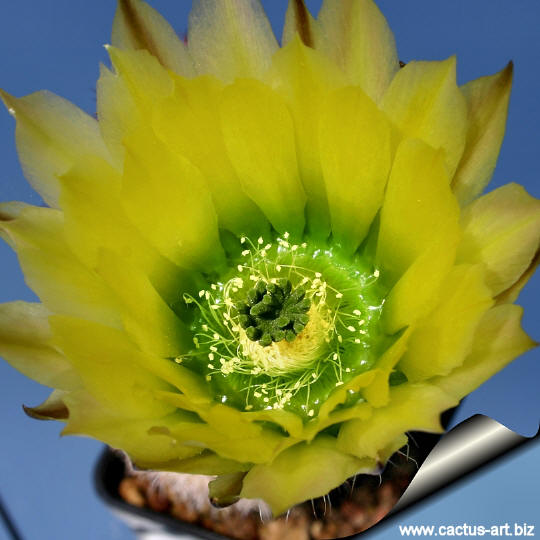
Echinocereus dasyacanthus SB415 Brewter Co. TX. USA |
|
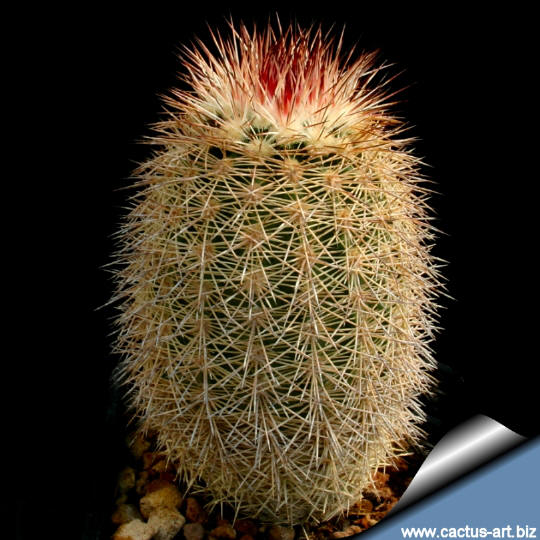
E. dasyacantus

 |
|


 Cultivation
and Mail Sale
Cultivation
and Mail Sale