|
|
|
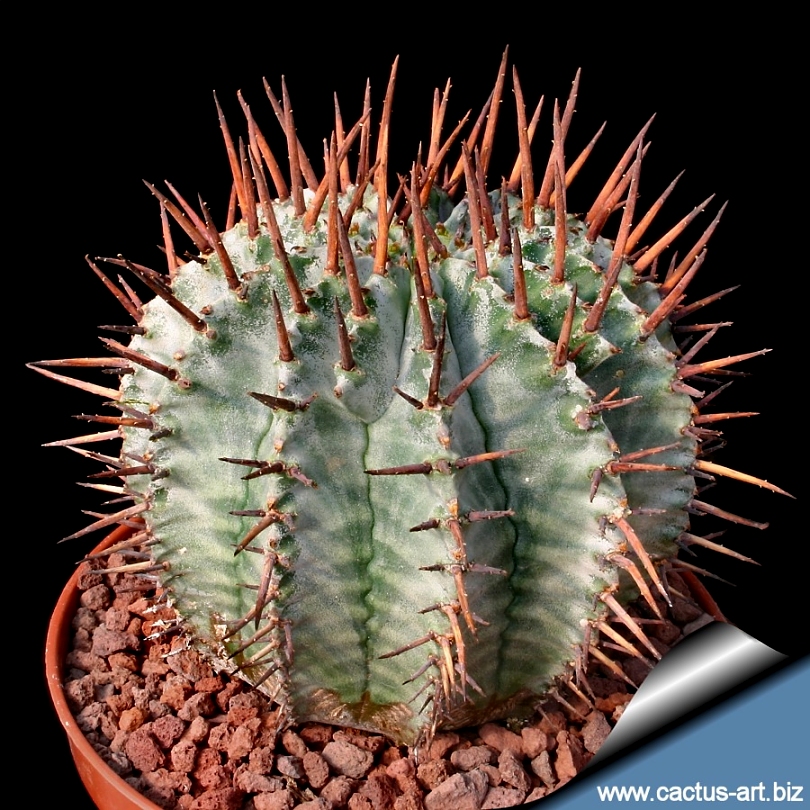
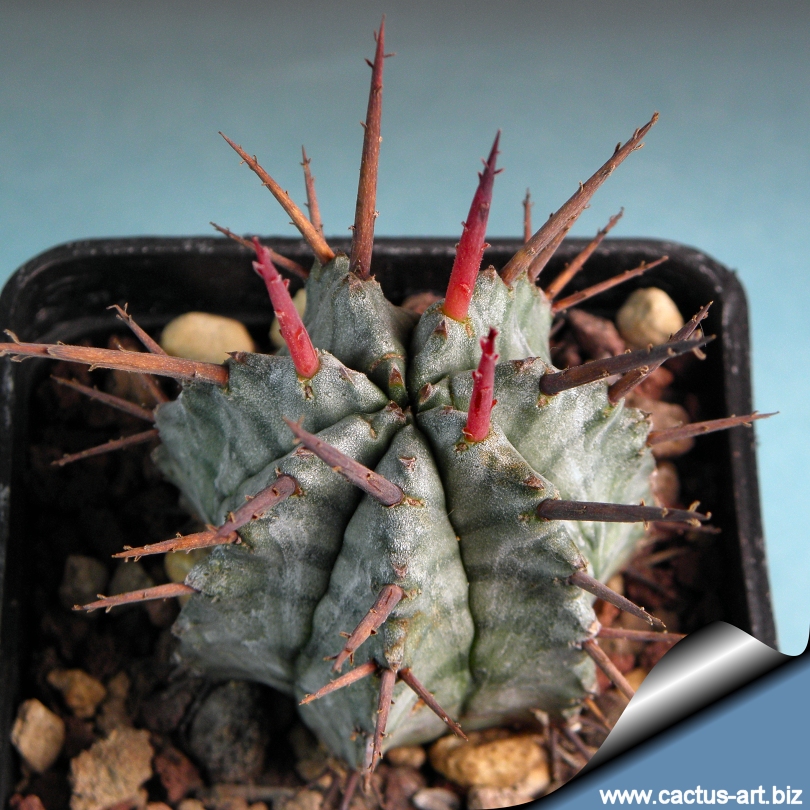
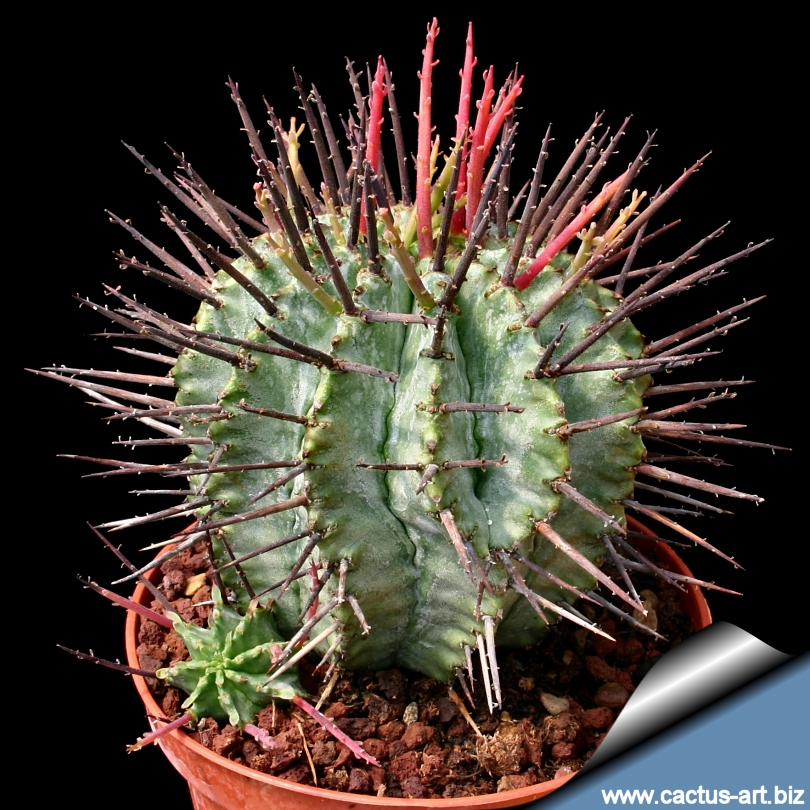
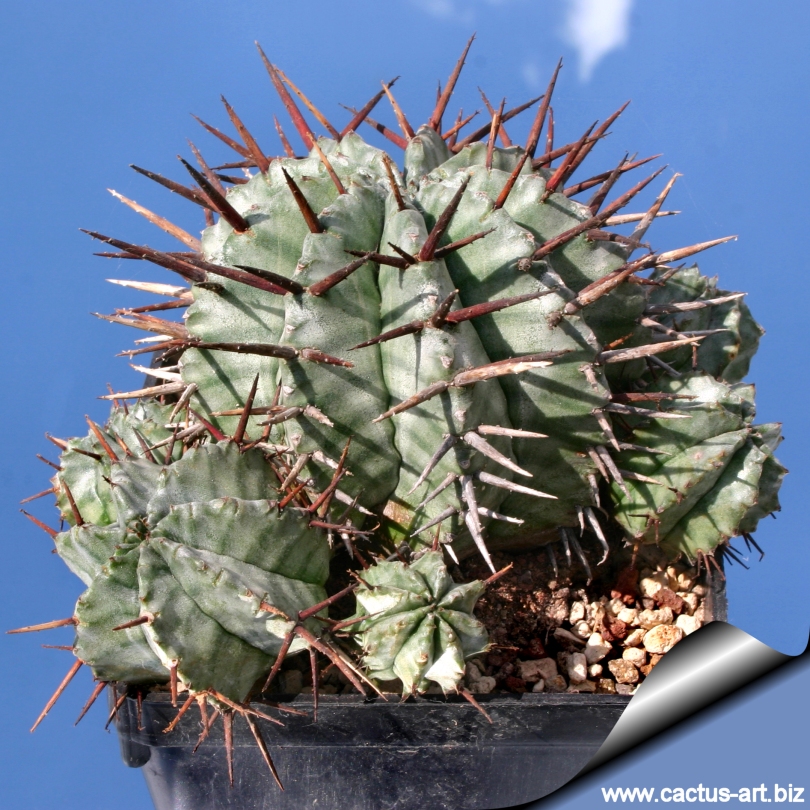
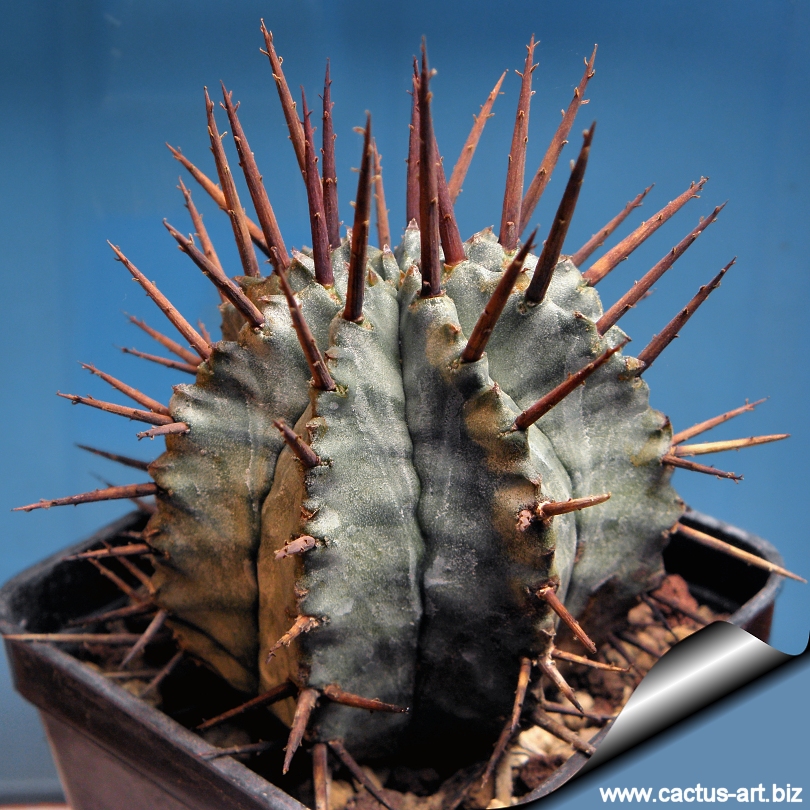
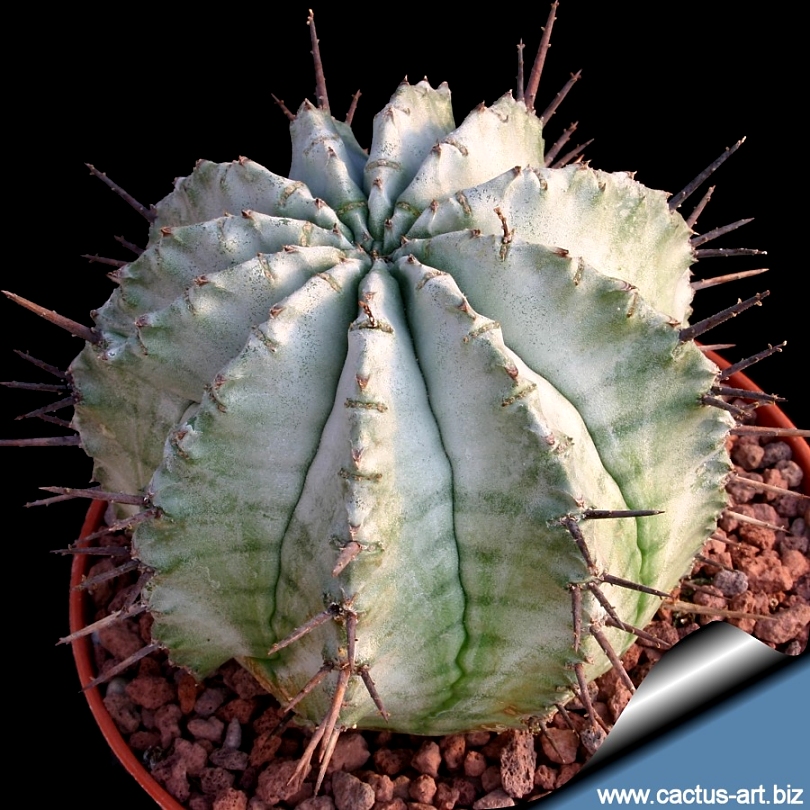
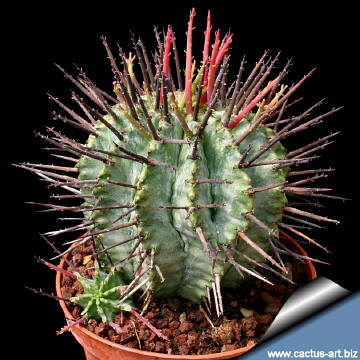
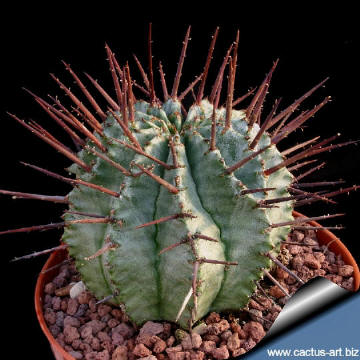
Euphorbia horrida is a wonderful example of convergent evolution in fact
it resemble incredibly to some new world cacti.
|
 |
 |
|
. |
 |
 |
|
. |
 |
|
|
. |
|
 |
|
|
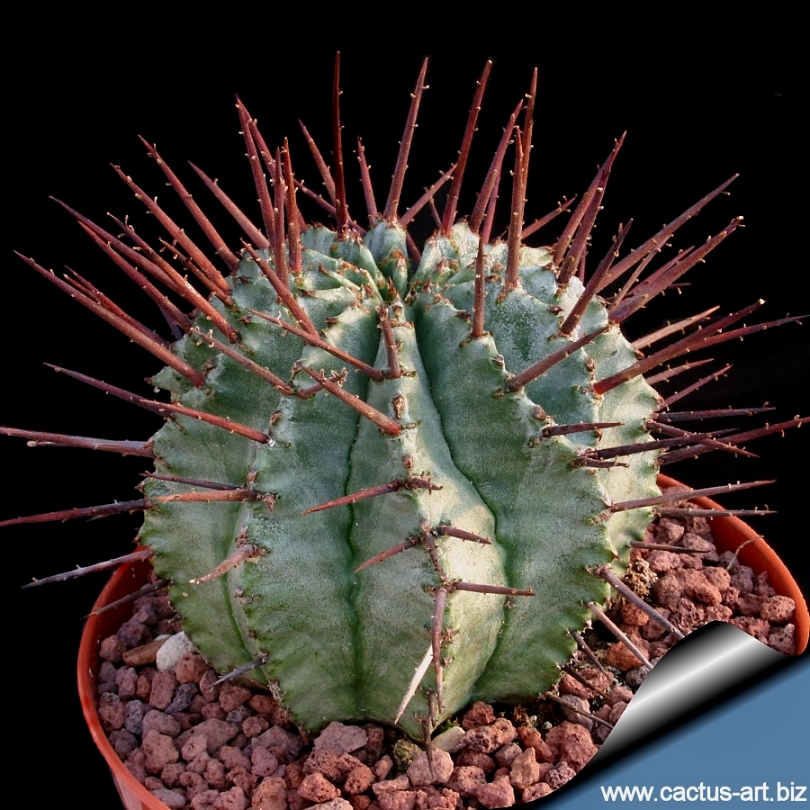
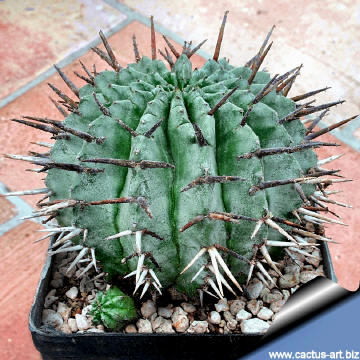
The species name 'horrida' comes from the Latin for spiny
referring to the formidable rows of spines up to 40 mm long. If the
spines weren't deterrent enough, they have also a poisonous, corrosive
sap.
|
|


Advertising
|
|
|
|
|
Family: Euphorbiaceae
Scientific name: Euphorbia horrida Boiss
Common name: African Milk Barrel
Origin:
South Africa (lower Great Karoo) Found in the Wittepoort Mts. in
the Willowmore District, var. striata is found 24km north
of Steyterville, var. noorsveldensis is found 18km to the
north of Jansenville, var. major is found 30km north of
Willowmore.
Conservation status: Listed in
CITES appendix 2.
|
|
Description:
Spiny succulent shrub with irregular basally clumping
stems.
Stem: Erect, cylindrical 100 to 150 mm thick, up to 75 (150) cm
tall.
Ribs: 10 to 20, wing-like, prominent.
Spines: The formidable rows of spines up to 40 mm long are
actually the dried remnants of its flower stalks and are very rigid.
Flower: Very small green and yellow solitary cyathia, pedunculate.
Involucre finely hairy with 5 glands and 5 large lobes. Involucres glands
are green, blooms in summer.
Note: This plant is
somewhat variable with many varieties and forms, and perhaps natural
hybrids between it and taller Euphorbias, giving rise to the big, spiny
forms like E. horrida noorvalescens, furthermore there are
several other similar Euphorbia species (particularly
Euphorbia polygona) which often looks a lot like some of the forms.
E. horrida and E. polygona are hard to tell
apart only by body characteristics, at least when the plants are young.
The only certain characteristic is in their cyathia. E. horrida
bears green cyathia that sometimes may turn brownish with the age. The
cyathia of E. polygona are red to deep purple.
|
|
|
|
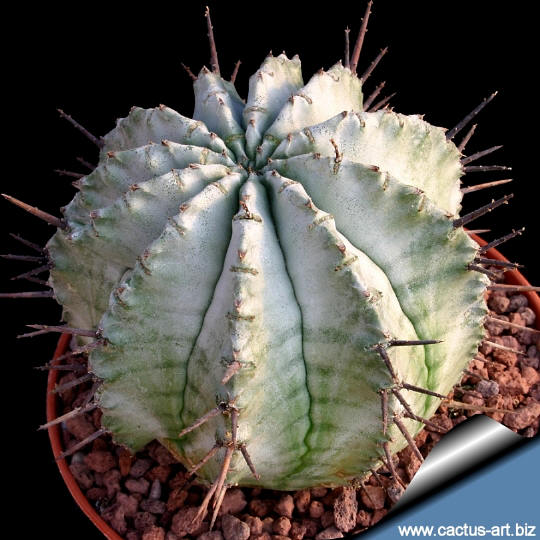
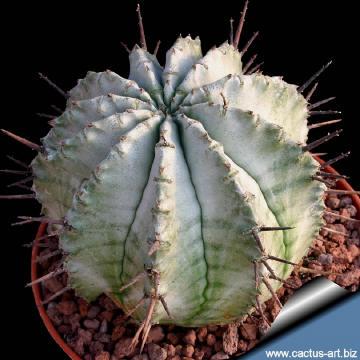
The rounder and whiter forms are often very pretty and appreciated by
collectors.
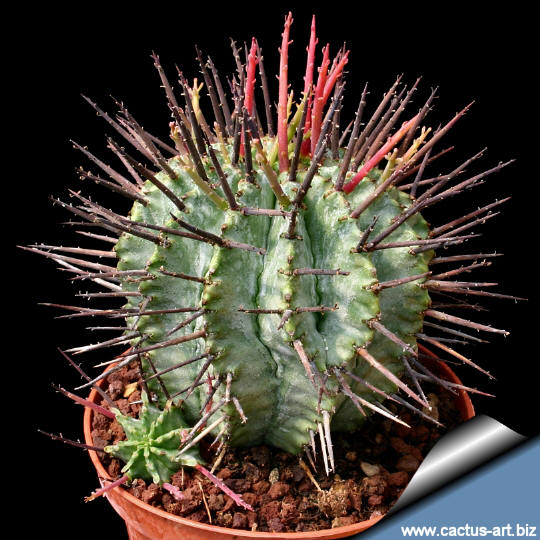
Euphorbia horrida is a wonderful example of convergent
evolution. In fact it incredibly
resembles a spiny cactus.
Cultivation: It is a pretty easy species, it grow
well in a very draining mineral potting substrate but it isn't picky
about soil, the area where this plant is native receives rains in both
winter and summer, so it can be watered moderately all year around
(except in the coldest month of the winter as it rot easily especially
if over wet ) During the summer, they enjoy average feeding and
watering. Mature healthy plants are tough and can also be grown out of
where frost is not too severe , it can tolerate temperatures down -4°C
(-10° C if the roots are kept dry). It like Light shade to full sun, but
different clones vary in their tolerance of full sunshine. The general
rule is that the smaller and rounder the variety, the less it can
tolerate full sunshine.
Propagation: It is propagated from seed sown during spring or
summer. Germination occurs within 3 weeks but it can be reproduced by
cuttings (The larger forms tend to branch enthusiastically and offsets
are readily available) if you remove an offset, remember to let it dry
for a week or so, letting the wound heal (cutting planted to soon easily
rot before they can grow roots). It is better to wash the cut to remove
the latex.
Flowering can be achieved within 5-8 years.
Warning: As with all other Euphorbias when a plant get damaged it
exudes a thick white milky sap known as latex. This latex is poisonous
and may irritate skin, and pay extreme attention not to get any in your
eyes or mouth.
Cultivated plants must be handled carefully.
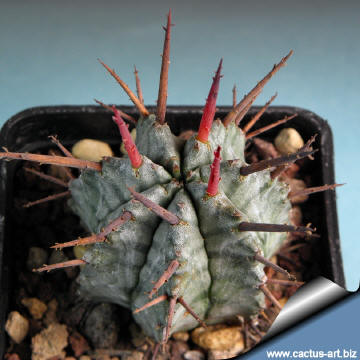
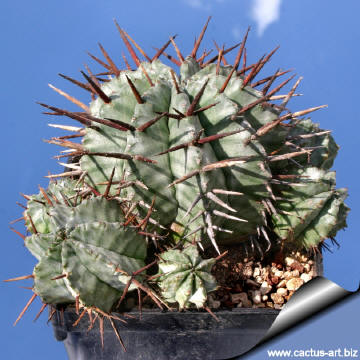
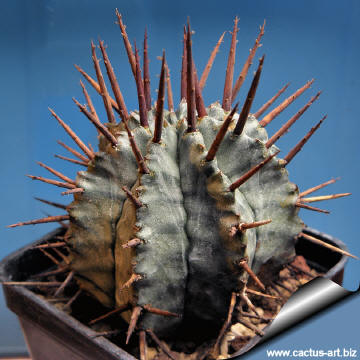
Photo of conspecific taxa, varieties, forms and
cultivars of Euphorbia horrida.
|
|