|
|
|
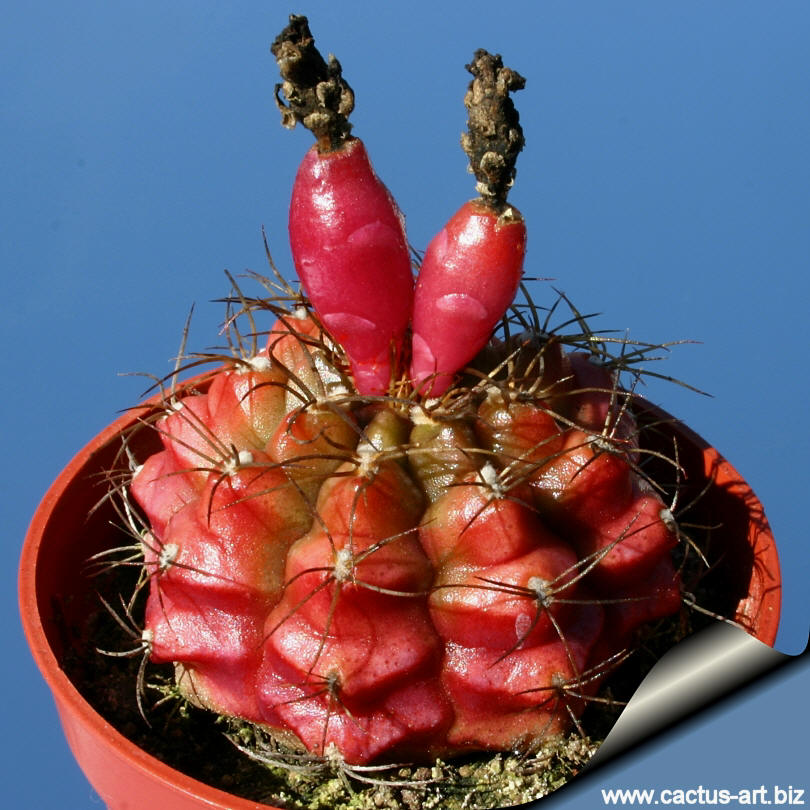
Large pale pink flowers from mid spring to early summer.
|
 |
 |
|
Photo of conspecific taxa, varieties,
forms and cultivars
of plants
belonging to the Gymnocalycium anisitii
complex
(This
Taxon has lots of synonyms ( like
many other cacti) with several controversial varieties and subspecies):
Cultivation:
Summer grower and pretty easy. Water
regularly in summer, keep rather dry in winter, but it can handle
excessive water to little water. Best
for half-shade,
but it grows well in full sun and full shade, too.
Seed
Collecting: Permit
fruit to
ripen.
Fruit must be significantly
overripe before harvesting seed.
Clean
and dry seeds.
|
|
Advertising
|
|
|
|
|
Family:
Cactaceae (Cactus
Family) Gymnocalycium damsii var.
tucavocense Backebergnom. inval. (Art. 8.2),
In: Descriptiones Cactacearum Novarum 3: 6,1963
Scientific name: Gymnocalycium anisitsii ssp. damsii
(Schumann) G. Charles
In: CSI 20: 17, 2005
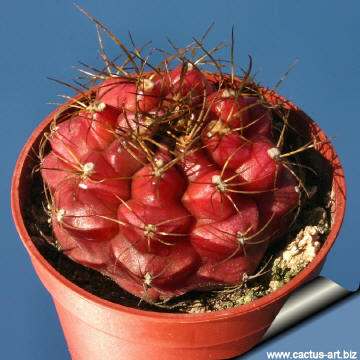
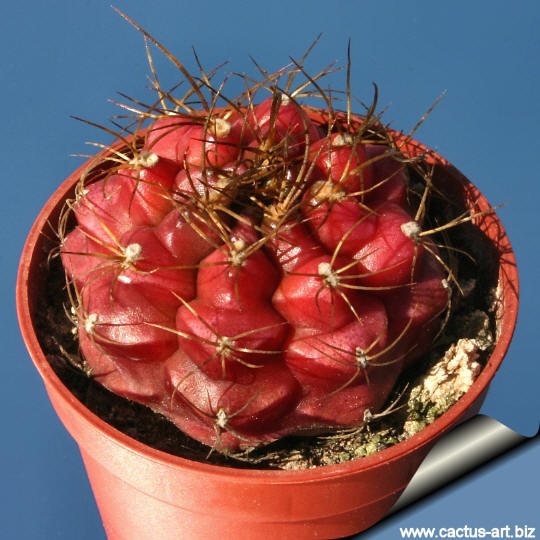
"RED FORM"
Origin:
Garden origin (Nursery
produced cultivar)
Conservation status: Listed in
CITES appendix 2.
Other
Synonyms:
- Gymnocalycium damsii (K. Schumann
1903) Britton & Rose
In: The Cactaceae 3: 163
- Gymnocalycium damsii var. anisitsii
Katalogname, zit. in Schneekloth-Liste
- Gymnocalycium tucavocense Haage SL 1992/93?
- Gymnocalycium anisitsii var. tucavocaense
- Gymnocalycium joossensianum
- Gymnocalycium griseopallidum
|
|
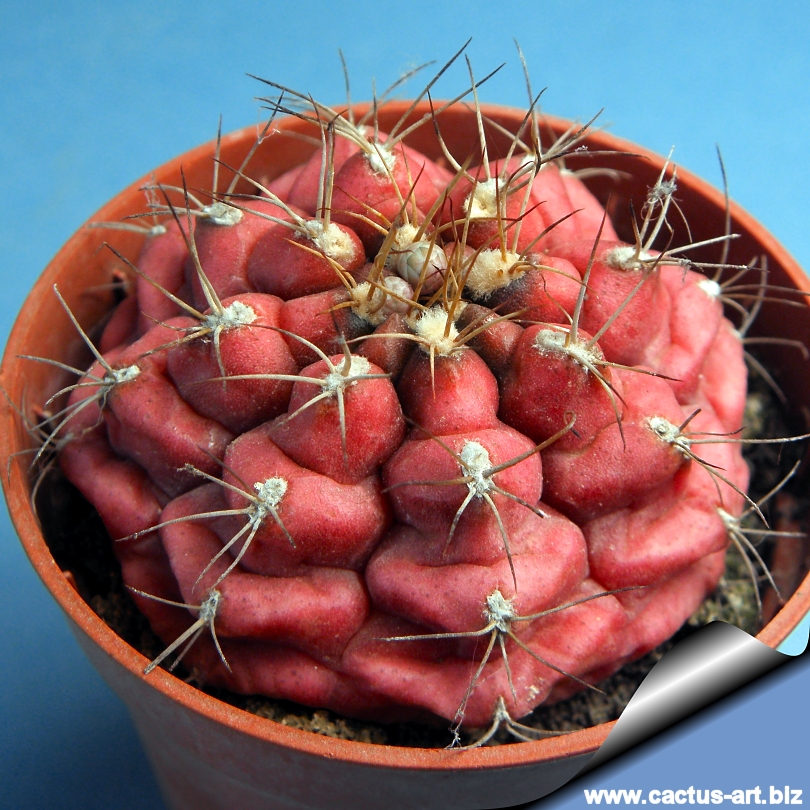
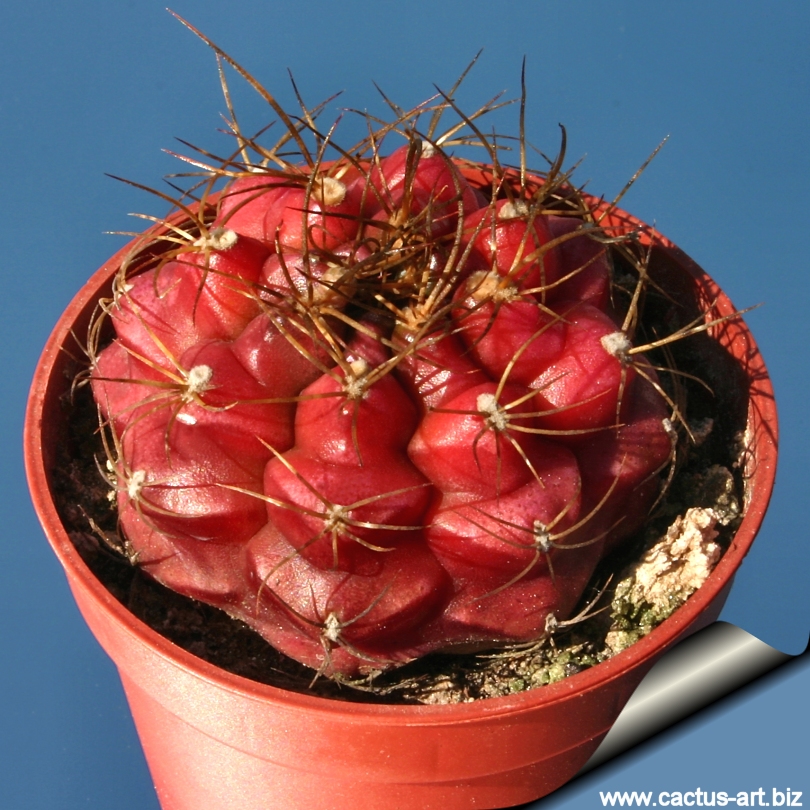
Description: This eye
catching garden selection is characterized by an unusual bright red
colouring of the body, this colour is due to a reduced production of
chlorophyll pigments, nevertheless the
plant can normally do photosynthesis and grows normally from
seeds.
Stem: Up to 10 cm tall , 8-15 cm in diameter colourful and
highly decorative, with characteristic horizontal clear and dark red strips. The clear areas (above the
areoles) are pastel-pink while the dark zone (below the areoles) are Deep
purple.
Spines: Nearly useless in terms of defence.
Note: Seems to be a pretty variable plant. You might get some
other names which are effectively the same plant.... and also not sure
all plants identified as this are really this.
|
|
|


|
|


 Cultivation
and Mail Sale
Cultivation
and Mail Sale