|
|
|
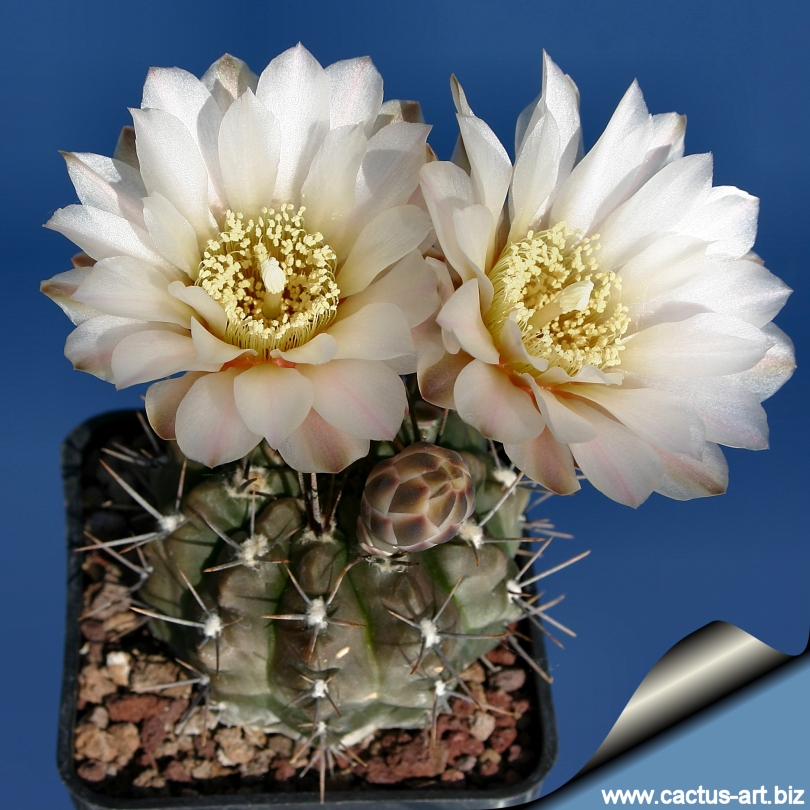
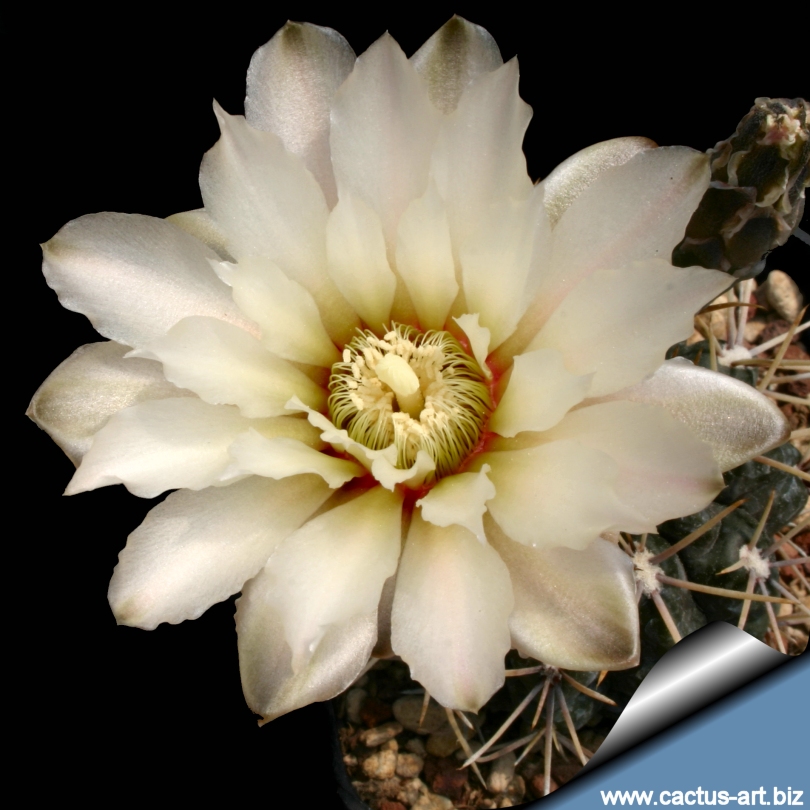
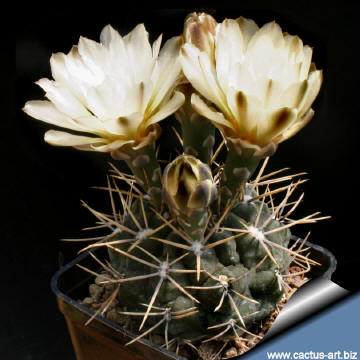
Gymnocalycium gibbosum R539 (Lihuel Calel, La Pampa,
Argentina)
Large pearly white or pale pinkish flowers from mid spring to
early summer.
|
|
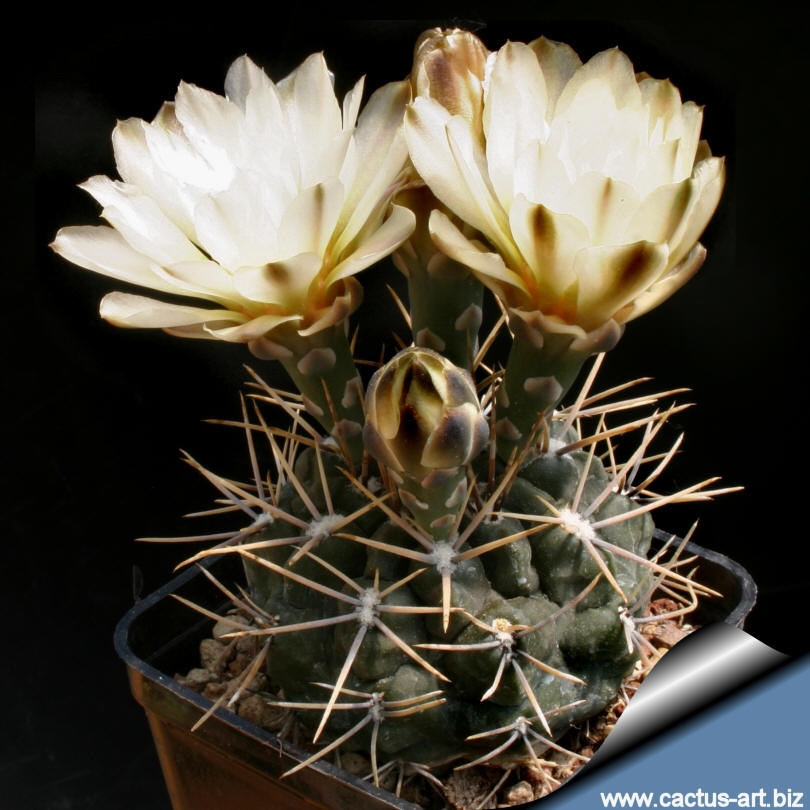
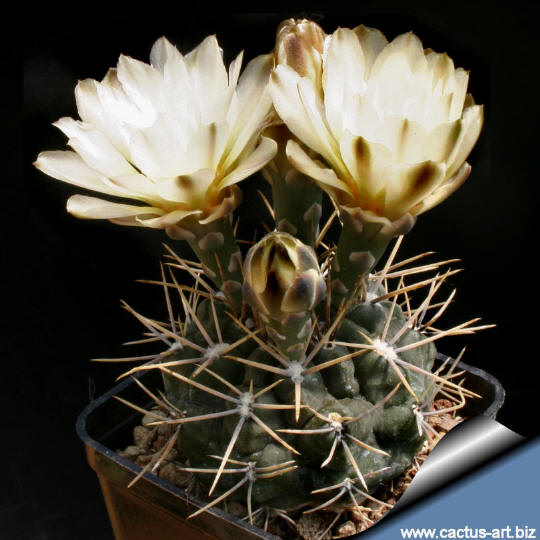
Description: G. gibbosum is a small solitary cactus.
It is a quite variable species.
Stem: Deep glaucous-green to grey-black, discoidal that became
elonged with time 10-25 cm tall, up to 12 cm in diameter, the apex is
slightly woolly.
Ribs: 10-16 straight, divided in well distinct angular ribs.
Areoles: Whitish-grey, elonged.
Radial spines: 5-7 (-9) 20-25 mm long slightly bent against the
plants body, clear brown with a darker base when young, that became
whitish-grey with a black base as they age.
Central spines: 0-2 very similar to the radials.
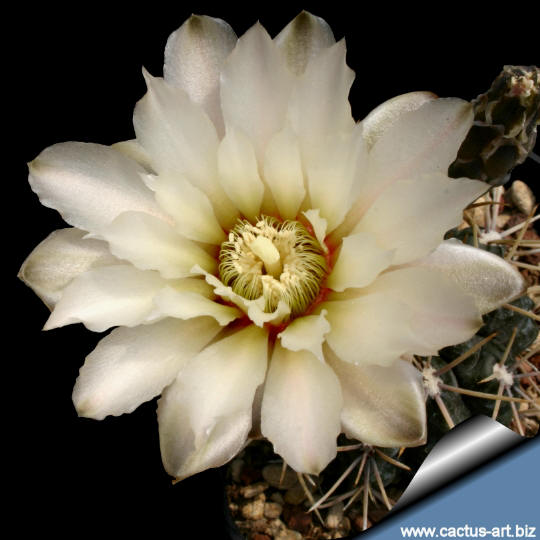
Flowers: Infundibuliform
in the nearest periphery just around the apex 45-60 mm
long, 60-65 in diameter. Tepals ivory white with a brownish mid rib or
occasionally reddish, throat greenish with a basal reddish area. Style
white-greenish, stigma white. Anthers cream coloured.
Fruit: Globate or fusiform, 20-40
mm long green with white bordered scales.
Note: Seems to be a pretty variable plant you might get some
other names which are effectively the same plant.... and also not sure
all plants identified as this are really this.
|
 |
 |
|
Cultivation:
summer grower
and pretty easy, water
regularly in summer, keep rather dry in winter,
but can handle excessive water to few water, best
for half-shade but grow well in full sun and full shade too (but in
full sun turns an uneven brownish red colour).
Frost Tolerance: Hardy to -12C.
Seed
Collecting: Permit
fruit to
ripen, fruit must be significantly
overripe before harvesting seed; clean and dry seeds
Photo of conspecific taxa, varieties, forms and
cultivars of plants belonging to the
Gymnocalycium gibbosum
complex
(This
Taxon
has lots of synonyms
(
like many other Gymnocalyciums)
whit several controversial varieties and subspecies and comprises a multitude of different forms, but where each form
is linked to others by populations of plants with intermediate
characteristics):
|
|
Advertising
|
|
|
|
|
Family:
Cactaceae (Cactus
Family)
Conservation status: Listed in
CITES appendix 2.
Scientific name: Gymnocalycium gibbosum
(Haworth 1812) Pfeiffer ex Mittler 1844
Common Name: Black Chin Cactus
Origin &
habitat: This species is widely distributed in the
mountains of Argentina from the south of the Buenos Aires province to
Patagonia and show a great variability in morphological traits.
Synonyms:
- Cereus reductus,
- Echinocactus gibbosus,
- Gymnocalycium reductum,
- Gymnocalycium gerardii,
- Cereus gibbosus,
- Cactus reductus,
- Cactus gibbosus,
- Gymnocalycium chubutense
G. gibbosum is the
type species of the genus Gymnocalycium
Etymology:
The
genus
name
"Gymnocalycium" derives
from the Greek words “gymnos” meaning “naked”
and “calyx” meaning “covering; calyx” referring to
the flower buds (calyx) bearing no
hair or spines. (The genus name implies: “naked
calyx”).
|
|
|

 |
|


 Cultivation and
Mail Sale
Cultivation and
Mail Sale