|
|
|
Echinocactus
polycephalus
|
|
Description: The
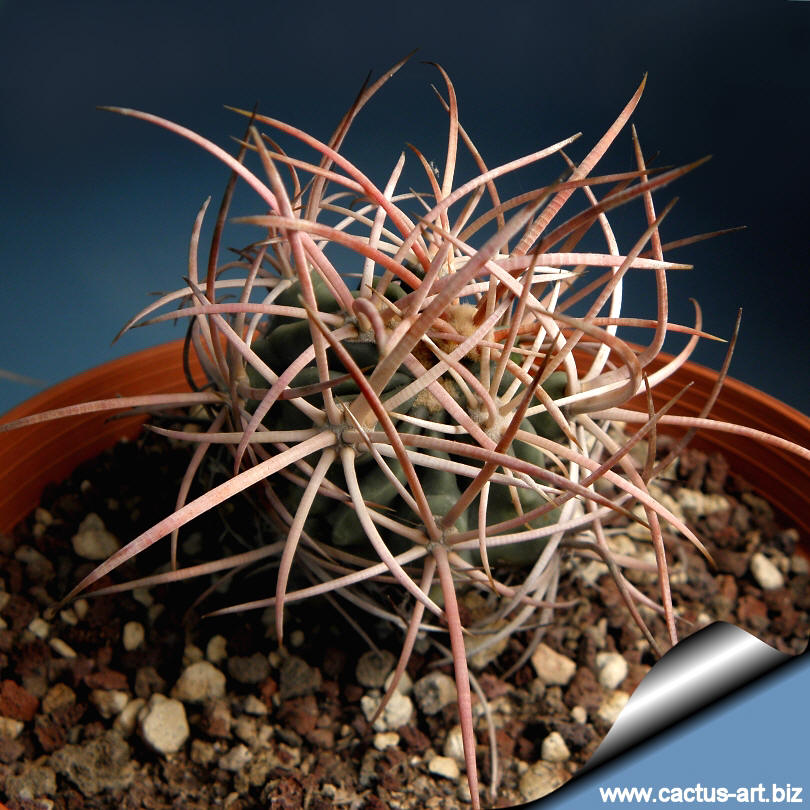
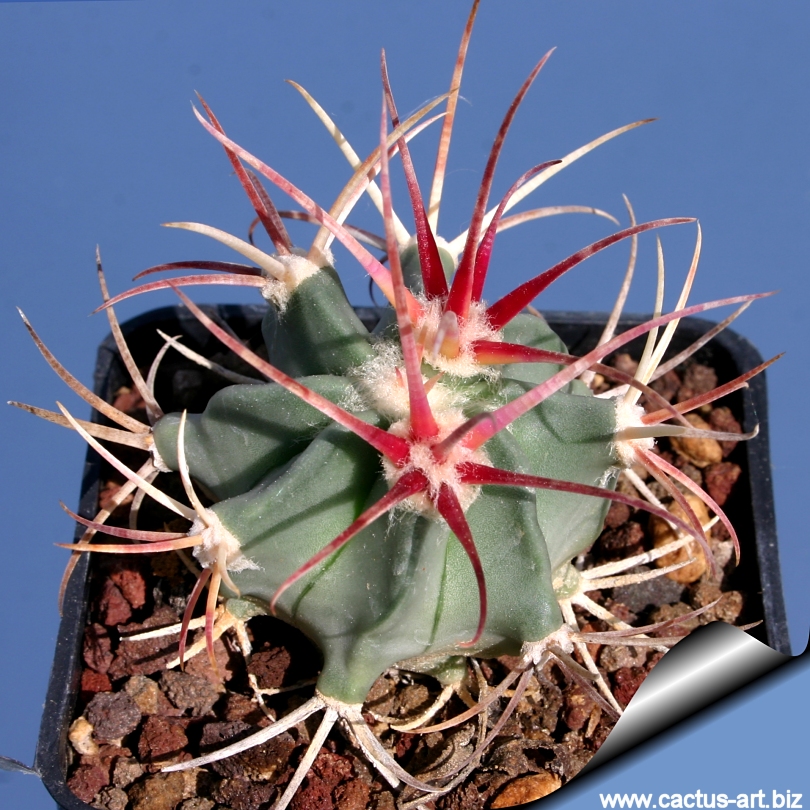
juvenile Echinocactus looks quite different from the
mature specimens. In fact, as with other Echinocactus and Ferocactus
seedlings, the
rib structure is not yet apparent, and they have pronounced
tubercles making them look superficially like
Mammillarias.
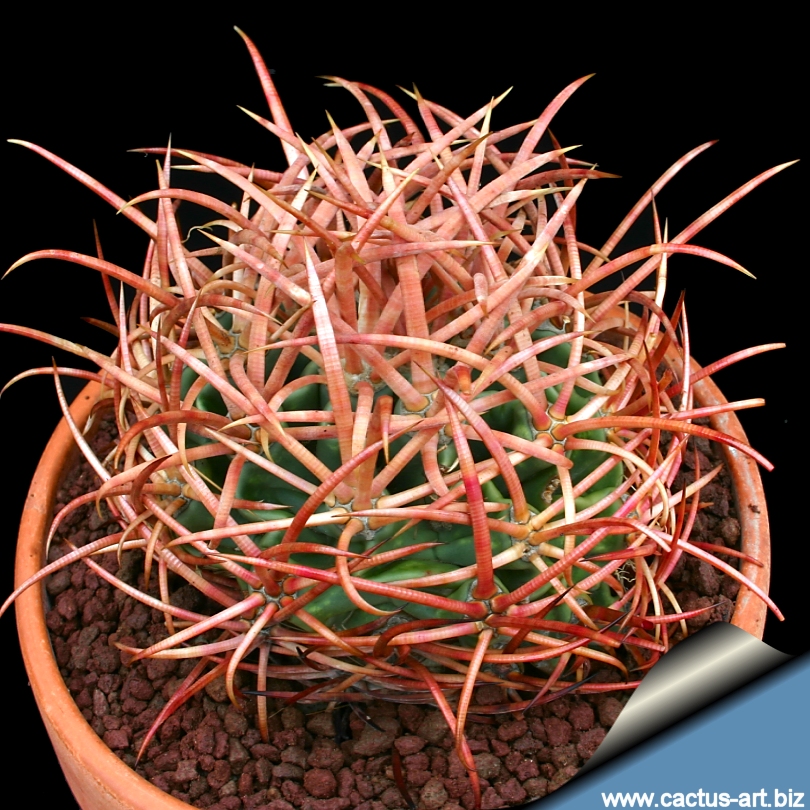
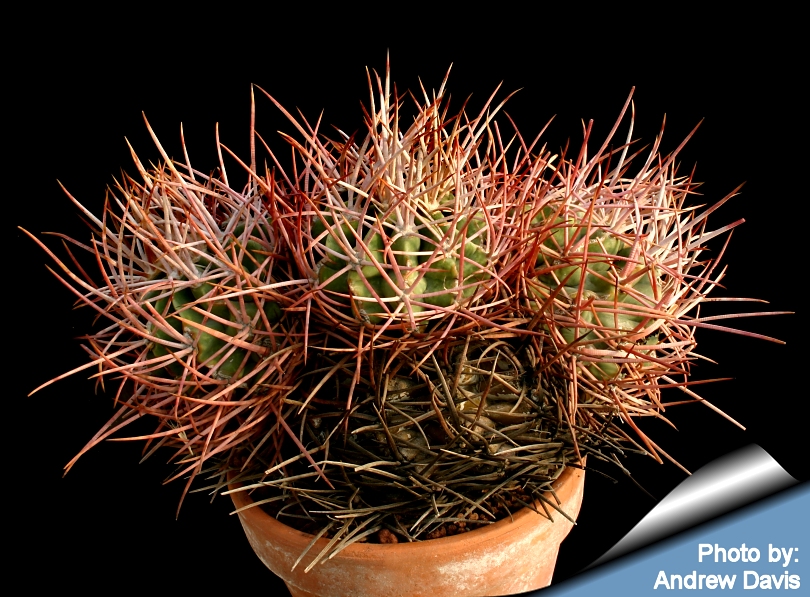
This Echinocactus is unique because it branches under normal conditions.
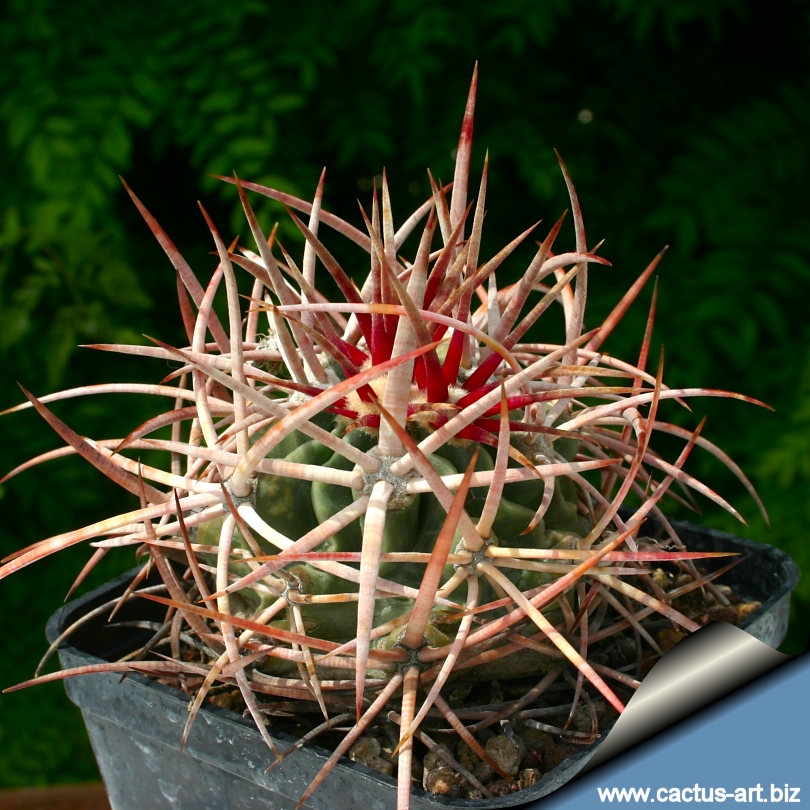
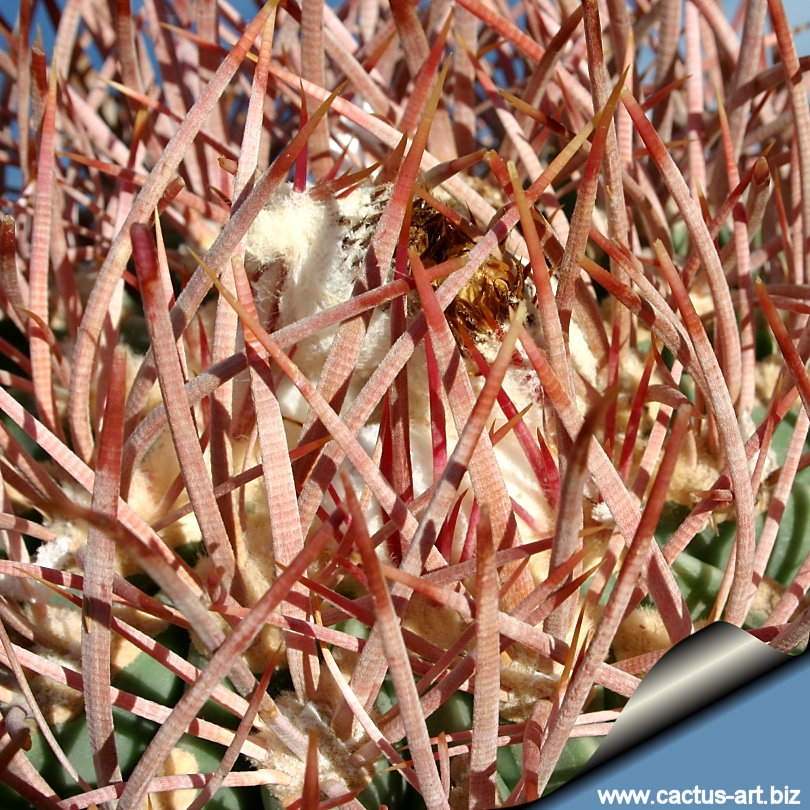
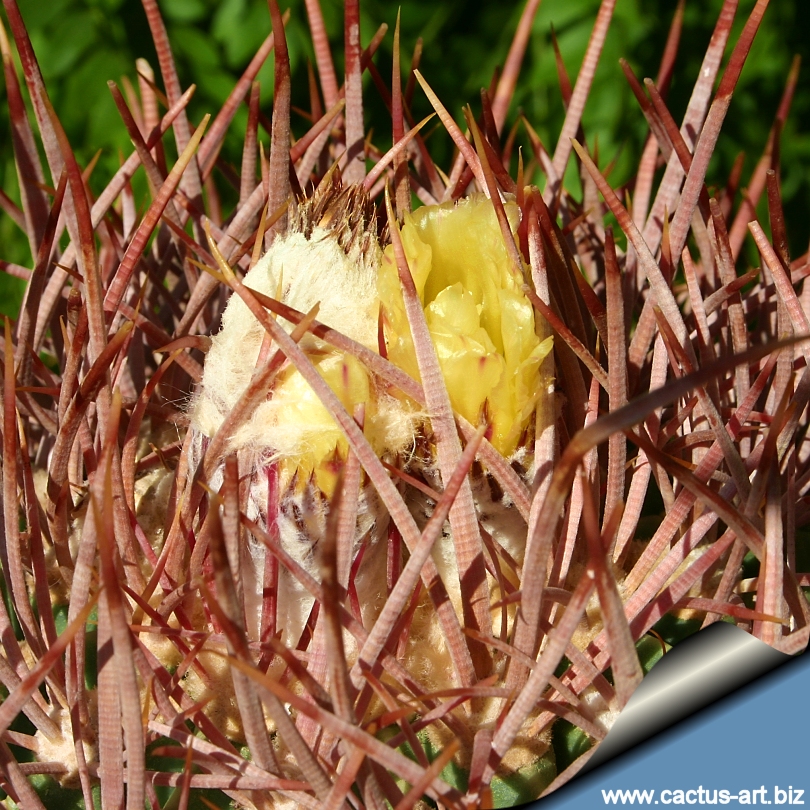
The dense, stout spines obscure the plant bodies and restrict the small
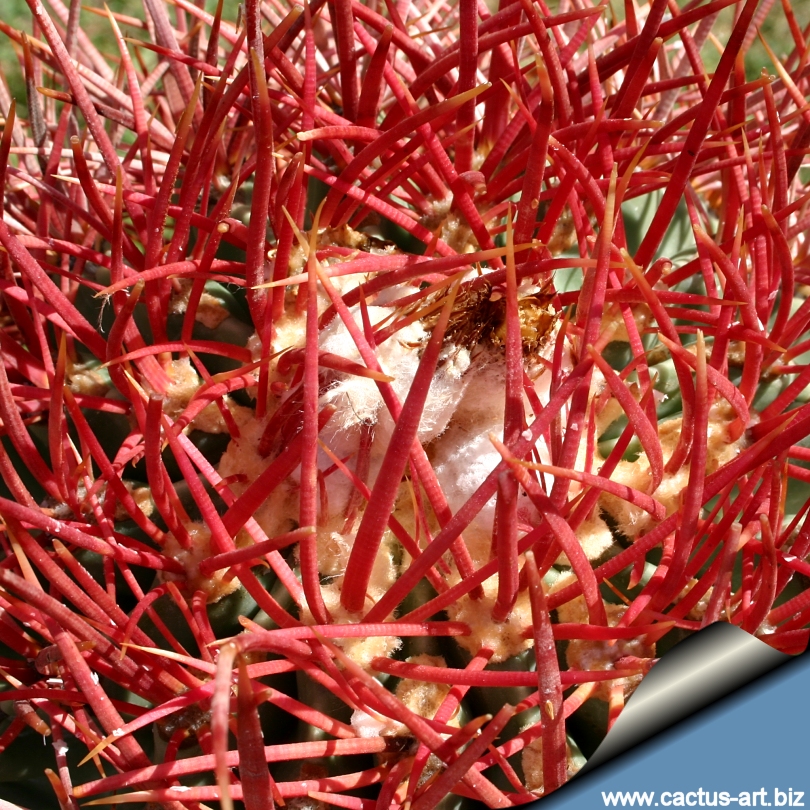
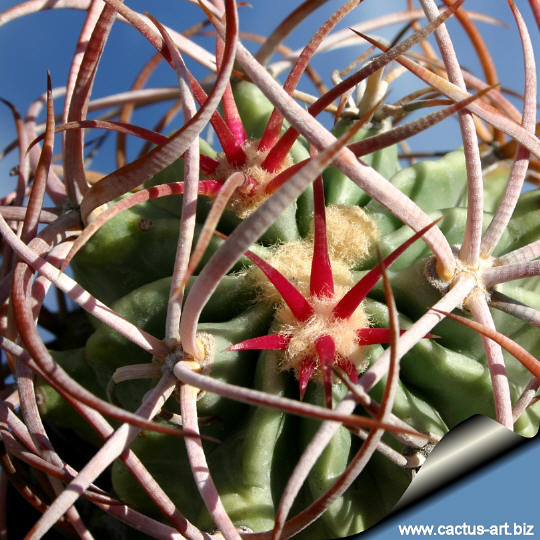
yellow flowers from opening fully. They appear in July. The brown spines
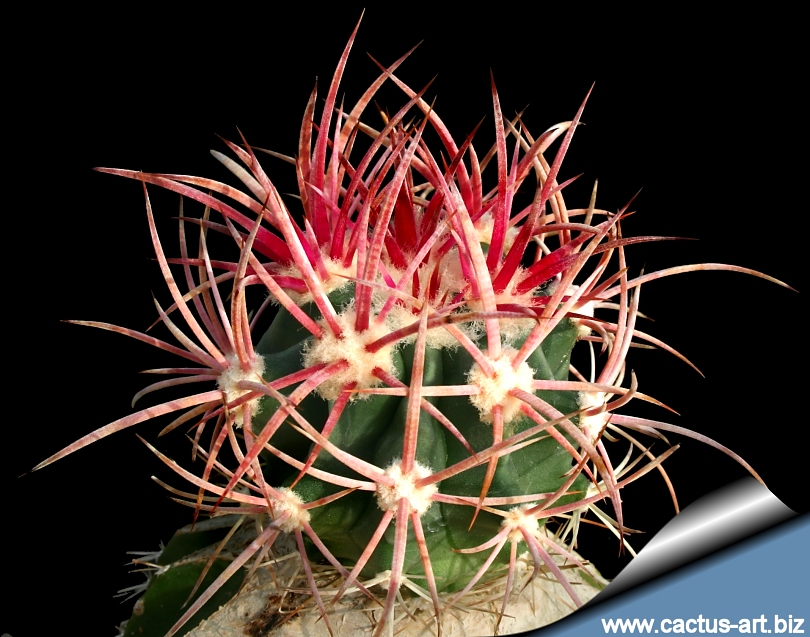
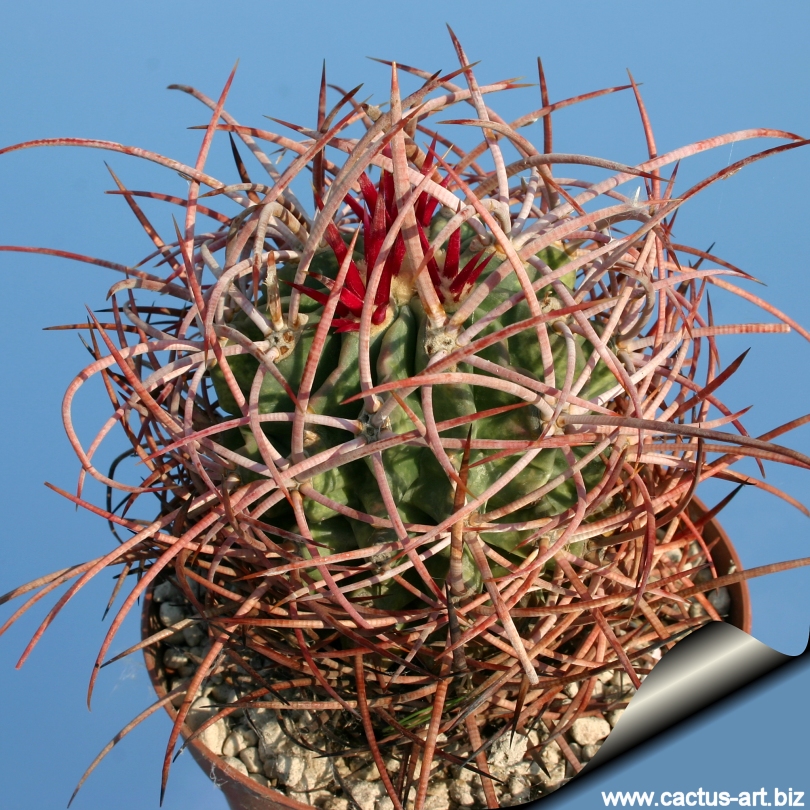
appear bright red when wet from rain.
E. polycephalus complex:
This complex is formed by three similar barrel cacti and comprises
E. parryi, E. polycephalus
var. polycephalus, and E. polycephalus var.
xeranthemoides. The two varieties of E. polycephalus
are indeed not recognized and accepted by all taxomists, in fact studies
in the in the field, and distribution maps indicate potential sympatry
among them. While herbarium studies, field observations, scanning
electron microscopy, and genetic analysis support the distinction of
E. parryi and E. polycephalus as separate
species.
|
|
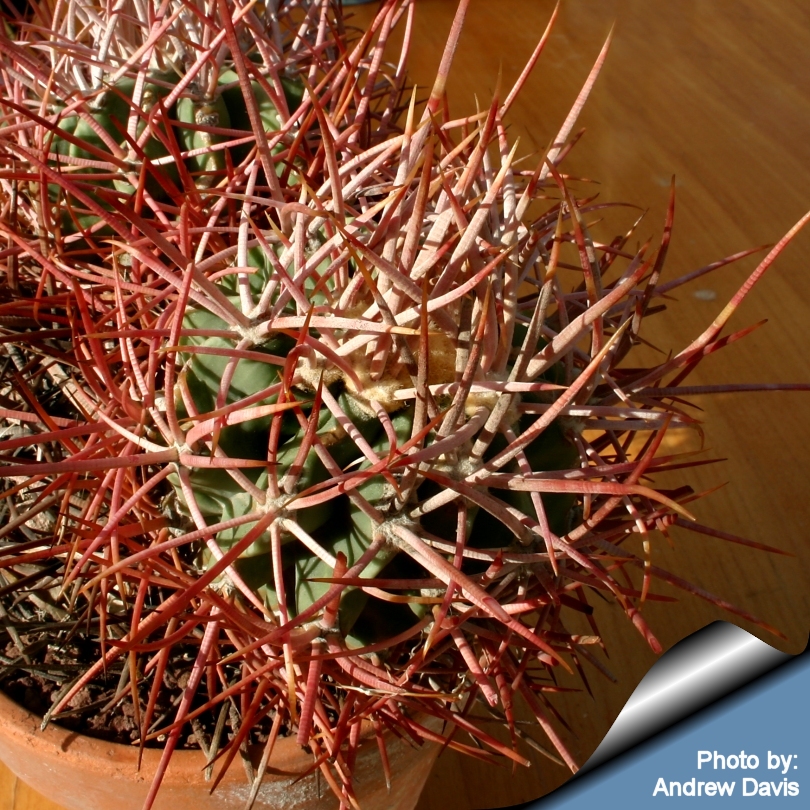
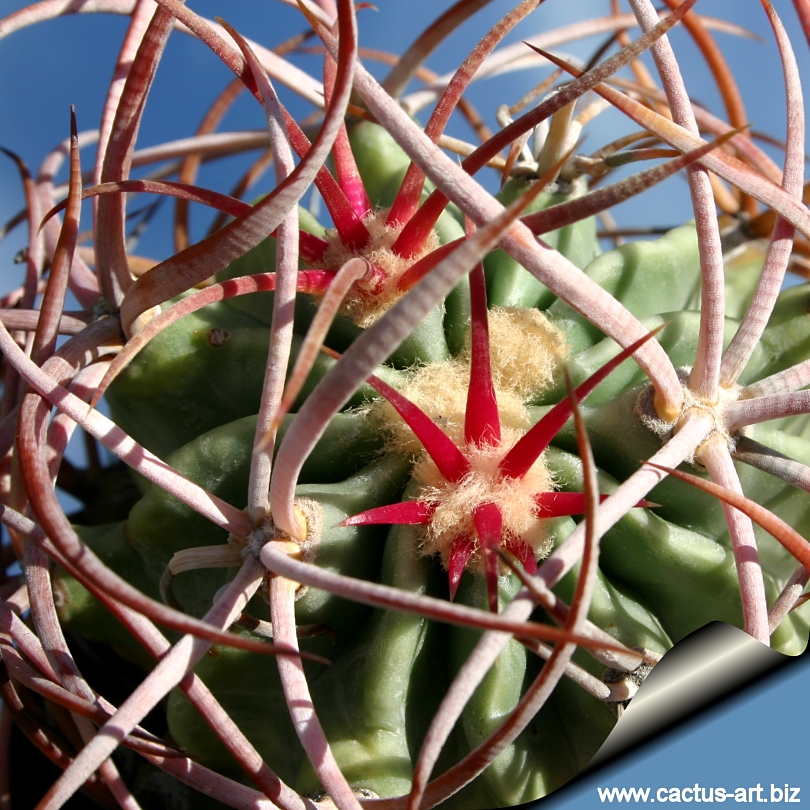
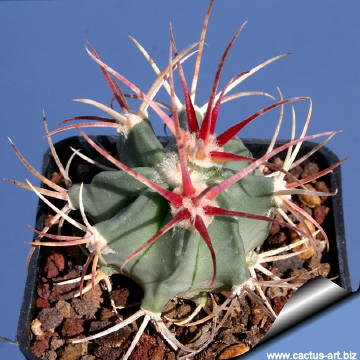
New spine are colourful. Needs as much sun as |
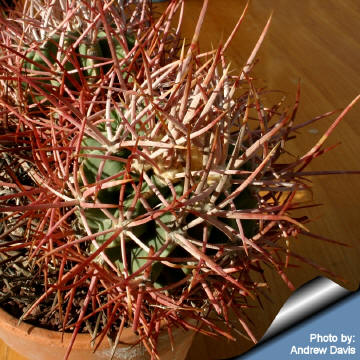
possible and careful watering to stay compact. |
|
. |
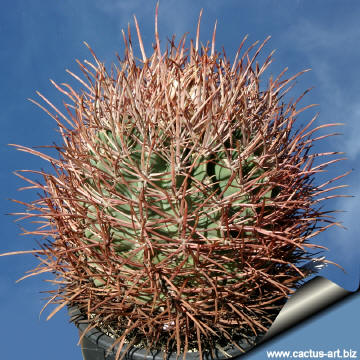
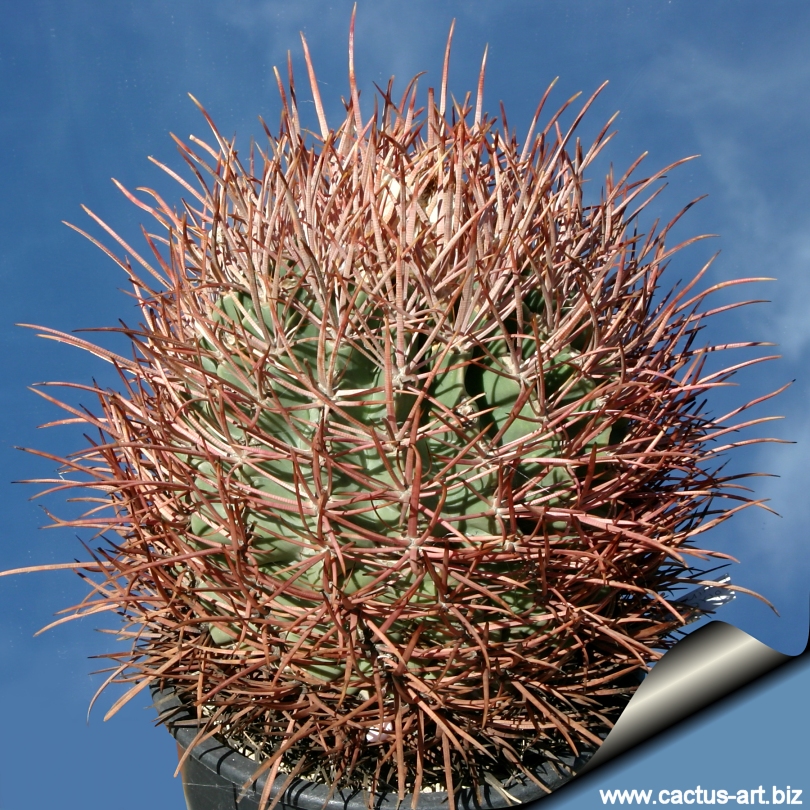
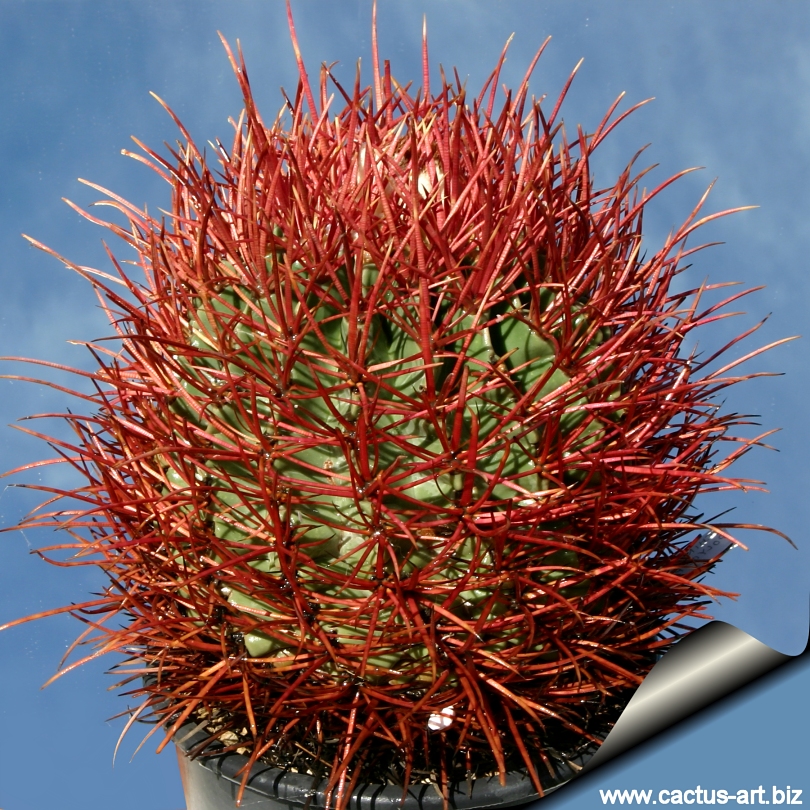
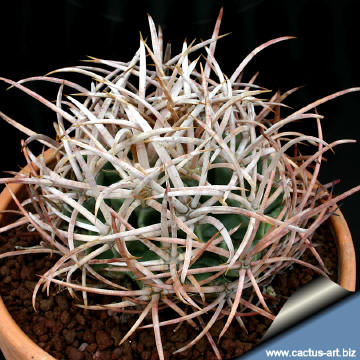
The chalky pink-white spines turn a |
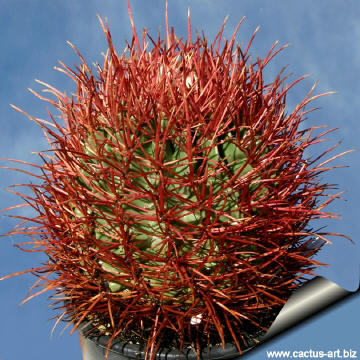
bright red when sprinkled with water. |
|
. |
Dry |
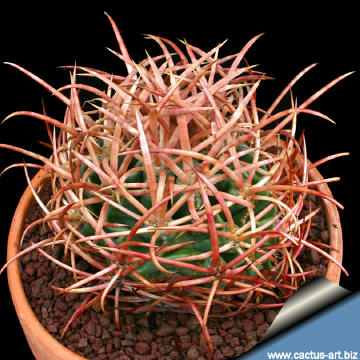
Wet |
|
. |
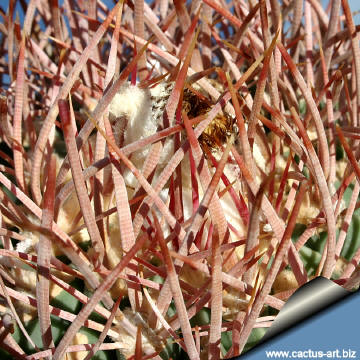
Dry |
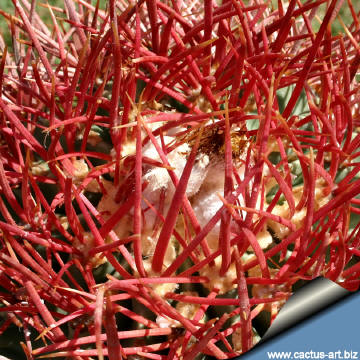
Wet |
|
.
|
 |
 |
Cultivation:
Relatively difficult to grow on their own
roots as they are
root rot sensitive in cultivation,
especially after planting. Slow-growing and very
long-lived. Plants grown from seed begin to branch at nearly 20 years of
age. Hardy to -12°C, it needs full sun, and good
ventilation.
It is extremely
xerophytic and adapted to very dry soils, but plant grafted are very
easy to grow and no special skill is required. They can stay in a non
heated green house (hardy to about - 9° C for a short time). This cactus
continues to be, a
particular prize among collectors.
Propagation: Seed or grafting. The seeds
germinate with extreme difficulty and a low rate of success. Seedlings
did not do well either, and some die each year.
|
|


Advertising
|
|
|
|
Family:
Cactaceae (Cactus
Family)
Scientific Name:
Echinocactus
polycephalus
Conservation status: Listed in
CITES appendix 2.
Synonyms:
- Echinocactus xeranthemoides
- Emorycactus polycephalus
Origin:
USA (Mohave and Sonoran
desert: Yuma and Mojave Co., Arizona, Inyo, San Bernardino
Valley, Riverside
and Imperial Co., California, Lincoln and Clark Co., Nevada), Mexico (northwestern
Sonora)
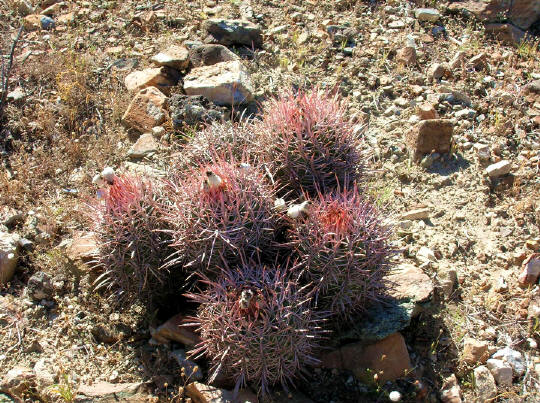
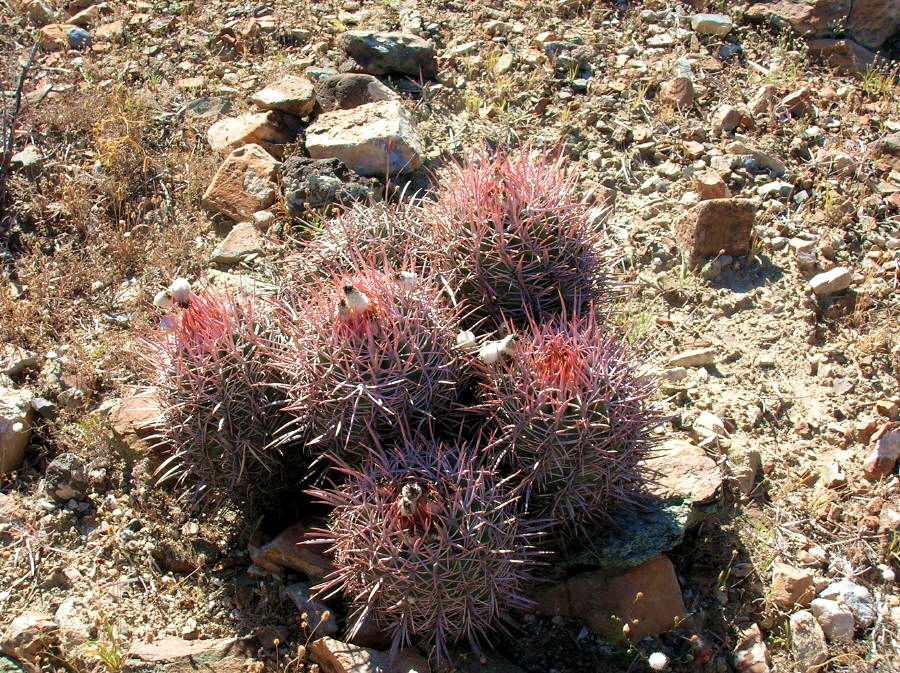
A plant in Habitat.
Photo
and © copyright by
Wilfried Stolz
(Austria)
Habitat: The plant occurs at low elevations mostly on rocky and gravely slopes
in the dryest parts of the Sonoran and Mohave deserts.
It is rarely
found where rainfall exceeds 5 inches (130 mm) at 30 to 750m elevation.
The plants grow in spreading clumps, sometimes of more than 100 stems,
although 20 to 40 stems are more common.
|
|
|
|
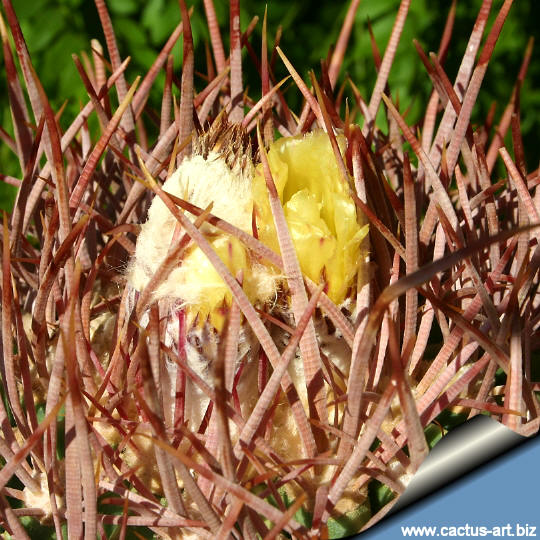
The flowers hardly escape from the
intertwined
mass of hardy spines, and often fail to open completely.
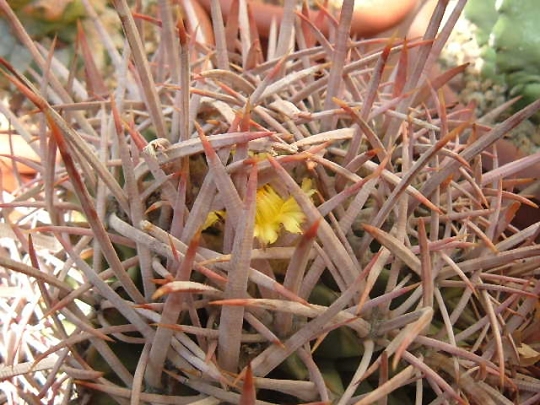
Photo & © copyright by Simone
Italy
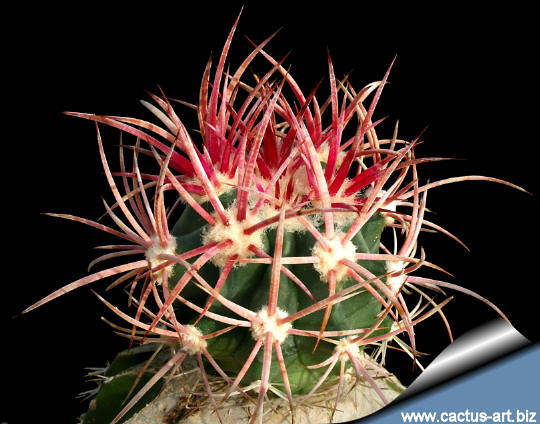
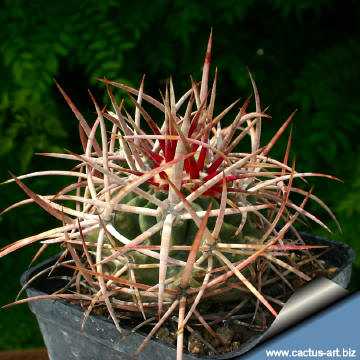
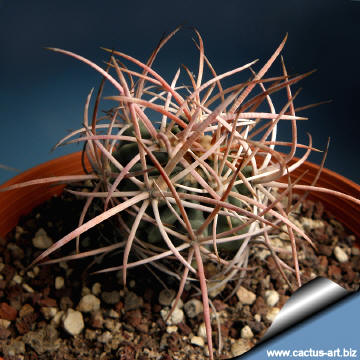
A
young specimen. (Grafted on Nebuxbaumia polylopha)
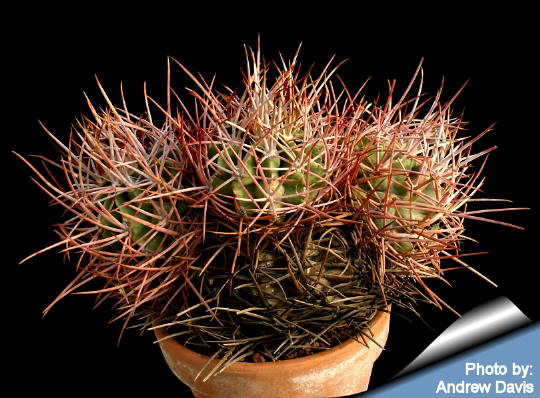
Grow it in a very draining mineral soil and provide good ventilation
(especially in winter)
|
|


 Cultivation and
Mail Sale
Cultivation and
Mail Sale