|
|
|
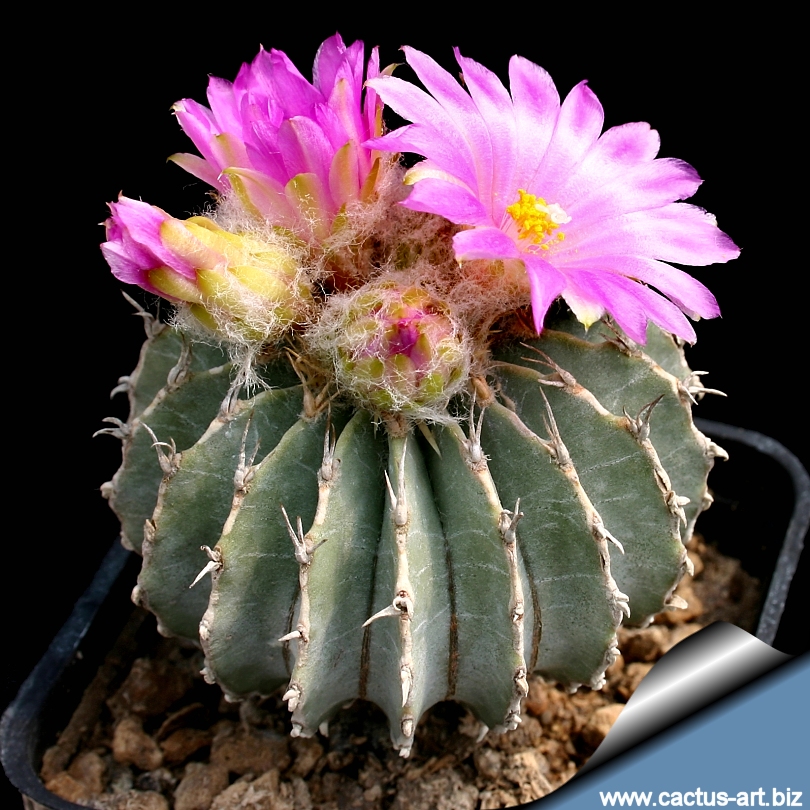
Flowers: magenta,
diurnal and
apical.
|
|
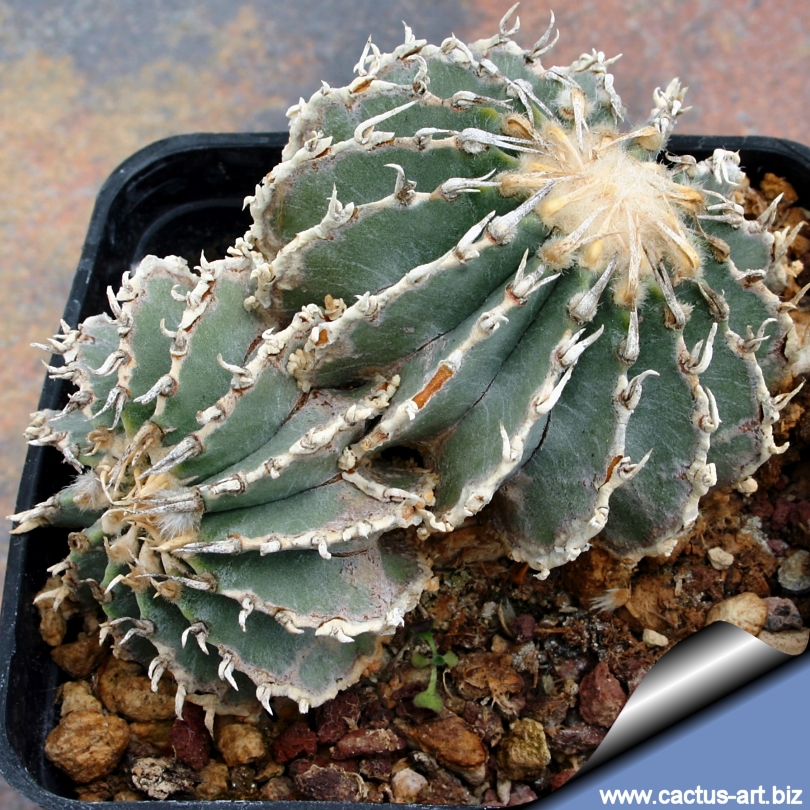
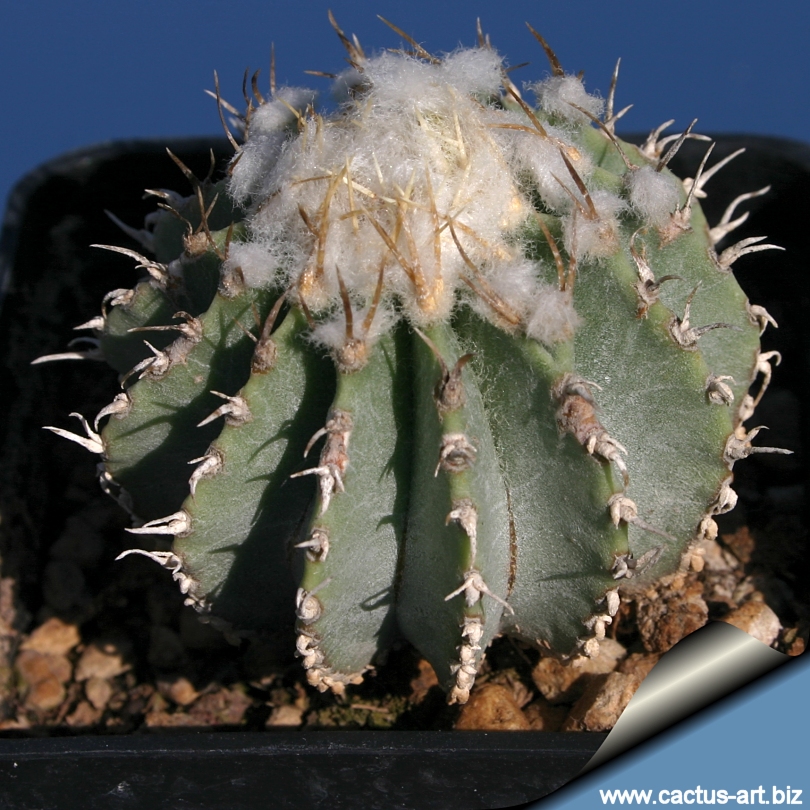
Description: Geohintonia is
a
monospecific
genus discovered in 1992. It is a strongly ribbed cactus of unique
appearance.
Stems: Usually
solitary, dark green/brown covered by a
glaucous/grey
pruina, globose becoming slowly
columnar, up to 10 cm or more, 10 cm in diameter with a
woolly
apex.
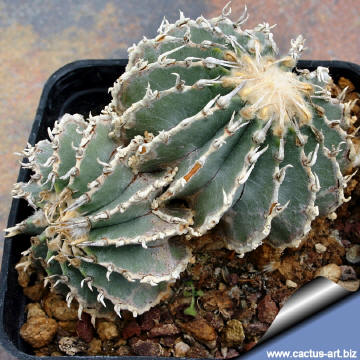
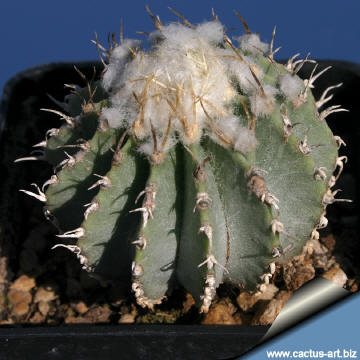
Ribs: Numerous (18-20) and well distinct.
Areoles: Large, discrete, at first with long wool, later nearly
naked.
Spines: Few, very short (3 to 15 mm),
triangular, curved,
flatened and
corky, soon papery a brittle
deciduous. Easily detached from the
base.
Flowers: 2 x2-4 cm, rich pink to magenta and open during the day;
they are born in
on top
of the plant. Pericarpel
and lower part of the tube naked, white. Upper part of the tube with
small acute scale, with densely hairy axil bearing 1 cm long white
bristles. Stigma 5-6 mm long, yellowish white.
Blooming season: Flowers
intermittently throughout the warm months from spring to autumn.
Fruit: Hidden in apical wool, ovoidal (approx 9x4-5 mm), thin
walled, pale, drying and breaking off below the middle.
Seed: Oval, 1,2x0,7 mm, black brown, shiny, relief flat to
low-domed. The hilum is large, basal and superficial.
|
|
 |
 |
|
. |
|
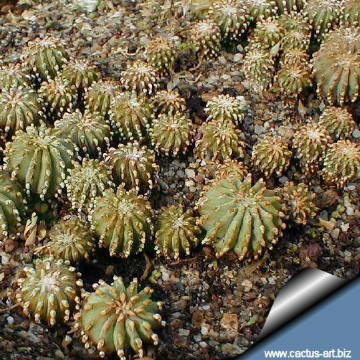
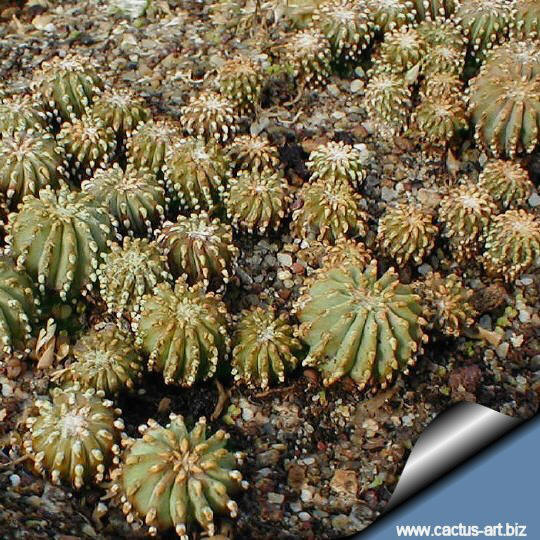
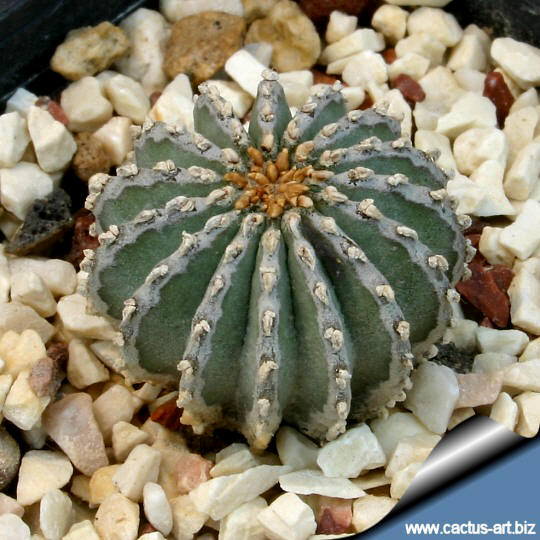
5 years old seedlings. |
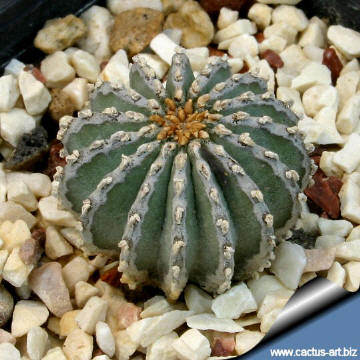
2,5 cm (9 ears old) |
|
Advertising
|
|
|
|
|
Family:
Cactaceae
(Cactus Family)
Scientific Name:
Geohintonia mexicana Glass & W. A. Fitz Maurice
In: Cact. Suc. Mex. 37(1):16-19 ('1992' , publ.1991)
Cact.Succ. j. (U.S) 64: 141-147 (1992)
Origin: Mexico (Nuevo
León: Sierra Madre)
Conservation status: Listed in
CITES appendix 2.
Habitat: This plant grows on
gypsum hills on vertical cliff
in the neighbourhood of Rayones. Now this plant is
endangered, the
wild
population of
G. mexicana was almost completely wiped out by "collectors".
About
taxonomy: The
Aztekium
Clade (consisting of
Aztekium and
Geohintonia) represents a
relictual, yet highly
specialized
lineage
forming a
sister group to the remaining
taxa of the
tribe Cacteae. It is
suggested that Geohintonia may represent an
intergeneric hybrid
involving Aztekium (probably
A. hintonii which is
sympatric with
Geohintonia ) and possibly Echinocactus horizonthalonius.
Etymology:
The
generic name "Geohintonia"
remembers its discoverer Georges Hinton.
The specific name "mexicana" derives from
the state of "Mexico" the
land of origin of this plant. (The specific name implies “Mexican”)
|
|
|
|
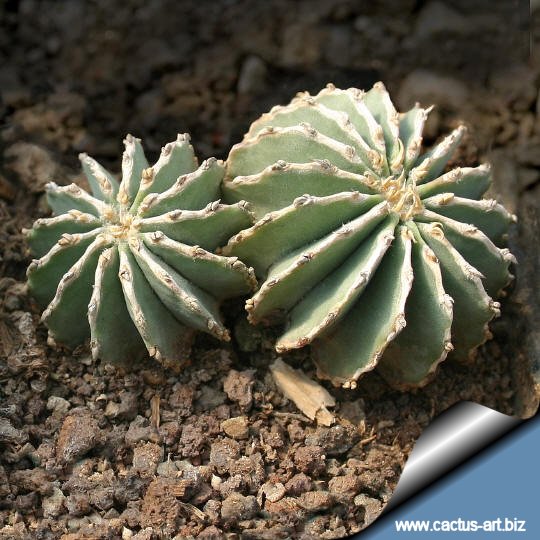
This odd cactus is
unmistakable and very distinctive
Cultivation: Although regarded as a choice and
difficult plant in cultivation it is relatively easy to grow, but very slow growing.
It is often seen as a grafted plant but grows very well on its own roots
too. Needs a very well drained mineral
substratum with little organic matter (peat, humus).
Requires strong sun to part sun to
develop good compact growth and waterings should be rather infrequent,
to keep the plant flat shaped and not become excessively elongated and
unnatural in appearance. Use Water
sparingly from
March till October and keep perfectly dry in
winter, or when night temperatures remain below 10° C (but some
people give this plant a light monthly watering to prevent the drying
and shedding of the lower tubercles.) It is hardy to -4°C (or less)
for a short period. In the rest period no high atmospheric humidity!!
Ensure
a
good
ventilation.
Propagation: Almost exclusively by seeds.
But the
seedlings are tiny and
very slow growing (reach 2 cm of diameter in 6/8 years)
and require very careful watering,
plants need 10 to 15 years to reach
the flowering size.
Sometime, older specimens may shoot
tillers
from under tubercles, so they can be propagated by cuttings in spring
(but rooting may prove a challenge). Plants are sometimes grafted
onto column-shaped cacti, which is a much easier way of propagation than
sowing.
|
|
Photo of conspecific taxa, varieties, forms and
cultivars of Geojintonia mexicana:

 |
|


 Cultivation and Mail Sale