|
Description: Usually single
stemmed, perennial, succulent.
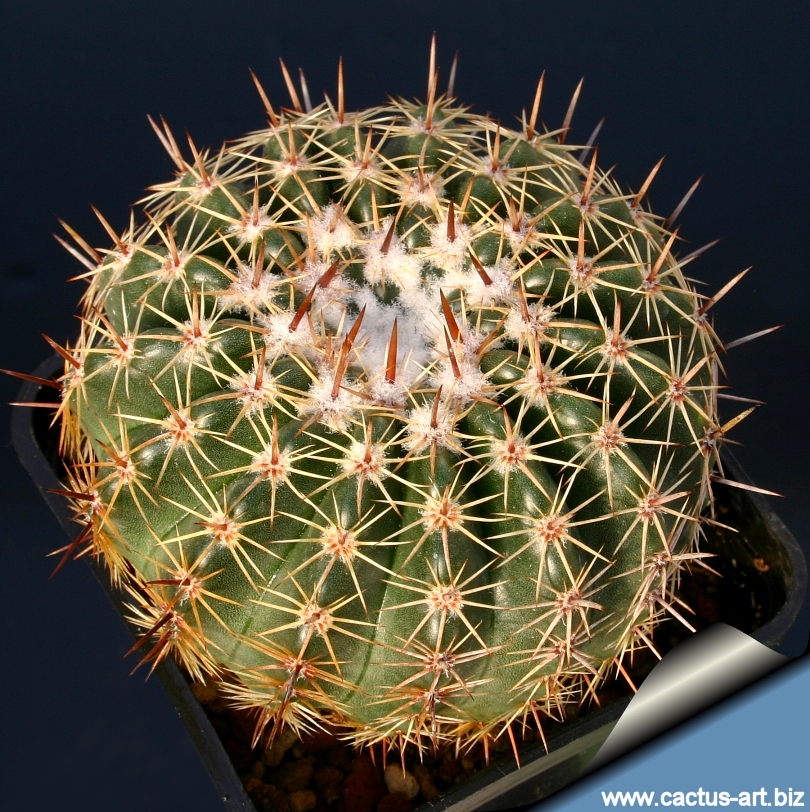
Stem: Large, spherical,
up to 15cm in diameter with flattened
apex, and with a dark-green to bluish-green epidermis.
Ribs: Approx. 18, vertical, well defined, forming large, distinct,
pointed tubercles with chin-like protrusion.
Areoles: Between tubercles.
Radial spines: About 12, up to 1 cm long, needle-like, whitish,
radiating flattened against the stem, interlacing.
Central spine: One, dark, strong, up to 2 cm long stinging.
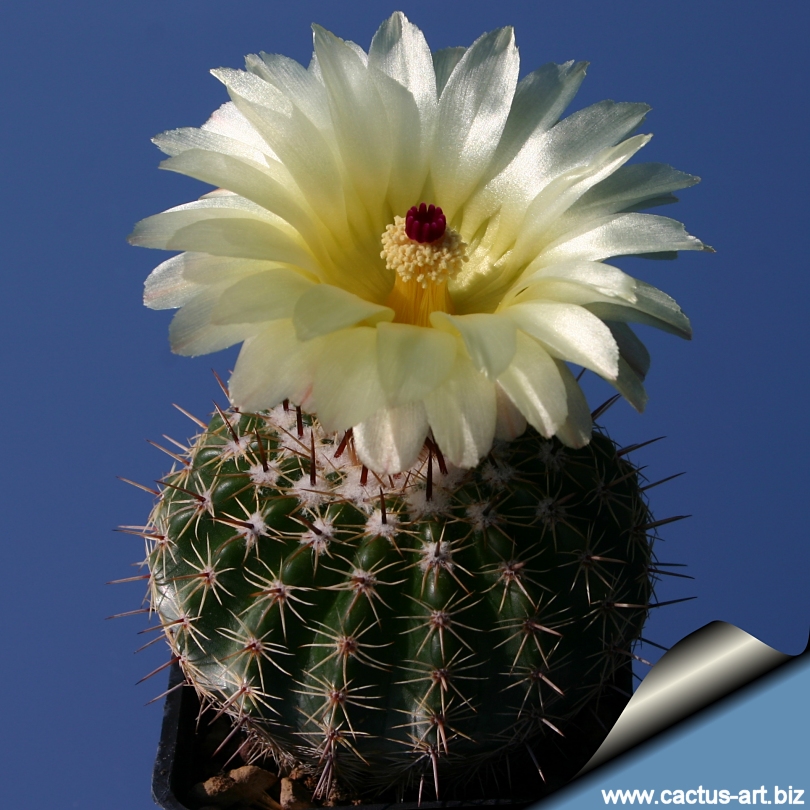
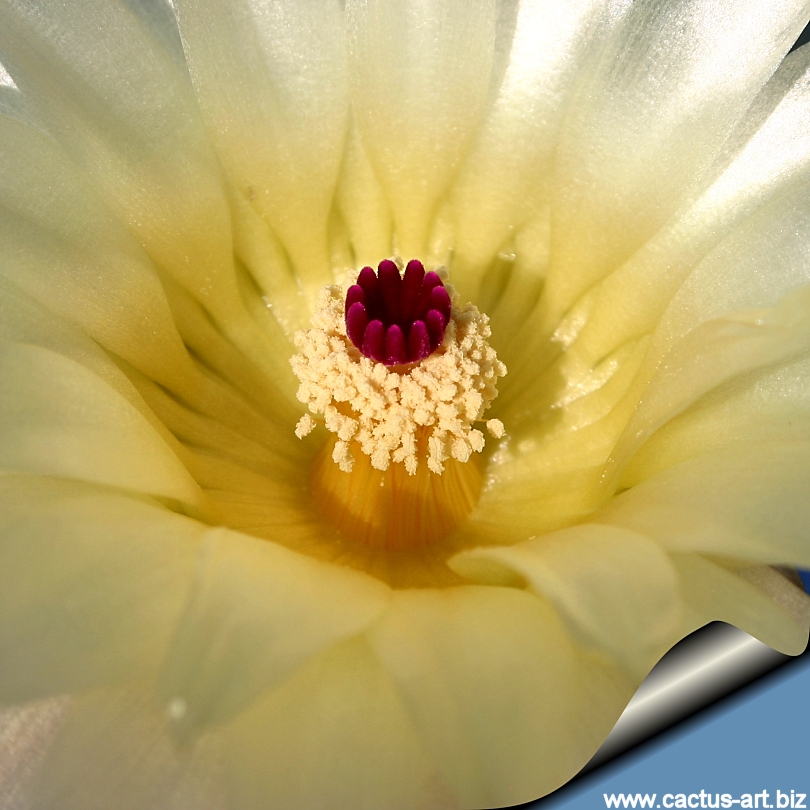
Flowers: 5 cm (or more) in diameter, shining lemon-yellow, in
rare cases also orange or reddish with dark purple-red stigma.
Pericarpel and floral tubes short and broad, with dense wool and few
bristles.
Blooming season: Spring. It will usually flower within 3 to 5
years.
Fruit: Globose, elongating at maturity, thin-walled.
Seeds: Bell to helmet-shaped, with corky
hilum, brown and finely tuberculate.
Flowers: Lemon-yellow .
Note: This plant was first described as Echinocactus
orthacanthus by Link and Otto, in 1827, when most globular
Cacti were called Echinocactus. Latter, in 1954, it was moved
into the genus Malacocarpus, by Herter, to become
Malacocarpus orthacanthus and then more recently (when van
Vliet re-discovered plants in Uruguay that matched with the original
description) was renamed again, in 1970, as Notocactus
orthacanthus by Van Vliet, when the genus Malacocarpus
was reduced to a subgenus of Notocactus.
|


 Cultivation
and Mail Sale
Cultivation
and Mail Sale