|
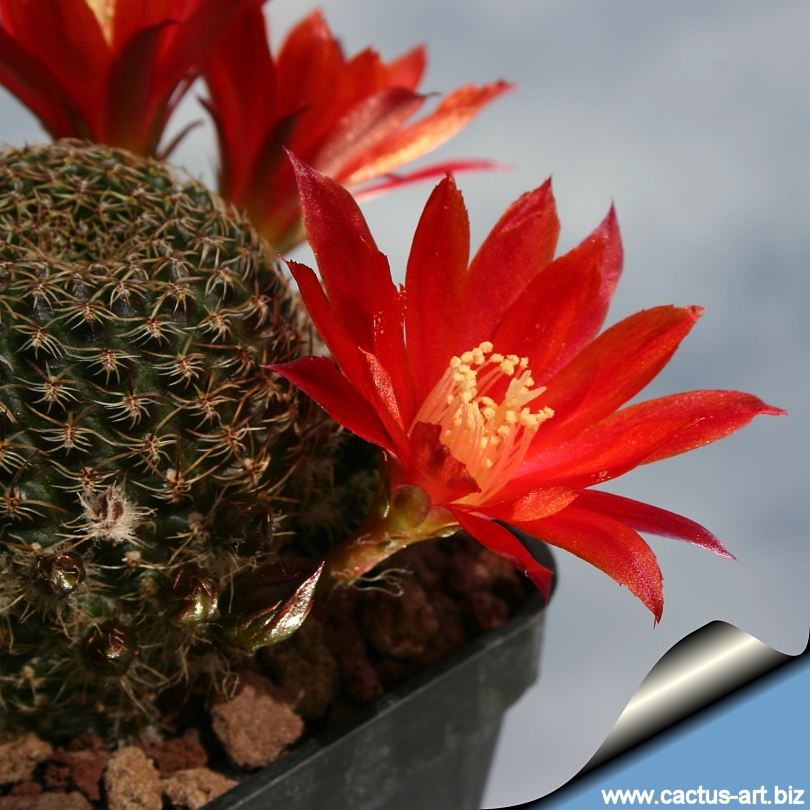
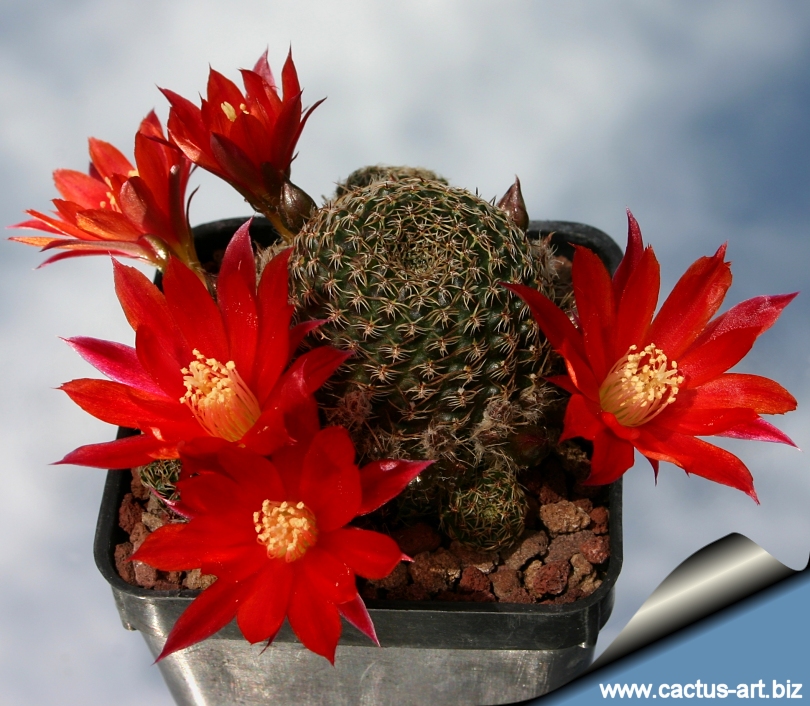
Rebutia heliosa var. condorensis VJ23 Condor Pas 2500 m ,
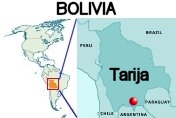
dpt. Tarija , Bolivia
This form comprises the clones of the species with dark red
flowers, and larger heads. It has very short spines arranged on globes
so that it looks like orbs covered with small, white spiders.
|
|
Description:
Small clumping cactus with
very short spines arranged on globes
so that it looks like orbs
covered with small, white spiders.
It
readily
forms a
clustering
mound.
The variety “condorensis”
specifically
describes the clones of the species with dark red flowers, and larger
heads.
Stem: Deep
green to brown , 3(-4) cm wide, rarely higher than 4 cm.
Spines: Very short, whitish to pale brown, spider-like.
Flower:
Large dark-red,
funnel-shaped, long -necked, 4 cm in diameter, 5 cm long.
Blossoming
time:
Profusely flowering in
spring. (Rebutias
are
self-fertilizing but aylosteras are not, and the latter can be
fooled by introducing foreign pollen and then re-pollinating with its
own pollen.)
Cultivation:
These small growing
plants come from
mountainous areas, so
they like bright light,
and cool and
dry conditions in the
winter.
This is important for the
flowers as well as for their
health.
Without this
cool winter period (0-10° C) they normally won't get
many
buds. They have thick
taproot and are of difficult cultivation, and
rot prone because of a great
sensitivity to
excessive watering.
It isn't easy to get
them to grow to a large size on their own
roots, and it's really a challenge to
get them to grow into a large
clump. They are commonly
grafted to avoid root problems, and to make easier to grow.
Suited
for
bright exposure; but
they can tolerate sunny exposure.
Suited for
airy exposures.
It is a
small container-size plant
and prefers a
deep pot and good
drainage
to accommodate its
tap root..
It will occupy a small pot comfortably and eventually remain a
manageable sized house plant.
It is very cold
resistant to as low as to -10° C or less, for short periods of time.
It is
a fine plant for a rock garden or container,
and contrasts well with agaves,
yuccas, and low-growing flowering plants. This variety is also likely to
flower as a house plant, but results will depend on a variety of growing
conditions.
Pests &
diseases:
R. heliosa
It
is especially
prone to root rot,
therefore,
underpot
in a smaller container filled with very
porous compost.
Propagation: By cuttings as it branches freely from the base;
Also can be grown from seeds or graft.
Seeds can
be sown in the spring or summer. The seedlings should not be disturbed
until they are well rooted, after which they can be planted separately in
small pots.
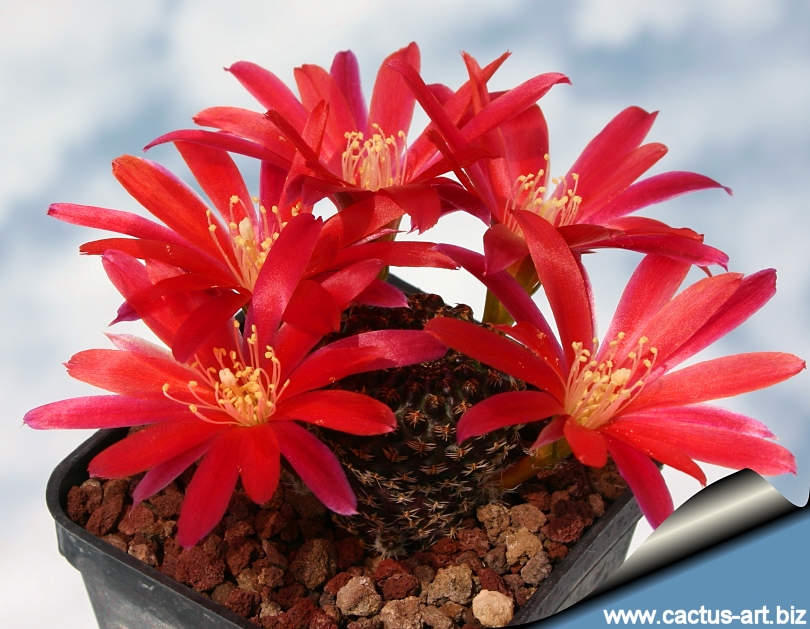
Photo of conspecific
taxa, varieties, forms and cultivars of Rebutia heliosa:
|


 Cultivation
and Mail Sale
Cultivation
and Mail Sale