|

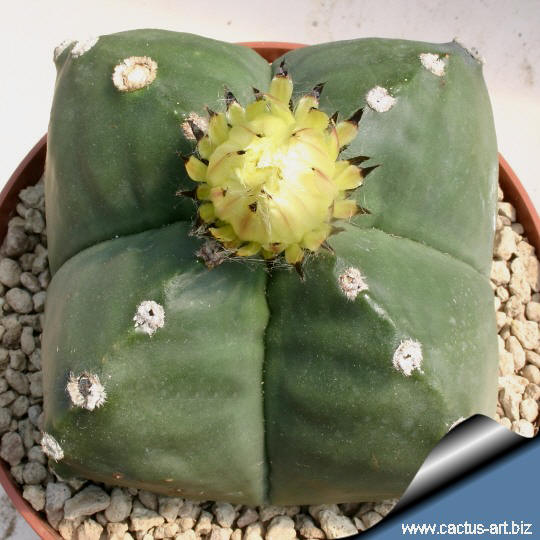
Astrophytum myriostigma quadricostatum "nudum"
This
form has a very characteristic
glabrous
stem lacking the white tufts of loose
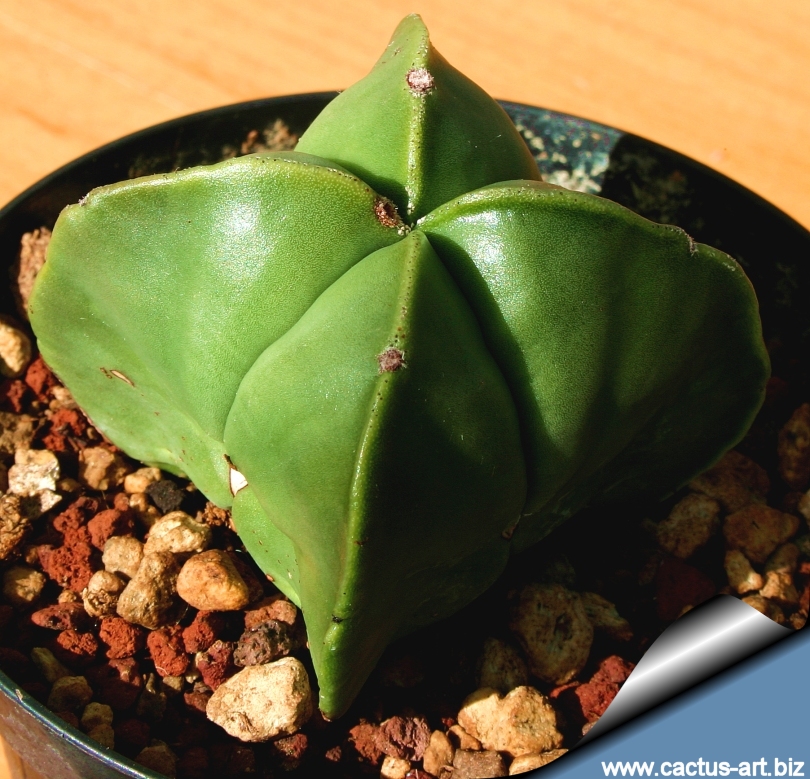
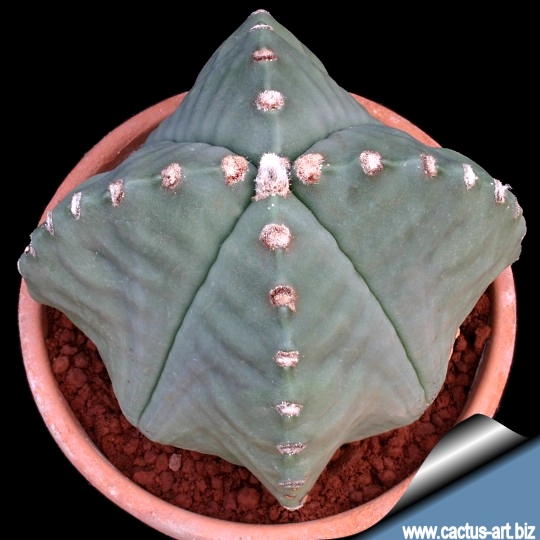
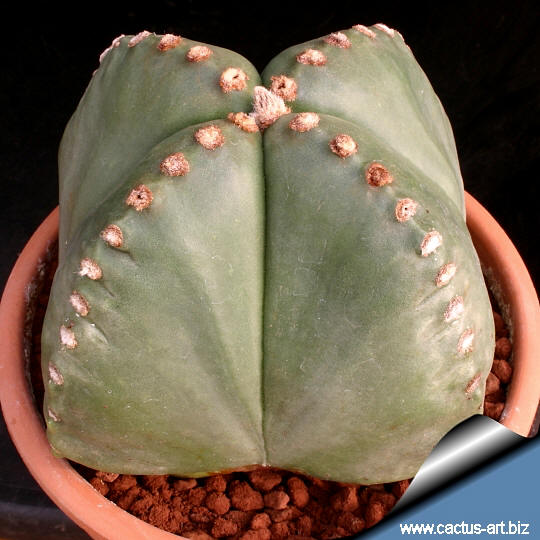
hairy scales typical of the common Astrophytum myriostigma. The smooth green
epidermis show up the
felty
areoles. |
 |
Description:
A. myriostigma quadricostatum nudum deviates from the well-known typical form for lacking or mostly
lacking
white flecks,
giving it a bright green, blue-green
colour.
Stem: Quadrangular to almost spherical,
the plants become shortly columnar with age. The stems
are
smooth and can be over 90 cm tall and 5-10 (-20) cm in diameter.
Spines: None.
Ribs: 4.
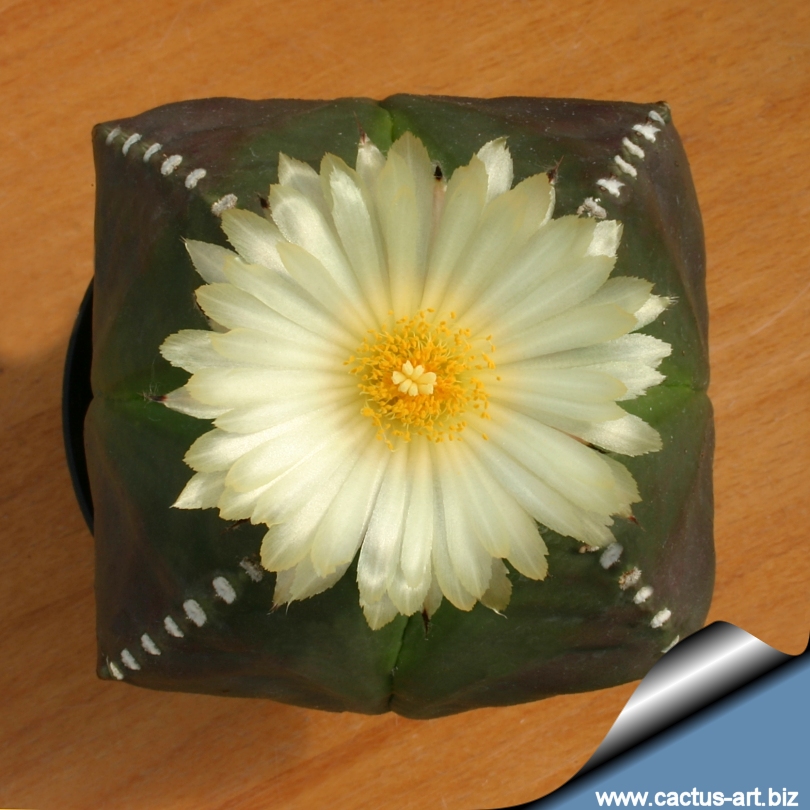
Flowers: 5 cm wide (or more), pale-yellow, shining-silk,
unlike the
white-spotted plant.
Blooming season: Spring or early summer, They take up to 6 years
to bloom. |
|
Cultivation: Although regarded as a choice and difficult
plant, it
is not too difficult in a
greenhouse,
although it grows quite slowly.
It is sometime seen as a grafted plant but grows very well on its own
roots, too. Use well- permeable
mineral soil
with little organic matter (peat, humus). Water sparingly
from March till
October
(weekly during
summertime,
if the weather is sunny enough)
, with a little
fertilizer
added. keep
perfectly dry in winter
at temperatures from 5 to
15 degrees centigrade.
(but it is relatively cold-resistant and
hardy to -7° (-10°)C
for short periods).
In the rest period no high atmospheric humidity!!
They need a good amount of
light shade to full sun
this help to keep the plants
healthy, although
with slow
growth.
|
|
Propagation: Almost exclusively by seeds
that germinate rapidly.
Plants are sometimes grafted onto column-shaped cacti.
|
| Photo of conspecific
taxa, varieties, forms and cultivars of Astrophytum myriostigma:
|
|
|
Family:
Cactaceae (Cactus
Family)
Scientific name:
Astrophytum myriostigma Lemaire
Original description: Cactacearum Genera nova Speciesque novae et
omnium in Horto Monvillano cultarum: 4-6 1839
cv. quadricostatum nudum
Origin:
Both nude and four ribbed plants of
Astrophytum myriostigma are occasionally found in
a natural habitat, but
the clones actually in cultivation are of
garden origin (Nursery
produced cultivars).
Conservation status: Listed in
CITES appendix 2


|
|