Home | E-mail | Photo gallery | Mail Sale Catalogue | Grafting Guestbook | News | Dictionary |  Winter test | Links | Search


Coryphantha echinoidea

  CACTUS ART
NURSERY

Cultivation and Mail Sale
of Cacti and Succulents.


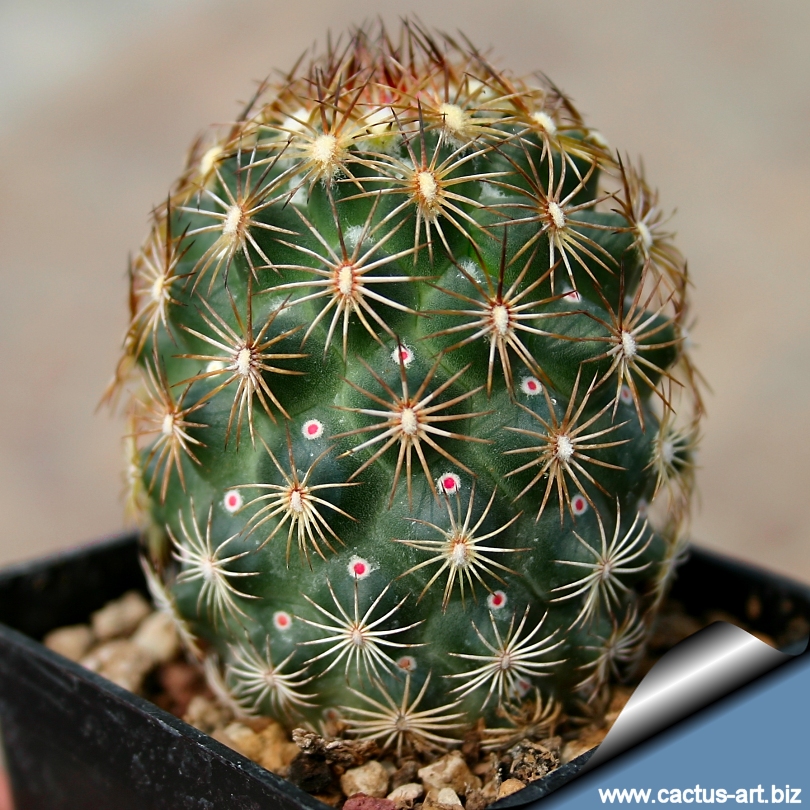
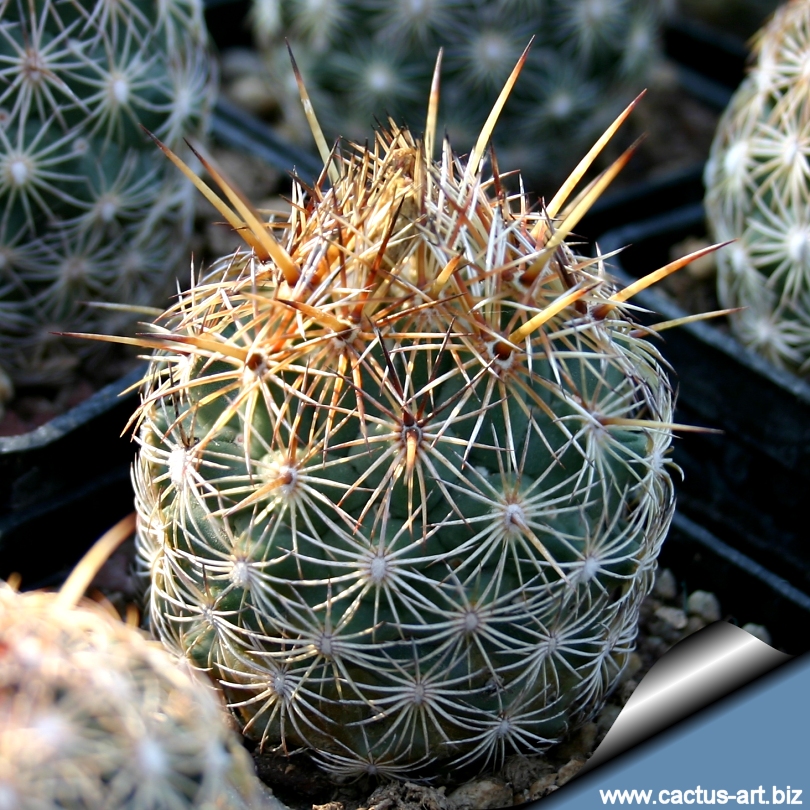
Coryphantha echinoidea SB26 Salinas, SLP, Mexico
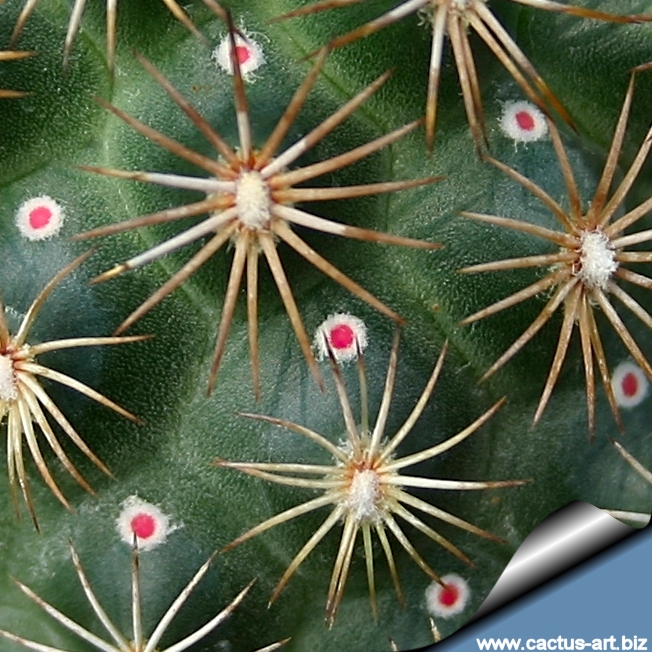
The red extrafloral nectaries attract the ants that defend
the plant against dangerous herbivore insects.


Morphology (Identifying Characteristics):
Habit:
Small solitary
Stem: Globous, to egg-shaped stems up to 6 cm high and diameter.
Spines: 20-24 radials, 1 to 3 porrect central spines 1-1.5 cm. in mature specimens;
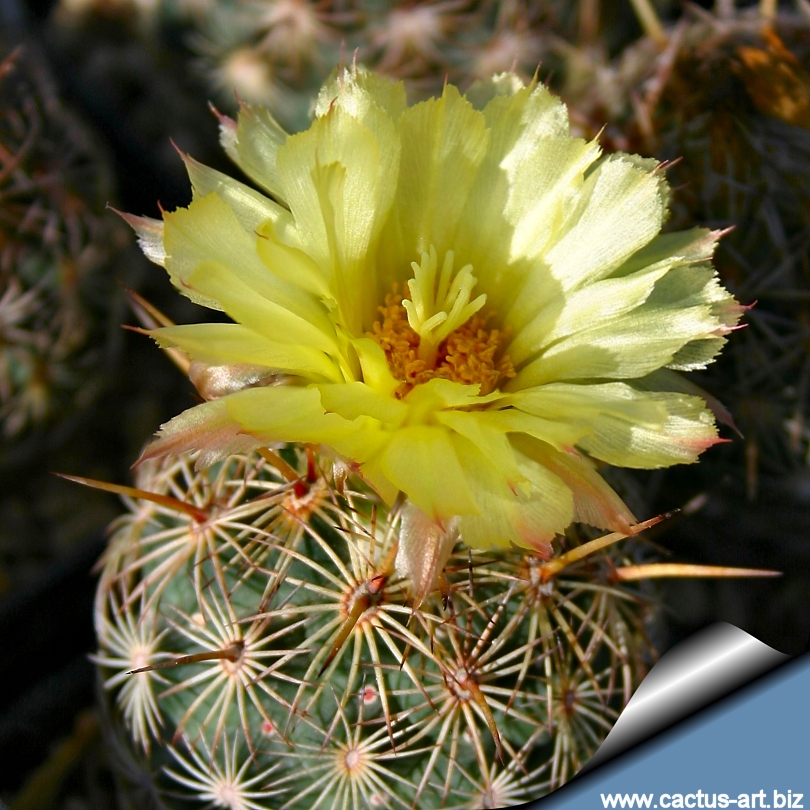
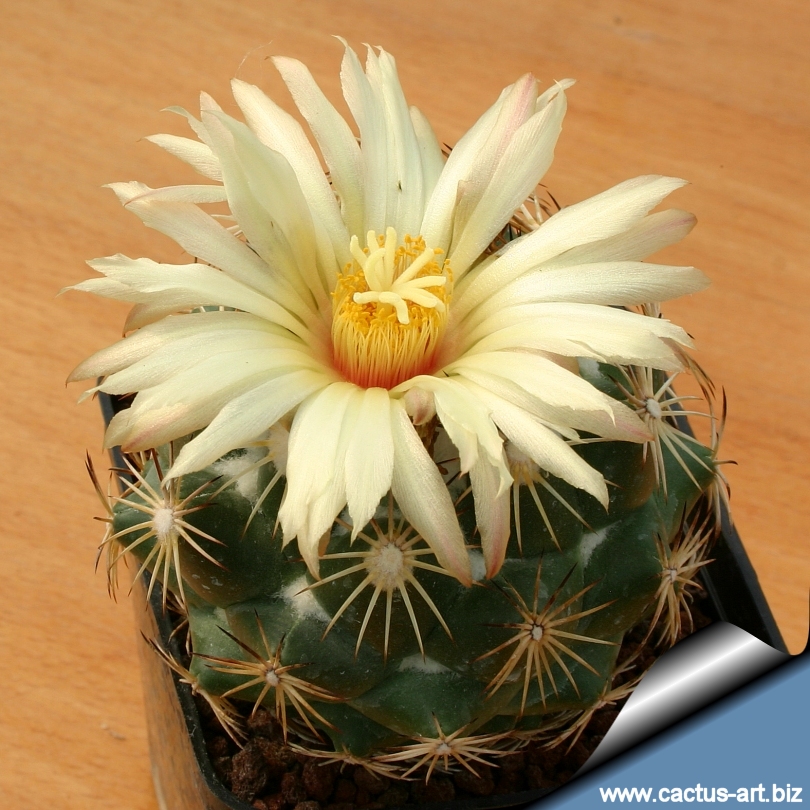
Flower: Large and yellow (5- 6 cm diameter) with - like the ones of the related C . vaupeliana and C. glanduligera - a sweet fragrance. All Coryphanthas develop woolly grooves  running down the tubercles as they grow towards maturity and plants will not flourish until this has happened which can take 4 years or more
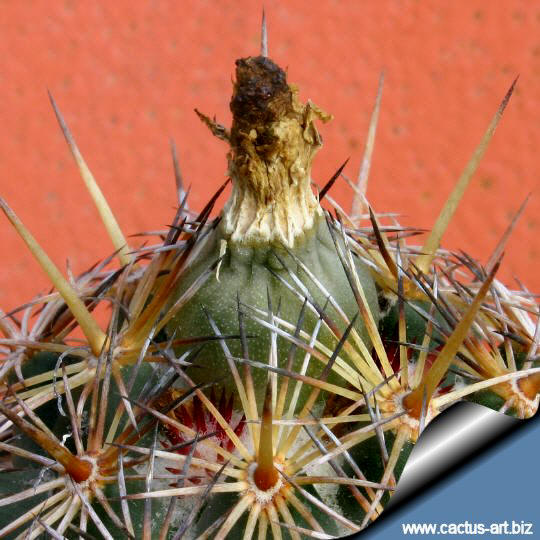
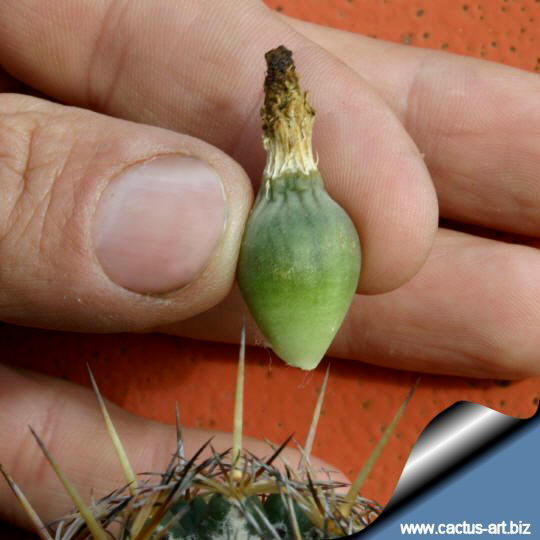
Fruit: Green, club-shaped.

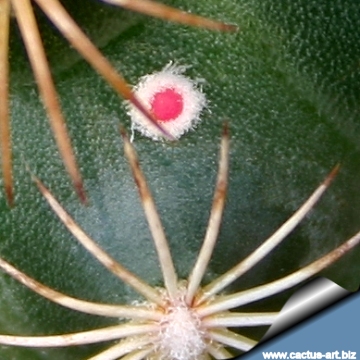
Notes: This cactus produces well marked red nectary glands on the tubercles ("extra"-floral structure secreting nectar) that attract ants.


The nectaries
 

Fruit at the apex among the porrect central
spines


Cultivation Easily grown in normal cactus compost, requires good drainage. Water in moderation, keep drier in winter. Full sun to partial shade. In humid conditions, the exudation of nectar (if not completely removed by ants) can cause the formation of mould which leads to ugly black-colouring of the epidermis. To prevent this, spray the plant with water to remove the nectar. And provide very good ventilation.


Photo gallery: Alphabetical listing of Cactus and Succulent pictures published in this site.

Photo gallery coryphantha

Family: Cactaceae (Cactus Family)

Scientific Name: Coryphantha echinoidea (Quehl 1913) Britton & Rose 1923
Subgenus Neocoryphantha (gland-bearing Coryphantas)

Distribution: It is found in the Mexican state of San Luis Potosí and the bordering regions of Guanajuato and Nuevo León, subsequent to its earliest description it is assumed to grow in the East of Durango, but it is almost certainly not found there.

Listed in CITES Appendix II
 

Taxon synonyms
  • Mammillaria echinoidea  Quehl 1913
  • Coryphantha schwarziana  Boed. ex Backeb. & F.M.Knuth 1935

Flower


New spines...
 

Notes:  The Subgenus Neocoryphantha Backeberg is characterised by the presence of extra floral nectaries; they are glands typically located in the tubercle-grooves or in the axils. These nectary-glands are red, orange or yellow and exude in the summer and autumn a viscous juice (nectar) with a high sugar-content. These glands represent a sophisticated strategy for ant  attraction.

The first hypothesis for why plants secrete extra floral nectar is that the presence of pugnacious ants seems to reduce the vulnerability of flower buds by herbivorous insects,  resulting in greater fruit production and tissue survival. (or by decreasing seed predation on plants.)
The second hypothesis is that they distract ants from foraging at the floral nectaries,  this might also serve as an adaptation to reduce ant visitation to flowers.
The third hypothesis is the nutrient enhancement. Ant colonies tend to concentrate on nutrients in the immediate vicinity of their nests - through storing food, discarding debris, and defecating. Plants that bear extra floral nectar, attract ant nests to their base.
Moreover ants can play an important rule in distributing the seeds of these Coryphanthas. (see: Myrmecochory )


A Special Thanks to all Those Who help us to make this web site
This plant description is based on research and personal experiences and is too short to provide a comprehensive coverage of the subject. Do you see an error in what is shown? Or do you know more about the species than we are showing? Your help is greatly appreciated. Why not send us an email with further information or photos so that we can correct or extend the information provided?

The photos in  this site are subject to copyright. Images may not be copied, downloaded, or used in any way without the expressed, written permission of CACTUS ART nursery and the original photographer.

Home | E-mail | Photo gallery | Mail Sale Catalogue | Grafting Guestbook | Dictionary |  Winter test | Links | Search