|
|
|
Family:
Asphodelaceae
(Aloacee - Liliaceae)
Scientific Name:
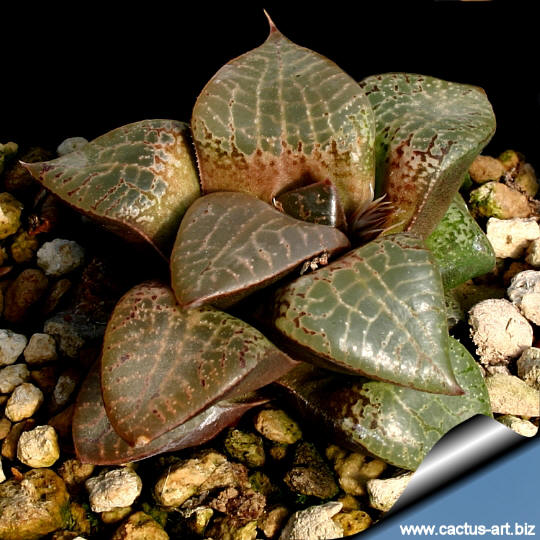
Haworthia emelyae var. comptoniana
(G.G. Sm.) J.D. Venter &
S.A. Hammer
Locality:
West of Willowmore - road to De Rust
Habitat:
South Africa (Georgida), in the Willowmore District. This plant comes
from a very small area no larger than 10 by 15 metres in
quartz patches,
it often grows under stones. It is very rare in the field.
Etymology:
The
genus
name "Haworthia" is
named after the British botanist Adrian Hardy
Haworth (1767–1833)
The
species name
"emelyae" was named
after Mrs. Emely Ferguson, Riversdale, RSA
The
variety name
"comptoniana" was named
in honour of Prof. R.H. Compton. |
|
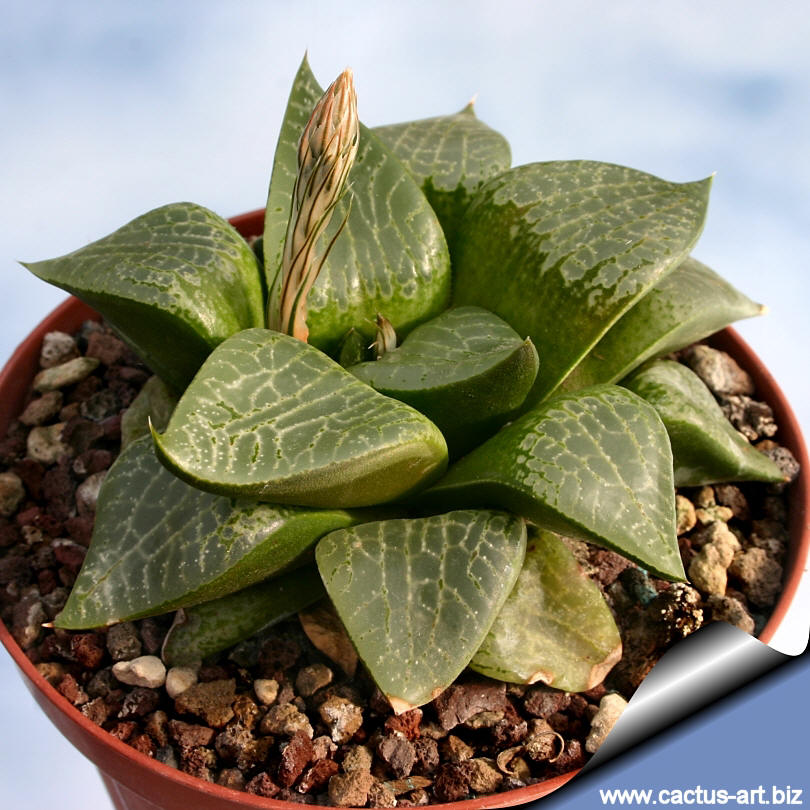
Description: Generally
solitary, its
growth is almost entirely
subterranean, with only the leaves'
apex
exposed to the
atmosphere at the
soil level (see:
geophyte plants)
Stem:
Stemless rosette succulent.
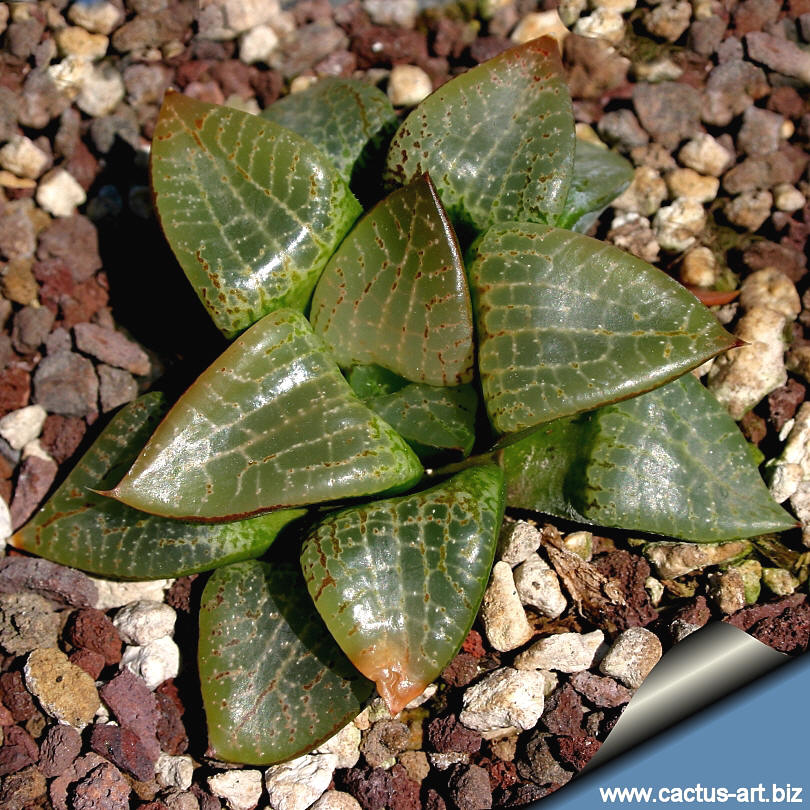
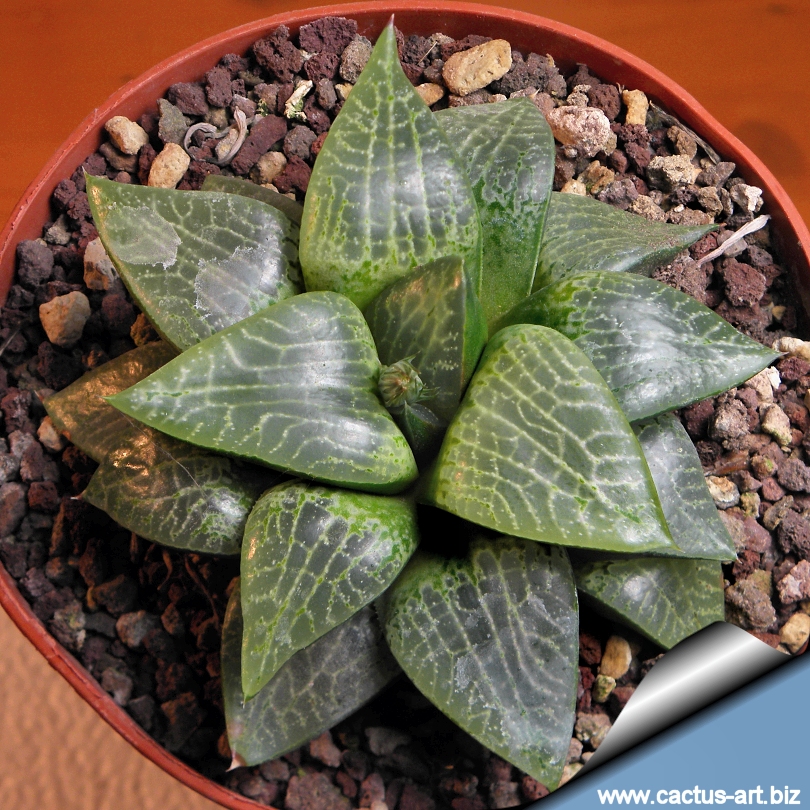
Leaves: Broad triangular, (4-5cm long and 2cm wide at the
base). The
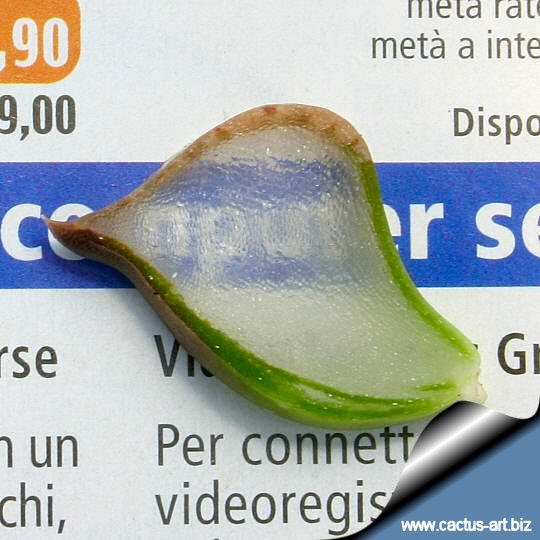
retuse leaf-end area is
pellucid and
reticulate with pale white-flecked "veins"
running into lines that converge at the apex.
These leaves form a
stemless
rosette that is 5-9 cm in diameter, up to 120
mm in cultivation,
with 15 to 20 leaves (plants in habitat
are barely 3 cm across!). The
reticulation and relative length of the leaves are quite
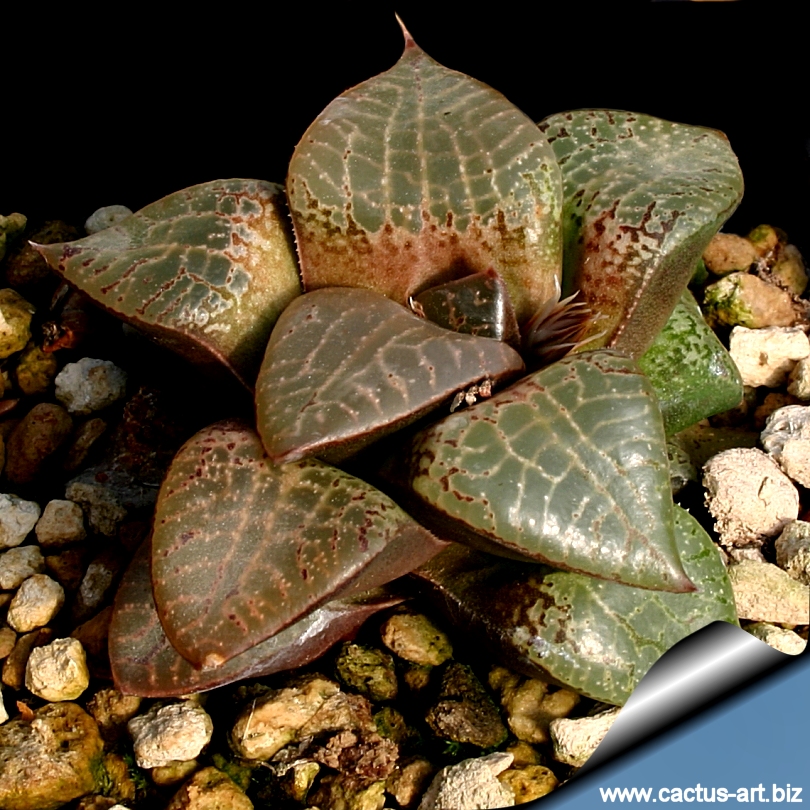
variable. The tops of the leaves near the centre of the plant
becomes reddish in
winter and in sunny expositions.
Flower:
2-lipped white with greenish veins, borne on a 20 cm tall
inflorescence.
Notes: The diversity between H. emelyae and this variety is
the smoothness and dimension of the plants, they are usually
smoother and larger sized.
|
|
|
|
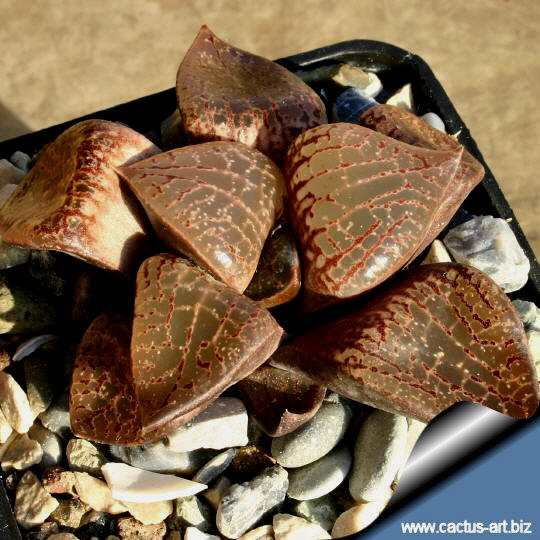
In a
half
shade (with a few hours of sun) the green
reticulated
fenestration of this plant
turn to a rich red-brown. Very nice!
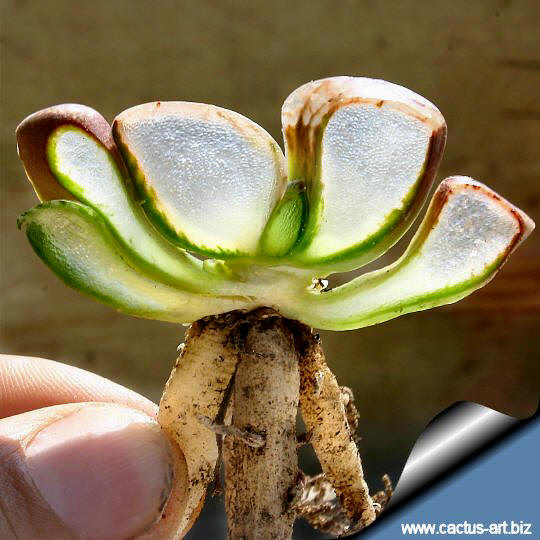
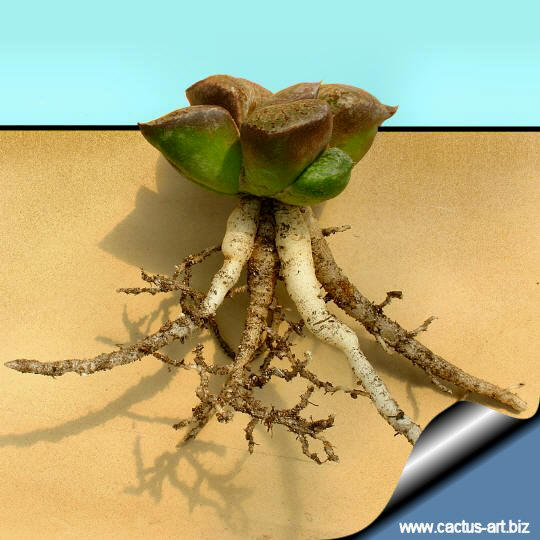
Contractile roots are
found in many plants
species mainly at the
base of an
underground
organ (bulb,
corm,
succulent rosette, etc.)
The contractile roots continually pull the plants deeper into
the
ground as the stem
elongates so the it remain
subterranean or at an appropriate level in the ground..
Contractile roots are usually broad,
fleshy, vertical, tapering,
wrinkled looking and very distinct of the rather
cylindrical
fine
absorbent roots and are capable of incredible effort.
In most cases, contractile roots not only produce a strong
pulling force on but also push away the
substratum and create a
soil channel in which plant movement is made easier. For example
in Haworthia the
fleshy contractile roots swell with
moisture in
the
wet season creating a space in the
substrate then - after
the full
drying out of
soil during the
dry season - a
considerable parts of this roots
die off leaving empty spaces in
the
substratum that allow plant movement with minimum or no
resistance, at the same time the other roots
dehydrates and shrinks
vertically, drawing the plant down into the ground. This is
repeated early permitting the top of the plant to remain
constantly at the
soil level.
Cultivation:
Easy to cultivate, it
needs
regular water.
Frost Tolerance: Light frost protection
required.
Minimum of 5º
C for safe growing (but hardy up to
-5°C.)
Sun Exposure: Requires light shade,
up
to bright light
(protect from direct sun)
Propagation:
Seeds, offsets, micropropagation.
Photo of conspecific taxa, varieties, forms and
cultivars of
Haworthia emelyae:
|
|


 Cultivation and Mail Sale