|
|
|
T.
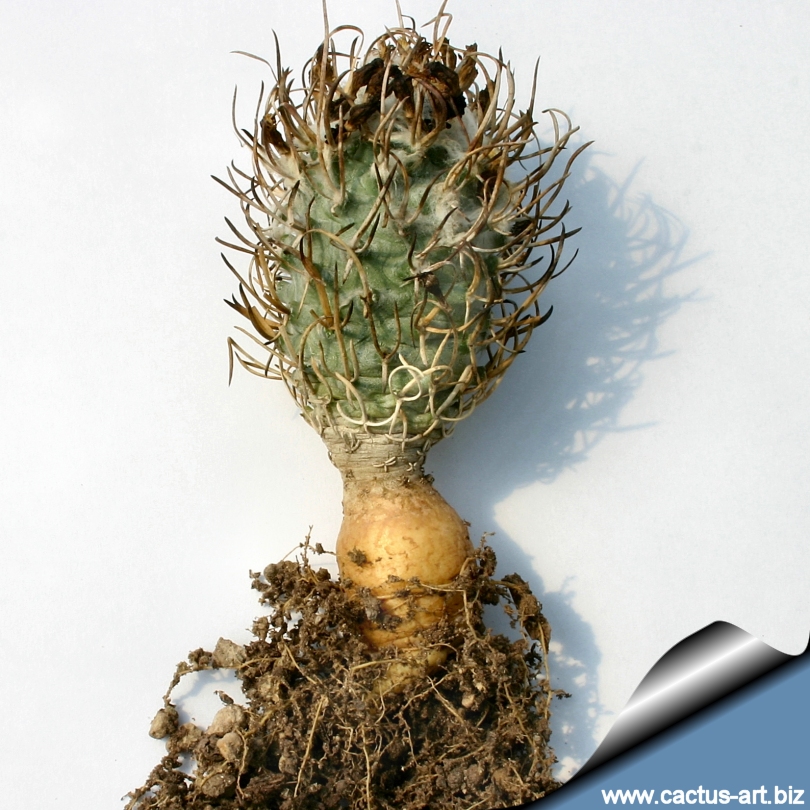
flaviflorus is a very nice and rare member of this
genus, and sought by many.
The
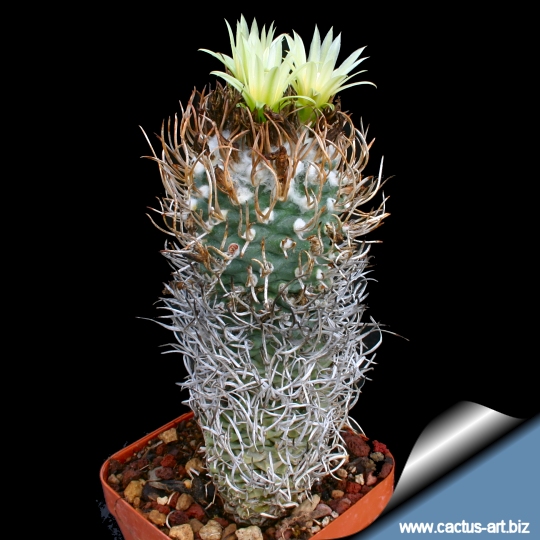
stem is
elongated, with a thin
neck
on a large
taproot.
|
|
Description:
Solitary or slowly clumping. It has a very distinctive form, described by
some as almost pagoda-like.
Stem: Cylindrical, grey-greenish, and coated in a whitish bloom, 2.5
cm in diameter, 5 cm tall; conical tubercles with a rhomboidal base.
Areoles: Small with white caduceus wool.
Root:
Napiform.
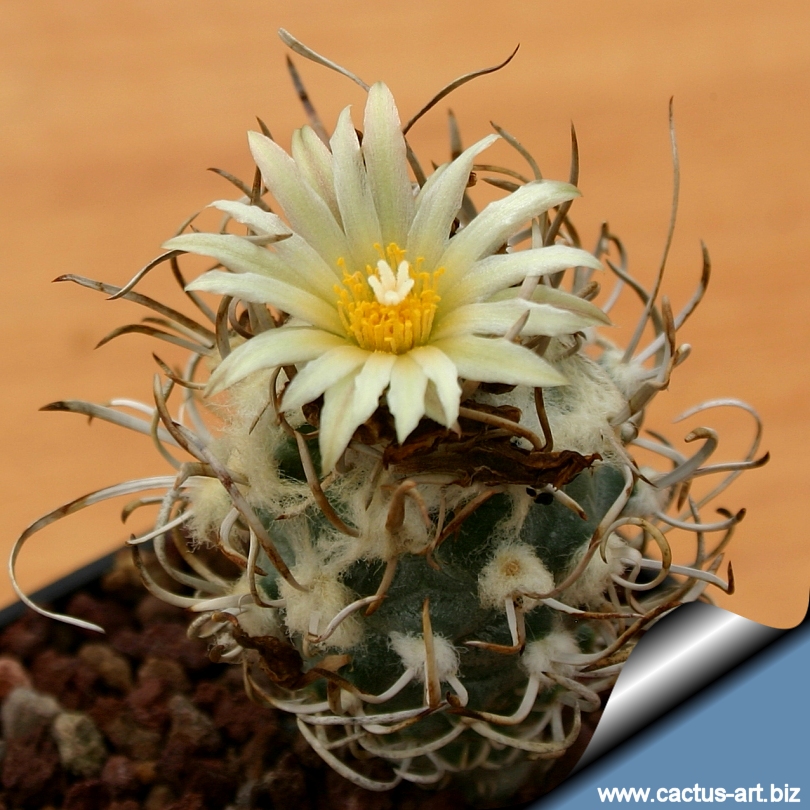
Spines: 4 to 6, up 30 mm long, the juvenile ones are dark-brown,
the older ones are greysh.
They are spongy, flexible and curve
upwards.
Flowers:
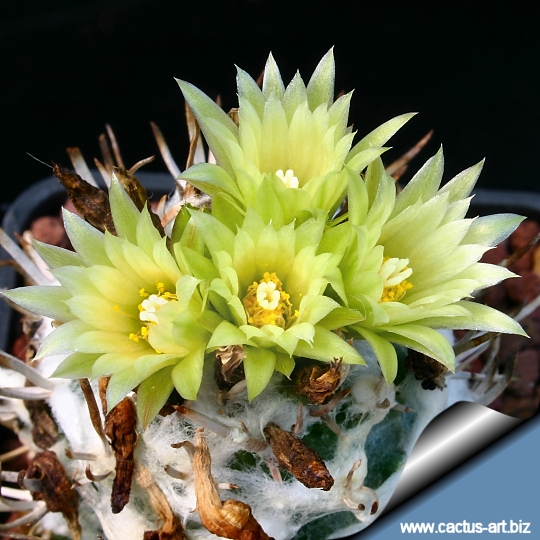
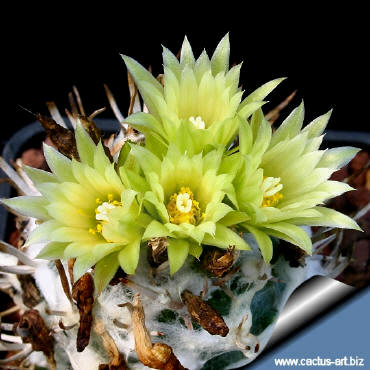
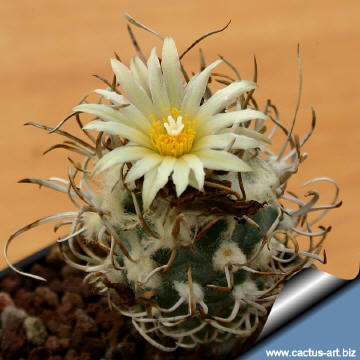
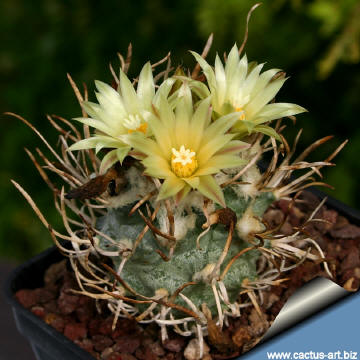
Infundibuliform, light yellow-green, up 2 cm in diameter.
Stylus pink with white
stigmas,
anthers yellow.
Blooming season: The flowers appear at the plant's apex, in succession
from spring to summer.
Fruit: Longly ovoidal, 10 mm long, base dark green, apex dark
brown.
Seed: Dark brown, 1
mm long.
|
|
|
|
|
The flowers, from which it gets its name (from Latin flavus = yellow)
are an unusual greenish-yellow, and contrast well with the body.
Cultivation: It’s a fairly
easy and robust species to cultivate, but very slow growing. It needs a
very well-drained soil, and requires strong sun to part sun to
keep the plant compact and low and to develop a good spinal
growth. Waterings should be rather infrequent to keep the plant compact,
and avoid its becoming excessively elongated and unnatural in
appearance.
Furthermore it has a tap root, and watering
it properly is often difficult, because it tends to crack open or rot if
over-watered. Keep dry in winter, or when night temperatures
remain below 10° C. It is hardy to -4°C for a short period. Assure a
good ventilation.
Reproduction: From seed, since the plant rarely produces
plantlets, or
grafted.
|
|
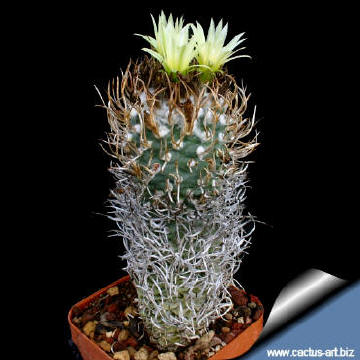
A very old specimen |
 |
|


Advertising
|
|
|
|
Family:
Cactaceae (Cactus
Family)
Scientific Name:
Turbinicarpus flaviflorus G.Frank & Lau
Published in:
Frank and Lau, KuaS, 30(1):6-7,
1979
Origin:
Mexico (San Luis Potosí: Santa Rita del Rucio)
Conservation status: Listed in
CITES appendix I |
Taxon
synonyms:
|
|
|
|
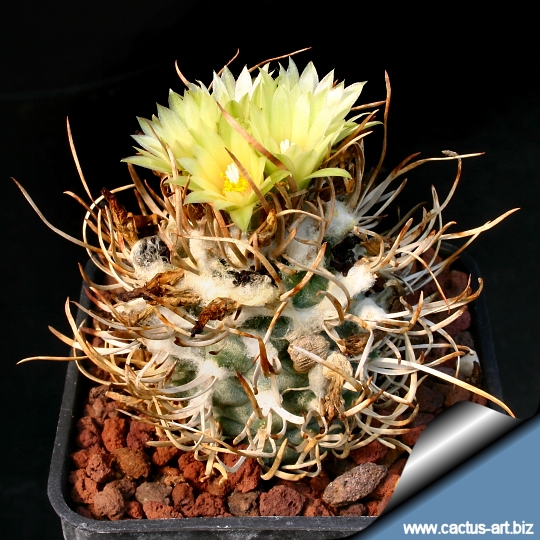
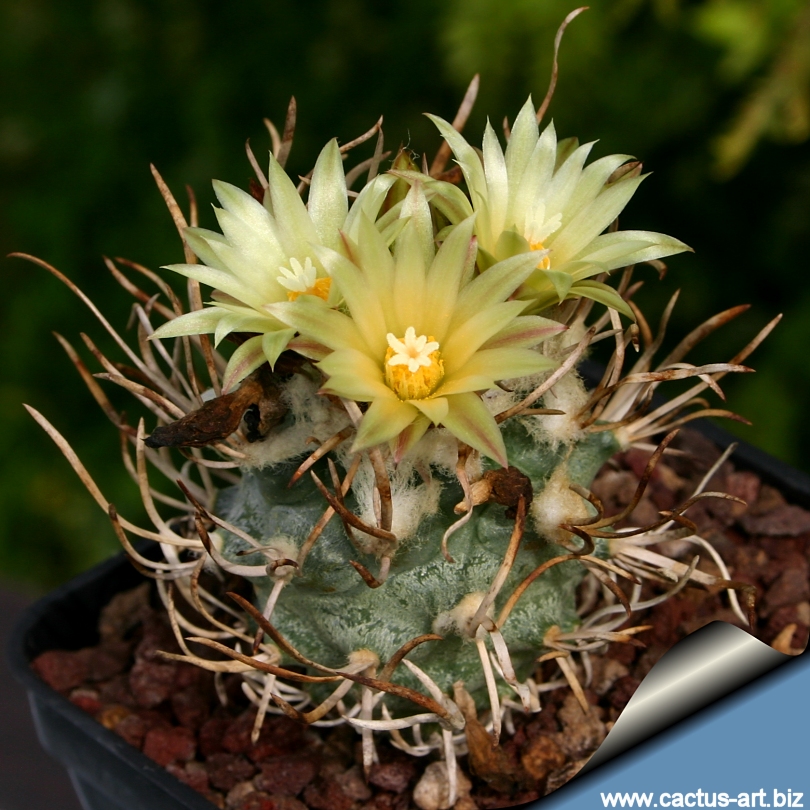
T. flaviflorus is for many the favorite
Turbinicarpus to grow.
This species has
long,
corky,
flexible
spines.
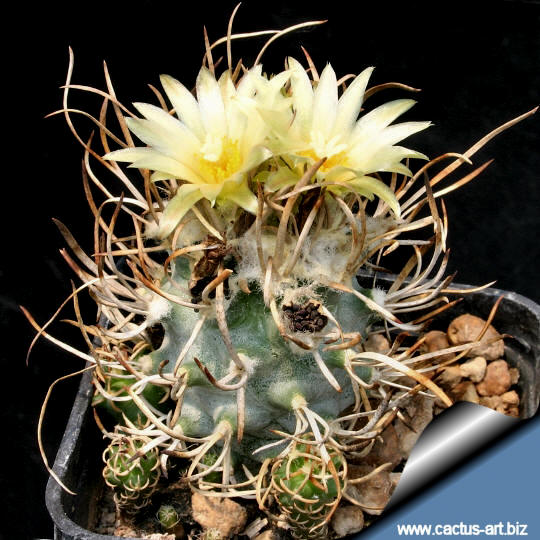
Small babies at the base of the mother plant.
|
|
Photo of conspecific taxa, varieties, forms and
cultivars of plants belonging to the Turbinicarpus schmiedicheanus
aggregate: (This taxon
has lots of synonyms, with
several controversial varieties and subspecies):
|
|


 Cultivation and Mail Sale