|
|
|
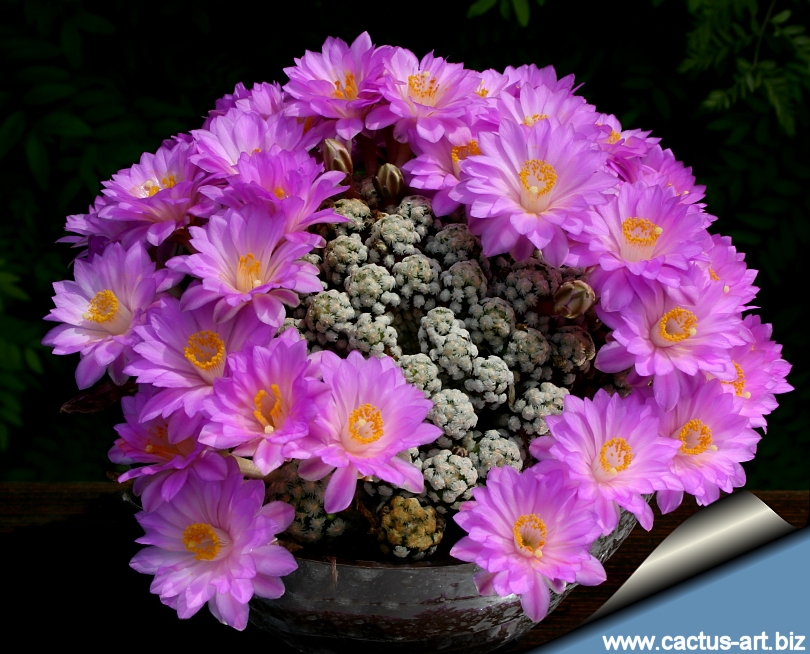
Mammillaria theresae is one of the most sought-after and very
distinctive species of Mammillaria, this little species is
immediately recognisable by its
spination even when not in flower.
|
Description: Small
geophyte usually
single headed, though some
specimens
offset in age.
Stem:
Subglobose to
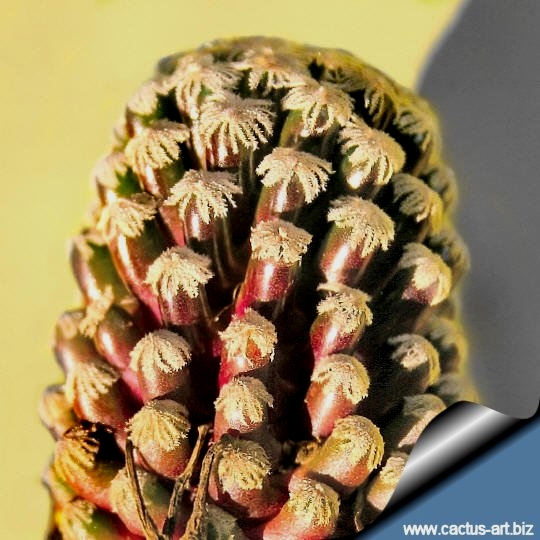
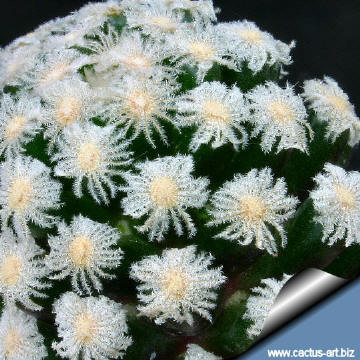
cylindrical, olive green, with magenta-red tint,
up to 4 cm high, 1-3 cm in diameter. Without
latex.
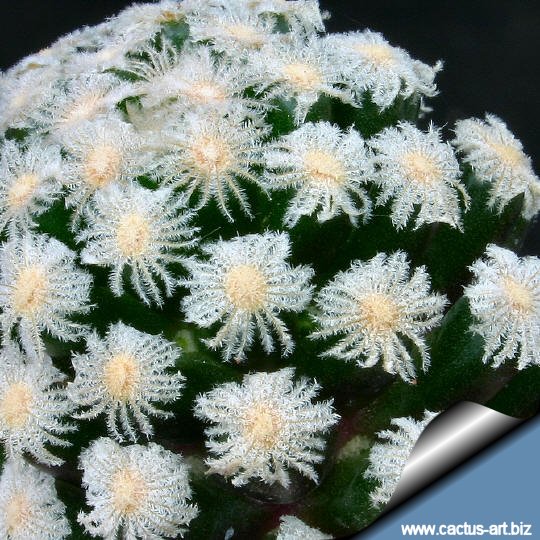
Tubercles: Small,
cylindrical/conical.
Spines:
Radial: 22-30,
plumose,
pinnated,
translucent, white to yellowish white, up to 2 mm long, forming
little
spines clusters.
Central spine: Absent.
Roots: Strong
taproot
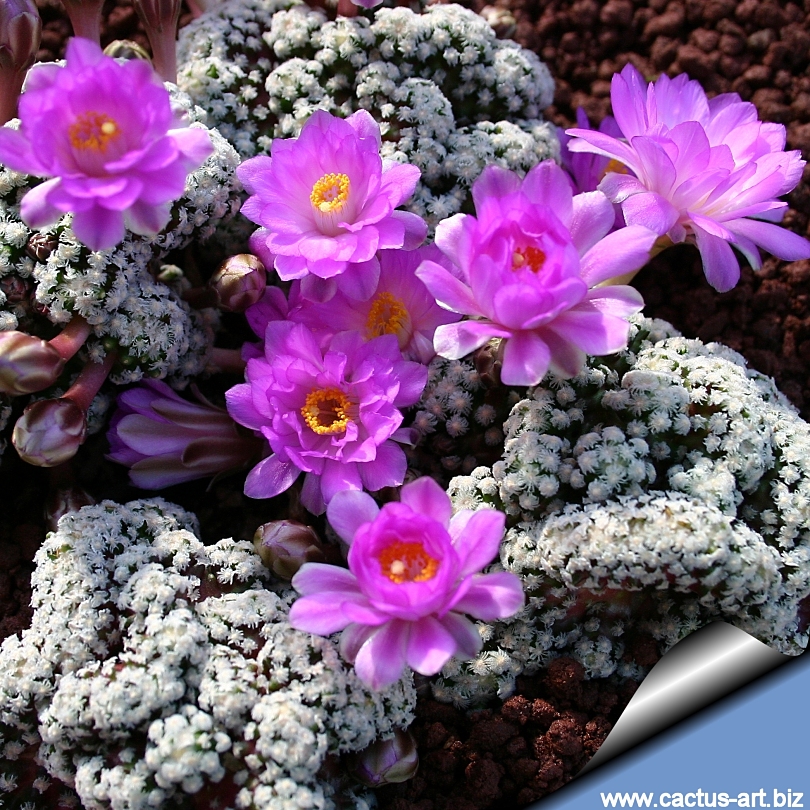
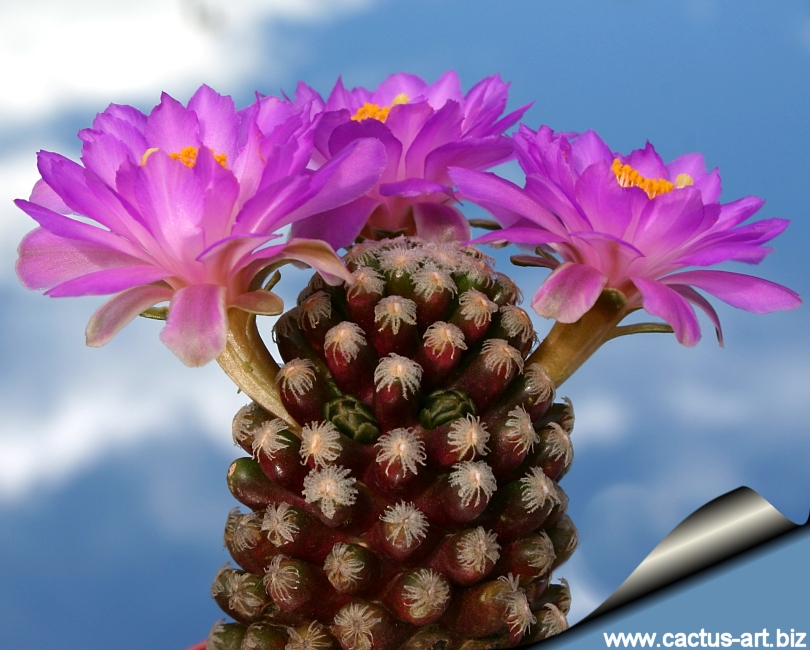
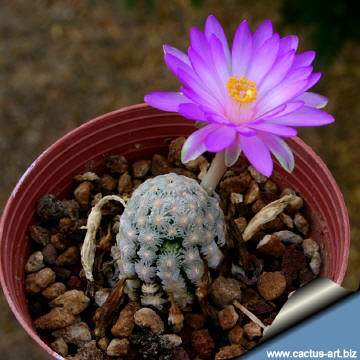
Flower:
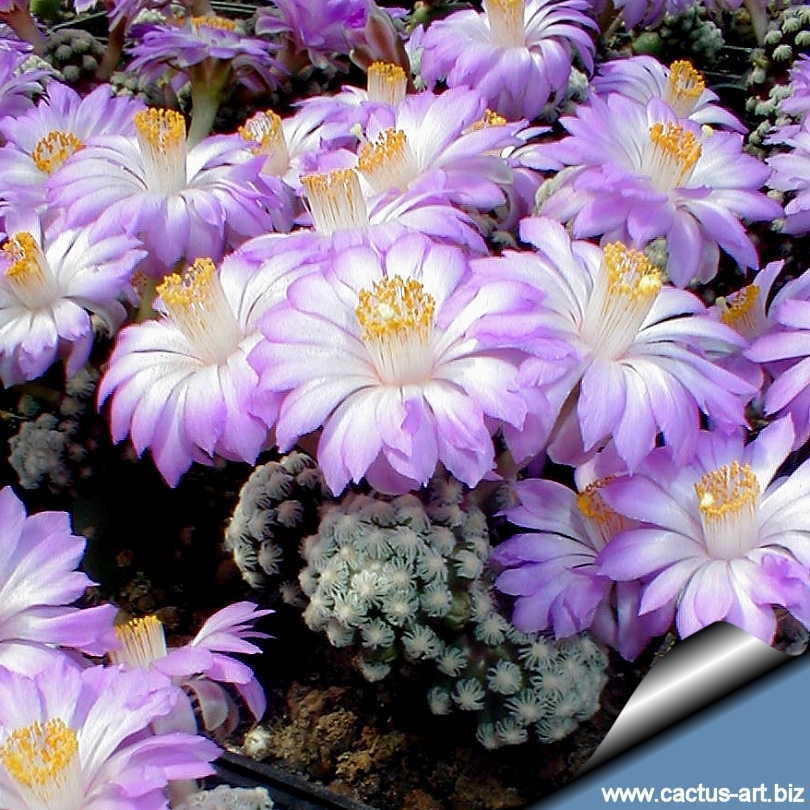
Crocus-like,
funnelform, pink, unusually long-stemmed for a Mammillaria (3.5
cm in diameter and up to 5 cm long), that are many times larger than
the plant body itself, at least with plants on their own roots.
Stigmas pale yellow.
Fruit: Cryptocarpic, stays retained
within the body at the
axil
for many years.
Club shaped, up to 10 mm long.
Phenology:
Blossoming time: May (but plants grafted on
Opuntia compressa bloom repeatedly from April to September)
|
 |
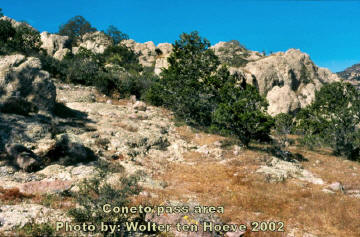
The
habitat at Coneto Pass
(Photo by: Wolter ten Hoeve)
Left:
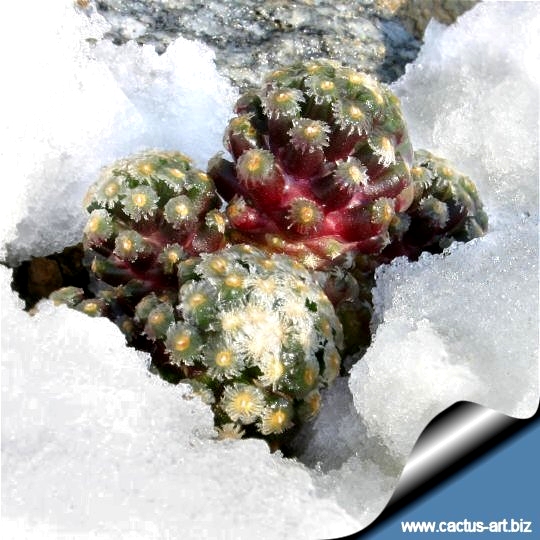
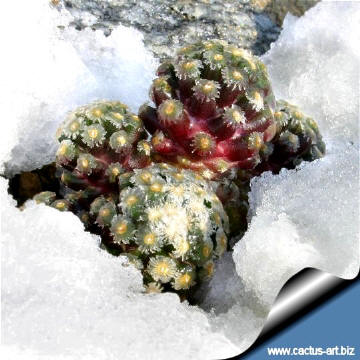
Outdoor in a rock garden: a plant emerge from the melting snow.
This
mountainous species is quite frost hardy, it can withstand night
temperature down to - 15° C |
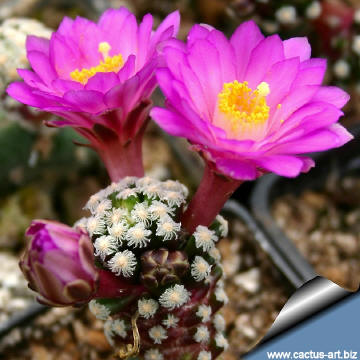
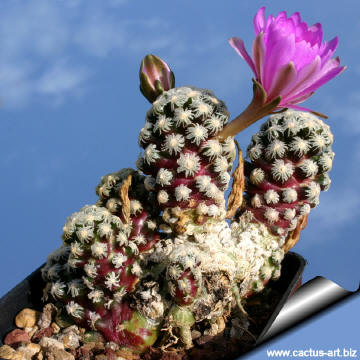
First spring flowers (in April)
and... |
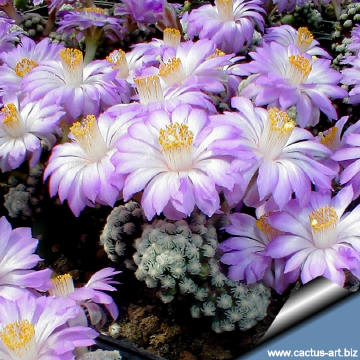
...summer blooms
|
 |
 |
|
. |
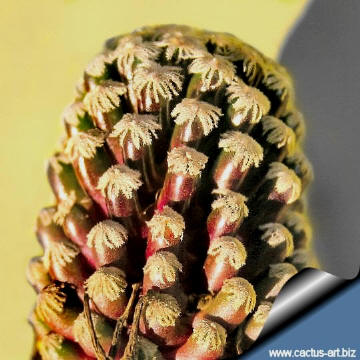
Tubercles are cylindrical with magenta-red tint. |
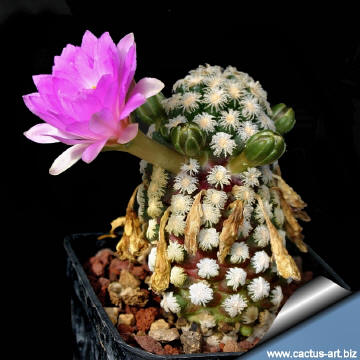
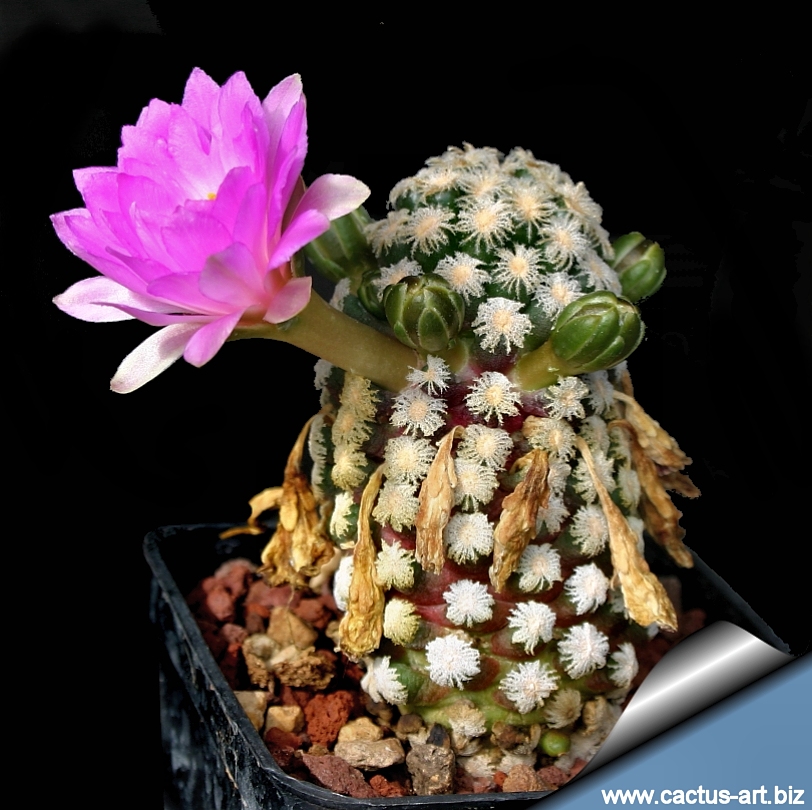
Buds and flowers remnants. |
|
 |
 |
|
. |
|
 |
 |
|
Cultivation:
M. theresae - like the other
Mammillarias of the saboae group -
is not the easiest of Mammillarias to grow and
keep, this is though it is easier
than some of its
relatives such as M. goldii. But all this
species require similar
growing conditions, and a
mineral-based potting mix is preferred. They need to be kept
dry in
winter.
Pot plants are quite
wet-sensitive. Care must be
taken with watering,
and it
needs good
drainage. Water
sparingly during the
growing season;
keep very dry in
winter. But plants grown outdoors
seems to tolerate
easily the winter wetness. Usually it is recommended to
overwinter this plant in a bright and warm greenhouse with
at least 8-10° C , but it has
proved to be quite
frost resistant and has
demonstrated to
survive safely
outdoors
under a cover of
snow at a temperatures of -15° C.
Sun Exposure: Full sun - Light shade.
Propagation:
Seeds,
cuttings or
grafting.
Germination of the seed can still prove to be a challenge.
|
|
Advertising
|
|
|
|
|
Family:
Cactaceae (Cactus
Family)
Scientific Name:
Mammillaria
theresae
Cutak
1967
Published in: Cutak, Cact. Succ. J. (US) 39(6): 239 (1967)
Conservation status: Listed in
CITES appendix 2.
Synonyms:
Mammillaria saboae var. theresae
Series: "Longiflorae"
M. theresae is one of a number of
similar
species, all discovered in the 1960s, the others being M. saboe,
M. haudeana, and M. goldii. Mammillaria theresae was
first
described in 1967,
Distribution:
Endemic to the Mexican state of Durango in the Coneto Mountains, (West
Sierra Madre) where it is found only at its
type locality.
Habitat:
Grows mainly in moss patches over rock formations on the eastern
slopes of the Coneto Mountains, at
altitudes of about 2200-2300 m. The mountainous habitat is
characterized by serious
temperature fluctuation.
Etymology: The
genus name
"Mammillaria"
is derived from the
Latin word
“mammilla” incorrect spelling of “mamilla”; which
means “breast, teat, nipple” and refers to the small
tubercles (fleshy lumps or warts) covering the plant body.
All cacti in this genus are
rib-less
( The genus name implies:
"bearing nipples (tubercles)")
The
species epithet "theresae"
has been named after Theresa Bock who, together with her
husband John, discovered the plants on the Coneto
Mountains in Durango, Mexico, in 1966/67.
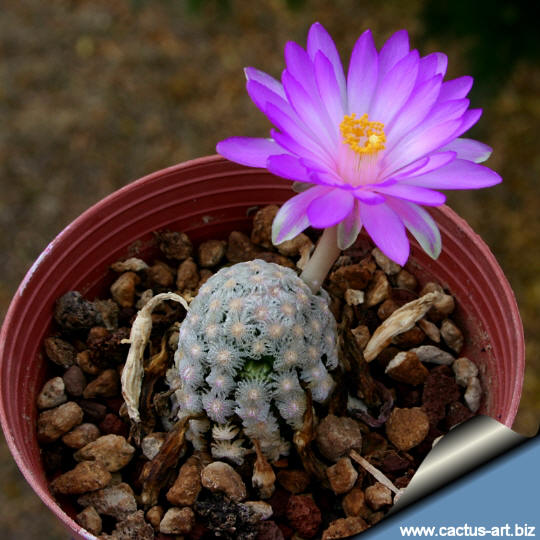
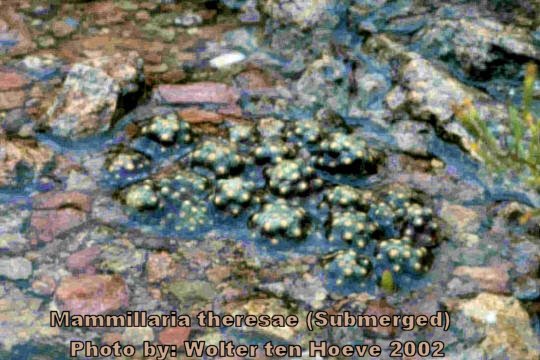
A plant in habitat at Coneto Pass (Photo by: Wolter ten
Hoeve)
A clustered plant submerged by abundant rain (2003)
Seasonal
growth and
contraction:
In the
wild these plants
contract considerably during the
dry season, sometimes pulling down completely under the
soil level, and frequently the flowers push up through the dirt
from the
underground cactus
body. In fact, even though these plants show a good amount of new
growth each
year (at least two or three cm), they hardly get any larger,
and their
dimensions remain unvaried year after year, as the individual
stems tend to
contract at the
base. The new
growth produced during the
vegetative season compacts considerably and
retracts sometime, pulling
the plant down completely under the
soil in the hottest months of
summer and coldest months of
winter.
It should be noted that "when
specimens are in this withdrawn state, it becomes almost
impossible to find them in their
natural state, even though their exact
locality is known"
See also:
Dehydration/rehydration cycles
|
|
|
|
 |
|
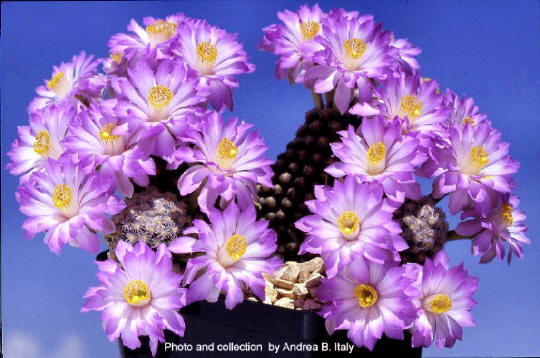
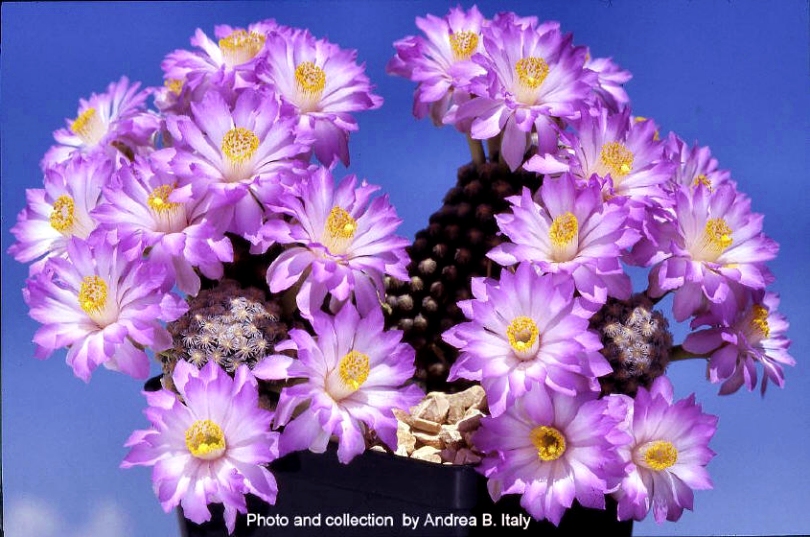
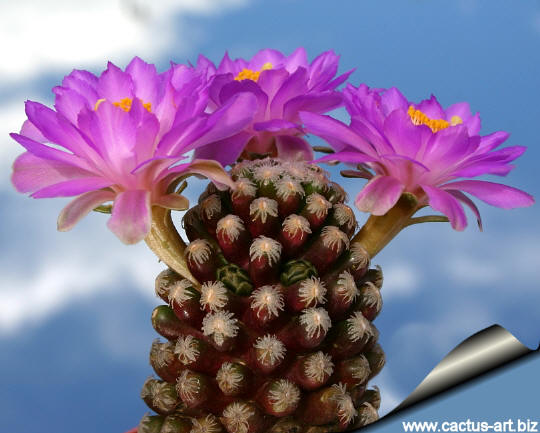
Photo
and © copyright by
Andrea B. (Bologna, Italy)
http://www.cactusfriends.com/Andrea/index.html
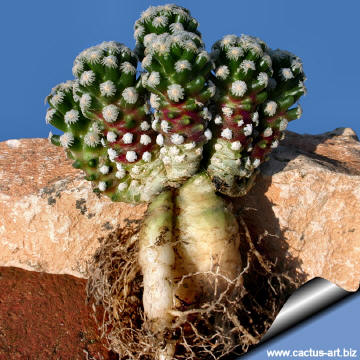
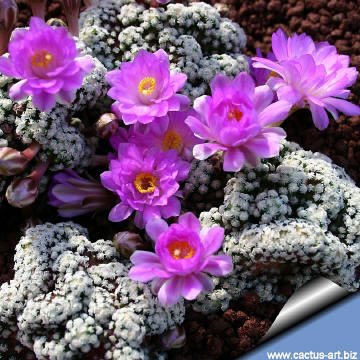
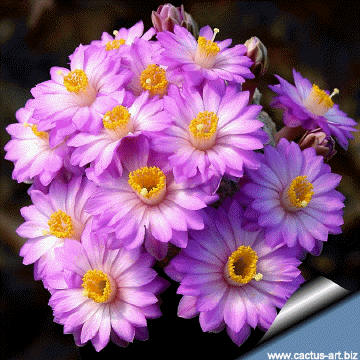
(24 flowers in late August)
grafted on short
Opuntia compressa stock
Cryptocarpic fruit: M. theresae is one of the few
species of cactus with
cryptocarpic fruits. That is, the fruit and seeds are produced and
retained inside the
stem of the plant. After the flower is finished and dropped off, the
stem closes over the fruit and the fruit/seed gradually ripens within.
The following years the fruit may remain within the body at the axil, or
may protrude a bit. A thin membrane will be above the part where ripe
seed can emerge. As the plant swells with the new growing season, the
membrane fractures, and some seed from the past years can little by
little drop down and germinate in the close proximity, forming small
colonies.
But usually the seeds remain within the plant body for several years or
for the whole life cycle of the plant, and frequently they will be
released only at the death of the plant after the disintegration of the
old stem.
It is possible to collect fruit and seeds only by means of a thin
pointed forceps. The seeds' vitality lasts for many years and moreover
seeds contain inhibitors that preserve them from premature germination.
Generally fresh seeds won’t germinate very well, only old seeds do. The
complete germination of this kind of seed may take several years (Some
will sprout unexpectedly after 5 or 8 years!). Because of the above
peculiarity, seeds and plants of cryptocarpic Mammillaria (Series
Longiflorae) are seldom available from commercial sources.
Photo of conspecific taxa, varieties, forms and cultivars of
Mammillaria theresae:

 |
|


 Cultivation
and Mail Sale
Cultivation
and Mail Sale